
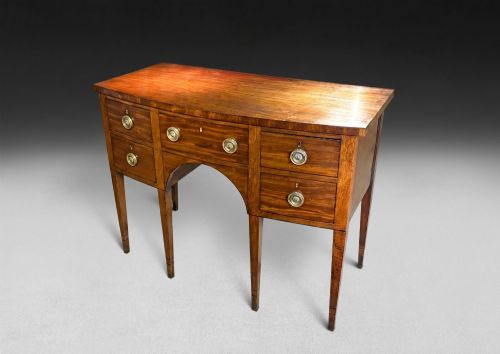
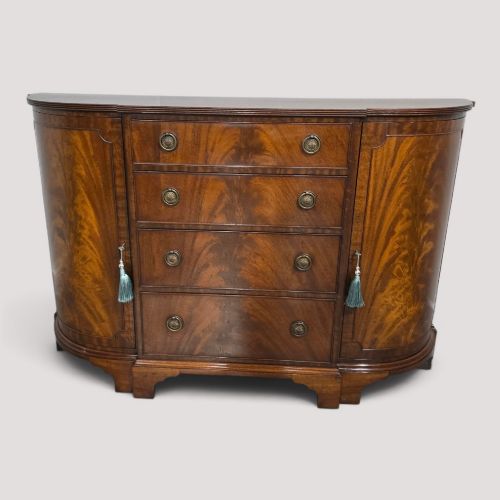
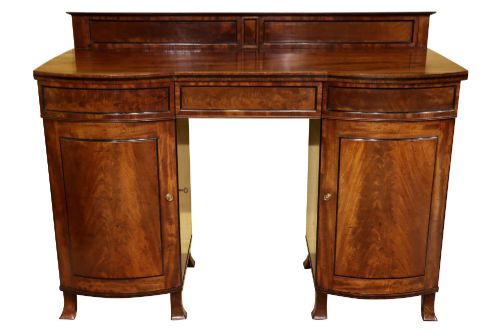
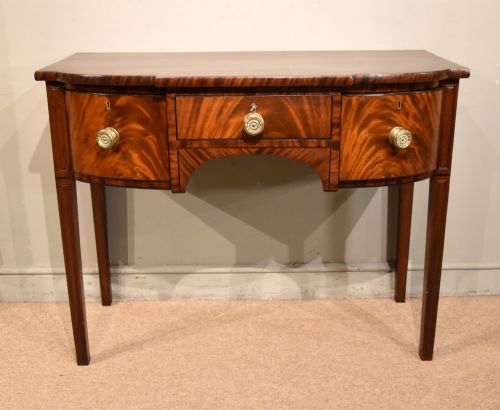
Georgian Bowfront Credenza
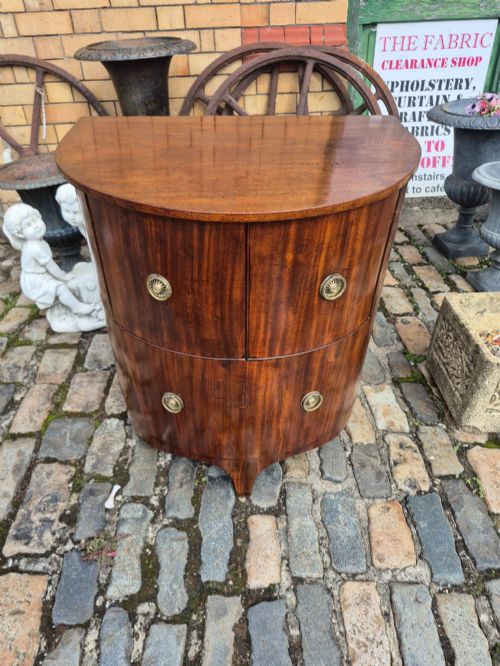
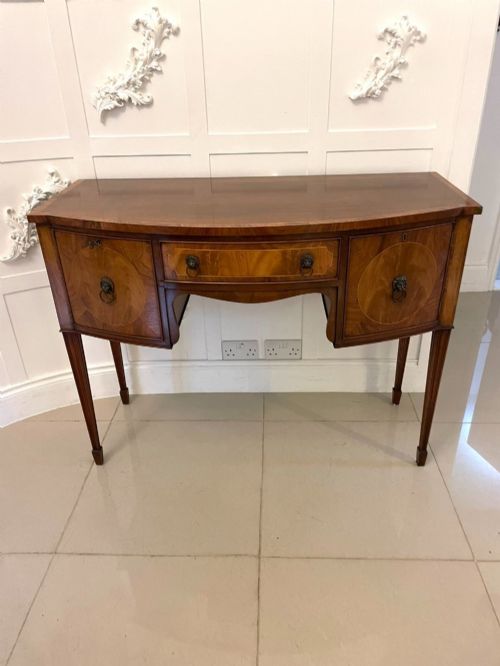
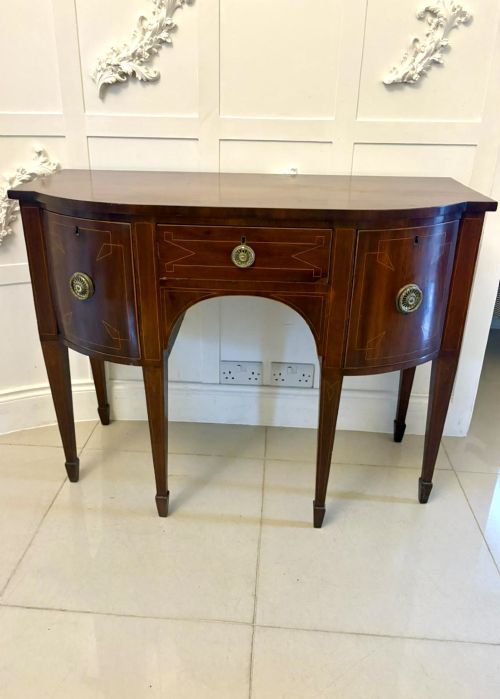
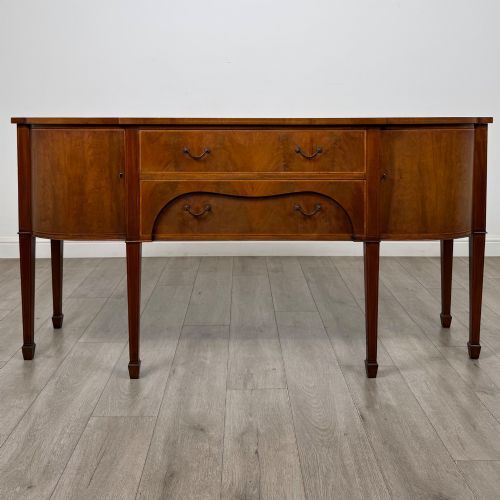
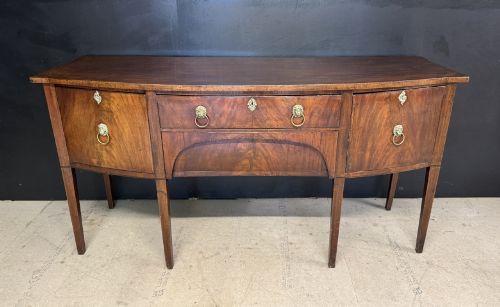
A georgian bowfront credenza brings curving mahogany fronts and polished brass hardware into a dining room or hallway with quiet authority.
Georgian Bowfront Credenza
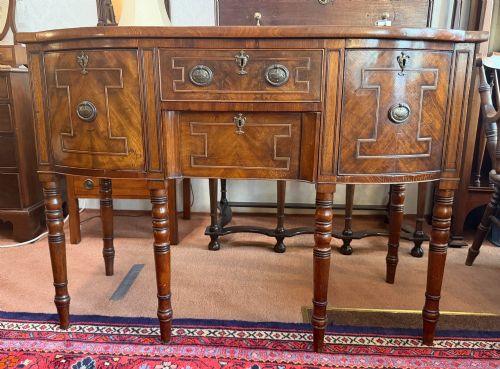
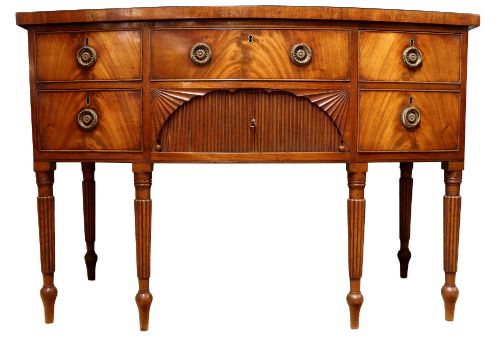
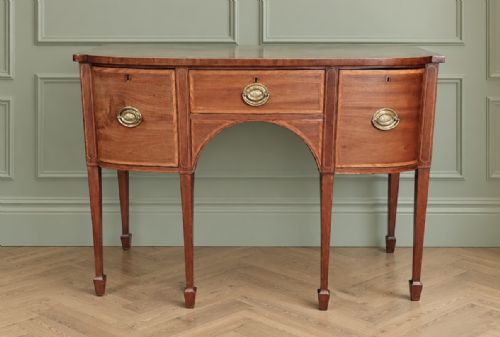
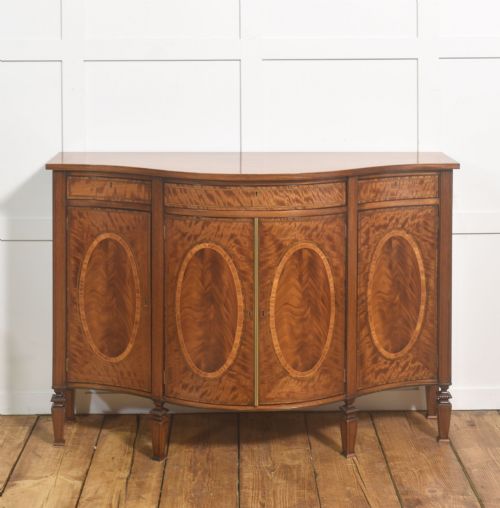
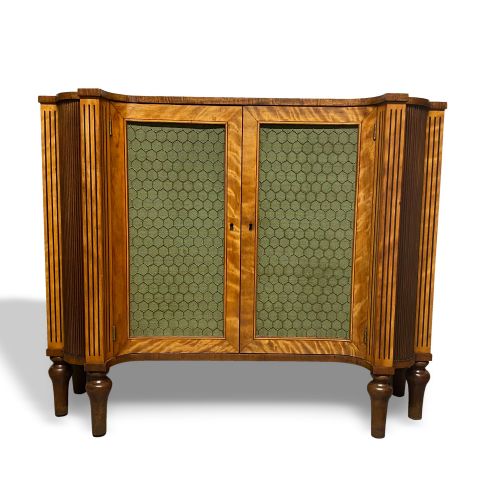
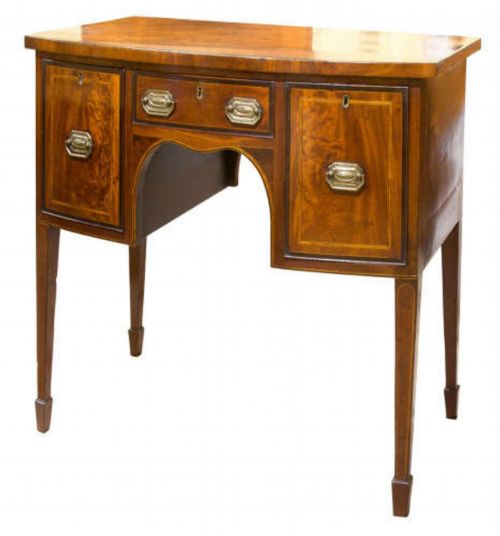
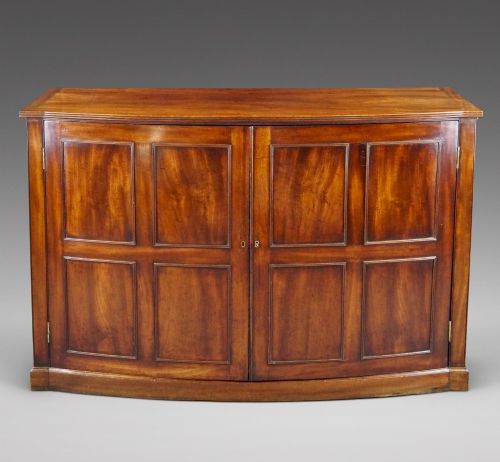
A georgian bowfront credenza, appearing in listings as a sideboard, side cabinet, or cupboard, centres on a curved front profile designed to soften the corners of a room while offering substantial storage.
The pieces seen here span the eighteenth century through to the Edwardian and revival periods of the twentieth century, capturing the evolution of the curved sideboard form.
Mahogany remains the dominant timber, accompanied by satinwood and occasional marquetry decoration, reflecting both original period production and later revival tastes.
How they were made
Cabinet makers constructed these pieces using solid mahogany and flame mahogany veneers applied to secondary timbers, shaping the curved fronts with steam and careful joinery.
Surface ornament relied on contrasting boxwood inlay, ebony stringing, and elaborate marquetry details that highlighted the central bow of the facade.
Brass handles, ring pulls, and sometimes pedestals completed the construction, combining structural utility with refined decorative hardware.
Mahogany and flame mahogany veneer dominate the material record, accompanied by satinwood, boxwood inlay, and brass hardware.
What varies in quality
The refinement of the timber selection dictates much of the visual weight, with figured mahogany and matched flame veneers sitting well above plain grain.
Precision in the boxwood inlay and the crispness of the carving along the edges separate standard workshop production from finer cabinet work.
Proportion and scale also vary, as smaller, more compact examples demand greater joinery skill to achieve the curved bowfront within restricted dimensions.
The Georgian Bowfront Credenza Glossary
- Bowfront
- A convex curved front profile common on eighteenth and nineteenth-century sideboards. This shape softens the linear appearance of standard furniture.
- Marquetry
- Decorative patterns formed by fitting together small pieces of coloured wood veneer. It creates elaborate pictorial or geometric designs on the cabinet surface.
- Inlay
- Contrasting wood such as boxwood or ebony inserted into recesses cut into the primary timber. This technique outlines drawers and doors with precise linear borders.
- Pedestal sideboard
- A form featuring distinct side cabinets flanking a central section rather than a continuous long carcase. Regency examples often display this specific arrangement.
Georgian Bowfront Credenza: Frequently Asked Questions
How do I date a bowfront sideboard?
Examine the timber, construction methods, and secondary woods inside the drawers to determine the likely period of manufacture. Original eighteenth-century pieces display different joinery characteristics compared to later Edwardian revivals.
Hardware and inlay styles also provide reliable clues, as Sheraton and Regency pieces utilise specific decorative motifs that evolved over subsequent decades.
Where should I place a credenza?
These cabinets suit dining rooms, large hallways, or living spaces where surface display and concealed storage are both required. The curved front allows them to project into a room without sharp corners.
Ensure adequate clearance around the piece so that doors and drawers can open fully without obstruction from surrounding furniture.
How do I care for mahogany surfaces?
Dust regularly with a soft, dry cloth and apply a quality beeswax periodically to nourish the timber and maintain its natural lustre. Avoid placing the cabinet in direct sunlight or near heat sources.
Keep moisture away from the veneer to prevent lifting, using coasters and mats beneath any objects placed on the top surface.
What is the difference between a sideboard and a credenza?
While modern usage often blends these terms, traditional dining room pieces with drawers and cupboards typically function as sideboards for serving and storage. Credenza and cabinet descriptions often apply to pieces with enclosed cupboard space spanning the front.
Both forms share similar proportions and curved front designs within the selection available here.