

Georgian Bow Fronted Chest
When you want a georgian bow fronted chest, you are looking at curved storage furniture shaped to catch the light.
Georgian Bow Fronted Chest
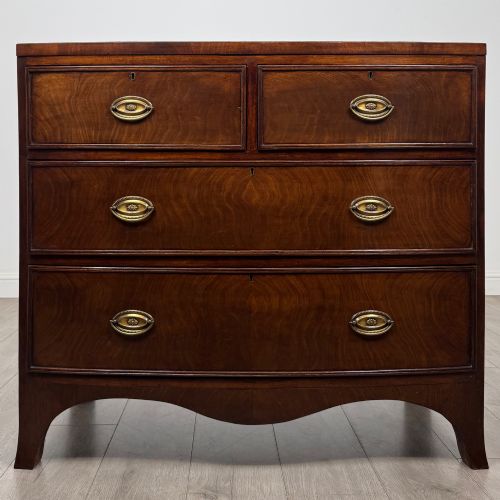
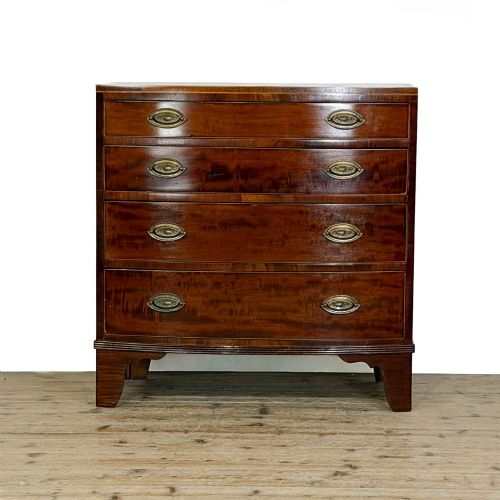
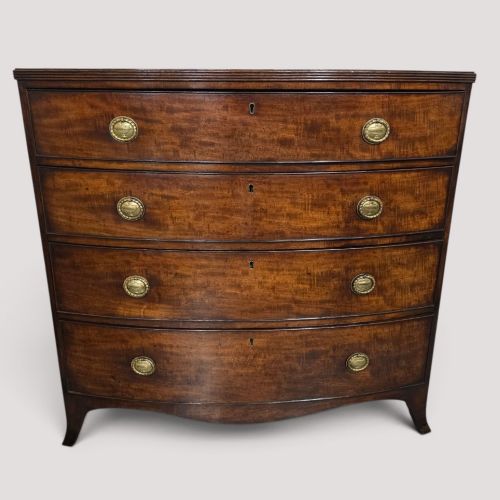
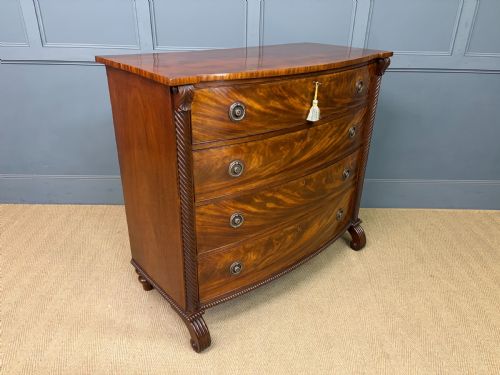
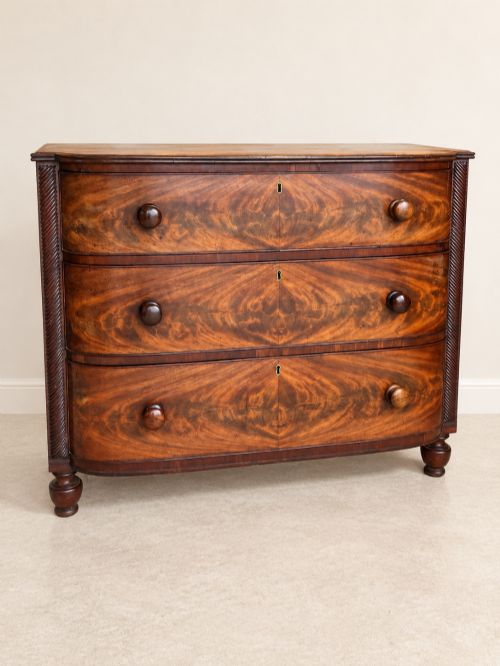
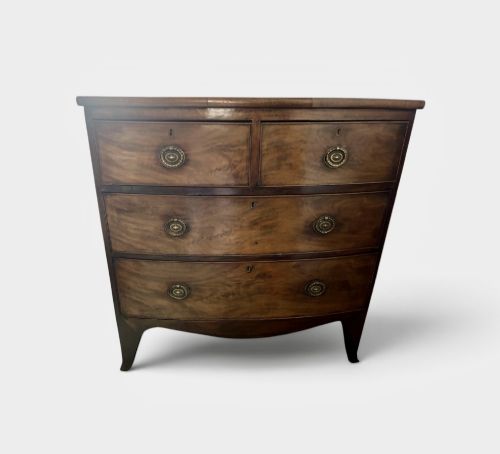
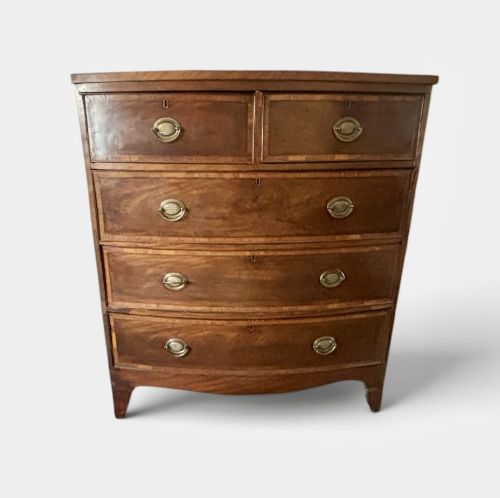
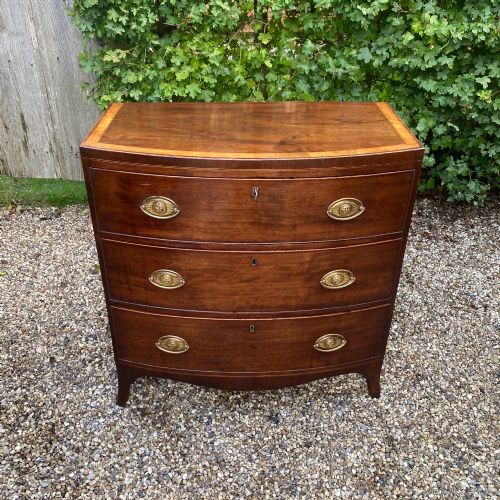
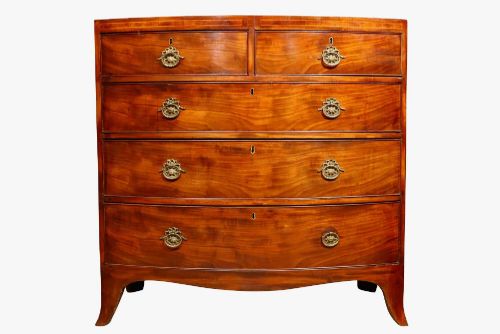
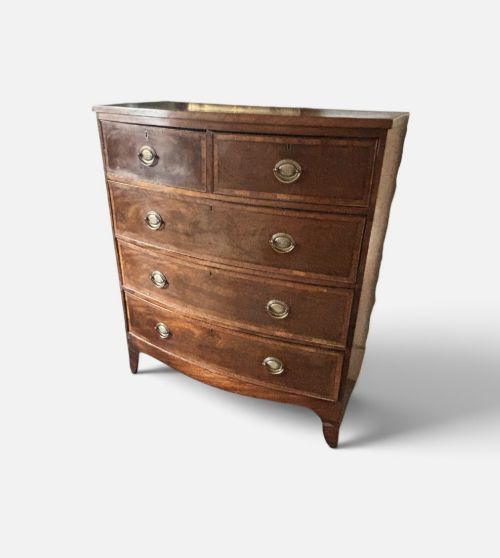
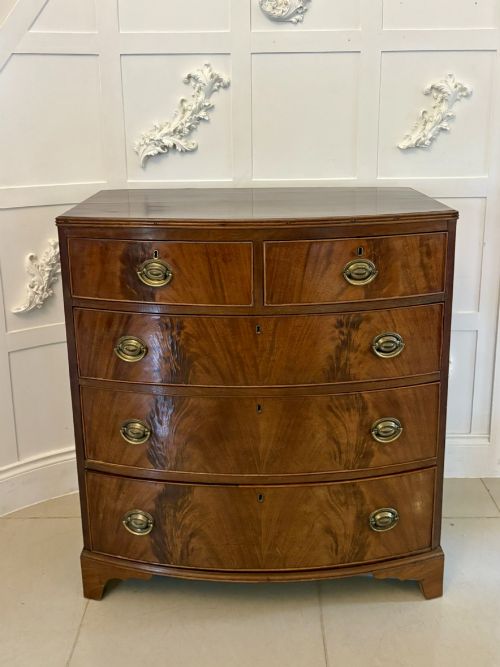
A georgian bow fronted chest is a functional storage piece defined by its gracefully curved front exterior, which breaks away from flat surfaces. The pieces seen here span periods from the eighteenth century through to the early twentieth century, incorporating George III, Regency, and George IV eras alongside later revivals.
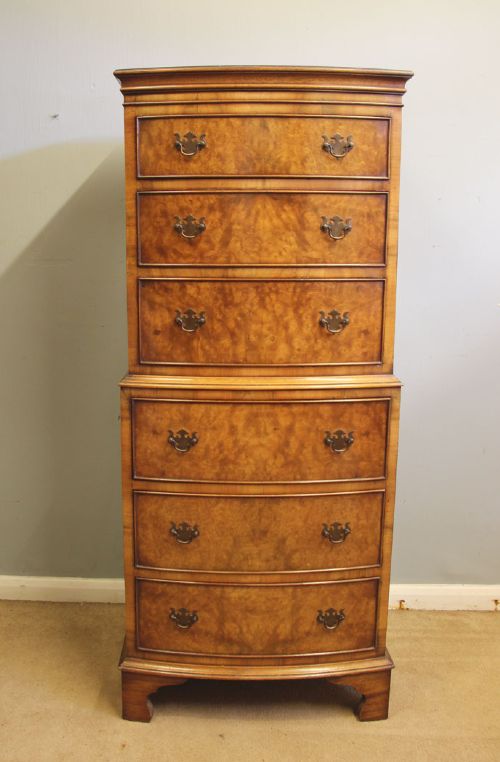
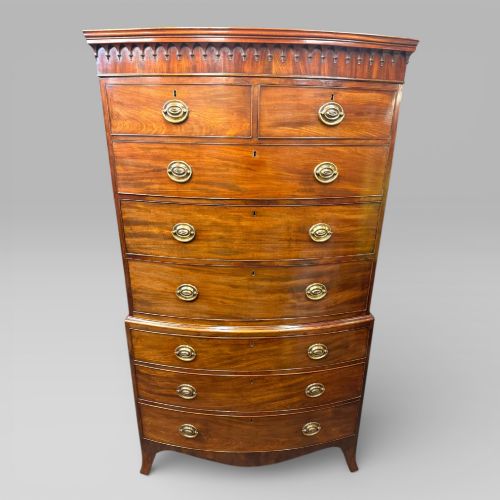
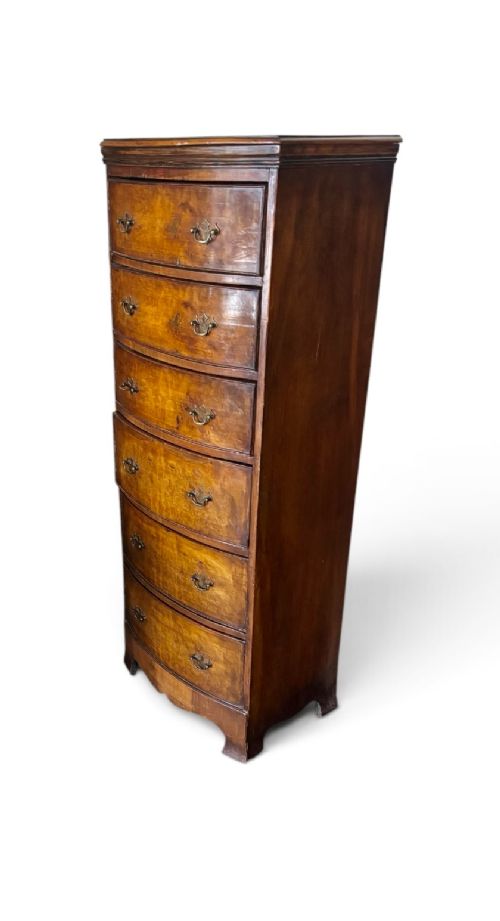
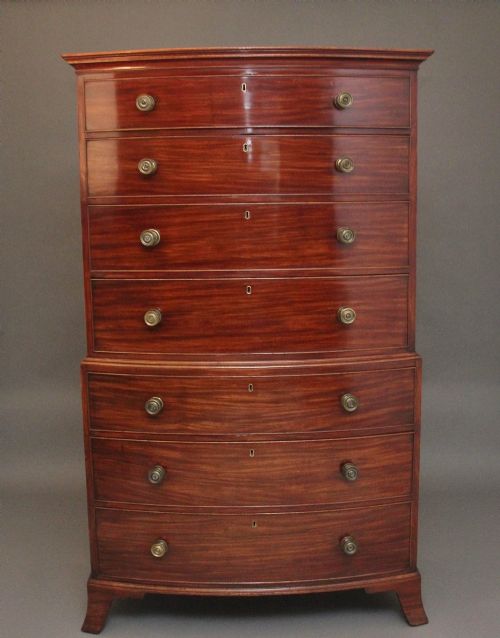
The most common format on this page is a chest of drawers, though variants include tallboys, chests on chests, miniature furniture, and dressing tables. Mahogany forms the backbone of these listings, accompanied by walnut, satinwood, and oak linings.
Regional variations also appear across the selection, including Scottish and Welsh examples, alongside smaller proportions designed for more compact rooms. Dating ranges from original eighteenth-century craftsmanship to later twentieth-century interpretations.
Materials and construction methods
Makers utilised solid timbers and applied veneers, with flame mahogany and burr walnut chosen for their distinct grain patterns on drawer fronts. Satinwood banding and crossbanding frequently frame the primary drawer timbers to create visual contrast.
Secondary structural timbers such as oak commonly appear inside the drawers, while brass hardware provides functional pulls and escutcheons. Cabinetmakers formed the distinctive curved fronts by carefully shaping solid wood or laying matched veneers over supportive curved carcases.
One Welsh chest hides a secret drawer for unexpected treasures.
Factors that distinguish quality
Quality rests in the handling of the timber figures and the precision of the curved drawer fronts. Finer examples display carefully matched flame mahogany or burr walnut veneers that flow naturally across the facade.
Construction details further separate the range, visible in the neatness of crossbanding, the selection of secondary woods like oak for internal drawer linings, and the crisp execution of edge mouldings. The overall harmony of proportions and the preservation of a deep timber patina mark out the superior pieces.
Gillows
The Georgian Bow Fronted Chest Glossary
- Bow front
- A convex curved front on a piece of furniture. This curved profile projects outward from the centre.
- Crossbanding
- A strip of veneer applied across the grain of the primary surface. It creates a decorative border around drawer fronts or tabletops.
- Tallboy
- A tall chest of drawers, often constructed in two stacked sections. This form provides substantial vertical storage capacity.
- Flame mahogany
- Mahogany timber cut to reveal a distinctive flickering flame-like grain pattern. Cabinetmakers reserved this striking wood for prominent exterior surfaces.
- Caddy top
- A tabletop style with a raised moulded edge resembling a tea caddy lid. This profile sits upon the upper surface of the chest.
Georgian Bow Fronted Chest: Frequently Asked Questions
How do I date a chest?
Dating relies on examining construction methods, timber choices, and hardware styles across the piece. Eighteenth-century and Regency examples often show specific secondary woods like oak alongside hand-cut dovetails.
Later nineteenth and twentieth-century revivals replicate these earlier Georgian forms with distinct variations in internal finish and veneer selection.
Where were these chests used?
These chests served primarily in bedrooms and dressing rooms for storing garments and personal linens. Gentleman's dressing chests often included specialised interior compartments for daily grooming items.
Smaller proportions allowed them to fit neatly into private chambers as well as principal reception rooms.
What is a tallboy chest?
A tallboy is a stacked chest of drawers offering greater vertical storage without occupying additional floor space. They frequently combine a lower chest base with a smaller upper chest section.
Examples on this page appear in both mahogany and walnut across Georgian and later periods.