

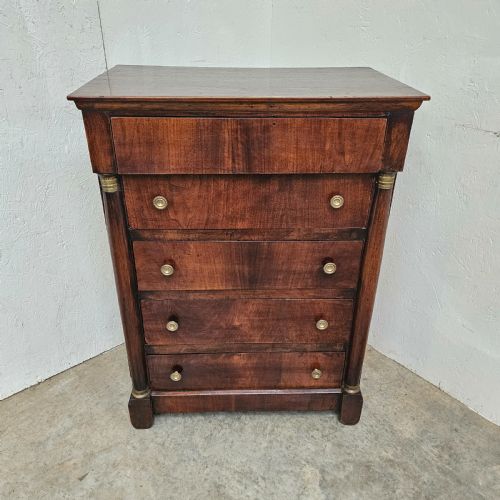


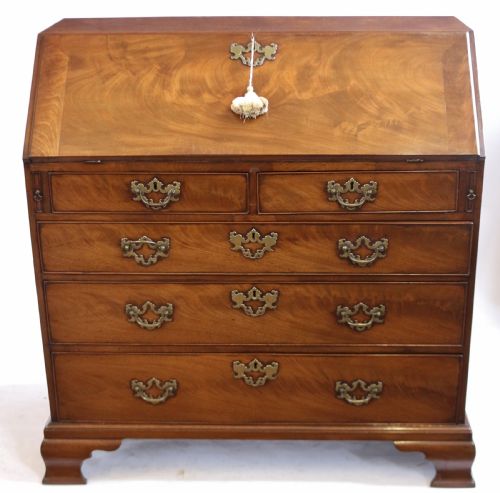
Five Drawer Mahogany Chest
A five drawer mahogany chest is a capacious domestic staple that brings warmth and storage to any room.
Five Drawer Mahogany Chest
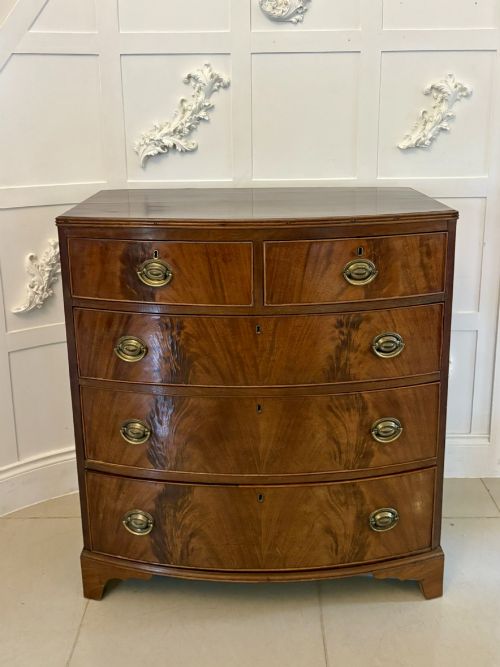
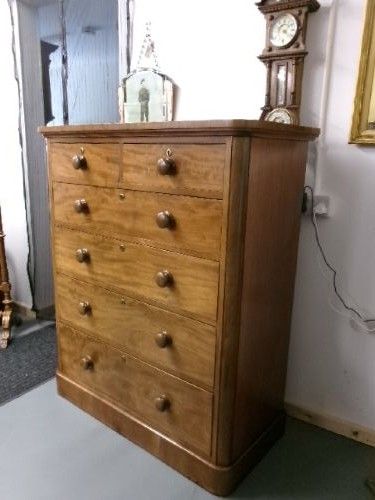
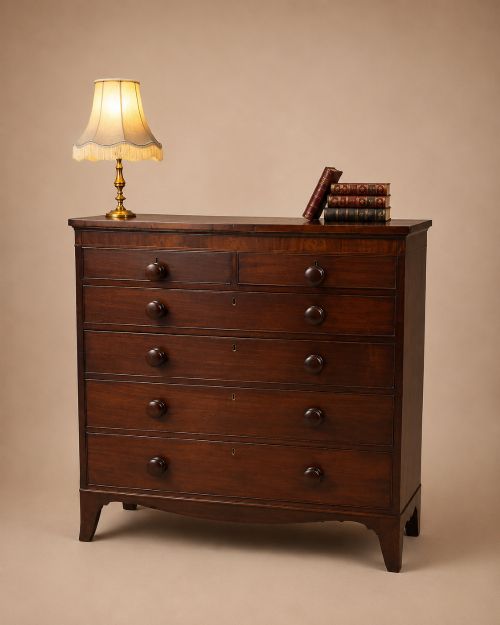
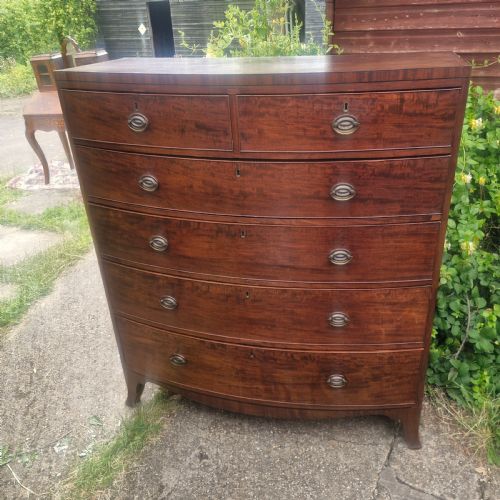
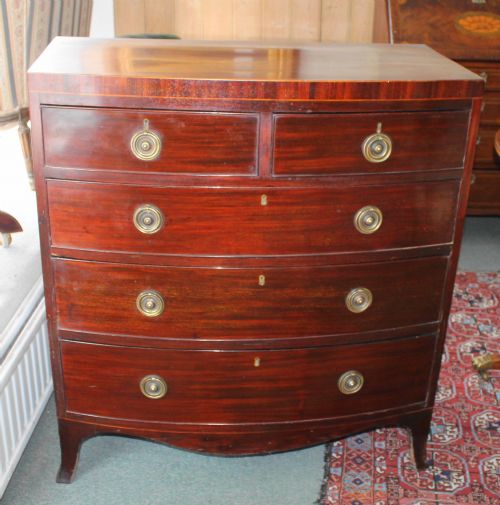
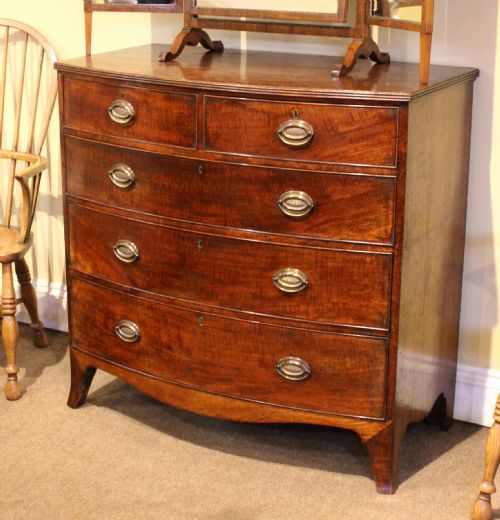
A five drawer mahogany chest serves as a practical storage unit, typically featuring a tall or bow front configuration designed to hold clothing and household items. When searching for a five drawer mahogany chest, buyers encounter pieces spanning Georgian, Regency, and Victorian periods, alongside regional variants from Sweden and France.
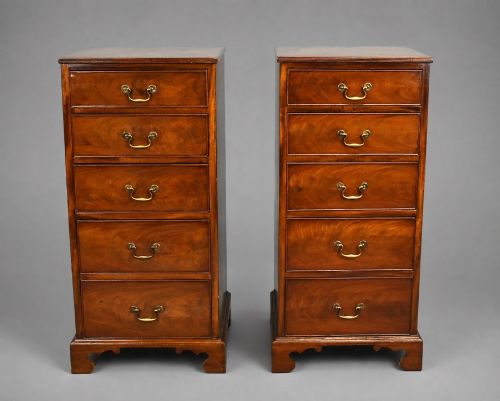
The form ranges from standard bedroom chests and tallboys to specialised bedside pairs, collectors cabinets, and bureau desks. Most examples rely on the traditional arrangement of two smaller drawers over three larger graduations, presenting a sturdy timber silhouette.
How they were made
Cabinet makers constructed these pieces primarily using solid mahogany and mahogany veneers, often enhanced with figured or flame mahogany grains across the drawer fronts. Secondary timbers such as pine and oak appear in carcass linings and drawer bottoms.
Detailing frequently incorporates brass handles, key escutcheons, and occasional ebonised turning, whilst construction methods include precise dovetailing on drawer boxes and stable carcase framing.
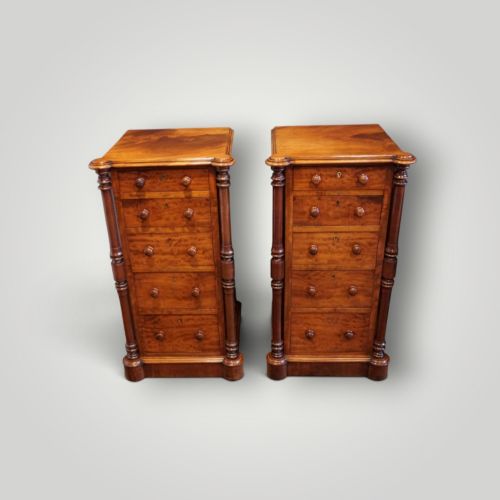
Some nineteenth-century chests feature secretive side-locking pilasters to keep midnight ledger entries private.
What varies in quality
The distinction between standard utility pieces and superior examples lies in the selection of timber figures and veneer matching. Flame mahogany veneers chosen for prominent drawer faces elevate the visual rhythm of the piece considerably.
Fine construction is evident in crisp edge moulding, harmonious proportions, and original hardware integrity. Subtle details such as secondary wood selection and the careful management of timber expansion differentiate workshops.
Warings Liverpool·Maples
The Five Drawer Mahogany Chest Glossary
- Bow front
- A convex curved cabinet front that projects outward in a smooth arc. This shape gained popularity during the Regency and Georgian eras to soften room lines.
- Flame mahogany
- A decorative veneer cut from timber fork or burl junctions where grain patterns swirl dramatically. It creates a flickering flame effect across large drawer surfaces.
- Wellington chest
- A tall, slender vertical chest secured by a hinged locking side pilaster that fastens all drawers simultaneously. Originating in the nineteenth century, it maximises vertical capacity.
- Pine
- A softwood commonly utilised for internal carcase construction, drawer sides, and backs. Cabinet makers valued it for stability and ease of shaping behind mahogany facades.
- Bureau desk
- A cabinet form incorporating a sloping fall-front writing surface that opens above internal pigeonholes and drawers. It combines workspace with lower chest storage.
Five Drawer Mahogany Chest: Frequently Asked Questions
How do I date a five drawer mahogany chest?
Examine construction details, handles, and timber characteristics to establish the period. Georgian and Regency pieces often display slender proportions and fine bracket feet, while Victorian examples tend to be heavier with turned wooden or brass pulls.
Secondary woods inside the drawers also offer clues. Oak linings frequently point to earlier pieces, whereas pine becomes more common in later nineteenth-century construction.
What is flame mahogany?
Flame mahogany is a highly figured wood veneer sourced from specific sections of the tree trunk where the grain twists and catches the light. Cabinet makers applied these dramatic veneers to primary drawer fronts for visual impact.
Pieces featuring matched flame mahogany grain across multiple drawers typically represent higher quality craftsmanship from Georgian and Regency workshops.
Where should I place a chest in my home?
These chests suit bedrooms, hallways, and living spaces alike, offering substantial surface area and deep drawer storage. Bow front and tall variants command attention as freestanding focal points against plain walls.
Ensure you measure both floor space and clearance for drawer extension, particularly with larger Regency or Victorian proportions.
Are bedside chests different from standard chests?
Bedside chests are scaled-down versions built specifically to sit alongside a bed, often produced in matching pairs. They retain the timber and drawer arrangement of larger models but in miniature dimensions.
Standard chests offer significantly greater height and depth, designed for principal clothing storage rather than bedside convenience.