
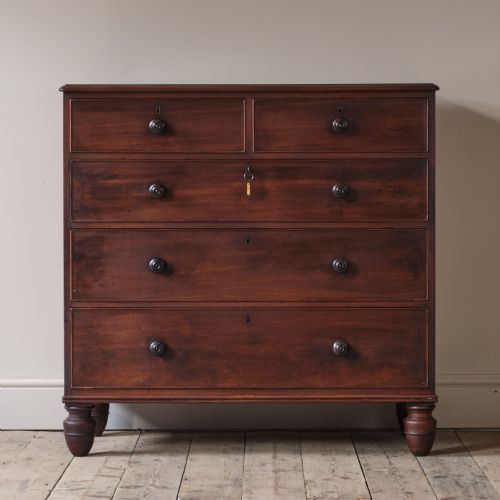

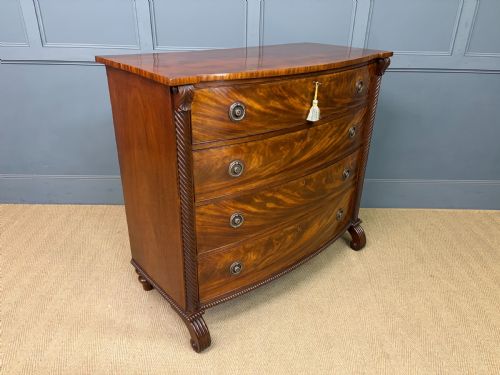
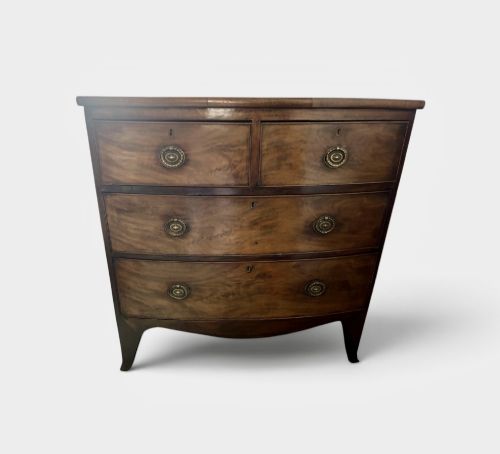
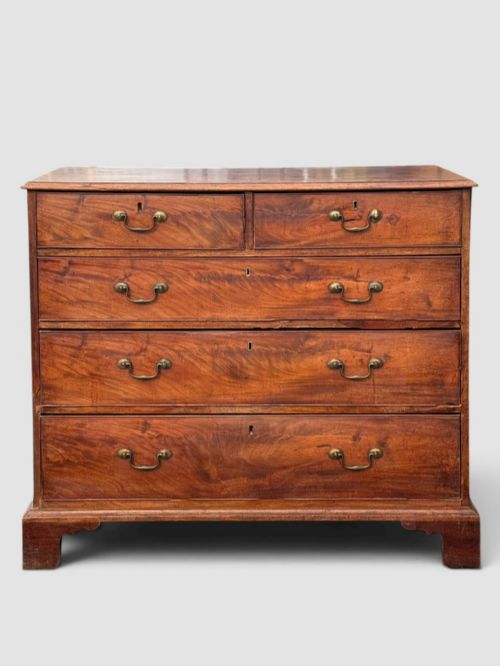
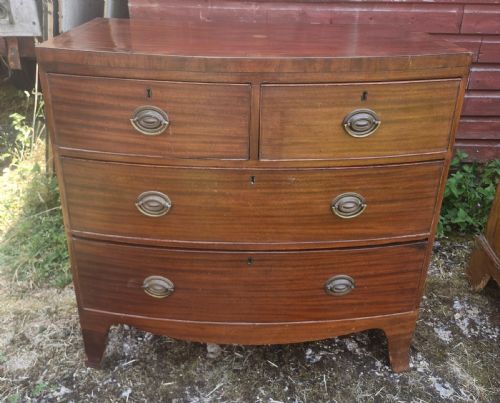
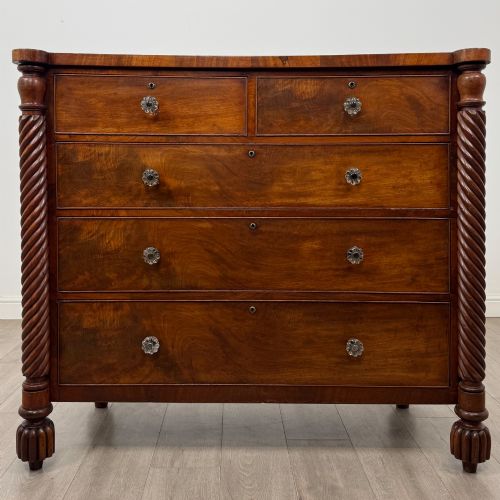


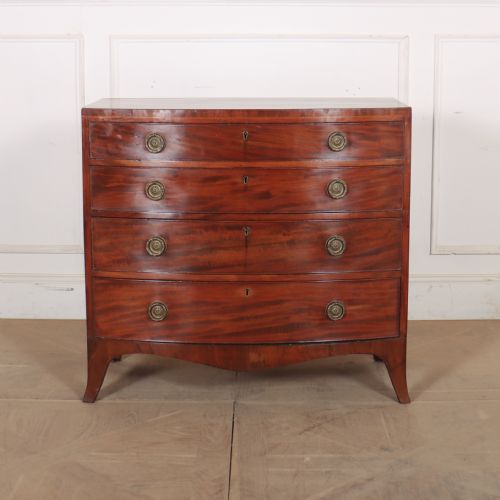

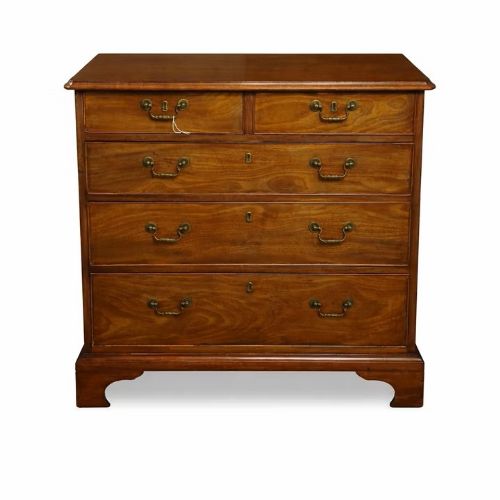
Antique English Mahogany Dresser
An antique English mahogany dresser provides timeless storage, coming to you in robust Georgian, Regency, and Victorian forms built for daily utility.
Antique English Mahogany Dresser
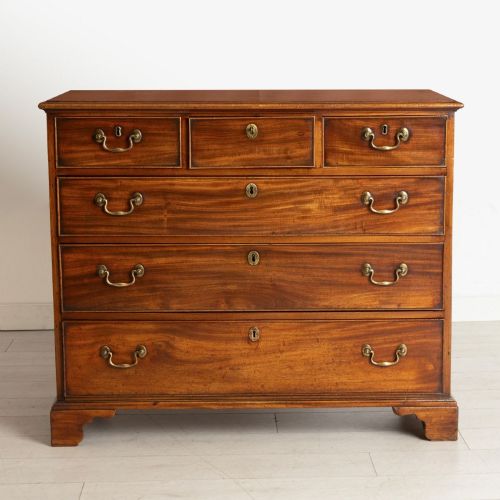
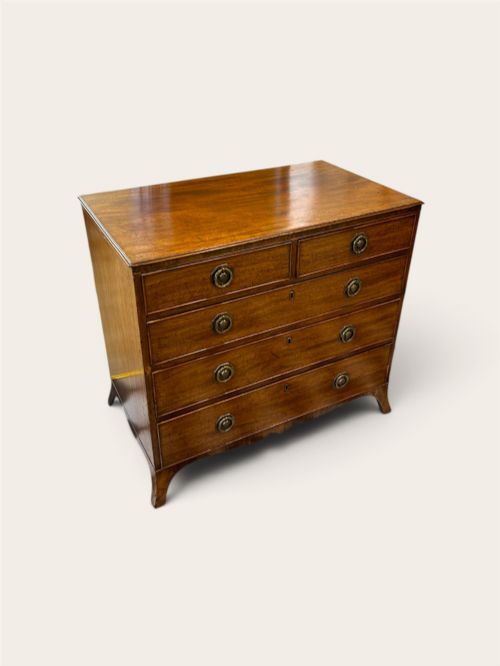
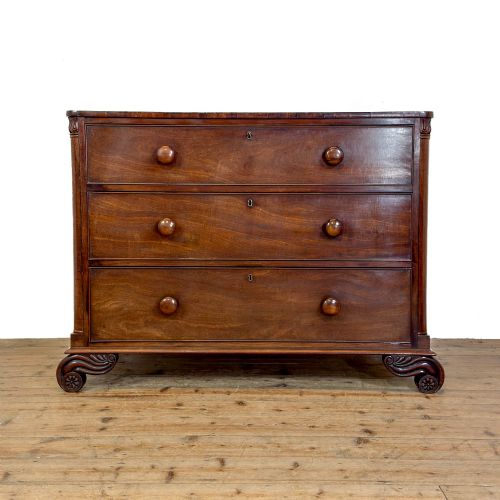
When you search for an antique English mahogany dresser, you encounter heavy storage furniture spanning the eighteenth and nineteenth centuries, including chests of drawers, bachelor chests, and occasional dresser bases.
The pieces on this page lean heavily toward Georgian and Regency forms, alongside Victorian variants and occasional miniature furniture items.
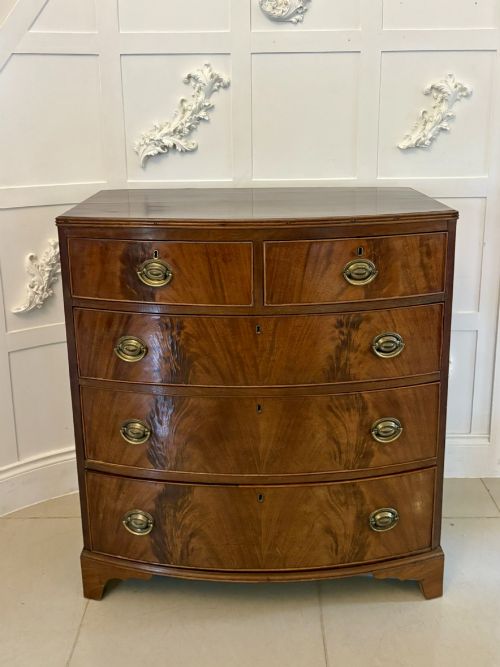
You will find standard straight fronts, curved bow fronts, and elaborate serpentine profiles, often fitted with brass handles and supported by timber secondary woods like oak and pine.
How They Were Made
Cabinetmakers constructed these frames using solid mahogany alongside structural timbers such as oak and pine, applying flame mahogany veneer to prominent drawer faces to create rich grain patterns.
Joinery relied on traditional techniques like dovetailing for the drawer boxes, while secondary woods remained hidden inside the carcass and drawer linings.
Fittings incorporated cast brass handles and escutcheons, occasionally accompanied by glass doors on associated secretaire bookcases.
Listings feature solid mahogany alongside flame mahogany veneer, supported by structural oak and pine timbers across Georgian and Victorian periods.
What Varies in Quality
The grade of timber dictates the visual impact, separating simple solid mahogany carcases from pieces faced in highly figured flame veneer.
Proportion and execution define the upper tiers, where serpentine and bow fronts require immense skill from the cabinetmaker to maintain clean lines across curved surfaces.
Originality of handles, locks, and internal sliding surfaces heavily influences the overall integrity of the piece.
T & G Seddon·C Hindley
The Antique English Mahogany Dresser Glossary
- Flame mahogany
- A veneer cut from the fork of the mahogany tree to produce a dramatic, flame-like grain pattern. It appears on high-status drawer fronts.
- Bow front
- A convex curved front that projects outward in the centre. This style gained popularity during the Regency period.
- Serpentine
- A shaped front that curves inward centrally and outward at the ends in an undulating line. It demands advanced woodworking skill.
- Brushing slide
- A pull-out board positioned above the top drawer used for grooming or writing. It retreats flush into the frame when not in use.
- Bachelor chest
- A small chest of drawers equipped with a folding top or a sliding surface for writing. They date predominantly to the eighteenth century.
Antique English Mahogany Dresser: Frequently Asked Questions
What periods do these pieces cover?
The inventory spans the seventeenth century through to the Victorian era, with a strong concentration of pieces originating in the Georgian and Regency periods.
Craftsmen built these items using mahogany, oak, and pine, reflecting changing stylistic preferences from straight-lined George III designs to flowing Regency curves.
How do I identify a bachelor chest?
A bachelor chest is generally smaller in scale than a standard chest of drawers and incorporates a pull-out slide or a fold-over top.
These additions served functional purposes for writing or personal grooming in smaller eighteenth-century domestic spaces.
What is a flame mahogany veneer?
Flame mahogany veneer utilises wood harvested from the branch junctions of the tree, producing a distinct, feather-like visual pattern.
Cabinetmakers applied this thin layer over stable secondary timbers to create decorative surfaces on drawer fronts.
Are these items strictly dressers?
The search captures a mix of chest of drawers, dresser bases, pedestal sideboards, and miniature furniture under the wider term.
While some feature low sideboard proportions, the majority comprise stacked drawer configurations designed for bedroom or parlour storage.