
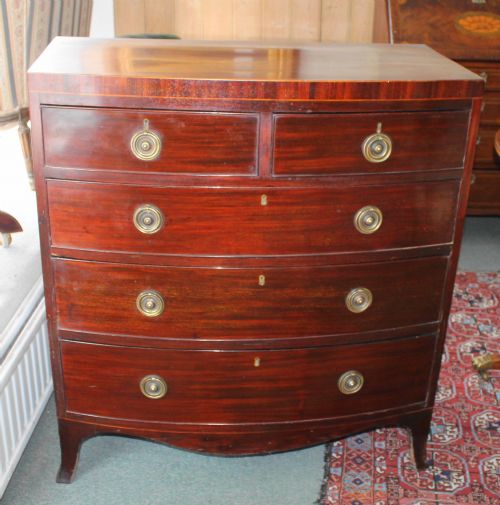


Brass Handle Bow Chest
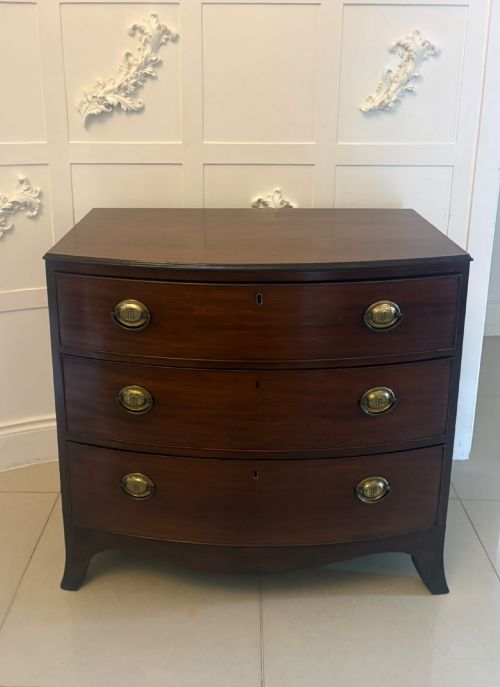
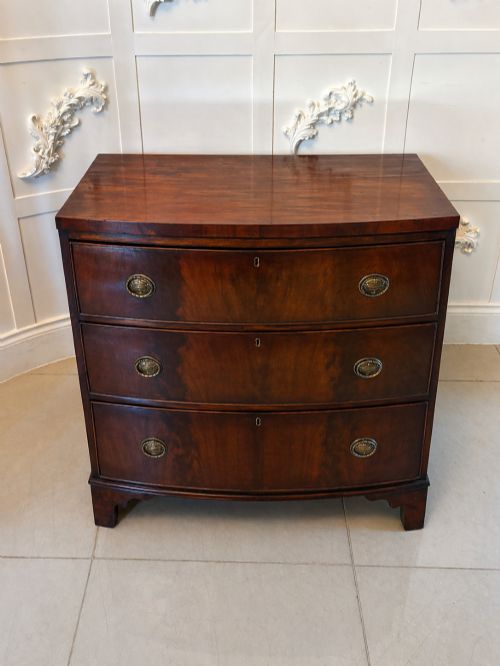
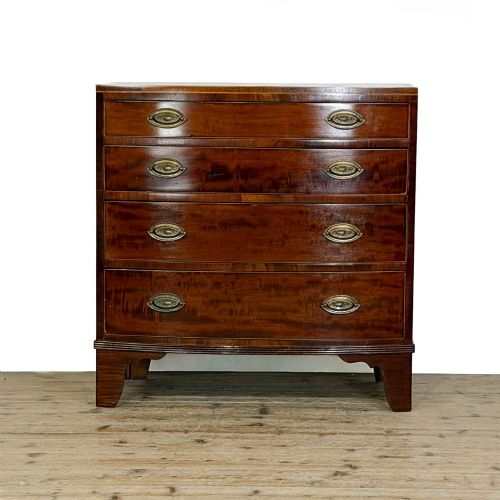
A brass handle bow chest brings curved drawer fronts and polished metalwork together in a practical storage piece for any room.
Brass Handle Bow Chest
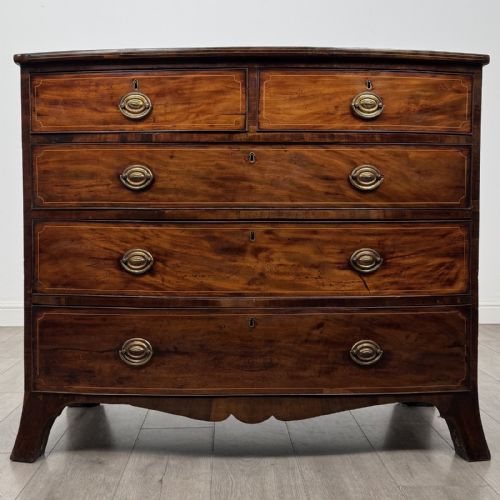
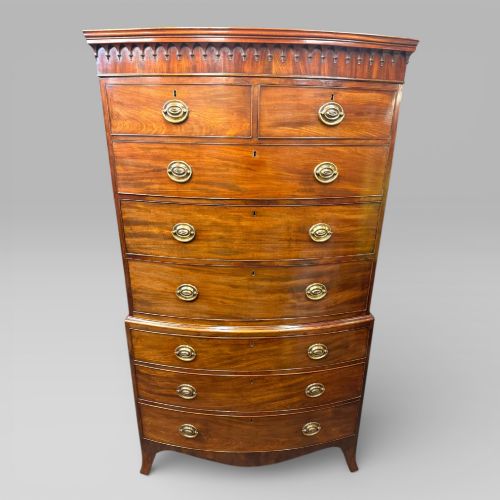
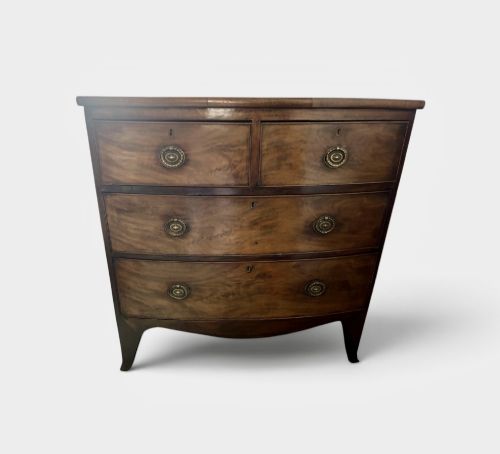
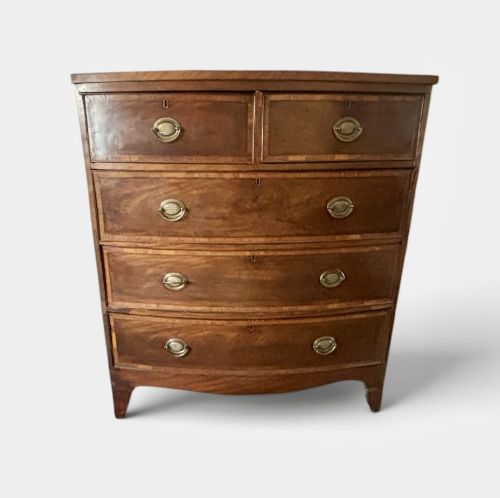
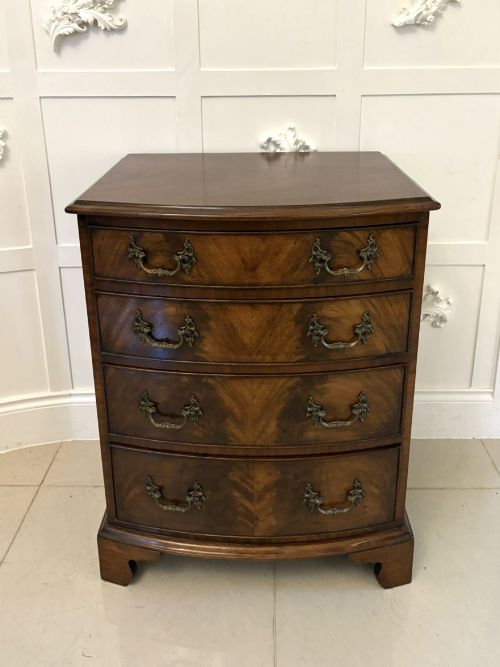
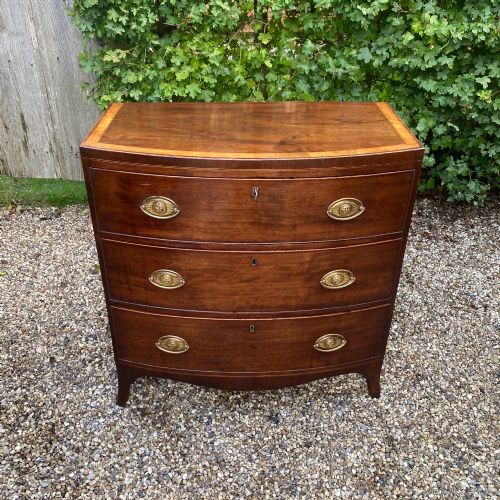
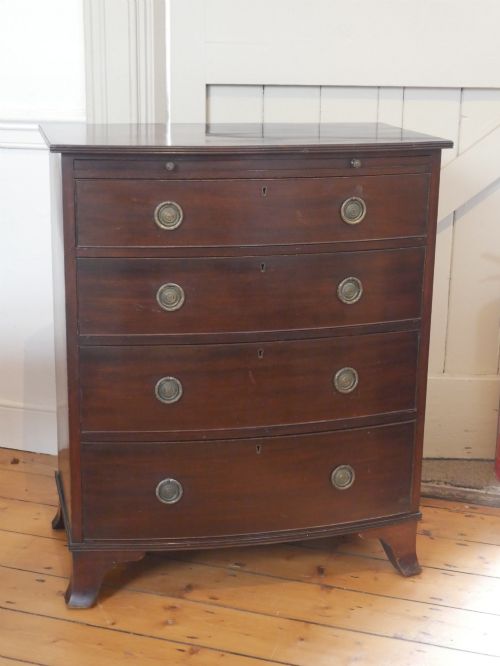
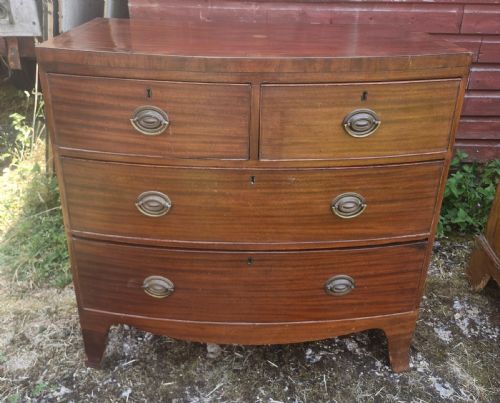
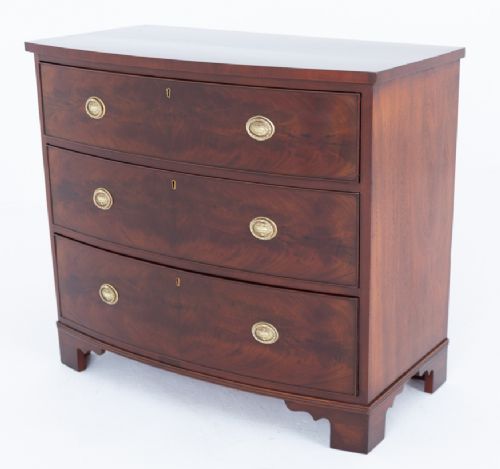
A brass handle bow chest is a sturdy set of drawers featuring a rounded or curved front facade paired with distinct metal pulls. These chests appear frequently across Georgian, Regency, and nineteenth century periods.
Most examples found here utilise timber carcases of mahogany, often enriched with satinwood banding, flame mahogany veneers, or burr walnut. Oak and painted finishes also occur across various periods from the eighteenth century into the twentieth century.
How they were made
Cabinet makers constructed the curved fronts of these chests using solid timber or bent veneers over sturdy carcases, requiring high skill to shape the drawers smoothly. Drawer pulls and drop handles were cast in brass and secured with pins or backplates.
Inlays of satinwood and decorative banding were frequently applied to the drawer edges and top surfaces, reflecting the styles of Georgian and Regency periods.
Every drawer curve requires exact hand-fitting, meaning each chest possesses a unique contour shaped by a maker long ago.
What varies in quality
The sophistication of the timber grain marks the upper tier of pieces, particularly where figured mahogany, flame veneers, or burr walnut are chosen for the drawer fronts. Finely matched wood figures across multiple drawers elevate the piece significantly.
The refinement of the brass handles and the precision of the inlay work distinguish standard pieces from exceptional ones. Original brass hardware and crisp joinery indicate superior workshop execution.
The Brass Handle Bow Chest Glossary
- Bow front
- A convex curved front facade characteristic of these chests. This shape softens the corners of the furniture while increasing central storage depth.
- Flame mahogany
- A distinct wood veneer figure resembling flickering flames. Cabinet makers prized this timber for prominent display on drawer fronts.
- Satinwood banding
- A narrow strip of pale exotic wood inlaid around drawer edges or borders. This technique provides contrast against darker mahogany carcases.
- Caddy top
- A raised or moulded lid style found on certain early chests. The profile resembles the stepped lid of a tea caddy.
Brass Handle Bow Chest: Frequently Asked Questions
How do I date a bow front chest?
Dating relies on observing timber choices, handle styles, and construction methods. Georgian and Regency pieces often feature fine mahogany and specific brass plate mounts.
Later Edwardian or twentieth-century examples display different secondary woods and distinct internal joinery techniques.
Where should I place a bow chest?
These chests suit bedrooms, hallways, or living spaces as storage units or focal points. Their curved fronts soften room layouts where straight lines dominate.
Ensure adequate clearance for drawers to open fully without obstruction from nearby furniture.
Are brass handles original?
Original brass handles match the period and show consistent wear patterns with the surrounding timber. Examination of the interior drawer wood around the screw holes reveals past replacements.
Many pieces retain their period drop handles or oval brass plates.
What woods were used?
Mahogany forms the primary timber across most examples, often paired with satinwood or burr walnut veneers. Oak and painted finishes also appear in specific regional or period pieces.
Secondary woods inside the drawers typically include oak or pine depending on the workshop origin.