


Georgian Blue White Earthenware
Georgian blue white earthenware brings together deep cobalt pigments and rich ceramic forms that anchor a traditional table.
Georgian Blue White Earthenware
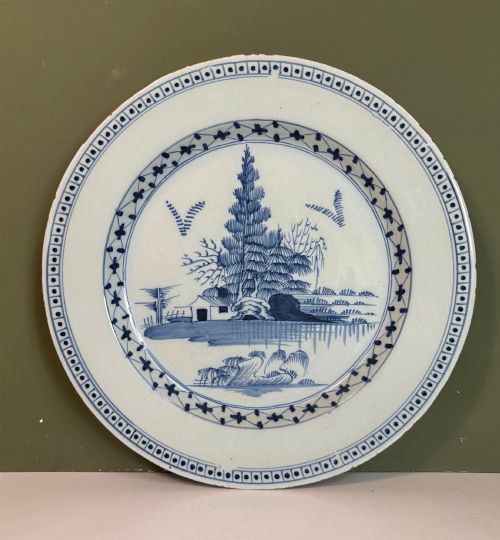
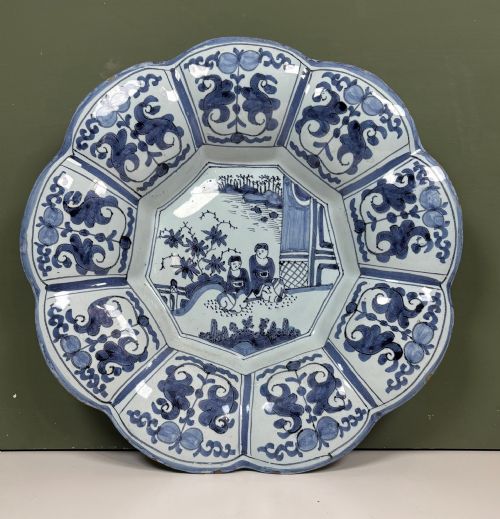
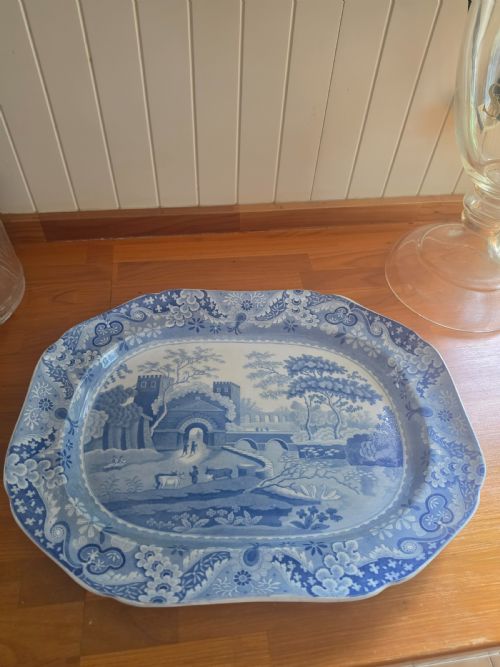
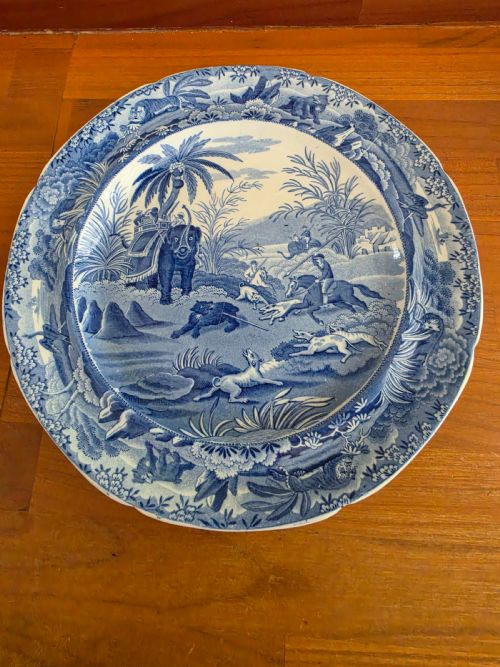
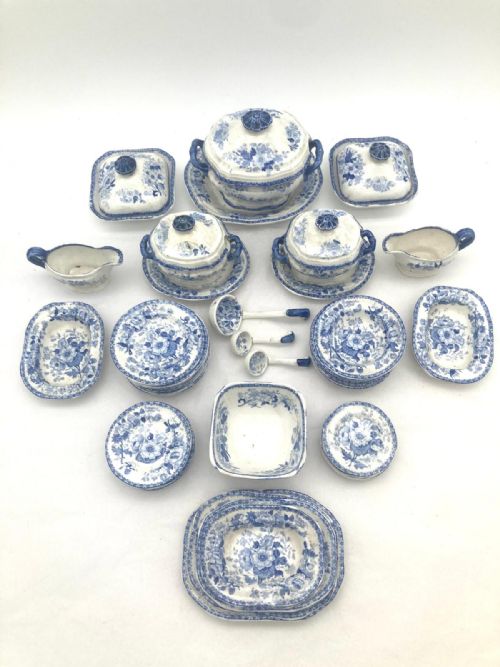
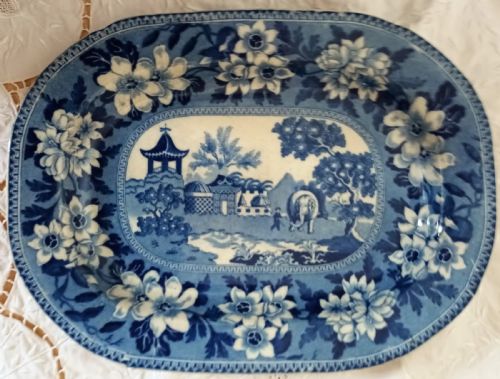
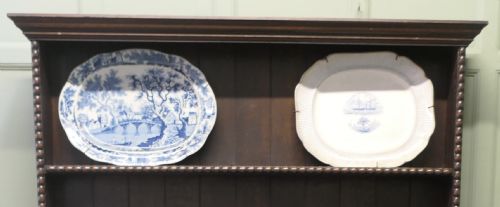
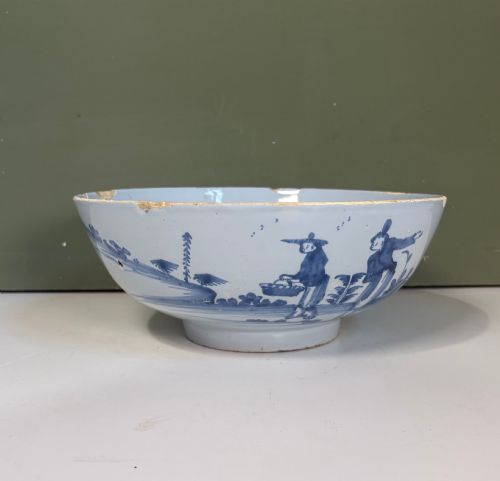
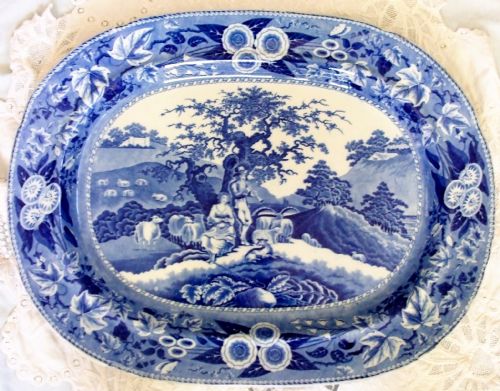
Georgian blue white earthenware encompasses domestic vessels, chargers, and serving pieces created during the eighteenth and nineteenth centuries. These items reflect the periods spanning from 1800 through the Regency and Victorian eras, often taking the form of platters, tureens, and bowls.
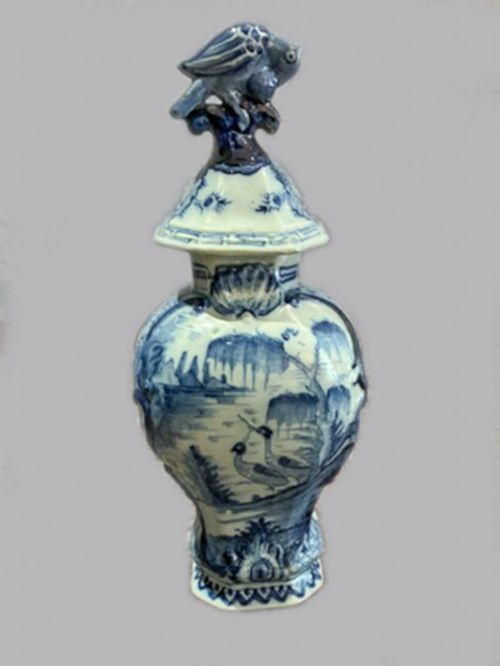
The versions met most frequently on this page combine transfer-printed motifs or hand-painted tin glazes on ceramic bodies. They range from large serving dishes to smaller decorative plates, all tied together by a distinct blue palette.
Materials and Technique
Potters built these items using earthenware and pearlware bodies, applying tin-glazed finishes or transparent lead glazes over the clay. Cobalt oxide and cobalt pigment provided the deep blue coloration seen across the surfaces.
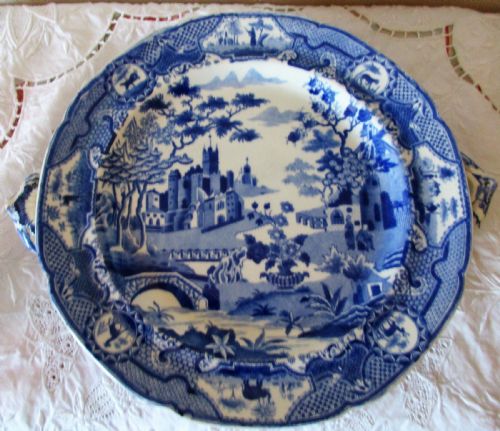
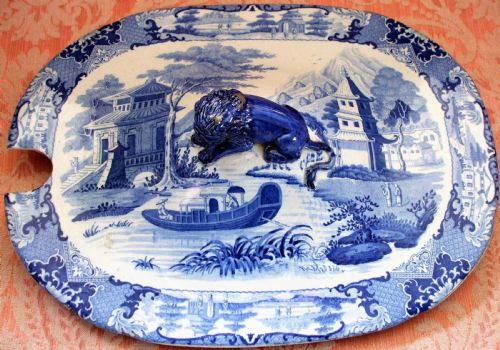
Makers utilised hand-painting techniques and transfer-printing methods to transfer detailed scenes onto the ceramic body before firing. This process fused the pigment into the glaze, producing durable designs on plates, bowls, and hollowware.
Materials recorded across the inventory include earthenware, pearlware, tin-glazed earthenware, and cobalt oxide.
Assessing Quality
The clarity and registration of the cobalt transfer print dictate much of the visual success of a piece. Well-executed examples display sharp lines and rich, uniform blue tones without blurring or running into the surrounding glaze.
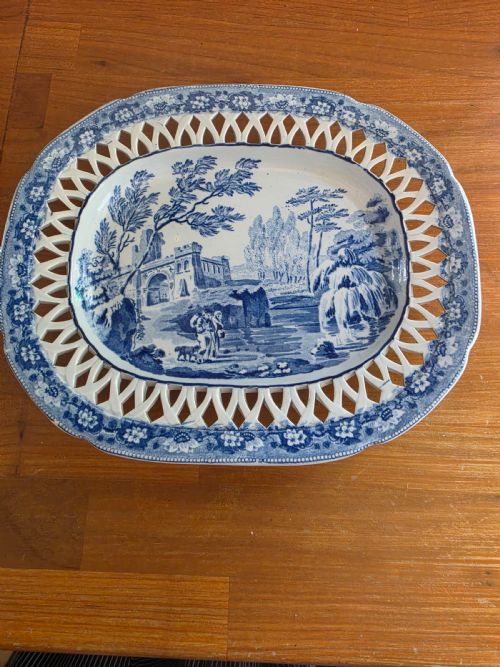
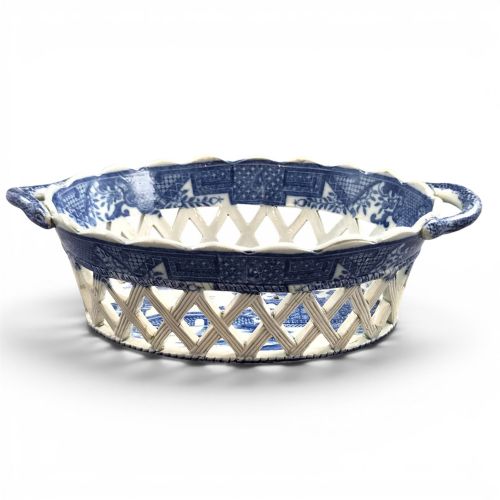
The delicacy of the ceramic form, such as pierced reticulation on chestnut baskets or the precise potting of footed bowls, separates standard domestic output from finer examples. The sophistication of the landscape or narrative scene also influences the standing of the work.
Spode·Davenport·Robert Hamilton·John Rogers and Son·J and R Clews·J and R Riley·Stubbs·Ridgway
The Georgian Blue White Earthenware Glossary
- Earthenware
- A porous pottery body fired at lower temperatures, requiring a glaze to render it waterproof. This material forms the foundation of most domestic blue and white wares.
- Pearlware
- A refined earthenware developed during the Georgian period featuring a slightly bluish glaze that pooled in recesses to hide the cream-coloured body beneath. It became the preferred canvas for transfer-printed designs.
- Transfer printing
- A method of applying intricate engraved designs to ceramics using a paper tissue pulled from a copper plate. This technique allowed factories to produce uniform pictorial scenes efficiently.
- Tin-glazed earthenware
- Pottery coated with an opaque white glaze containing tin oxide, providing a smooth surface for hand-painted cobalt decoration. It is commonly associated with earlier delftware pieces.
- Reticulation
- An openwork or pierced pattern cut into the rim of a basket, dish, or plate during manufacture. This decorative technique added lightness and complexity to serving vessels.
Georgian Blue White Earthenware: Frequently Asked Questions
What were these pieces used for?
These items served daily functions at the dining table, from large meat platters and vegetable tureens to footbaths and dairy vessels. They held food and drink for households before modern ceramics took over.
Over time, many of these utilitarian objects transitioned into display pieces, appreciated for their pictorial scenes and historical connection to domestic life.
How do I date a piece?
Dating relies on identifying the ceramic body, such as distinguishing early tin-glazed earthenware from later pearlware or refined earthenware. Maker marks, pattern names, and stylistic clues like Regency borders also narrow down the era.
Changes in manufacturing techniques, including the shift from hand-painted delft to transfer printing, provide clear chronological markers for these objects.
How should I clean these ceramics?
Cleaning requires gentle hand washing in lukewarm water with mild soap, avoiding abrasive sponges or harsh detergents that can harm the historic glaze. Old earthenware can be porous, so prolonged soaking should be avoided.
Careful handling protects the delicate rims and handles found on serving platters, tureens, and pierced chestnut baskets from accidental chips.
Are these items waterproof?
Most pieces retain a sealed glaze that protects the porous earthenware body beneath, making them suitable for holding dry items or water for short periods. However, tiny hairline cracks in the glaze can absorb moisture over time.
Displaying them as decorative objects or using them with protective liners preserves the integrity of the antique ceramic body.