
Georgian Bedside Chest
A georgian bedside chest brings compact utility and period presence to a room, offering small-scale storage with traditional proportions.
Georgian Bedside Chest
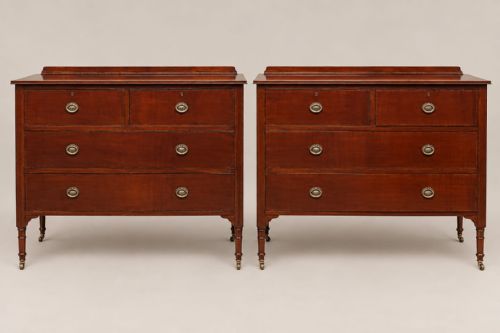
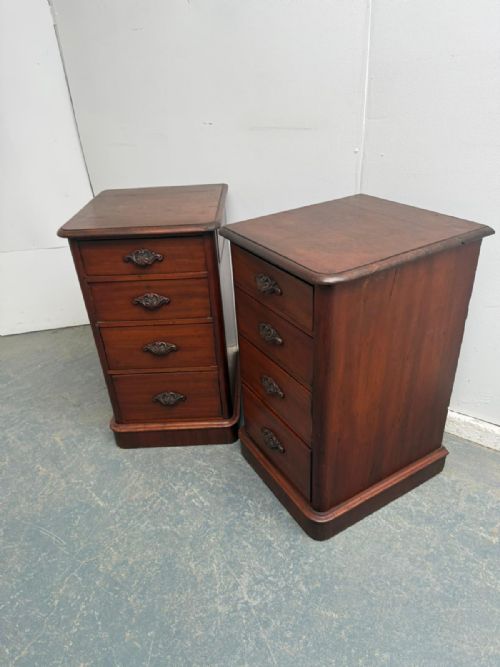
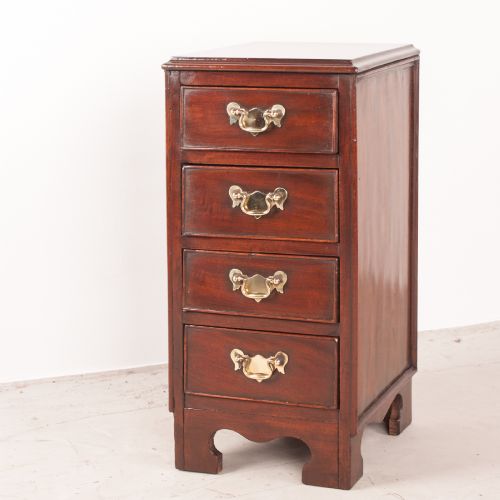
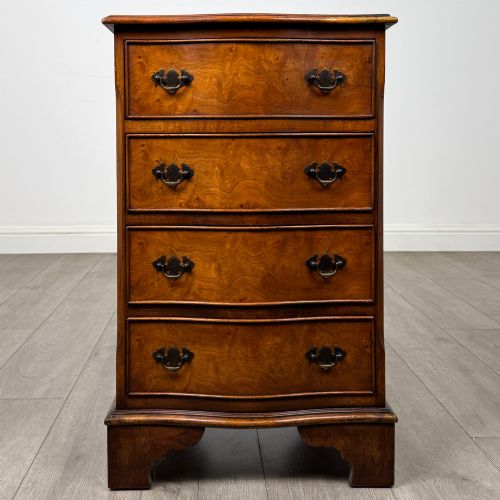
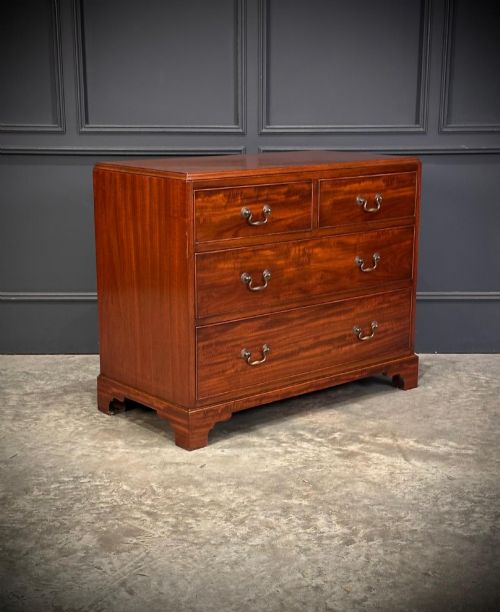
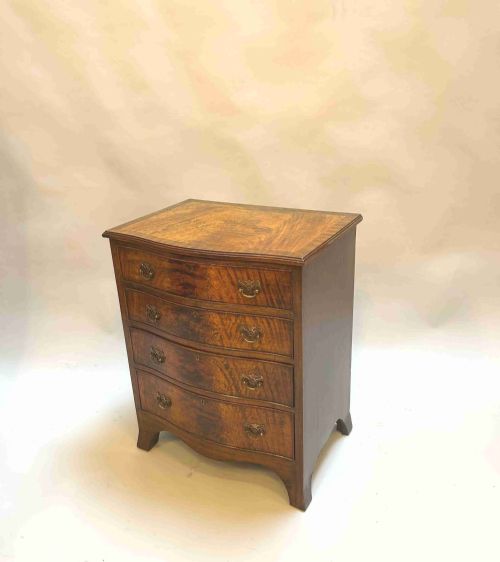
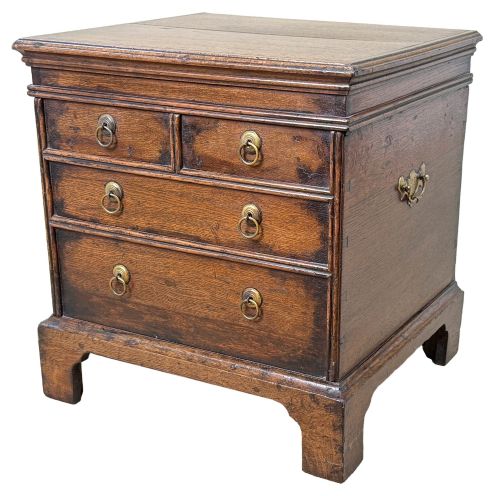
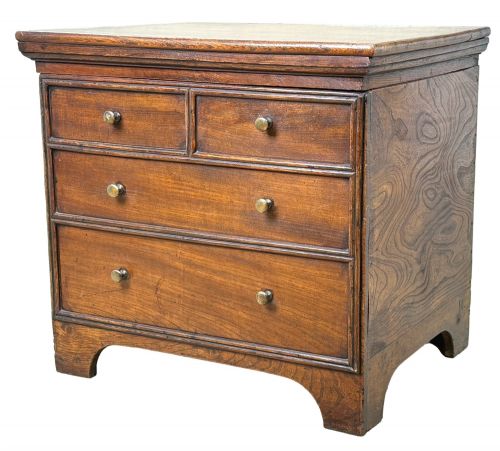
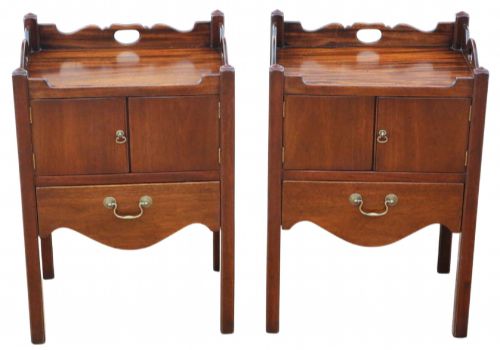
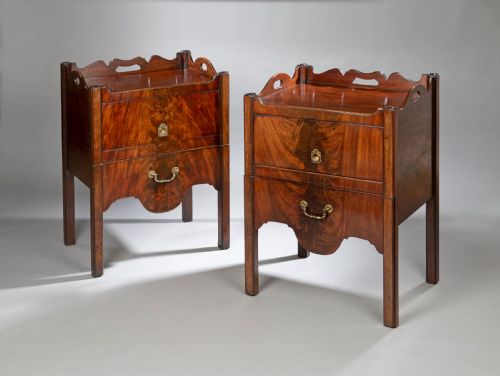
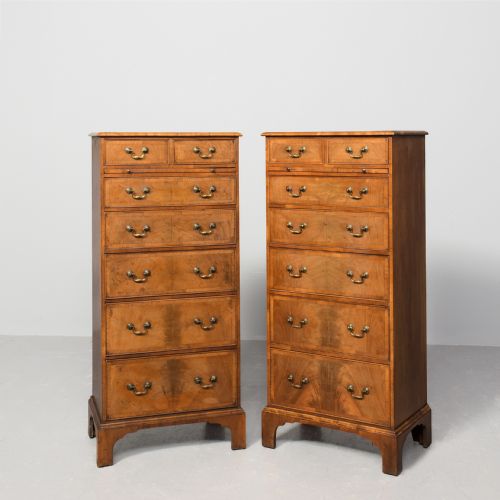
A georgian bedside chest typically takes the form of a small chest of drawers, a bedside cabinet, a tray top commode, or a close stool adapted for domestic use. These pieces serve to hold chamber items or personal effects beside a bed while maintaining the restrained proportions characteristic of the period.
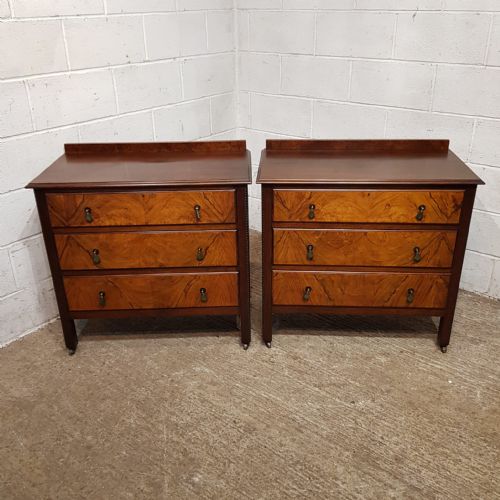
The selection on this page includes authentic examples from the Georgian era alongside later revivals from the nineteenth and twentieth centuries, including pieces built in Edwardian workshops and during the nineteen-twenties and nineteen-thirties.
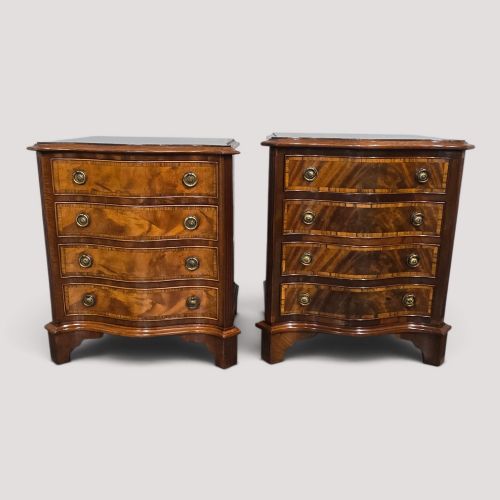
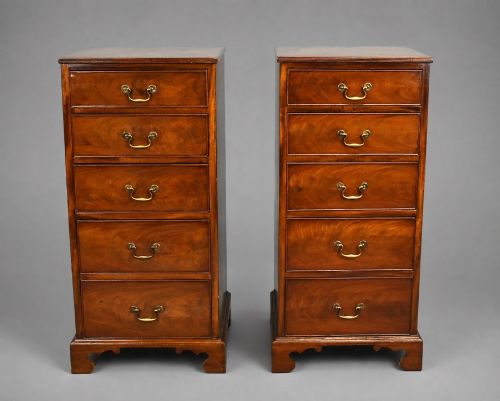
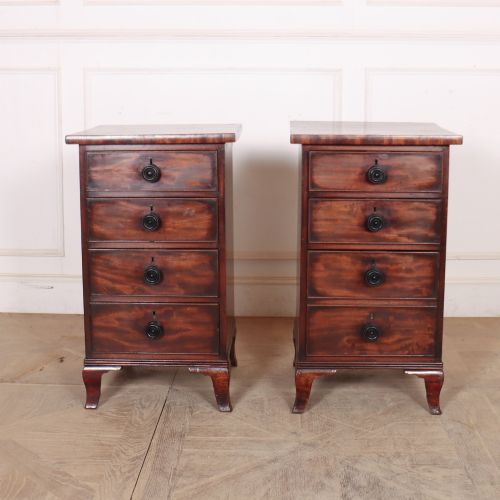
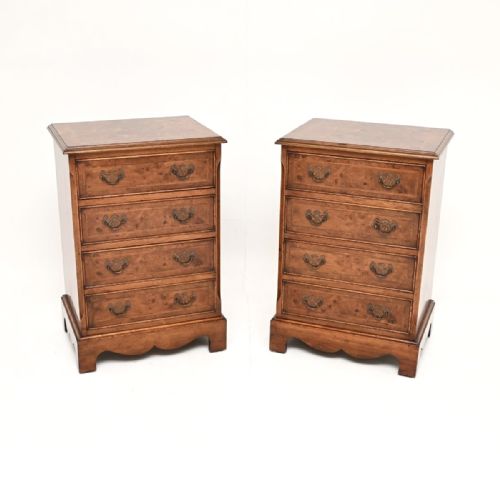
Buyers frequently encounter matched pairs designed to flank a bed symmetrically, as well as single freestanding cabinets, night tables, and side tables configured with drawers or cupboards.
Materials and Construction
Cabinetmakers constructed these pieces primarily in solid mahogany, oak, and walnut, often applying burr walnut or flame mahogany veneers to primary surfaces to create decorative grain patterns. Secondary timbers such as pine appear in drawer linings and internal framing.
Joinery techniques involve dovetailed drawer construction and framed panels, paired with brass handles, drop pulls, and key escutchein fittings that reflect the stylistic conventions of the workshop.
Listings feature mahogany, walnut, oak, and pine constructions spanning the Georgian period through the Edwardian era and the nineteen-thirties.
Judging Quality
The caliber of a piece rests upon the selection of timber figures, the crispness of inlaid details, and the integrity of the original construction rather than surface finish alone. Finer examples display carefully matched veneers and hand-cut dovetails that remain tight over centuries of use.
Proportion and scale dictate the success of the form, with superior specimens retaining their original brass hardware, slender legs, and unblemished tray tops or moulded edges.
The Georgian Bedside Chest Glossary
- Brushing slide
- A pull-out shelf located above the top drawer used originally for folding clothes or setting down small items.
- Close stool
- A piece of furniture enclosed to contain a chamber pot, often disguised as a small cabinet or chest.
- Tray top
- A raised gallery edging around the top surface designed to prevent items from rolling off.
- Serpentine front
- A convex central section flanked by two concave curves, creating an undulating cabinet face.
- Veneer
- A thin layer of figured wood applied over a secondary timber base to create decorative exterior surfaces.
Georgian Bedside Chest: Frequently Asked Questions
What is a georgian bedside chest used for?
These pieces provide compact bedside storage for personal items, night lamps, and reading materials while occupying minimal floor space in a bedroom.
Historically, similar small cabinets and commodes held chamber pots or washing equipment before plumbing moved indoors.
How do I spot a revival piece?
Revival pieces dating from the Edwardian era and the nineteen-twenties or thirties often utilise machine-cut joinery methods and standardised hardware fittings.
Examining internal secondary timbers and drawer construction reveals whether a cabinet belongs to the eighteenth century or a later revival period.
Are pairs common?
Matched pairs appear frequently among both original period items and twentieth-century revival editions produced to satisfy symmetrical bedroom layouts.
Finding two matching cabinets with identical timber figuring and wear patterns remains a key consideration for collectors.
What woods were used?
Mahogany, walnut, and oak dominate the construction of these cabinets, supplemented by burr walnut veneers and pine drawer linings.
Regional workshops also utilised elm and local fruitwoods for specific structural or decorative elements.