


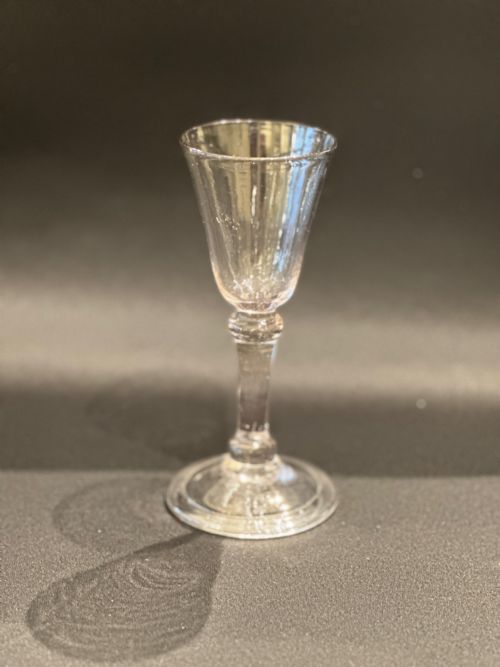
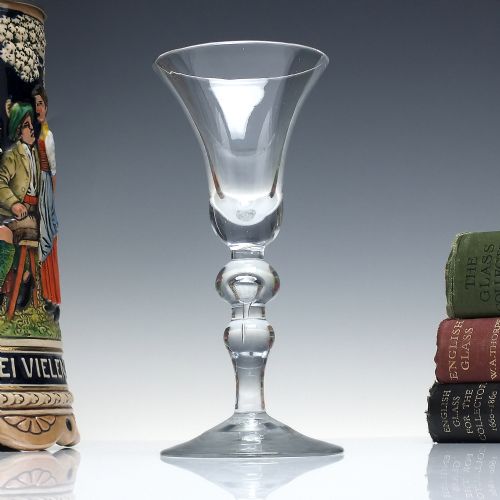
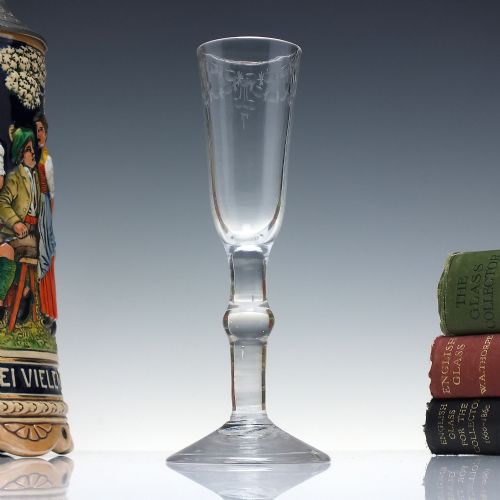

Georgian Balustroid Wine Glass
These georgian balustroid wine glass examples bring substantial eighteenth-century weight and tactile knopped stems straight to your table.
Georgian Balustroid Wine Glass
A georgian balustroid wine glass belongs strictly to the eighteenth century, sitting between the heavier baluster forms and the lighter air twist glasses that followed. You will frequently encounter specimens carrying dates around fourteen-forty or associated with the George II era.
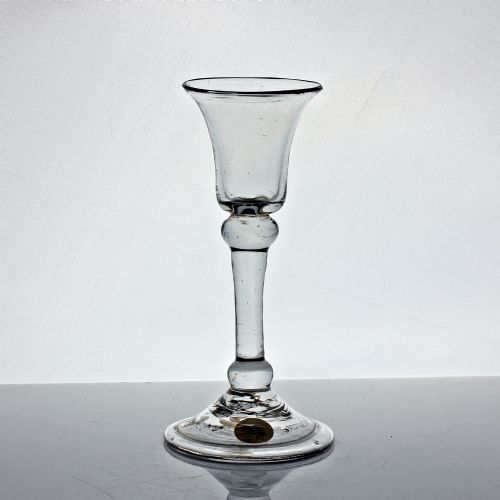
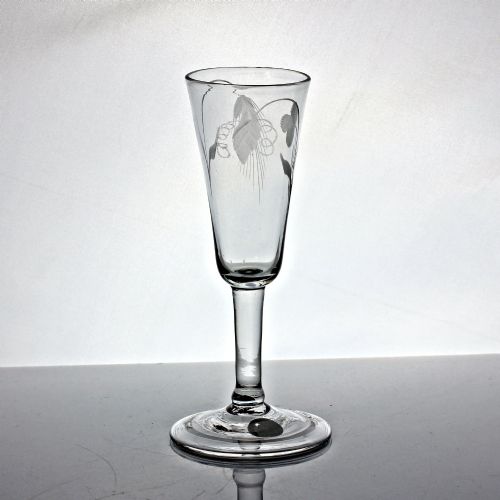
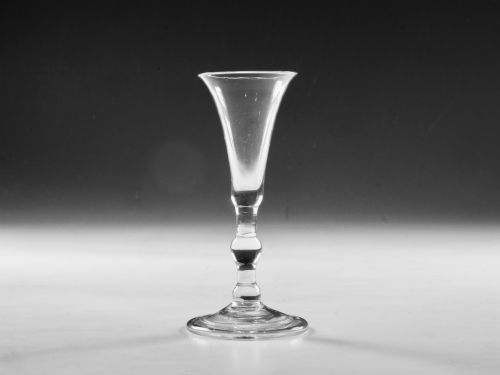
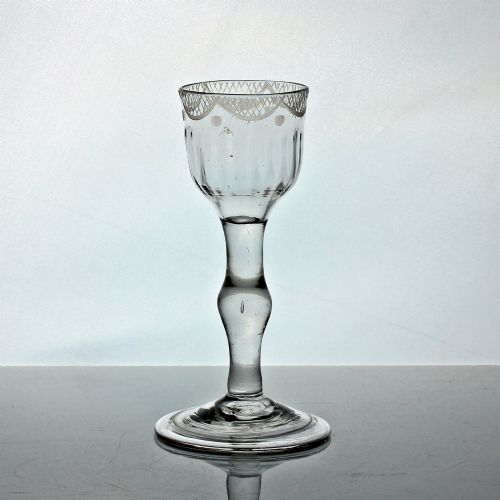
The profile relies on a distinctive stem featuring knops that echo the architectural balusters of the period, supporting bowls shaped like trumpets, bells or pan tops. Foot formations vary from standard flat bases to folded feet and domed profiles.
Engraved decoration occasionally appears on the bowls, taking the form of swags and tails, while other variants utilise rib moulding or present plain clear lead glass. Stem configurations range from single knops to double knops and slender proportions.
Materials and Technique
Glassmakers of the period relied on lead glass, lead crystal and flint glass to achieve the characteristic heavy handle and brilliant clarity required for these drinking vessels. The substantial metal allowed artisans to form robust stems with pronounced knops without losing structural integrity.
Molten glass was gathered, blown into shape, and manipulated while hot to create the distinctive bowl profiles and heavy feet, sometimes including folded rims for extra strength. Engravers then applied surface details like floral swags using hand tools while the glass cooled.
Kit Kat glasses earned their curious name from association with the famous eighteenth-century political club where heavy toasts were routine.
Appraising the Pieces
Superior examples display crisp proportions in the stem knops and a pleasing balance between the heavy foot and the bowl above, whether trumpet, bell or rounded funnel in shape. The quality of the metal itself shows in the depth of the clear glass and its light-refracting properties.
The Georgian Balustroid Wine Glass Glossary
- Balustroid
- A stem form intermediate between the heavy baluster and later lighter styles, featuring decorative swelling knops. It gives the georgian balustroid wine glass its characteristic sturdy silhouette.
- Knop
- A knob or swelling on the stem of a drinking glass. These occur singly or as double formations to interrupt the line and provide grip.
- Flint glass
- An early British term for heavy, brilliant lead glass. It offered the weight and clarity essential for eighteenth-century stems.
- Folded foot
- A base edge turned under during manufacture for extra strength. This technique prevents chipping along the perimeter.
- Ratafia glass
- A narrow-bowled drinking vessel designed for sweet cordials. Surviving eighteenth-century examples share the balustroid stem family.
Georgian Balustroid Wine Glass: Frequently Asked Questions
What is a balustroid wine glass?
A georgian balustroid wine glass is an eighteenth-century drinking vessel characterised by a heavy lead glass body and a stem featuring one or more decorative knops.
These pieces bridge the gap between heavy baluster stems and slender twist stems, originating mostly between seventeen-twenty and seventeen-fifty.
How do I date an 18th century glass?
Dating relies on observing changes in bowl shape, stem construction, and foot formation across the eighteenth century. Earlier pieces tend to show heavier proportions and simple folded feet.
Matching the specific knop style and metal weight against documented examples helps narrow down the decade of manufacture.
Were these glasses used for wine?
Contemporary drinkers used these vessels for wine, ale, and cordials depending on the capacity and bowl shape. Smaller bowls suited potent fortified wines of the period.
Tall trumpet and bell bowls accommodated larger measures at the dining table during the Georgian era.
How should I display them?
Display these eighteenth-century glasses in a secure cabinet where light can pass through the clear lead crystal. Adequate spacing highlights the knopped stems and foot variations.
Avoid overcrowding shelves to ensure the weight of each piece remains properly supported.