
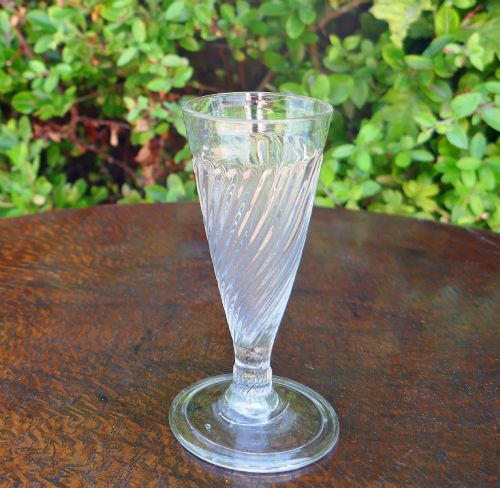
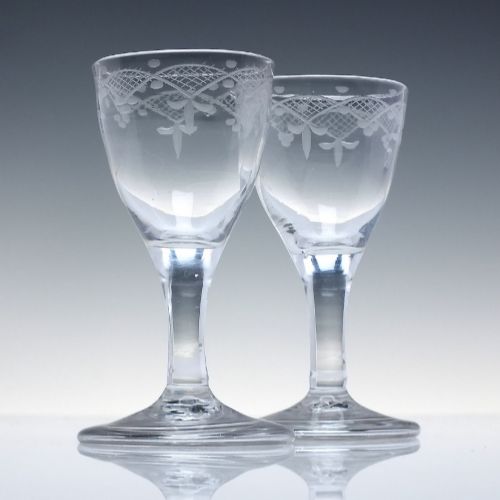

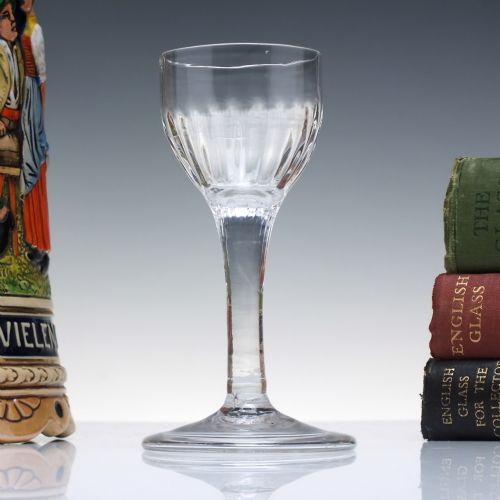


Folded Foot Drinking Glass
These folded foot drinking glass examples offer tangible links to eighteenth-century tavern and dining tables.
Folded Foot Drinking Glass
A folded foot drinking glass belongs to the Georgian era, principally emerging across the eighteenth century from around 1700 onwards. Buyers examine drinking glasses, wine glasses, ale glasses, whisky dram glasses, goblets, gin glasses, and cordial glasses featuring this specific base formation.
How they were made
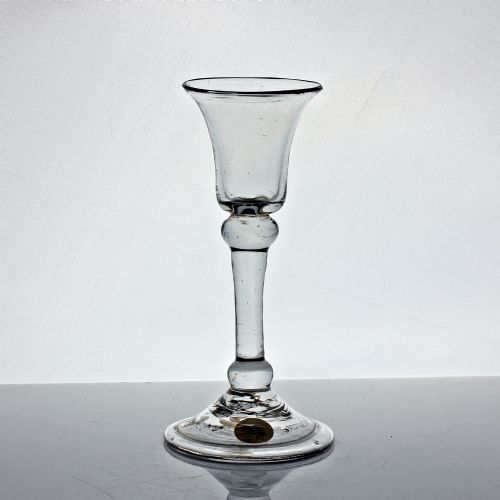
Makers utilised lead glass, clear glass, lead crystal, and flint glass, shaping the metal entirely through hand-blown techniques. The defining rim was formed by folding the hot edge of the foot underneath to create a stable, doubled border.
Listings span the eighteenth century and Georgian era, featuring lead glass, clear glass, and flint glass in forms like wine glasses, ale glasses, and goblets.
What varies in quality
Quality rests upon the proportion and clarity of the metal, together with the neatness of the folded foot itself. A well-executed fold sits flat and even beneath stems displaying fine optical clarity or crisp air twists.
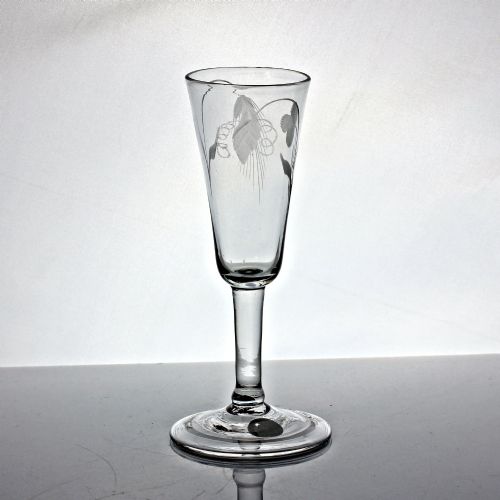
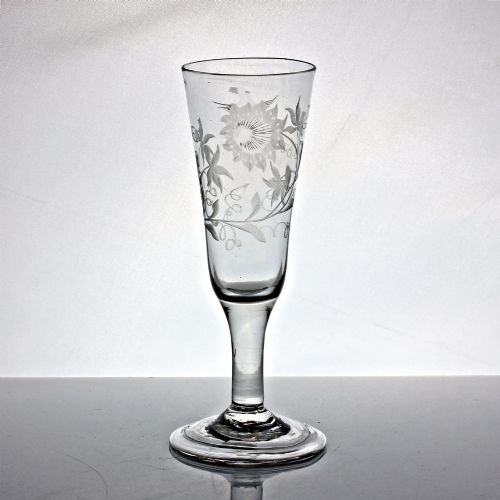
The sophistication of the stem formation distinguishes standard tavern forms from more elaborate balustroid or multi-spiral air twist drinking vessels. Engraving depth and clarity on bowls further separate simpler utility pieces from finer table examples.
The Folded Foot Drinking Glass Glossary
- Folded foot
- A base formed by turning the hot outer edge of the foot underneath itself during manufacture. This technique added weight and strength to the lower portion of the drinking glass.
- Air twist
- A stem containing spiral threads of tiny air bubbles trapped within the glass. Makers produced these by twisting a rod drawn from molten metal before cooling.
- Balustroid
- A stem style echoing architectural balusters, featuring thickened nodes or knops above a tapering shaft. This form gained popularity in English glasshouses during the early eighteenth century.
- Wrythen
- A decorative pattern of spiral ribbing on the bowl or body. Artisans achieved this effect by twisting the hot glass whilst it rested in a mould.
- Air tear
- An elongation of an accidental bubble left inside the stem or base during blowing. Glassmakers often utilised these intentionally as a decorative feature.
Folded Foot Drinking Glass: Frequently Asked Questions
What is a folded foot?
A folded foot is a heavy rim at the base of an eighteenth-century drinking glass created by turning the molten edge underneath during manufacture.
This method provided extra stability and durability for vessels used daily on dining and tavern tables.
How old are these glasses?
The pieces shown here date primarily from the eighteenth century, spanning the Georgian period and the decades around seventeen-hundred to seventeen-fifty.
Most examples reflect English glassmaking techniques from the reigns of George the Second and earlier Georgian periods.
What did people drink from them?
These vessels served various beverages depending on their specific form, including wine, ale, gin, whisky drams, and cordials.
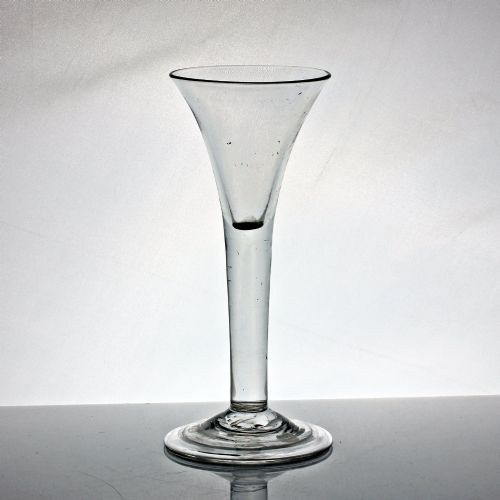
Smaller glasses handled potent spirits or liqueurs, whilst taller trumpet and bell bowls accommodated wines and ales.
How do air twists form?
Air twists are created by drawing and rotating molten metal containing internal air bubbles into a spiral thread before shaping the stem.
This technique required considerable skill from the glassblower to maintain even distribution throughout the stem.
Are all these glasses English?
The pieces listed on this page originate from English production centres during the eighteenth-century Georgian era.
They showcase domestic lead glass and flint glass manufacturing traditions of the period.