




Georgian Glass Ale Flute
A georgian glass ale flute is a tall drinking vessel designed for malt liquor, prized for its slender proportions and period craftsmanship.
Georgian Glass Ale Flute
On this page, the pieces you are most likely to meet span the eighteenth century, including examples from the seventeen forties through to the seventeen seventies. They appear in forms such as dwarf ale glasses and tall flutes, often displaying characteristic manufacturing traits of the era. The selection shows a clear focus on English drinking vessels from the Georgian period.
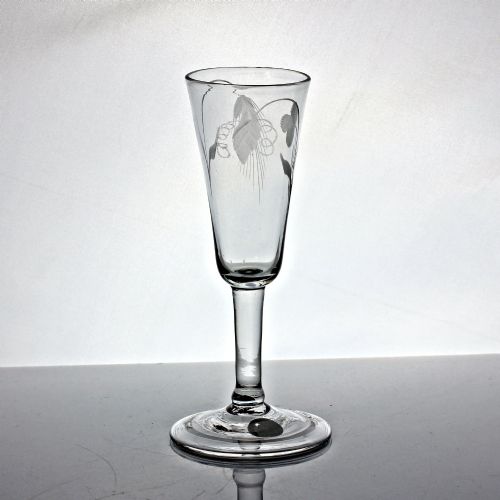
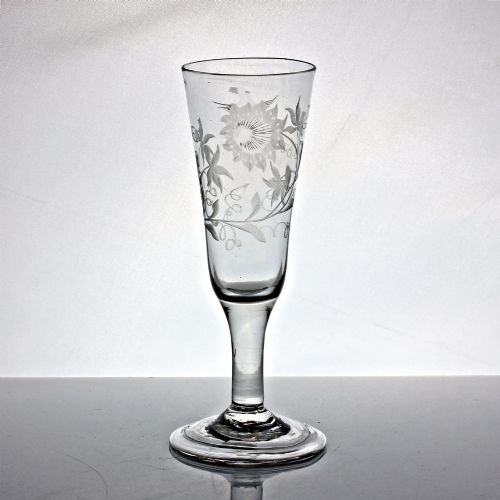
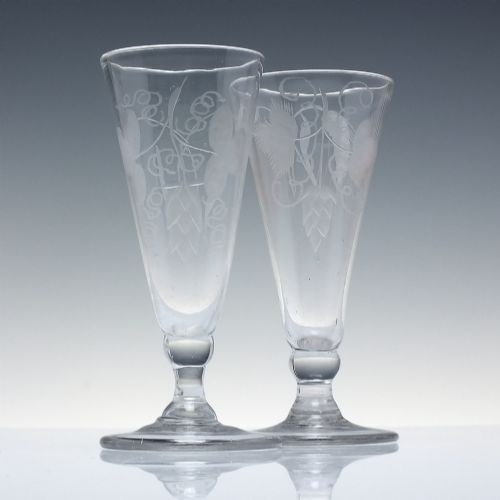
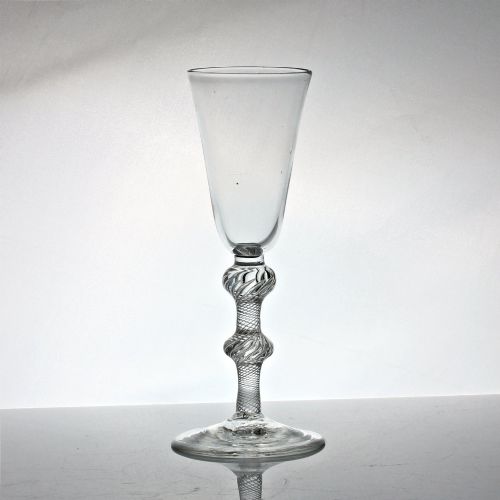
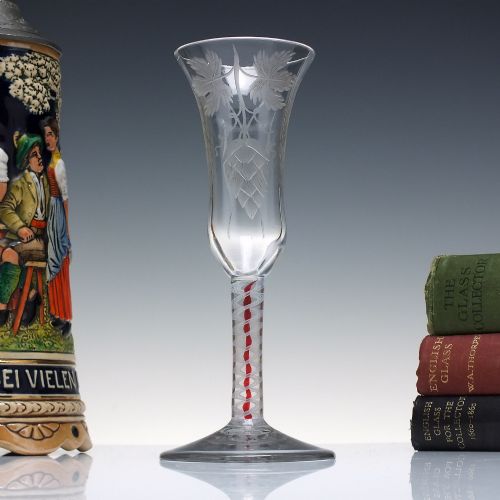
The styles recorded in the evidence demonstrate considerable variety within this specialised drinking form. You will encounter plain stems alongside intricate air twists, opaque twists, and red colour twists, as well as facet cut stems. Bowls range from unadorned surfaces to those finely engraved with hop and barley motifs or passion flowers.
Materials and construction
The pieces on this page are fashioned from lead glass, flint glass, and clear glass, utilising traditional hand-blown techniques. Glassmakers manipulated molten metal to create slender bowls and delicate stem formations, frequently incorporating folded feet to provide stability and strength to the base.
Internal optical effects are achieved through specialised manipulation of the glass while hot, resulting in air twists and double series opaque twists trapped within the stem. Surface decoration involves wheel engraving to depict botanical subjects like hops and barley, alongside facet cutting and white enamel application.
The documented items span the eighteenth century, showcasing air twists, opaque twists, and red colour twist stems.
Assessing quality and character
Quality in these drinking vessels rests upon the proportion and balance of the bowl, stem, and foot. Finer examples display symmetrical twist formations within the stem and crisp, deep wheel engraving across the bowl rather than shallow surface scratching.
The Georgian Glass Ale Flute Glossary
- Folded foot
- A base formed by turning the outer edge of the glass under itself to create a thickened, rounded rim that adds stability. This technique is frequently observed on eighteenth-century drinking vessels.
- Air twist
- A decorative stem containing spiral threads of air trapped inside the glass during the manufacturing process. Makers produced these by drawing and twisting a bubble-filled metal.
- Opaque twist
- A stem featuring white or coloured enamel glass rods twisted into a spiral pattern within clear metal. These create a striking contrast against the transparent bowl.
- Facet cut
- Geometric planes ground and polished onto the surface of the glass, often covering the stem or the lower bowl. This technique catches the light and adds texture.
- Wrythen
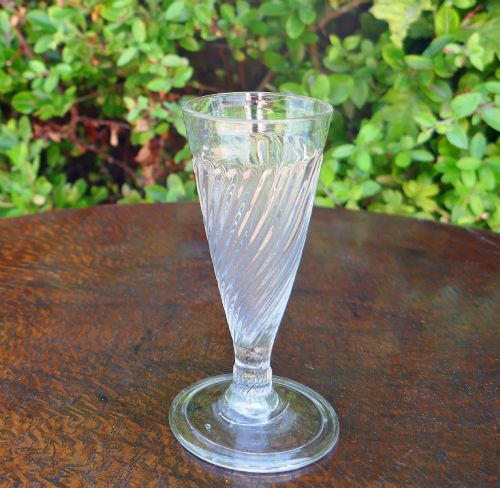
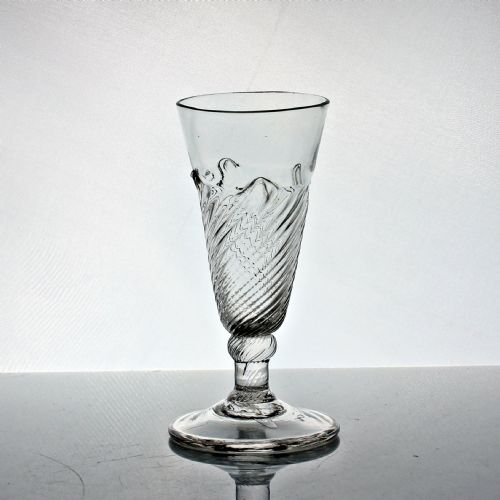
- A decorative pattern of spiralling ribs or flutes moulded into the body of the glass. It creates a subtle optical movement as the vessel turns.
Georgian Glass Ale Flute: Frequently Asked Questions
What were ale flutes used for?
These tall glasses served specific malt liquors, beers, and ales during the eighteenth century. Their narrow profile helped to preserve the effervescence and head of strong drinks.
Guests at formal dinners and social gatherings used them to enjoy beverages poured straight from ceramic jugs or bottles. The slender shape also prevented the warmth of the hand from heating the contents too quickly.
How do I date a glass?
Dating relies on identifying specific manufacturing techniques, stem formations, and engraving styles recorded in the period. Eighteenth-century pieces often exhibit distinct characteristics like pontil marks and specific twist configurations.
Comparing the bowl shape and foot style against documented examples helps narrow down the decade of production. Enamel work and cutting styles also provide reliable chronological markers.
Are these glasses safe to use?
While these vessels are genuine antiques from the eighteenth century, most collectors choose to display rather than use them. The historic glass metal can be fragile and vulnerable to thermal shock or modern detergents.
If you do choose to use them for special occasions, hand washing in tepid water without soaking is essential. Modern dishwashers and sudden temperature changes will damage the historic glass.
What is a dwarf ale glass?
A dwarf ale glass is a shorter, more compact version of the standard drinking vessel designed for malt liquors. It retains the narrow bowl form while scaling down the overall height.
These pieces were suited to smaller tables or tavern settings where tall vessels might easily tip over. They share the same decorative stem and foot variations as their taller counterparts.