


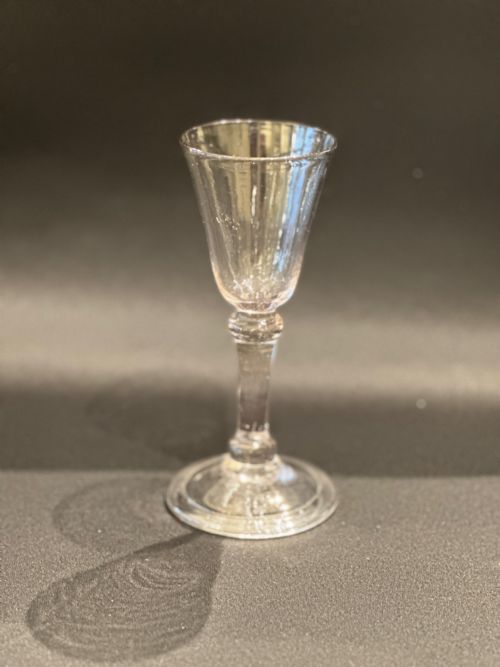
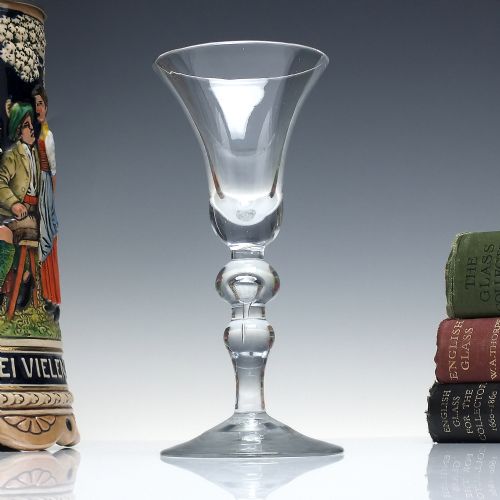

Clear Glass Balustroid Goblet
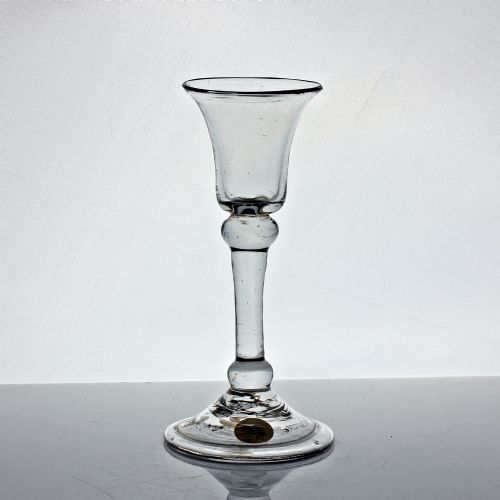
A clear glass balustroid goblet is an eighteenth-century drinking vessel defined by its sturdy, drawn stem, offering collectors a robust piece of Georgian history.
Clear Glass Balustroid Goblet
A clear glass balustroid goblet is an eighteenth-century drinking vessel associated with the Georgian and George II periods. These items appear primarily as wine glasses and stemware, reflecting the drinking habits of the era.
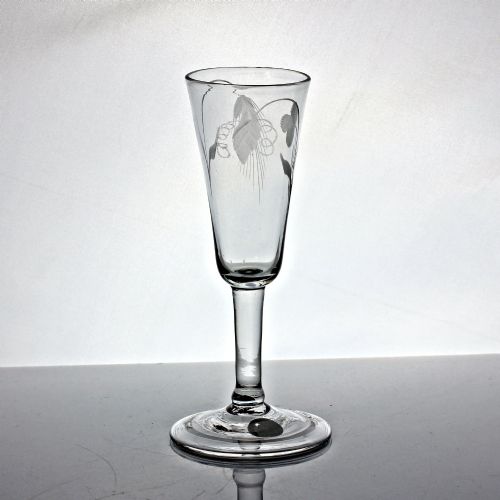
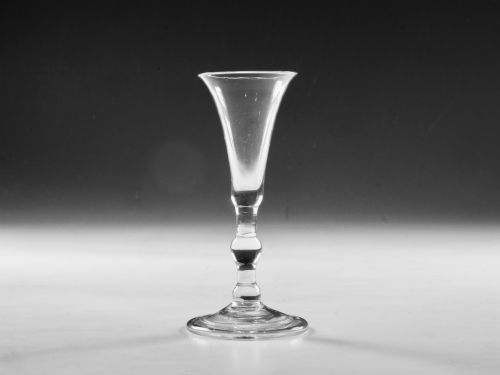
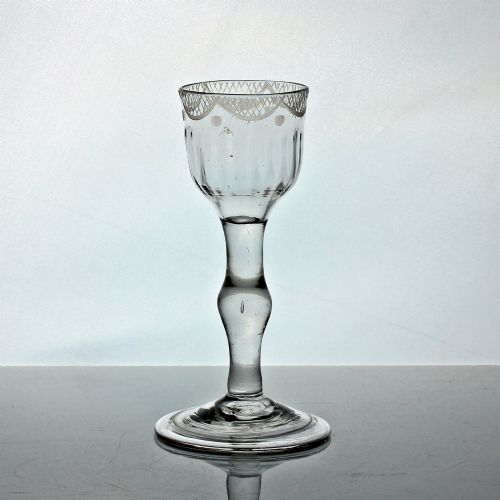
The form is characterised by its distinctive balustroid stem, which supports a clear glass bowl above a foot. Most examples date from the decades around seventeen-forty, showing the standard proportions of English glasshouses of that time.
What varies in quality
Quality in these goblets rests on the crispness of the metal and the proportion of the stem to the bowl. Superior examples show clear, heavy lead glass without excessive cloudiness or heavy impurities.
The distinction between standard pieces and better specimens also lies in the execution of decorative details like engraving or the formation of a domed foot. A well-balanced balustroid stem commands greater attention from collectors.
Georgian drinkers trusted these stout balustroid stems not to snap when raised in a hearty toast.
The Clear Glass Balustroid Goblet Glossary
- Balustroid
- A term describing a drinking glass stem that imitates the thick, curving shape of an architectural baluster. This form is shorter and thicker than later eighteenth-century stems.
- Lead glass
- A type of glass containing lead oxide, which increases clarity, weight, and the ease of working the metal. It was widely utilised by English glasshouses.
- Domed foot
- A pedestal base that rises towards the centre before meeting the stem. This feature provides extra weight and balance to early stemware.
- Kit Kat
- A specific proportion and form of eighteenth-century wine glass associated with a particular bowl shape and stem configuration. These glasses reflect standard Georgian drinking vessel designs.
- Flint glass
- An early term for high-quality English lead glass. The material allowed makers to produce clear vessels with bright refraction.
Clear Glass Balustroid Goblet: Frequently Asked Questions
What is a balustroid goblet?
A balustroid goblet is an eighteenth-century drinking vessel featuring a heavy, curving stem that sits beneath a clear glass bowl.
These pieces belong to the Georgian era and were primarily produced as wine glasses during the seventeen-thirties and forties.
How old are these glasses?
The pieces available date from the eighteenth century, specifically within the Georgian and George II periods.
Most examples originate from around seventeen-thirty to seventeen-fifty, placing them firmly in the middle of the Georgian epoch.
What materials were used?
English makers used lead glass, lead crystal, and flint glass to produce these drinking vessels. These materials provided the necessary weight and clarity.
Selected items also feature surface decoration, including swag and tail engraving applied to the bowl.
How do I identify a domed foot?
A domed foot rises upwards from the edge towards the centre where it joins the stem, rather than resting flat on the surface.
This construction adds physical stability and visual weight to the lower portion of the wine glass.