
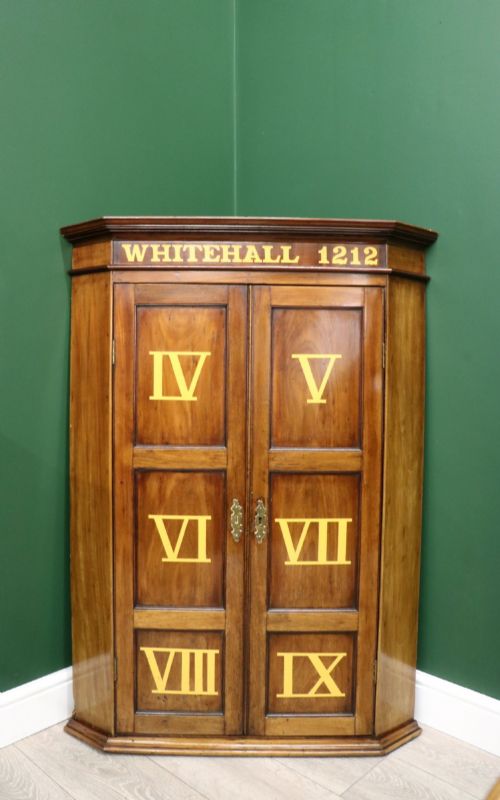

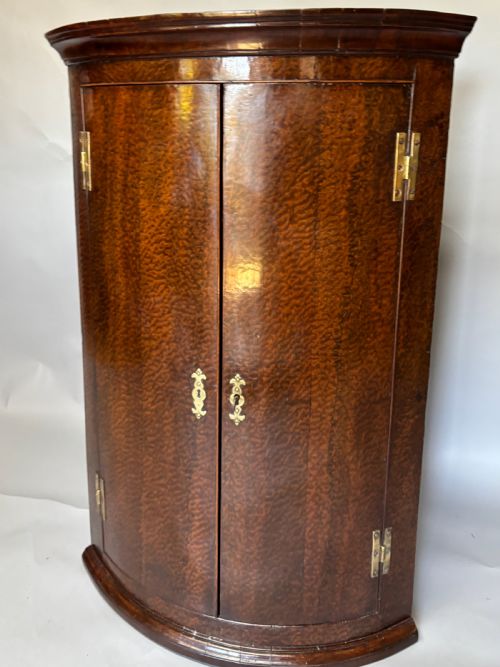


George III Wall Cupboard
A george iii wall cupboard is a corner cabinet designed to utilise idle domestic space, offering rich timbers and period proportion.
George III Wall Cupboard
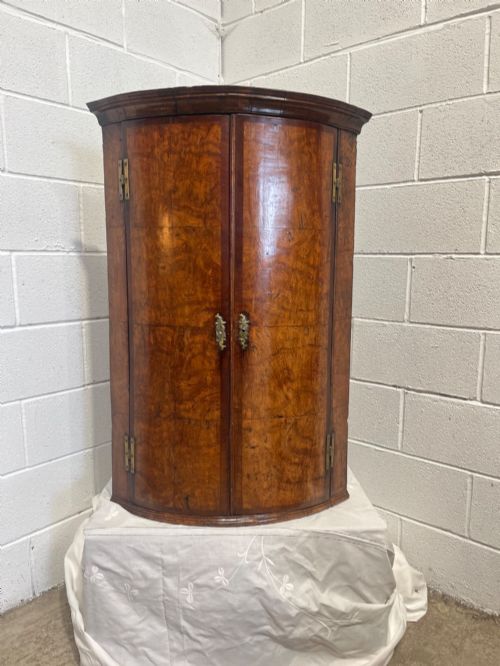
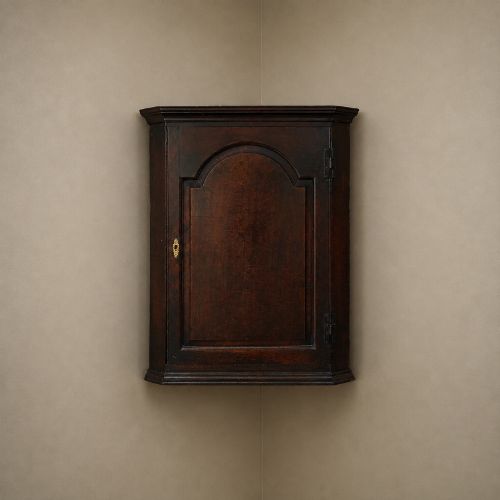
A george iii wall cupboard most commonly presents as a hanging corner cabinet or corner cupboard designed to fit neatly into the junction of two walls. These pieces originate predominantly from the Georgian period and the later eighteenth century, utilising height to save floor space while providing display or storage.
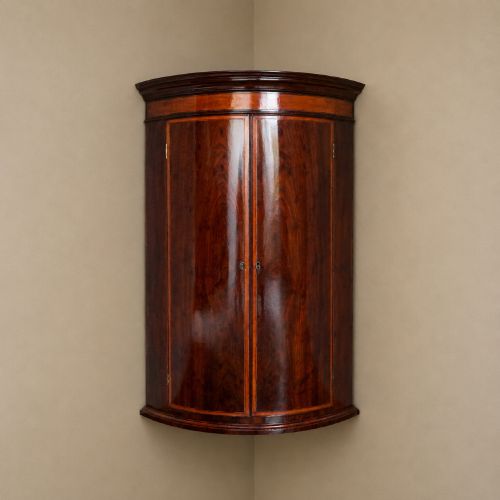
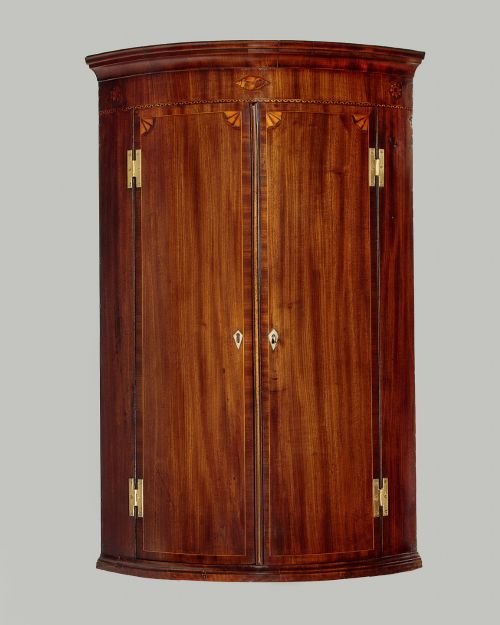
The prevailing forms on this page include flat-fronted and bow-fronted variants, alongside glazed doors and solid wooden panels. Oak and mahogany serve as the primary foundational woods, frequently embellished with crossbanding or fine stringing.
Distinctions in quality
Quality rests in the selection of timber figures, where burr oak or plum pudding mahogany displays superior grain movement compared to plain stock. The crispness of the inlaid boxwood and satinwood stringing further elevates a piece.
Internal configuration also separates standard examples from finer ones, with shaped shelving, butterfly hinges, and intact original brassware indicating higher workshop standards. The integrity of the wall-mounting structure determines practical longevity.
Plum pudding mahogany timbers owe their festive name to burr formations that look remarkably like fruit in a Victorian dessert.
The George III Wall Cupboard Glossary
- Bow front
- A convex curved cabinet front that projects outward from the corners, typical of later eighteenth-century design. This shape softens the angular geometry of a room.
- Crossbanding
- A narrow strip of veneer laid perpendicularly to the grain of the main surface, often seen framing the door panels of these cupboards. It creates a defined visual border.
- Satinwood
- A pale, lustrous exotic timber utilised for contrasting inlay work and stringing on mahogany carcases. It brings a bright golden tone to darker woods.
- Plum pudding mahogany
- A highly figured tropical hardwood displaying mottled, circular markings resembling the texture of a traditional Christmas pudding. This grain choice denotes high status.
George III Wall Cupboard: Frequently Asked Questions
How do I hang a heavy corner cupboard?
These cupboards attach to walls via internal brackets or heavy-duty screw fixings positioned through the back framing timbers. Ensure the fixings anchor securely into wall studs or masonry rather than plaster alone.
Because eighteenth-century construction uses dense hardwoods, professional installation by a specialist helps distribute the weight safely across the corner junction.
What rooms suit a corner cupboard?
Dining rooms, hallways, and living spaces benefit most from these wall-mounted cabinets, as they occupy otherwise neglected corner angles. They function well for displaying ceramics or storing glassware.
Their elevated position keeps floor areas clear while drawing the eye upward to architectural timber details.
How do I distinguish oak from mahogany pieces?
Oak exhibits a paler, golden-brown tone with pronounced medullary rays visible as flecks across the grain. Mahogany offers a deeper reddish-brown hue with a smoother, denser surface appearance.
Both woods appear frequently across the period, with oak often indicating provincial English workshops and mahogany suggesting more urban cabinet-making.
Did these cupboards always have glazed doors?
Glazing represents one option among these listings, alongside solid timber panel doors made from oak or mahogany. Solid doors kept stored contents private, while glazed variants displayed porcelain.
Original glass panes feature minor imperfections and bubbles consistent with eighteenth-century manufacturing techniques.