


George III Tier Stand
A george iii tier stand brings tiered shelving and rotating tiers into a room, serving as a practical surface for meals or display.
George III Tier Stand
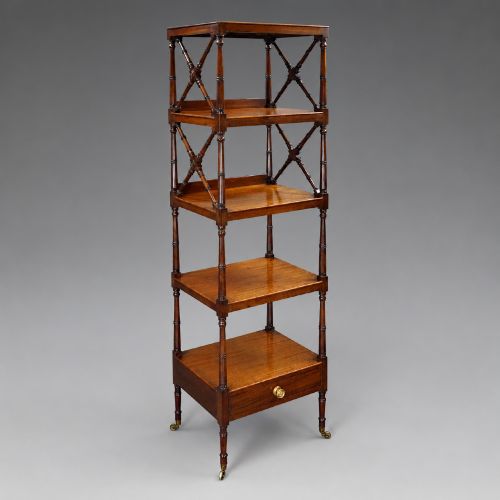
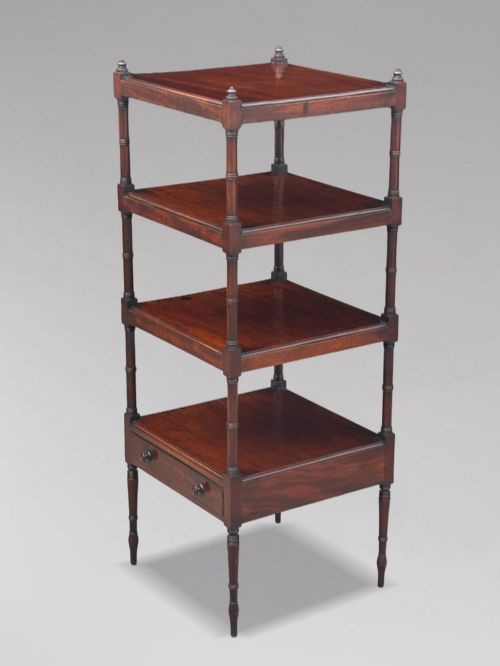
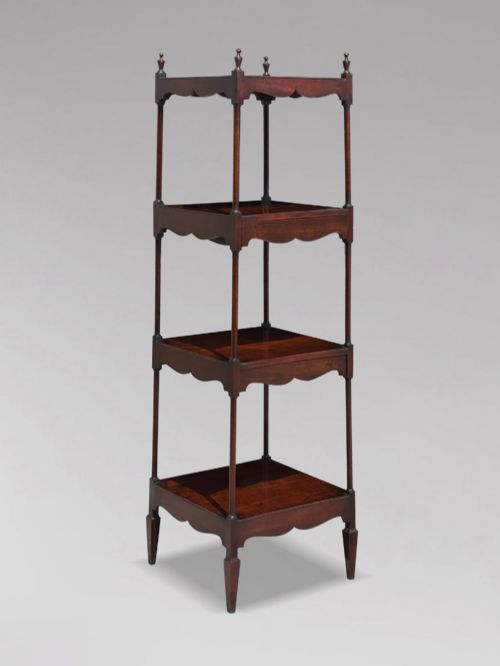
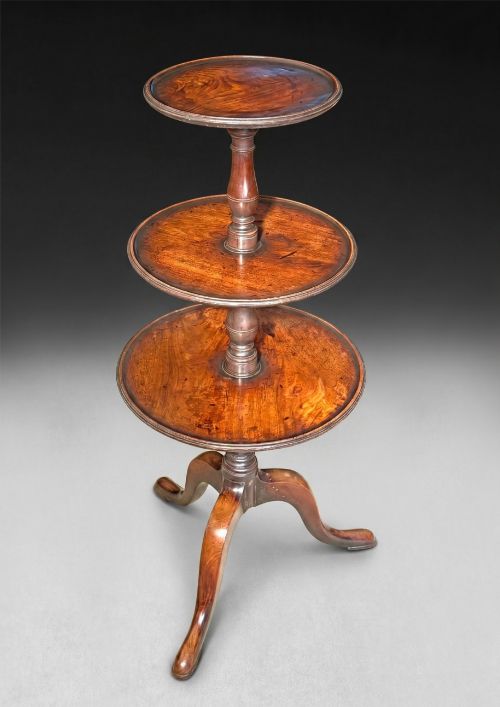
A george iii tier stand encompasses multi-level furniture forms from the Georgian period, primarily dumb waiters, whatnots, and etageres. These pieces provide stacked tiers of shelving supported by columns or tripod bases, designed to hold items in dining rooms or living spaces.
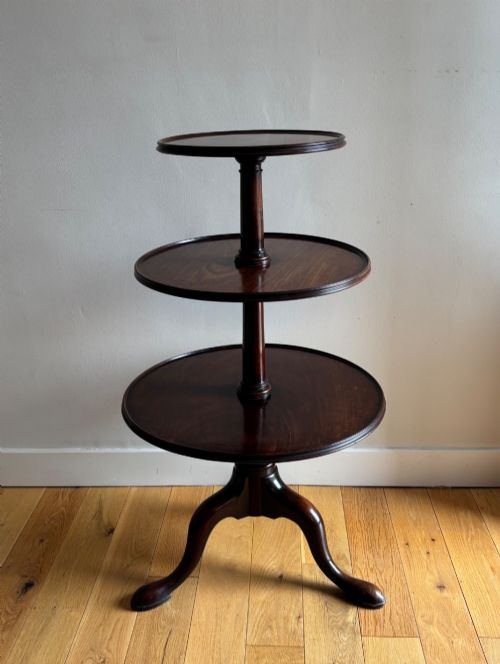
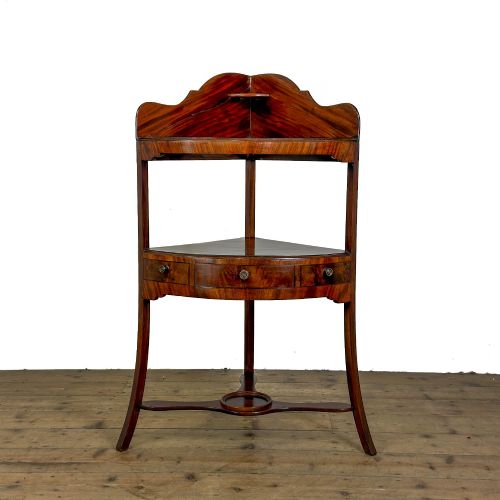
The version most commonly encountered on this page is the three-tier mahogany dumb waiter, often featuring graduated circular or folding drop-leaf tiers. Alongside these, the listings show two-tier tripod tables, corner washstands, and occasional tables from the late eighteenth century.
How they were made
Makers constructed these tier stands predominantly using mahogany and Cuban mahogany, sometimes incorporating inlay, brass hardware, and paint. Timber selection provided the structural strength needed for multi-tiered weight distribution.
Joinery techniques accommodated functional movement, including revolving mechanisms, folding drop-leaf sides, and hexagonal or circular rotating tiers. Turned columns and tripod base supports kept the multi-level stands stable.
The archive and active listings show forms spanning dumb waiters, whatnots, etageres, corner cabinets, and occasional tables.
What varies in quality
Quality separates pieces through the selection of timber grain, such as figured Cuban mahogany, and the precision of the turning on the central columns. Finer examples display disciplined proportions and well-executed mechanical folding or revolving actions.
Design complexity also marks the division between standard forms and superior items, visible in unusual formats like hexagonal or octagonal drop-leaf tiers. The crispness of the joinery and the integrity of the original brass fittings further distinguish the work.
Gillows
The George III Tier Stand Glossary
- Dumb waiter
- A multi-tiered freestanding piece of furniture used to serve food or hold tableware without requiring a servant present. These typically feature two or three graduating circular tiers supported on a central pillar and tripod legs.
- Whatnot
- An open set of shelves used for displaying ornaments, books, or small objects. They appear in multiple tiers during the Georgian period.
- Etagere
- A piece of furniture consisting of a set of open shelves for display. The term overlaps with whatnots in late eighteenth-century listings.
- Cuban mahogany
- A dense, richly figured hardwood imported from the Caribbean. Cabinet makers utilised this premium timber for its dark tone and durability.
- Drop-leaf
- A table top or tier design featuring hinged flaps that fold down to save space. This mechanism allowed stands to be tucked away when not in use.
George III Tier Stand: Frequently Asked Questions
What is a george iii tier stand used for?
These pieces served practical dining functions as serving tables for food and glassware, or held books and ornaments in principal rooms.
Today, owners utilise them as occasional tables or display stands in living spaces and dining rooms.
What is the difference between a whatnot and a dumb waiter?
A dumb waiter generally centres on a rotating pillar with circular or shaped tiers intended for dining utility. A whatnot functions primarily as a stationary set of open display shelves.
Both share the multi-tiered format characteristic of the period.
Are all tiers made of mahogany?
Mahogany and Cuban mahogany form the vast majority of the timber seen in these listings. Cabinet makers relied on these dense hardwoods to support stacked tiers.
Occasional pieces incorporate painted finishes or inlay work alongside the primary timber.