


George III Tallcase Clock
A george iii tallcase clock brings enduring mechanical precision and period presence into a room, measured through traditional brass dials and timber cases.
George III Tallcase Clock
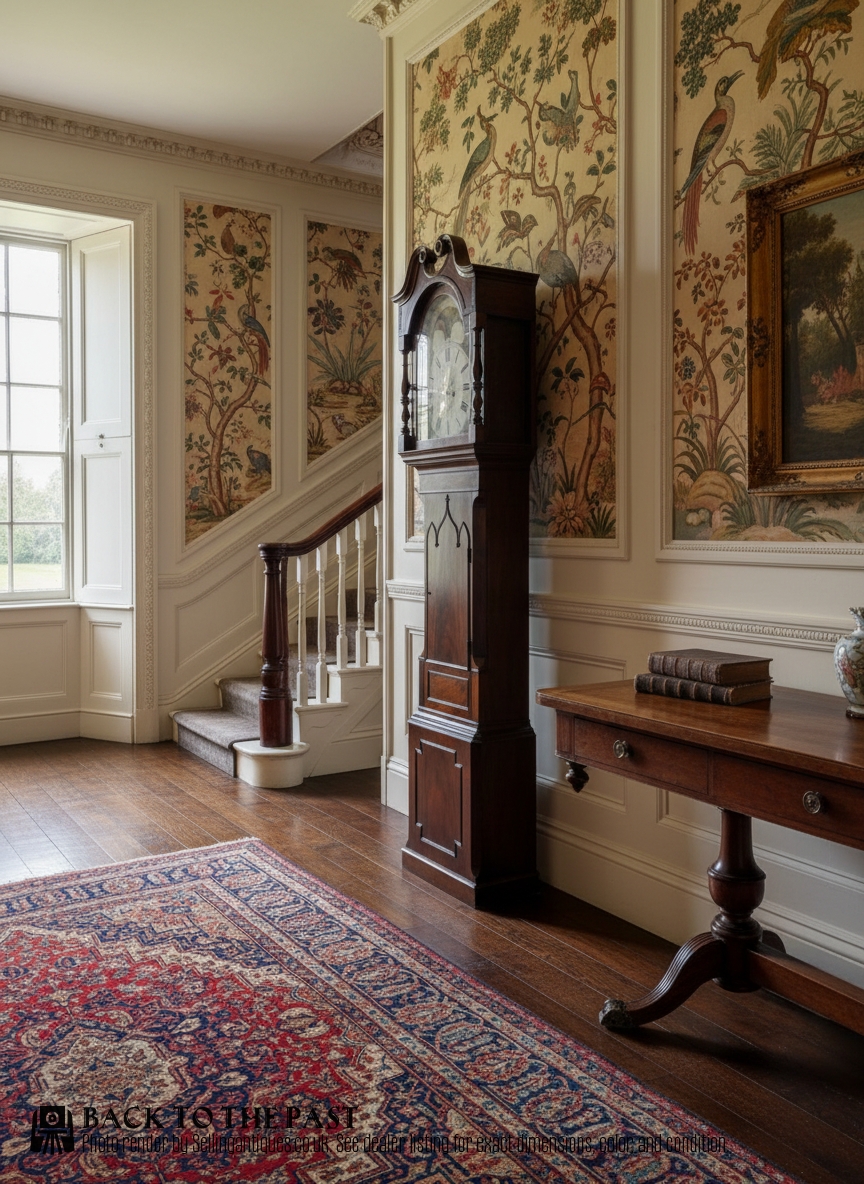
A george iii tallcase clock is an upright timekeeper spanning the georgian era, 18th century and early 19th century. These grand pieces stand tall in hallways and principal rooms, housing weights and swinging pendulums within protective wooden housings.
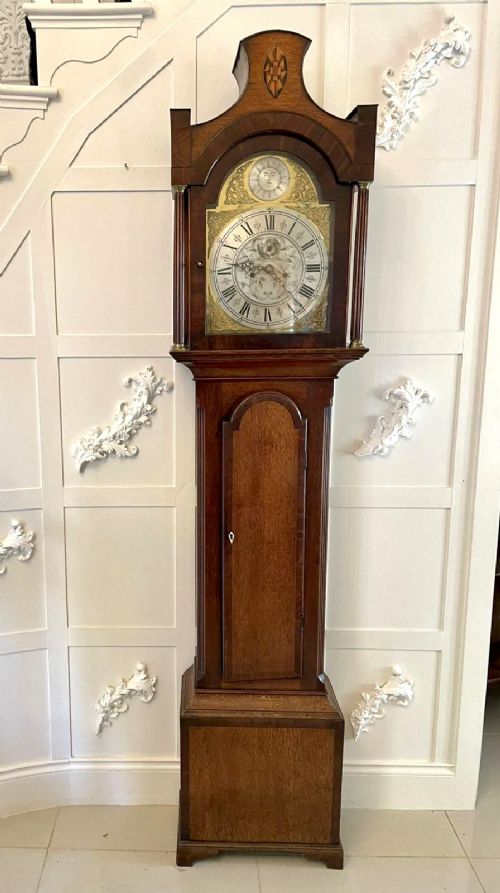
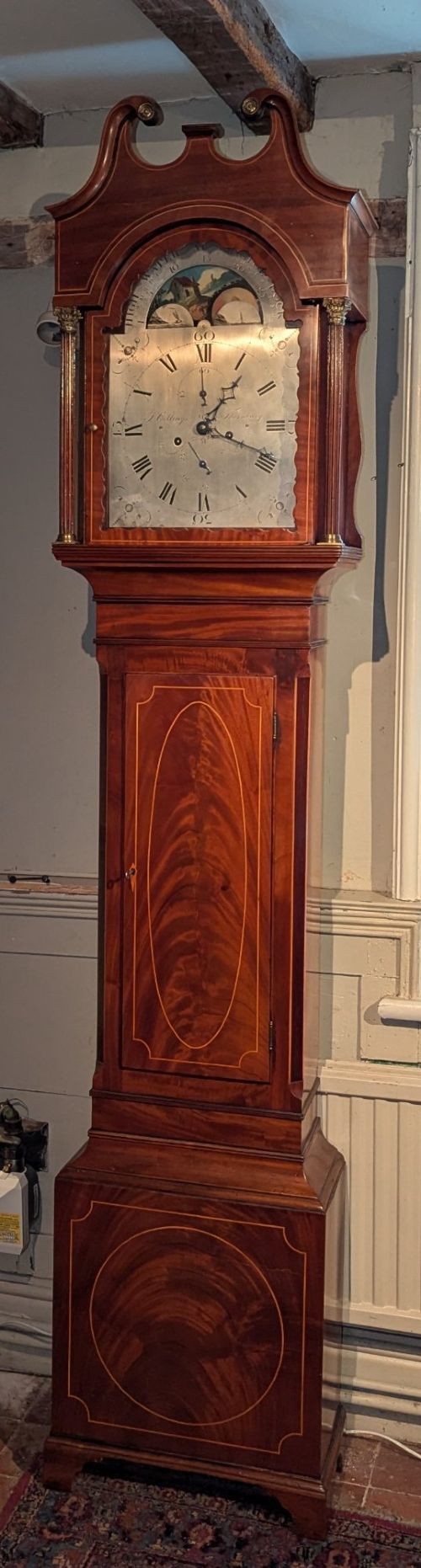
The specimens met on this page appear primarily in oak and mahogany, occasionally finished with lacquer and chinoiserie decoration. Many incorporate brass faces, painted iron dials, and moon phase mechanisms that track lunar cycles alongside standard hours and minutes.
Materials and construction
Cabinetmakers built the tall enclosures using solid timbers like oak and mahogany, sometimes combining both woods in a single case and adding glass panels to shield the dial. Iron and steel components form the intricate internal movements, while brass provides durable gear wheels and decorative faceplates.
Dial faces combine engraved or polished brass with enamel and painted iron surfaces to display maker signatures and time markings. Enamel and painted details often feature subsidiary calendars or painted moon phases driven by the eight-day or thirty-hour movements.
George III Tallcase Clock Retail Price Guide 2026
Typical asking prices for george iii tallcase clock among the pieces listed under this phrase on Sellingantiques today, from the lower quarter to the upper quarter. They describe what is for sale here now, not the wider market.
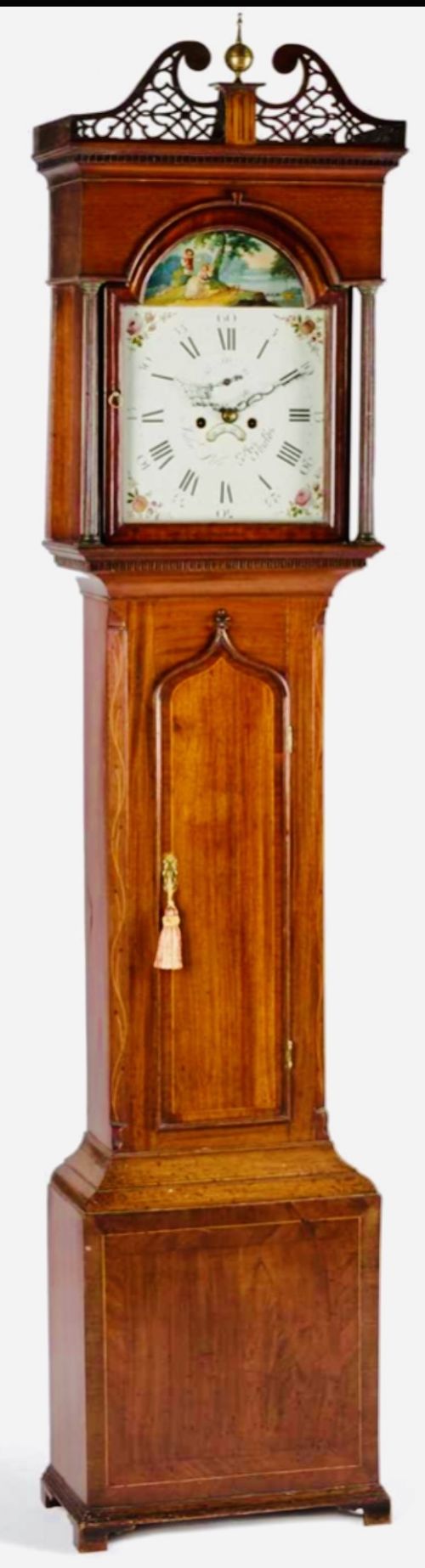
Mr Hudfon of Nottingham spelled his surname with a traditional long s, leaving a charming typographical footprint on his dial.
Judging quality in tallcase clocks
The refinement of the timber case sets apart the standard examples from the exceptional ones, visible in figured mahogany graining, carved architectural details, and inlaid woodwork. Regional cabinetmaking styles show varied levels of sculptural depth and surface polish across different maker workshops.
Movement sophistication also distinguishes the range, particularly eight-day movements with specialised moon phase displays versus simpler thirty-hour setups. Signed brass or painted dials by known makers add a layer of horological documentation that elevates the piece.
Charles Dowsett Of Canterbury·Edward White Birmingham·James Tregent of London·John Pollard of Crediton·Walker of Nantwich·Wm Stanford·Dan Williams, Crickhowell·Hudfon Of Nottingham·Bentley London·James Marshall
The George III Tallcase Clock Glossary
- Longcase clock
- A tall freestanding pendulum clock enclosed in a wooden case, commonly called a grandfather clock. These floor-standing timepieces developed sophisticated weight-driven movements during the Georgian period.
- Moon phase
- A mechanical display on the dial that tracks the visual phases of the moon through a rotating painted disc. This complication required specialised gearing connected to the primary clock movement.
- Eight day
- A clock movement designed to run for eight days before requiring manual winding via a key. This mechanism utilises dual weights suspended on cords or chains.
- Arch dial
- A clock face featuring a rounded upper section above the main circular dial, often housing subsidiary seconds, calendar apertures, or moon phase indicators.
- Chinoiserie
- European decorative technique imitating Chinese artistic styles, applied here as lacquered surface ornamentation on clock cases. This decorative treatment creates ornate pictorial scenes across the wooden exterior.
George III Tallcase Clock: Frequently Asked Questions
How do I wind a tallcase clock?
Winding involves inserting a key into the winding holes on the dial face and turning it carefully to lift the internal weights.
Most eight-day movements require this action weekly to maintain accurate timekeeping and keep the pendulum swinging steadily.
Where should I place a longcase clock?
Position your clock on a firm, level floor against a sturdy interior wall away from direct sunlight and heating vents.
Placing the case on a stable surface ensures the pendulum swings evenly and the delicate internal escapement functions correctly.
What is the difference between oak and mahogany cases?
Oak cases often reflect earlier regional cabinetmaking traditions with prominent grain patterns and robust structural framing.
Mahogany became increasingly popular for its rich reddish-brown tones and ability to take a high polish, suiting more formal neoclassical interiors.
How do painted dials differ from brass faces?
Brass faces feature engraved numbers and decorative spandrels mounted in the corners, typical of mid-Georgian horology.
Painted iron dials emerged later in the period, offering smooth white surfaces decorated with floral motifs, maker signatures, and calendar subsidiary rings.