
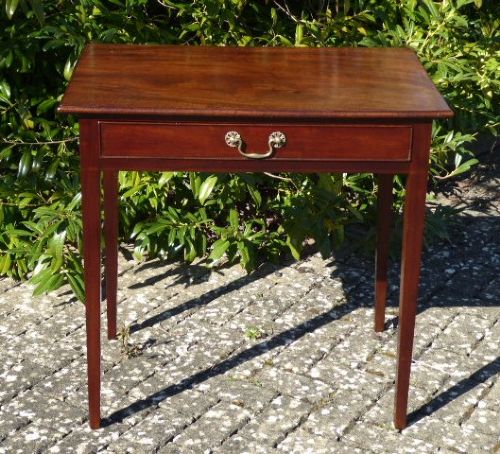
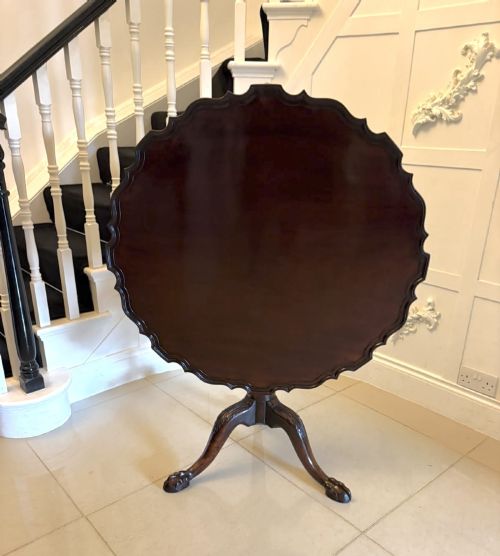
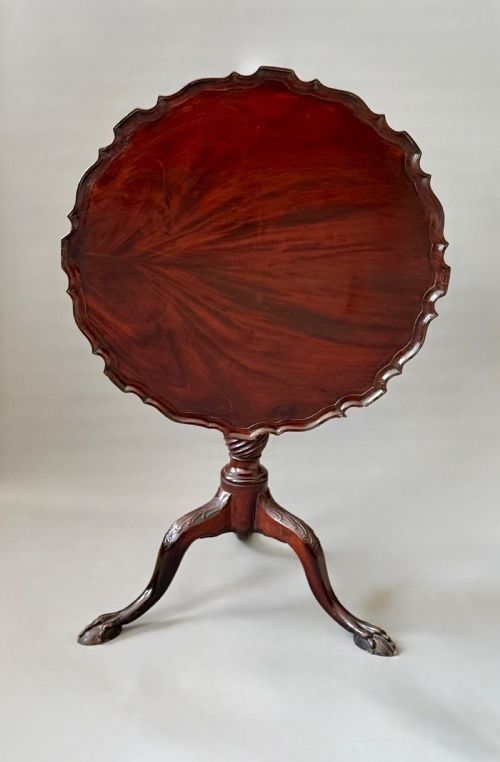
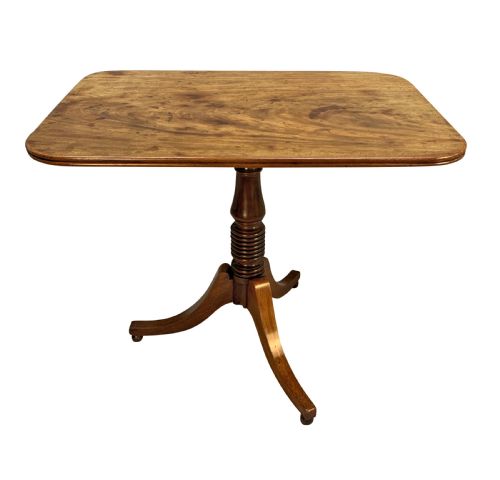

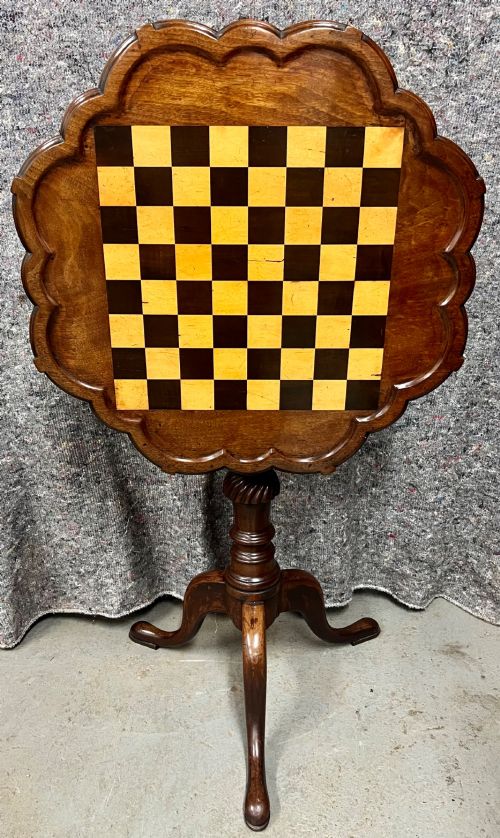

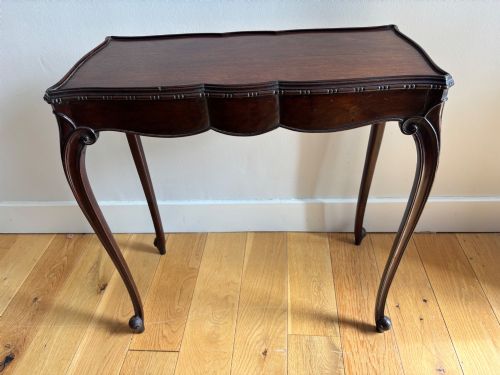
George III Mahogany Tea Table
A george iii mahogany tea table brings eighteenth-century elegance to a room, offering a versatile surface that transforms from a console to a serving top.
George III Mahogany Tea Table
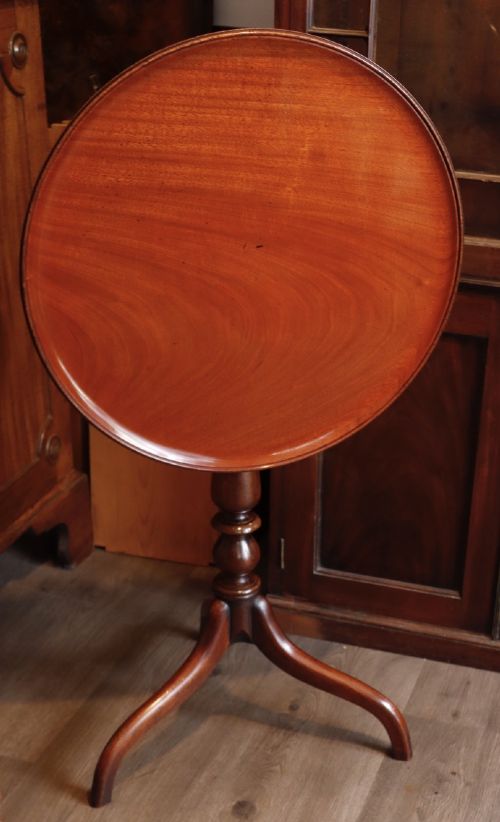
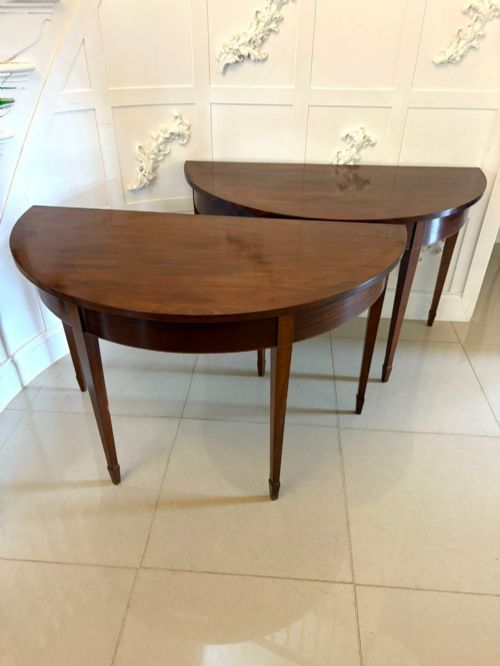
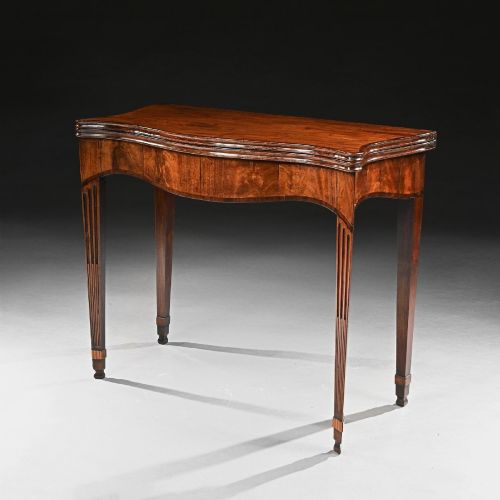
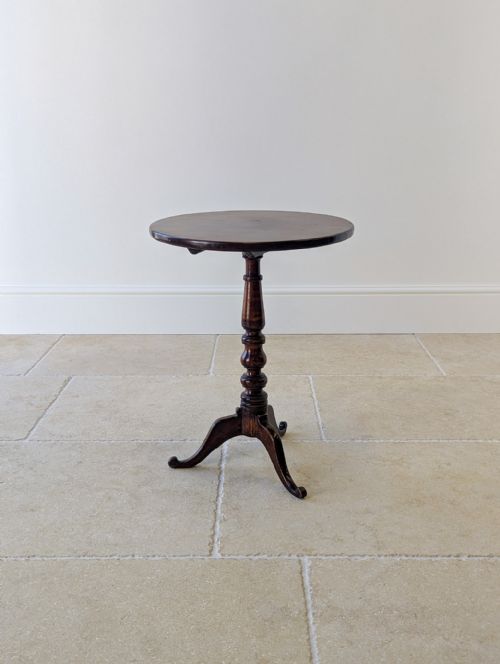
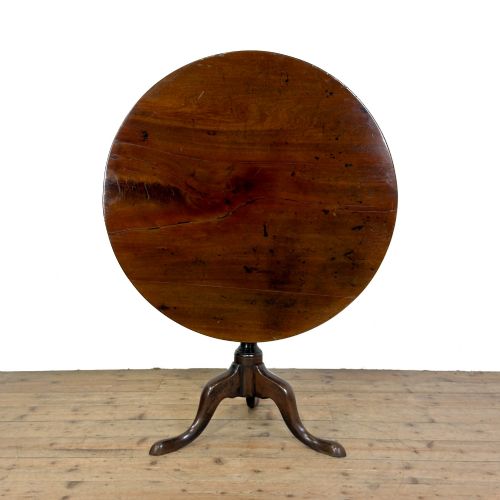
When you search for a george iii mahogany tea table, you encounter pieces designed to hold the expensive leaves imported during the Georgian period. The most common form met here is the demi-lune or D-shaped console with a fold-over top, alongside circular tilt-top tripod tables used for the same purpose.
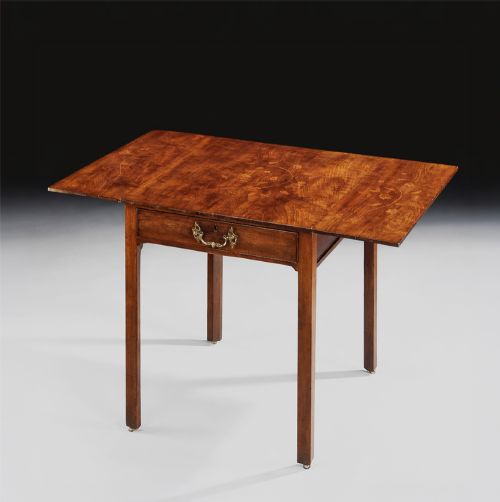
Makers adapted these tables for domestic parlours, creating folding, snap-top, and Pembroke variations. The construction reflects the social habits of the eighteenth century, when hosting evening tea required adaptable furniture that stood neatly against a wall when not in use.
Materials and Construction
Cabinetmakers relied heavily on solid mahogany and figured veneers, sometimes selecting flame mahogany or Spanish timber to show deep grain patterns. Details relied on contrasting timbers such as satinwood, boxwood, and ebony for stringing and inlaid borders.
The mechanics of the period involved clever pivot hinges, birdcage actions, and tilt-top mechanisms supported by tripod pedestals or straight gateleg frames. Timber choice dictated the weight and stability of the folding leaves.
Listings feature diverse forms including Pembroke tables, lowboys, card tables, and tripod bases spanning the Georgian era into the Edwardian period.
Judging Quality
The distinction between ordinary and exceptional examples rests on the choice of timber and the crispness of the carving or inlay. Figured grain, rich patination, and balanced proportions separate utilitarian pieces from those commissioned for high-status interiors.
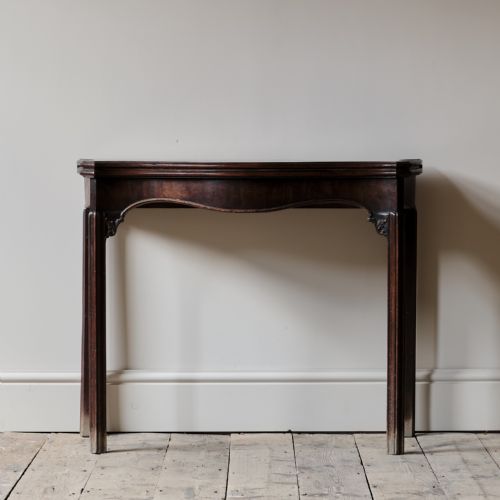
Subtlety in serpentine shaping, fine brass fittings, and uncompromised structural integrity define the upper tier of surviving examples. The handling of secondary timbers and the precision of the fold-over joints further indicate workshop capability.
Bruce & Burns of Edinburgh
The George III Mahogany Tea Table Glossary
- Demi-lune
- A half-moon shape popular for console and tea tables placed flat against a wall. These tables often feature a fold-over top that doubles the surface area.
- Snap-top
- A mechanism allowing the tabletop to tilt vertically and lock into a horizontal position when in use. This saves space in smaller rooms.
- Stringing
- Thin inlaid lines of a contrasting wood used to outline geometric panels and borders. Boxwood and satinwood provide pale contrast against dark mahogany.
- Patina
- The deep gloss and surface character developed by timber over centuries of handling and polishing. Good patination shows warmth and depth.
- Tripod base
- A central pillar supported by three outward-curving legs. This structure keeps the table steady on uneven floors.
George III Mahogany Tea Table: Frequently Asked Questions
How were these tables used?
A george iii mahogany tea table stood against the parlour wall holding porcelain and caddies until evening service. The hinged leaf opened to receive the tea equipage once the guests gathered.
Afterwards, the top folded back down so the furniture resumed its place as a side console. This dual function made them essential for polite entertaining.
How do I spot a fold-over tea table?
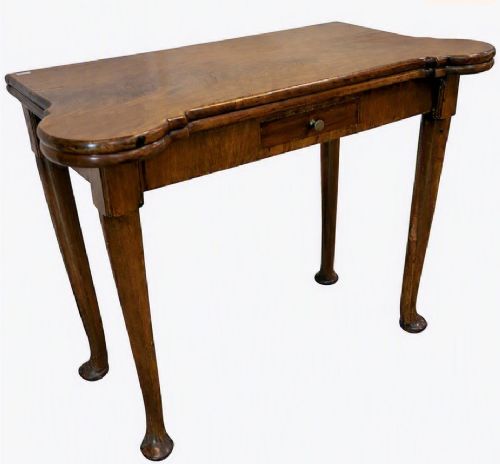
Look for a double-depth top where two leaves match in grain and thickness, joined by hinges along the back edge. When opened, a swing leg or a gateleg mechanism pulls out from the frame to support the extra flap.
Closed, the piece resembles a slim console or side table with no indication of its internal folding leaf.
Where does mahogany come from?
Cabinetmakers during the Georgian period sourced dense tropical hardwoods from the Americas, including Spanish mahogany and Cuban timber. These woods allowed for sharp carving and took a high polish.
As solid supplies shifted, workshops turned to rich veneers laid over sturdy secondary pine or oak carcases.
How do I care for antique mahogany?
Keep the wood away from direct heat sources and sudden humidity changes to prevent the solid timbers and veneers from splitting. Regular dusting with a soft cloth maintains the surface.
Apply traditional wax sparingly when the finish looks dry, buffing gently to preserve the historic shine.