

George III Mahogany Box
When you handle a george iii mahogany box, you hold a utilitarian object shaped by late eighteenth-century craftsmanship.
George III Mahogany Box
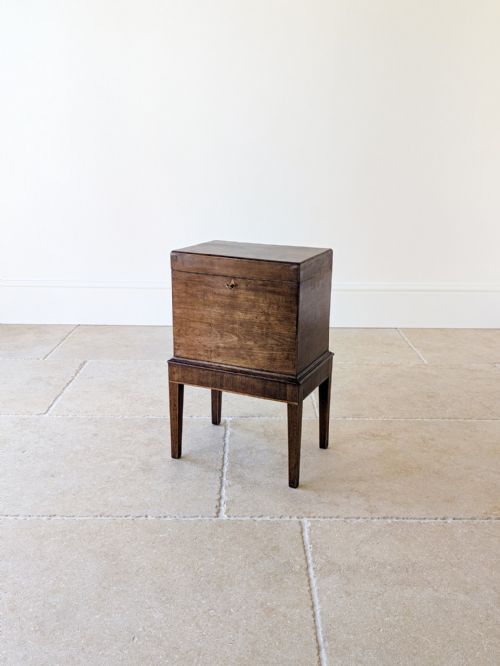
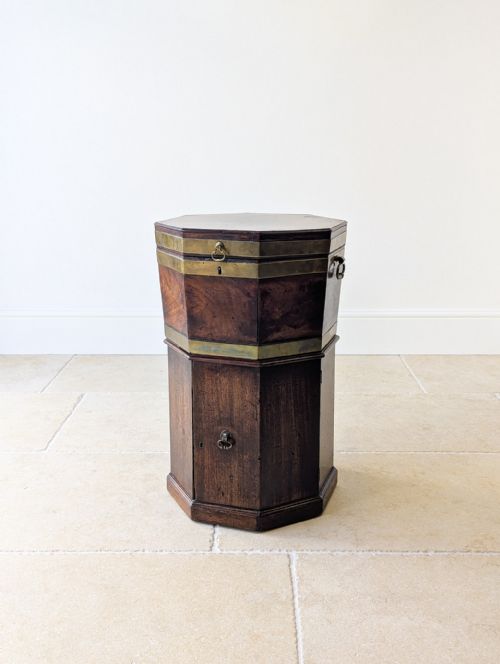
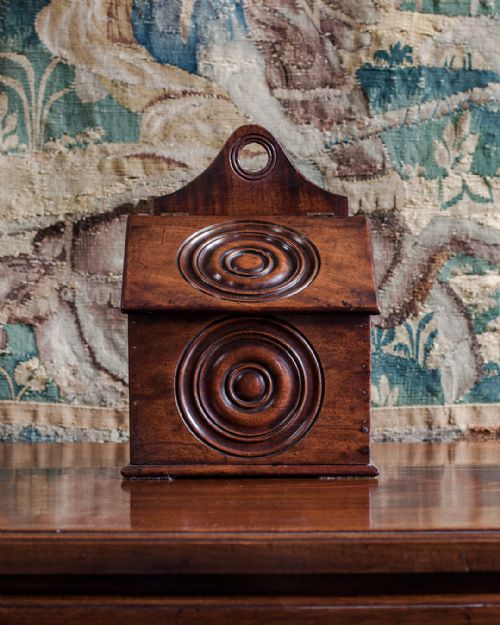
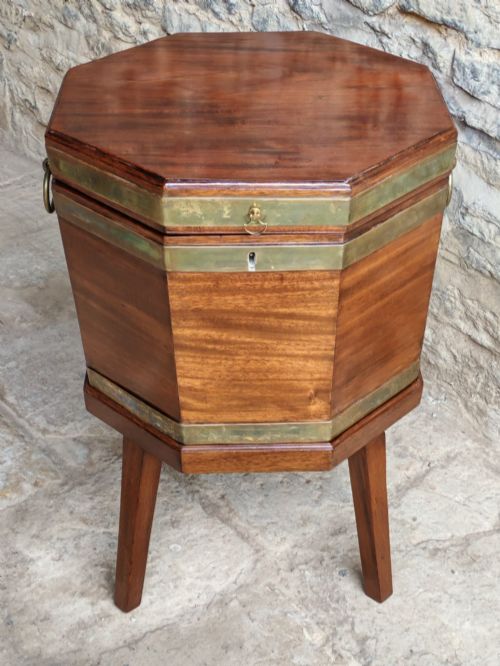
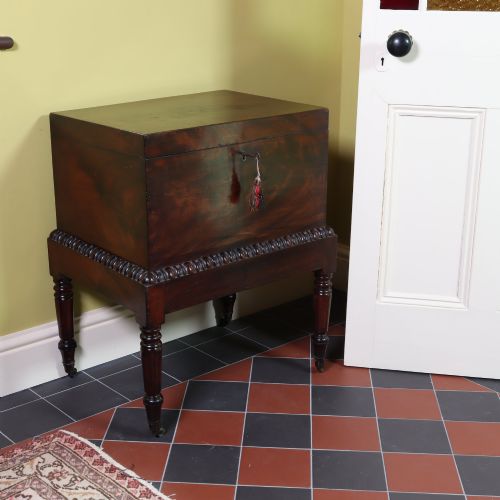
The selection ranges from octagonal cellarets and apothecary chests to small candle boxes and document storage chests. These pieces reflect the specific organizational needs of households in the eighteenth and early nineteenth centuries.
Makers designed these boxes to serve distinct functions, incorporating internal partitions, secret drawers, and fitted compartments for cutlery, bottles, or valuable documents. The survival of original interiors and brass hardware defines the utility of the pieces found in this inventory.
How They Were Made
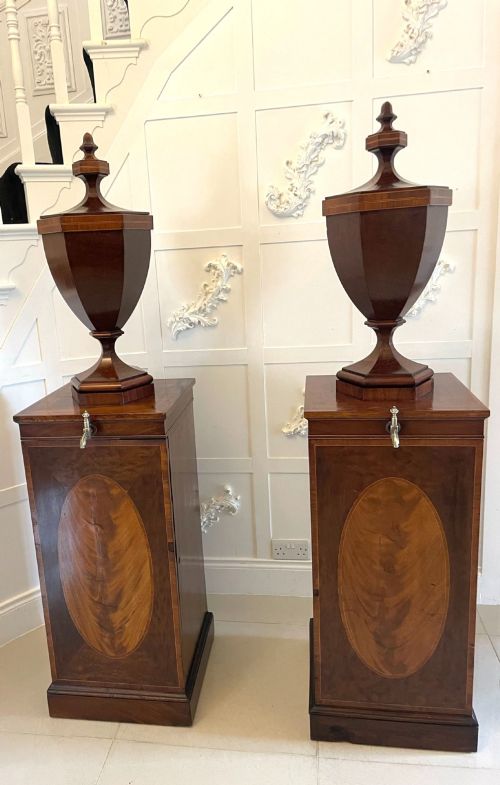
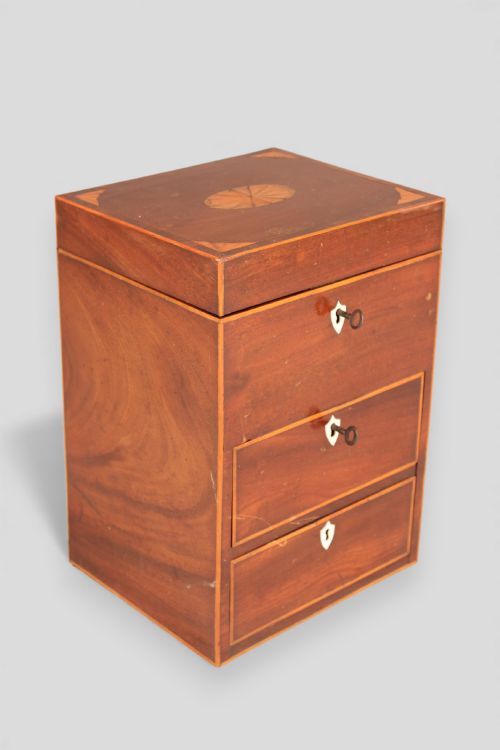
Cabinetmakers utilised solid mahogany, often selecting figured, flame, or Cuban varieties, alongside secondary timbers such as satinwood and boxwood for decorative contrast. Surfaces frequently feature precise boxwood stringing, inlay, and cross-banding that delineate panels and borders.
Construction relied on dovetail joints for durability, while brass mounts, hinges, carrying handles, and escutcheons provided structural reinforcement and functional hardware. Specialised boxes incorporated internal dividers, glass bottles, and sliding trays assembled by hand.
What Varies in Quality
Quality rests upon the selection of timber grain, where highly figured flame mahogany or carefully matched veneers elevate a simple container into an exceptional work. The precision of inlaid boxwood stringing and the crispness of serpentine or octagonal contours further distinguish finer examples from standard workshop output.
The survival of original interior fittings, functional locks, and period brass hardware separates well-preserved boxes from those altered over time. Master craftsmanship shows in the tightness of dovetail joinery and the harmonious proportions of handles and mounts.
The George III Mahogany Box Glossary
- Cellaret
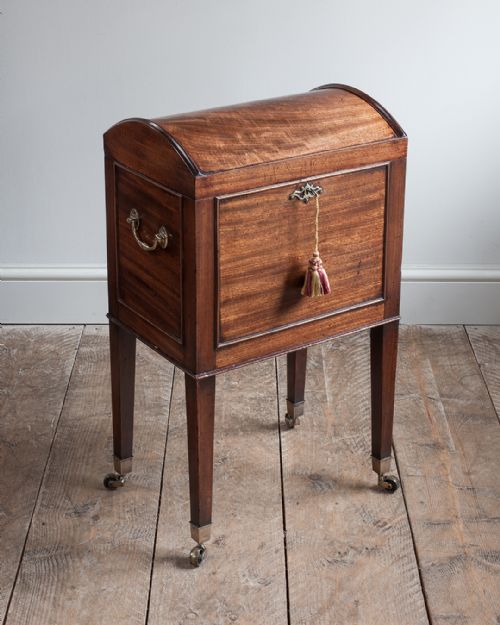
- A lockable container designed for holding wine bottles and cooling them with ice or water. These vessels often feature octagonal shapes and brass banding.
- Tea Caddy
- A small lidded box engineered to store dry tea leaves securely under lock and key. Interiors frequently include foil-lined compartments or mixing bowls.
- Writing Box
- A slope-front or rectangular chest that opens to form a slanted writing surface with internal slots for inkwells and stationery. Many include secret compartments beneath the stationery tiers.
- Stringing
- Thin inlaid lines of contrasting timber, such as boxwood, set flush into the mahogany surface to create geometric borders. This technique highlights the edges of lids and drawer fronts.
- Flame Mahogany
- A veneer cut from timber where the grain creates a distinctive undulating, flame-like pattern. Cabinetmakers prized this figure for principal display surfaces on boxes and furniture.
George III Mahogany Box: Frequently Asked Questions
What were tea caddies used for?
Households utilised tea caddies to store expensive tea leaves securely away from servants and damp air. The boxes featured internal compartments and locks because tea was a high-value commodity.
Over the eighteenth century, these containers evolved from simple double-lidded cannisters into elaborately inlaid boxes with glass mixing bowls and specialised storage sections.
How do I identify a knife box?
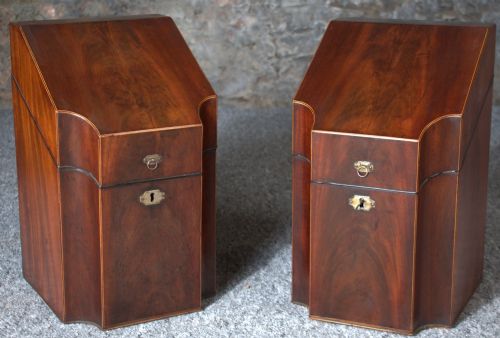
Knife boxes typically feature a sloping lid and a vertical serpentine or curved front designed to display and store cutlery upright. Makers constructed them to sit on sideboards during formal dining.
Inside, the wooden partitions are drilled and shaped to hold fork tines and knife blades securely in place.
What is an apothecary box?
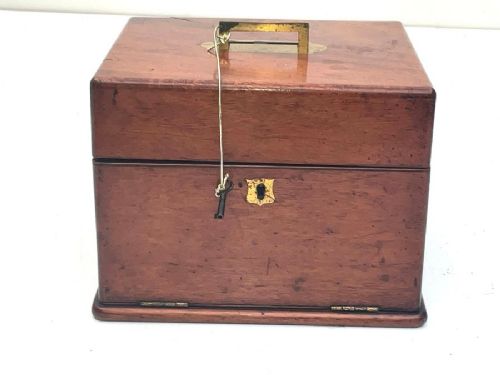
An apothecary box is a portable chest fitted with internal racks designed to hold glass medicine bottles, scales, and mortars. Doctors and travellers carried them to dispense remedies away from fixed dispensaries.
These pieces often retain original glass phials and secure brass locking mechanisms to prevent spills during transit.
How can I tell a cellaret from a tea caddy?
Cellarets are substantially larger floor-standing or tabletop containers built specifically to hold heavy wine bottles and decanters. They frequently incorporate lead linings or octagonal shapes with robust brass carrying handles.
Tea caddies remain compact enough to sit on tables and feature interior partitions meant for dry goods rather than liquor bottles.