




George III Ladies Desk
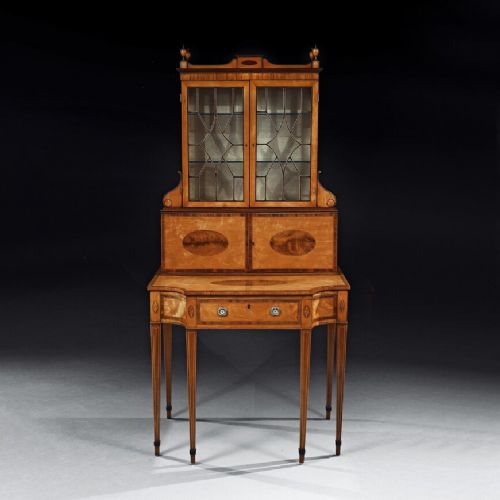
A george iii ladies desk is a refined piece designed for private correspondence, combining elegant cabinetry with compact practicality.
George III Ladies Desk
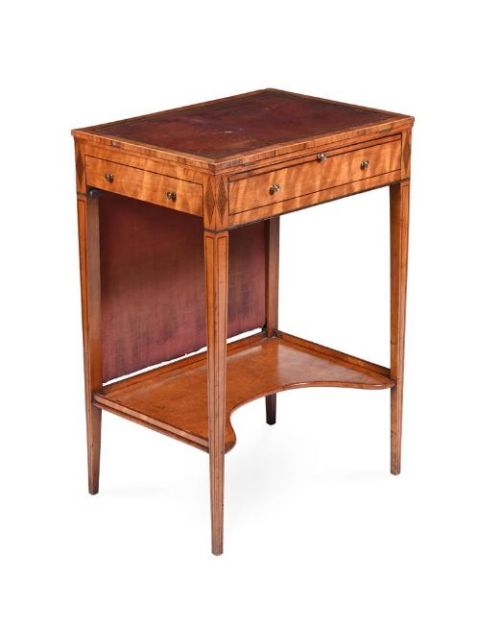
A george iii ladies desk encompasses delicate writing furniture from the eighteenth century alongside later revivals, offering compact surfaces tailored for letter writing and personal administration. The selection centres heavily upon the bonheur du jour and satinwood writing tables, alongside tambour desks, cheverets, and worktables equipped with secret rising compartments.
Most examples originate from the eighteenth century under the Georgian and George III styles, though later nineteenth and twentieth century revival pieces also appear. These smaller writing cabinets and writing tables bridge the gap between ornamental furniture and functional workspace.
How they were made
Cabinetmakers utilised rich timber foundations such as mahogany and satinwood, frequently enhanced by contrasting boxwood inlay and exotic woods like sabicu. Structural fittings incorporated brass hardware and leather writing surfaces.
Joinery involved intricate construction for tambour shutters, folding flaps, and multiple secret rising compartments within small-scale writing cabinets and tables.
Several ladies desks conceal secret rising compartments, offering hidden spaces designed for private correspondence and small treasures.
What varies in quality
The degree of refinement rests heavily upon the selection of timber veneers and the precision of the boxwood inlay. Superior examples display harmonious grain matching across satinwood panels and mahogany surfaces.
Complexity of internal architecture also separates standard items from exceptional ones, particularly where mechanical rising compartments and tambour mechanisms operate with seamless precision.
The George III Ladies Desk Glossary
- Bonheur du jour
- A light daytime writing desk featuring a small cabinet or set of drawers on top of the writing surface. This form gained popularity during the eighteenth century.
- Cheveret
- A small movable writing table fitted with a tiered superstructure of small drawers or shelves above. It often incorporates a pull-out slide.
- Tambour
- A sliding door or shutter constructed from narrow vertical strips of wood glued to a canvas backing. It runs in concealed grooves to enclose desk compartments.
- Satinwood
- A durable tropical hardwood prized for its golden lustre and smooth texture. It serves as a primary decorative veneer in late eighteenth-century cabinetry.
- Sabicu
- A dense Caribbean timber featuring rich colour and grain patterns. Makers utilised it alongside satinwood in high-status cabinet work.
George III Ladies Desk: Frequently Asked Questions
What is a bonheur du jour?
A bonheur du jour is a small, light writing desk featuring a raised cabinet or shelving tier atop the main writing surface. These pieces were designed for ladies to use for correspondence and reading during the day.
First appearing in France, the form was adopted by English cabinetmakers during the George III period, utilising fine timbers such as satinwood and mahogany.
How do I identify a George III period desk?
Genuine George III pieces date from the reign of King George III between seventeen sixty and eighteen twenty. They display characteristic Neoclassical or Sheraton design elements, precise boxwood inlay, and traditional eighteenth-century joinery.
Later revival pieces from the nineteenth and twentieth centuries imitate these styles but generally exhibit different secondary woods, machine-cut elements, or modern construction marks.
What was a cheveret used for?
A cheveret served as a versatile multi-purpose piece for a lady's private boudoir or drawing room. It provided a portable writing surface combined with tiered compartments for letters, stationery, and needlework.
Many examples included a removable book stand or small drawer section on top, mounted on slender legs for easy movement around the room.
How do tambour desks work?
Tambour desks feature flexible sliding shutters that conceal pigeonholes and small drawers. The shutter consists of narrow wooden slats glued side by side onto a linen or canvas backing, allowing it to slide smoothly around a curved track.
This mechanism allowed makers to secure the writing compartment without needing a heavy hinged fall-front lid.