



George III Bedside Cabinet
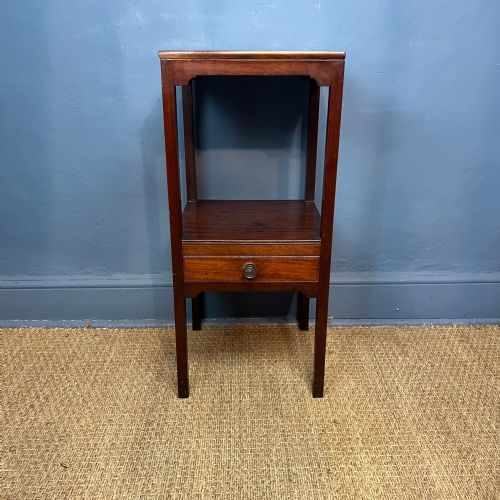
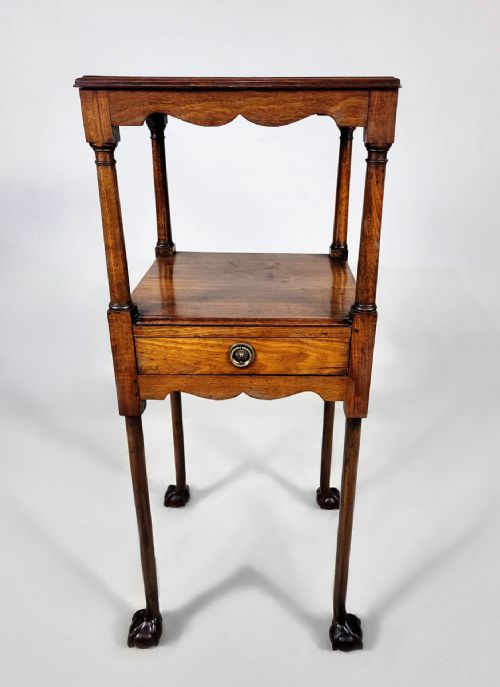
A george iii bedside cabinet brings Georgian proportion and practical timber work to a room.
George III Bedside Cabinet
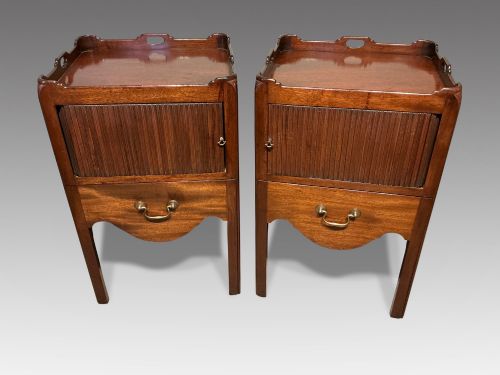
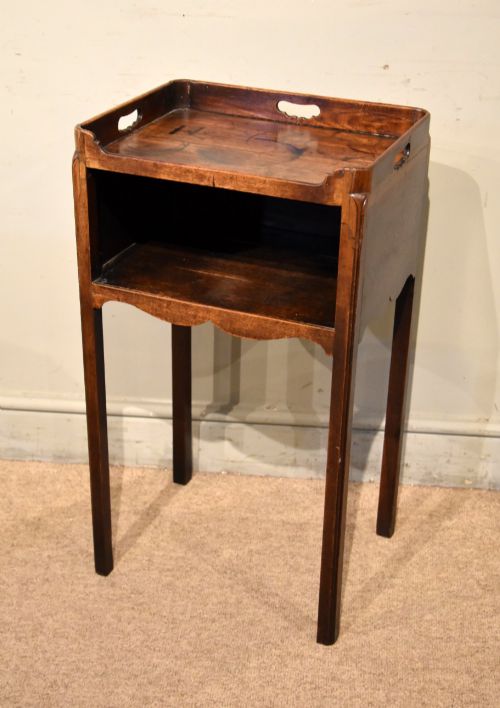
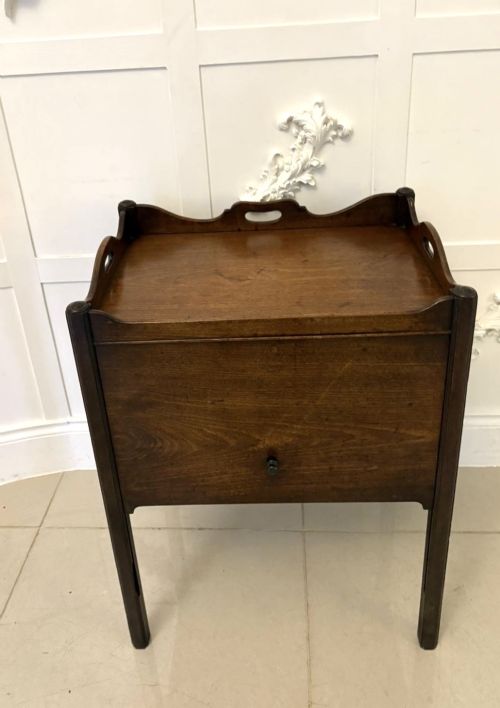
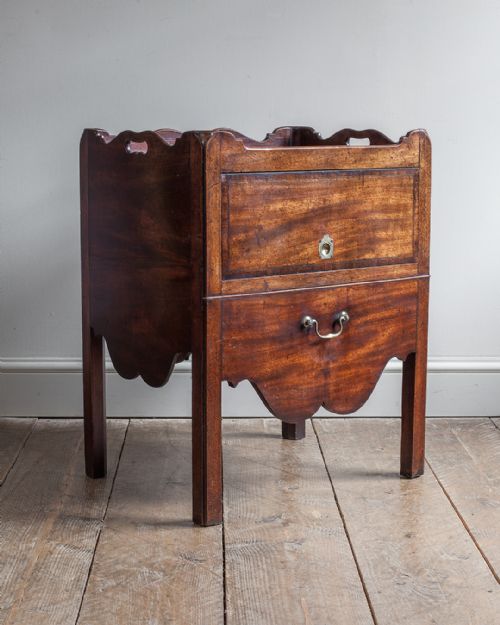
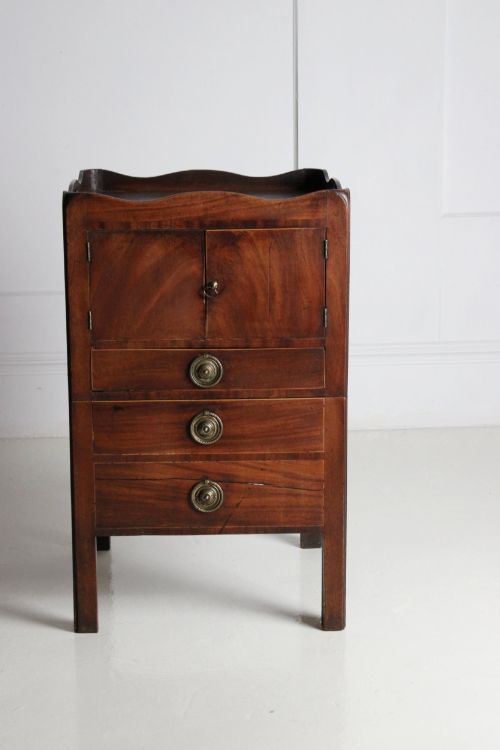
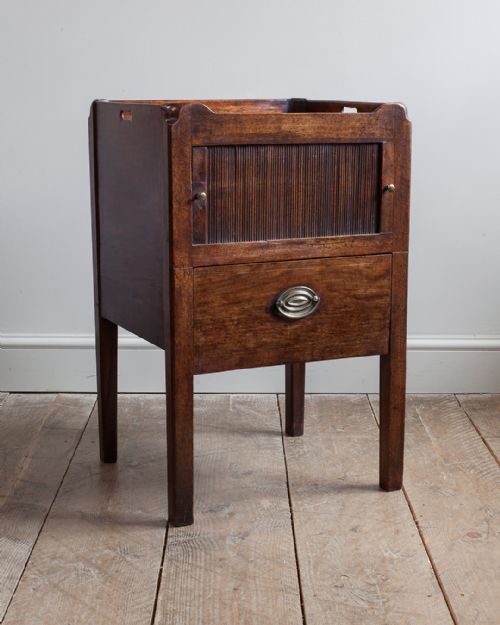
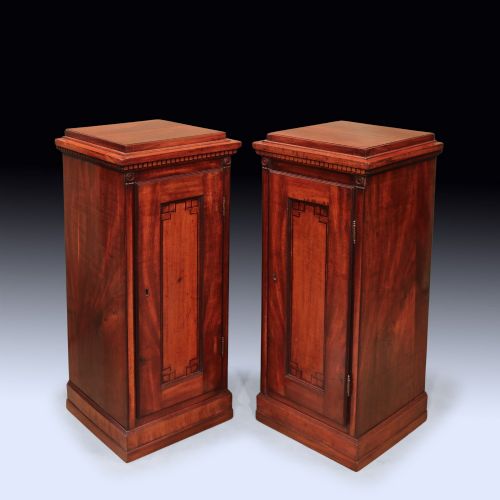
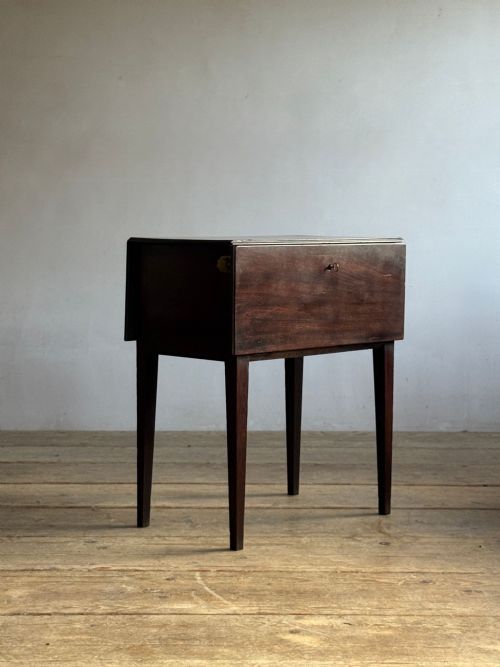
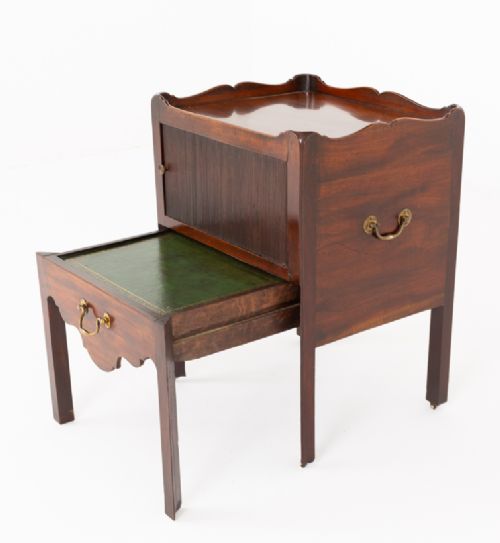
When you search for a george iii bedside cabinet, you encounter compact mahogany case pieces designed to hold chamber apparatus or night necessities. The version you are most likely to meet on this page is the freestanding pedestal cupboard or tray top commode originating in the eighteenth century or following its distinct geometric lines.
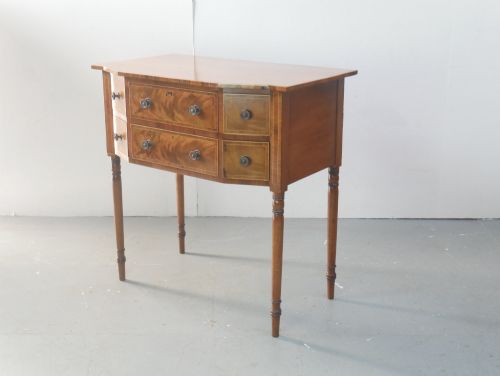
Makers and cabinet makers of the Georgian era produced these forms as nightstands, tambour front commodes, and serpentine front tables. The selection ranges from authentic eighteenth century examples to later revival pieces shaped in the classic George III style.
The common thread across these forms is the enclosed storage space beneath a flat, galleried, or tray top. Buyers encounter single items as well as matched pairs finished in rich timber grains.
Materials and Technique
Construction relies heavily upon solid mahogany and carefully selected mahogany veneers applied to secondary structural timbers. Workshops utilised brass for handles, hinges, and occasional gallery fittings, adding functional detail to the case corners and doors.
Cabinet makers incorporated satinwood, boxwood, and boxwood inlay for contrasting banding and stringing details on select pieces. Tambour fronts required slender wooden slats glued to canvas backing to achieve a flexible sliding door mechanism.
Joinery techniques included dovetailing for drawer construction and panel-in-frame assembly for cabinet sides. Surfaces received hand-rubbed finishes that emphasised the natural figure and depth of the timber.
George III Bedside Cabinet Retail Price Guide 2026
Typical asking prices for george iii bedside cabinet among the pieces listed under this phrase on Sellingantiques today, from the lower quarter to the upper quarter. They describe what is for sale here now, not the wider market.
The listings span the Georgian, Regency, and Neoclassical styles, constructed primarily in mahogany with satinwood and brass details.
Assessing Quality
The distinction between ordinary and exceptional pieces rests upon timber selection and the precision of the cabinet work. Superior examples display figured mahogany with consistent grain patterns across the top, sides, and doors, matched carefully by the maker.
Detailing differentiates the range, such as finely executed boxwood inlay, crisply carved brackets, and smoothly operating tambour mechanisms that glide without friction. The integration of original brass hardware and untouched structural integrity elevates an item above standard utility pieces.
Gillows
The George III Bedside Cabinet Glossary
- Tray top
- A tabletop finished with a raised moulded edge or pierced gallery designed to prevent items from sliding off the surface. This feature appears frequently on eighteenth century bedside commodes.
- Tambour
- A flexible sliding door formed from narrow vertical strips of wood affixed to a fabric backing. It allows access to narrow cabinet spaces where hinged doors would prove impractical.
- Commode
- A low cabinet or chest enclosing storage space, often adapted in the eighteenth century to house a chamber pot. In modern terms, it functions as a bedside table or nightstand.
- Serpentine front
- A furniture front characterised by a gentle convex centre flanked by concave curves. This shaping demands advanced woodworking skill and indicates higher status pieces.
- Stringing
- Thin inlay work contrasting in colour with the primary wood surface, used to outline drawers and panels. It frames the main timber panels on refined cabinet work.
George III Bedside Cabinet: Frequently Asked Questions
What is a george iii bedside cabinet used for today?
These cabinets serve as practical bedside tables offering enclosed storage space beneath a surface suitable for a lamp and books. Their compact proportions allow them to fit easily beside modern beds.
Collectors and interior designers utilise them to introduce period timber warmth and historical character into contemporary and traditional bedrooms alike.
How do I identify a genuine period piece?
Examination of the secondary woods, dovetail joints, and timber ageing reveals the period of construction. Authentic eighteenth century examples exhibit hand-cut joinery and period-appropriate hardware fixings.
Comparing the construction methods against documented Georgian pieces helps distinguish original items from later nineteenth and twentieth century revival examples.
Are pairs difficult to find?
Matched pairs of bedside cabinets occur less frequently than single pieces because original commissions typically involved single items or were separated over centuries of use. Surviving pairs represent a higher level of initial investment by the original owner.
Listings occasionally feature matched pairs or assembled pairs that share similar proportions, timber selection, and George III stylistic details.
How should I care for mahogany bedside furniture?
Maintenance requires keeping the timber away from direct heat sources and strong sunlight to prevent the mahogany finish from fading or drying out. Gentle dusting with a soft cloth preserves the surface lustre.
Applying occasional appropriate wax feeds the timber and maintains the depth of the grain without building up heavy chemical layers.