
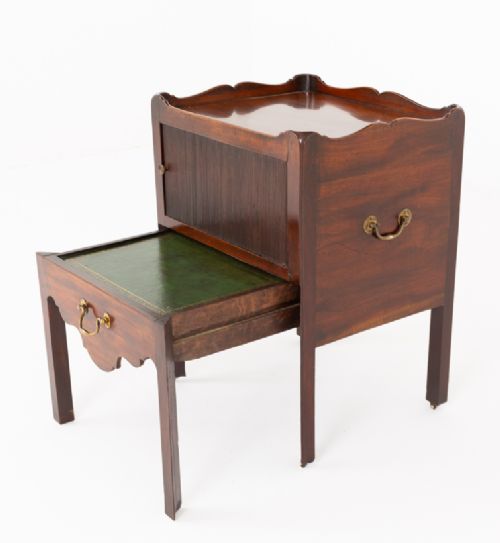
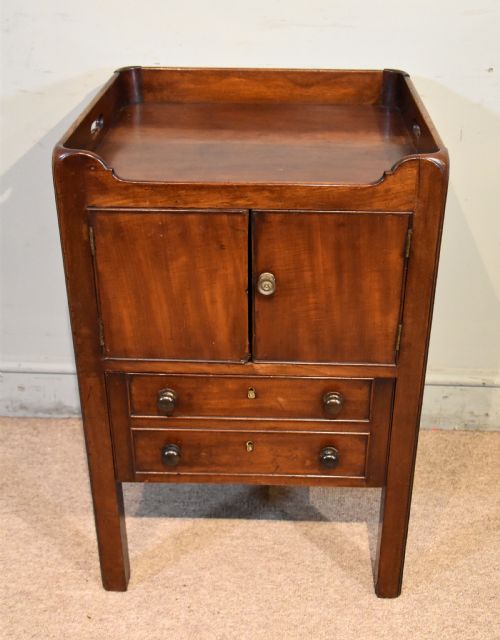


George III Tray Top Table
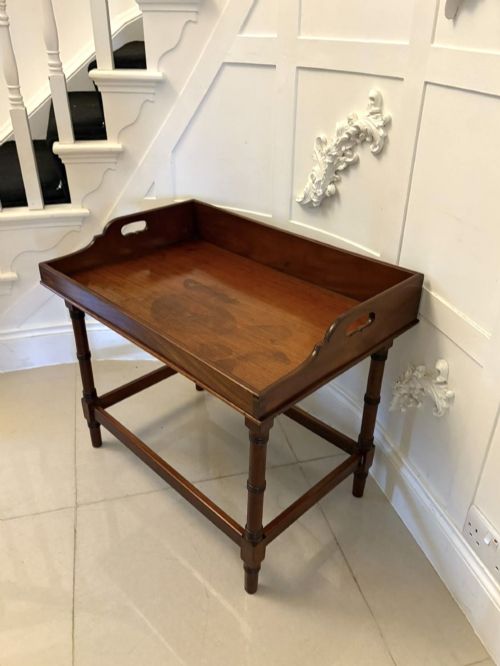
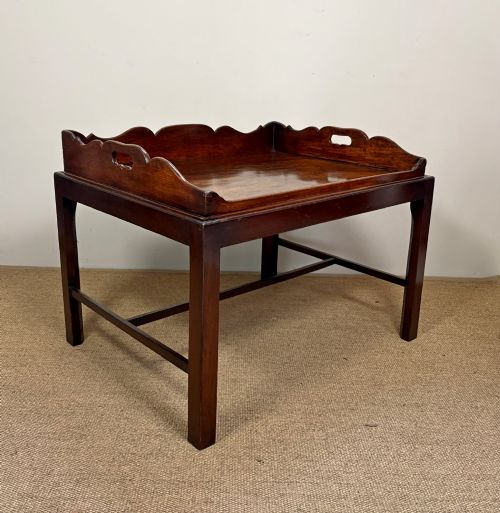
A george iii tray top table offers refined Georgian elegance, serving as a versatile bedside or lamp table with a raised gallery edge.
George III Tray Top Table
A george iii tray top table combines practical containment with the understated elegance characteristic of late eighteenth-century British furniture. The defining feature is the raised gallery edging, which prevents items from sliding off the surface during daily use.
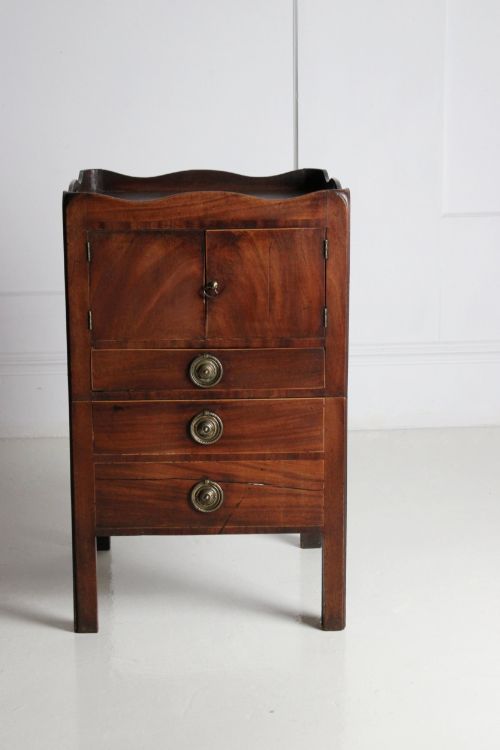
Most examples encountered here take the form of bedside cabinets, nightstands, and commodes, alongside occasional lamp tables and silver tables. These pieces originate predominantly from the Georgian period, often bearing the clean lines associated with the era.
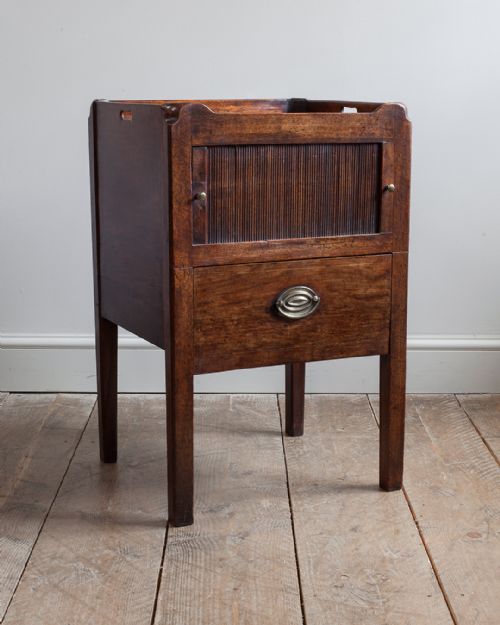
Makers adapted the form to suit various domestic requirements, producing bow-fronted, serpentine, and tambour-fronted variants alongside standard square tops. Buyers often select these pieces for their compact proportions and functional top surfaces.
Construction and Materials
Makers relied heavily on solid mahogany and flame mahogany veneer, selecting timber for its rich grain patterns and durability. Selected pieces incorporate contrasting elements such as satinwood and boxwood inlay to articulate panels and borders.
Cabinetmakers constructed the characteristic tray tops either by shaping the solid timber of the surface itself or by joining applied mouldings to form the raised gallery edge. Brass handles and hinges frequently provide functional and visual accents on cupboard doors and pull-out sections.
Step commodes offered Georgian gentlemen a dignified way to reach high beds and dress.
Determinants of Quality
Quality rests in the crispness of the timber carving, the precision of the joinery at the gallery corners, and the selection of figured mahogany veneer. Superior examples display thoughtful grain matching across drawer fronts and cabinet doors.
The integrity of the structural frame, the original condition of the brass hardware, and the subtlety of any inlay work distinguish finer workshop output from simpler utilitarian pieces.
Gillows
The George III Tray Top Table Glossary
- Tray top
- A tabletop finished with a raised moulded edge or gallery designed to keep objects from falling. This feature defines the primary utility of these tables.
- Commode
- A low cabinet or chest of drawers, frequently enclosing a chamber pot in period examples. These pieces often feature enclosed cupboards or tambour doors.
- Tambour
- A flexible shutter made from narrow strips of wood glued to canvas, allowing curved cabinet doors to slide open smoothly. This technique required precise carpentry.
- Serpentine
- A furniture front curving outward in the centre and inward at the sides. This contour demands advanced woodworking skill to execute properly.
- Flame mahogany
- Mahogany veneer cut from the fork of the tree where branches meet, creating a distinctive flamed or feathered pattern. Cabinetmakers reserved this timber for prominent surfaces.
George III Tray Top Table: Frequently Asked Questions
What was a tray top table used for?
These tables served multiple domestic functions in the eighteenth century, operating primarily as bedside stands, lamp tables, or small serving pieces. The raised edge made them particularly useful for holding items securely in bedrooms and drawing rooms.
Over time, their compact scale allowed them to transition easily into modern interiors as versatile accent tables or bedside cabinets.
How do I identify a Georgian piece?
Authentic Georgian furniture typically exhibits eighteenth-century construction methods, including hand-cut dovetails and native timber framing. The proportions, hardware, and patination of the wood generally align with the period of manufacture.
Examining the interior secondary woods and the wear patterns on the feet helps confirm the age of the piece.
What is a tambour front?
A tambour is a sliding shutter composed of narrow vertical wooden slats backed onto canvas or linen. This allowed makers to enclose curved cabinet compartments without using swinging doors.
Operating the sliding mechanism reveals a smooth action that indicates careful historical craftsmanship.
Are these tables suitable for modern bedrooms?
Their modest proportions and enclosed storage compartments make these cabinets practical for contemporary bedside use. The top surface provides adequate space for lighting and books while keeping items secure within the gallery edge.
They blend readily with various interior styles due to the warmth of the polished mahogany.