


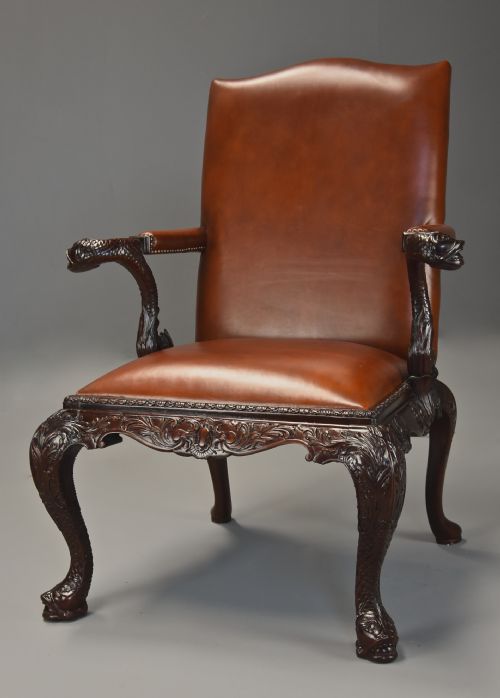

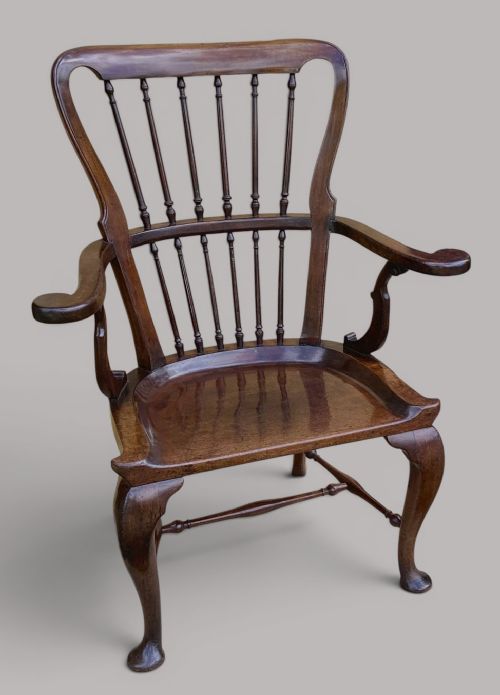


George II Mahogany Armchair
A george ii mahogany armchair brings robust mid-eighteenth-century proportions and dense timber into a room, valued for its commanding silhouette and tactile carving.
George II Mahogany Armchair
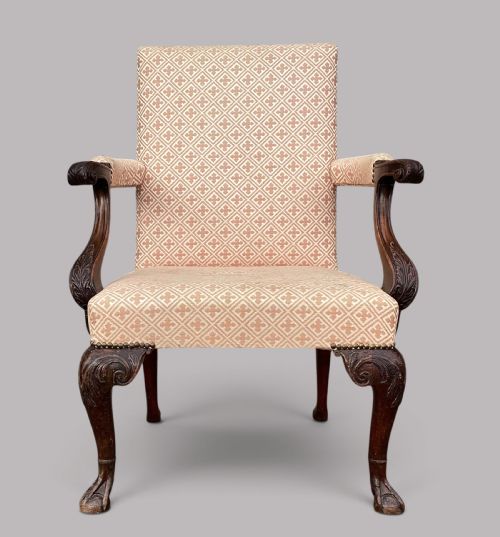
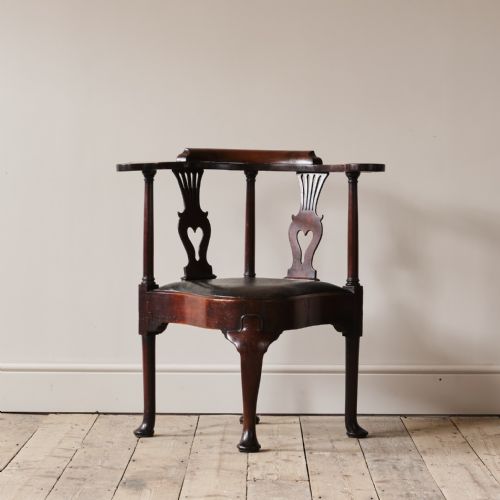
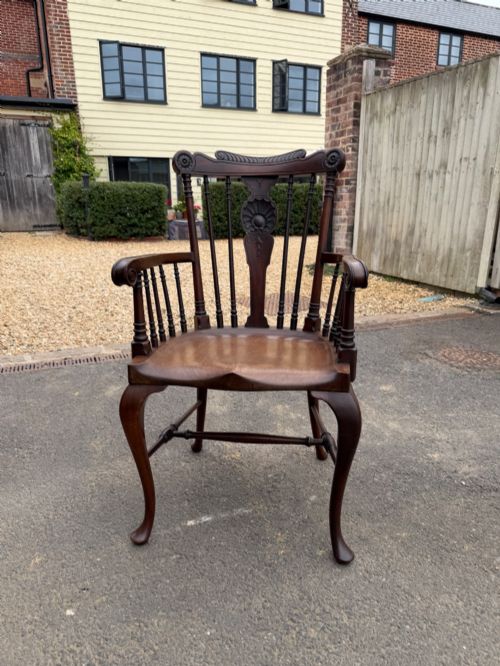
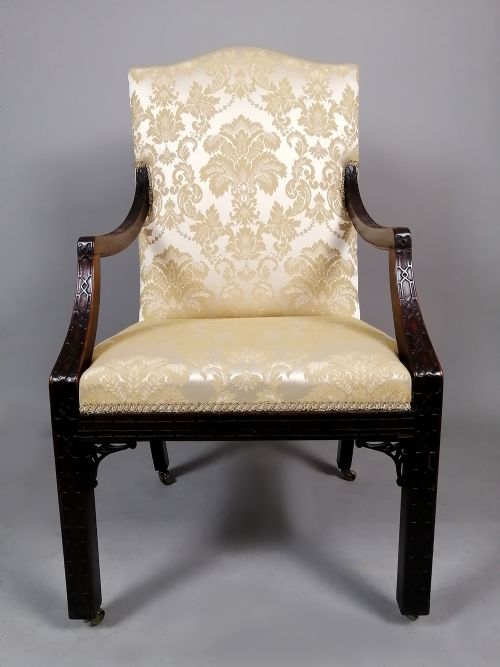
A george ii mahogany armchair represents a heavy timber seat built during the mid-eighteenth century or reproduced in later revival periods. The selections here include open armchairs, library chairs, Gainsborough models with upholstered frames, and corner chairs.
Most items on this page span genuine eighteenth-century execution and later nineteenth- or twentieth-century revival interpretations. Makers across these periods utilise traditional forms such as Chinese Chippendale details, Irish carved motifs, and wing back structures.
Buyers encounter seating ranging from single library armchairs to matched sets of dining chairs and two-chair back sofas. The underlying material across nearly every piece remains solid timber paired with textile, leather, or velvet coverings.
How they were made
Makers constructed these chairs primarily using dense mahogany, shaping structural frames with mortise and tenon joints to support heavy daily use. Carvers worked directly into the timber to execute intricate shell motifs, scrolling arms, and ball and claw feet.
Upholstered variants incorporate webbing and stuffing beneath surfaces covered in leather, velvet, tapestry, or standard textile fabric. Brass tacks often secure the perimeter of the upholstery, while subsidiary elements employ secondary woods beneath the primary mahogany show-wood.
George II Mahogany Armchair Retail Price Guide 2026
Typical asking prices for george ii mahogany armchair among the pieces listed under this phrase on Sellingantiques today, from the lower quarter to the upper quarter. They describe what is for sale here now, not the wider market.
Listings feature eighteenth-century pieces alongside nineteenth and twentieth-century revival examples, all constructed from mahogany with brass, leather, and textile elements.
What varies in quality
The crispness of the hand-carved ornament separates standard production from exceptional examples, as deep undercut details reveal the hand of a skilled artisan. Sharp definition in acanthus leaves and animal paws indicates superior workshop standards compared to soft or mechanical shaping.
Timber selection dictates visual weight, with dense, dark mahogany grains offering greater depth than plain or faded surfaces. Original structural integrity, minimal timber replacement, and well-preserved upholstery support also determine the standing of each piece.
Giles Grendey·Robert Strahan Dublin
The George II Mahogany Armchair Glossary
- Gainsborough armchair
- An upholstered open armchair with padded arms and a wide seat, designed in the mid-eighteenth century for writing desks or parlours. These chairs typically stand on four legs with carved cabriole or straight supports.
- Corner chair
- A seating form featuring a diagonal orientation designed to fit into room angles, supported by three side legs and a central rear leg. The curved top rail rests on three or more turned or carved uprights.
- Chinese Chippendale
- A decorative style incorporating fretwork lattice patterns, pagoda motifs, and square legs influenced by eighteenth-century Chinese design. Cabinetmakers applied these ornamental flourishes to chair backs and stretchers.
- Cabriole leg
- A furniture leg that curves outward at the knee and tapers inward toward the ankle, often terminating in a claw and ball foot. This shape derives from ancient animal forms adapted by European cabinetmakers.
- Wing chair
- An upholstered armchair with high side panels designed to shield the occupant from drafts and retain fireplace heat. The padded wings extend from the upholstered backrest down to the armrests.
George II Mahogany Armchair: Frequently Asked Questions
How do I identify a genuine eighteenth-century piece?
Examine the timber underneath for tool marks, dry grain, and construction methods consistent with period hand-working tools. Secondary woods and traditional joinery provide key clues regarding age.
Compare the carving depth and proportions against documented examples from the mid-eighteenth century to confirm authenticity.
What is a Gainsborough armchair used for?
These wide upholstered seats served primarily as library or writing chairs where comfort mattered during long hours of reading or correspondence. Their open arms accommodated voluminous eighteenth-century garments.
Today they function effectively as desk chairs or occasional seating in studies and drawing rooms.
How do I care for antique mahogany and leather?
Apply a microcrystalline wax sparingly to nourish the mahogany surface and buff gently with a soft cloth to maintain a natural sheen. Avoid placing timber pieces near direct heat sources or strong sunlight.
Treat leather upholstery with specialised leather dressings to prevent cracking while keeping abrasive cleaners away from the fabric.
What distinguishes George II style from revival pieces?
Revival items manufactured during the nineteenth or twentieth centuries often display machine-assisted joinery, standardised timber seasoning, and minor stylistic discrepancies in the carving. Examining the interior framework reveals the manufacturing era.
Period pieces carry the accumulated wear of centuries alongside eighteenth-century construction techniques unique to early workshops.