
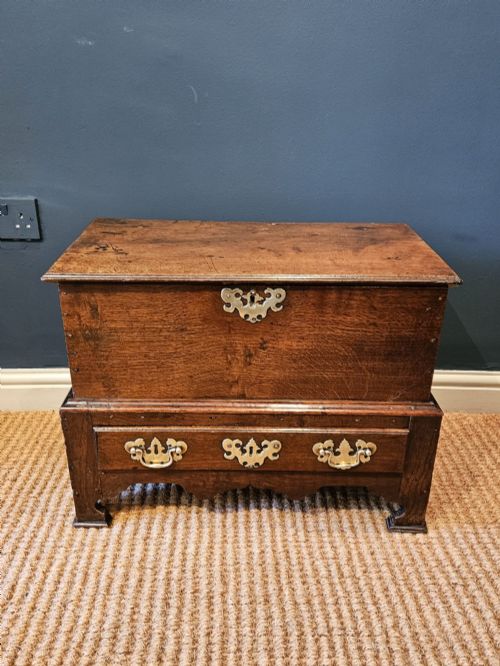


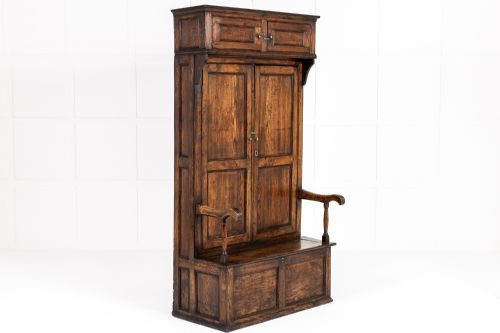


George I Oak Box
A george i oak box brings straightforward early eighteenth-century utility and sturdy timber grain into a room.
George I Oak Box
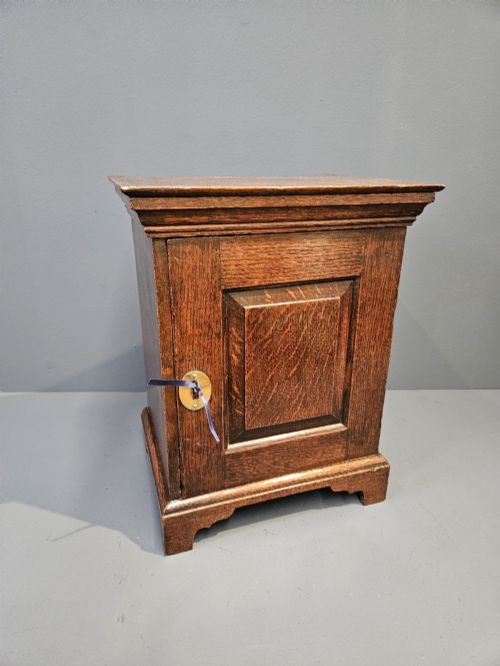
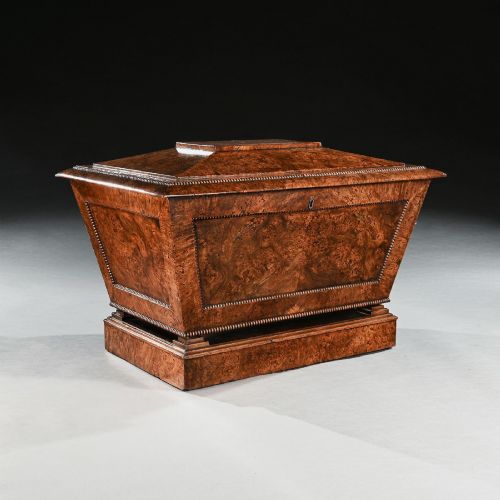
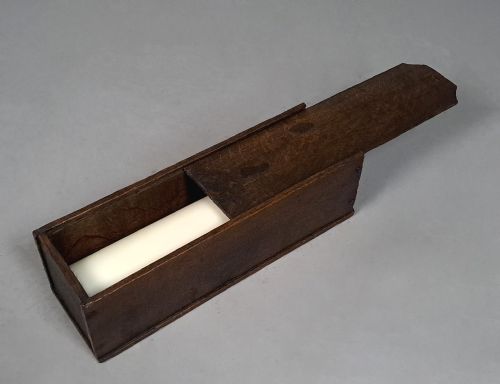
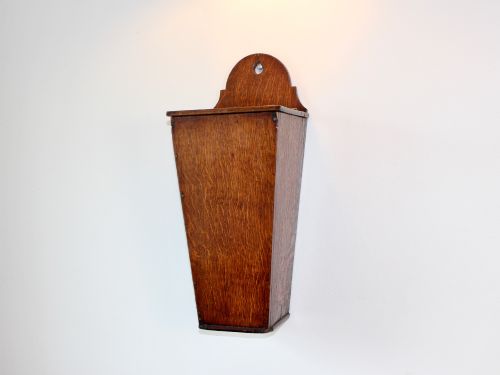
When you search for a george i oak box, you are looking at utilitarian early eighteenth-century containers built to hold documents, candles, small valuables or household textiles. The pieces meeting this description range from compact candle boxes and deed boxes to small coffers, box stools and bible boxes originating in the early decades of the seventeen-hundreds.
The version you are most likely to encounter combines sturdy local timber with simple panel construction, reflecting the domestic needs of the period. These items often display the honest joinery and practical sizing typical of early Georgian country furniture, showing how domestic storage was handled before mass production.
Many survivors carry the marks of daily use over three centuries, from surface scuffs to rich patination on the timber. Whether designed for wall hanging or floor placement, they provide compact storage that holds a distinct early Georgian character.
How they were made
Makers built these pieces primarily using solid domestic oak, frequently complemented by secondary timbers like elm, fruitwood inlay or brass hinges and lock plates. Carpenters relied on traditional methods such as six-plank construction and box joints to assemble the sides and lids securely without complex machinery.
Surfaces were typically left to mature naturally or treated with basic oil finishes that allowed the grain and figure of the oak to darken over generations. Hardware like iron strap hinges or brass escutcheons was hand-forged or cast, fastening lids and compartments with robust simplicity.
Listings for this phrase include examples in solid oak, elm and fruitwood inlay spanning the early eighteenth century.
What varies in quality
Quality in these early containers rests on the originality of the timber, the crispness of the joinery and the survival of authentic surface patination. Examples that retain their original hinges, locks and feet stand apart from those altered or rebuilt during later centuries.
The depth of colour in the oak and the crispness of any carved or panelled details separate standard utility pieces from those commissioned with finer proportions or regional decorative flourishes. A surface untouched by modern stripping reveals the true grain quality and tactile depth of early eighteenth-century craftsmanship.
The George I Oak Box Glossary
- Box coffer
- A small trunk or chest featuring a hinged lid, used for secure domestic storage before fitted closets became common in homes.
- Six-plank chest
- A primitive form of box construction where the base, lid and four sides consist of single boards joined at the edges.
- Patina
- The deep sheen and warm colour developed on wooden surfaces over centuries of handling, exposure to light and waxing.
- Escutcheon
- A protective plate surrounding a keyhole, often fashioned from brass to reinforce the timber around the lock mechanism.
- Box stool
- A low seat featuring a hollow compartment beneath the lid, combining domestic seating with concealed storage.
George I Oak Box: Frequently Asked Questions
What did they store inside?
These containers held precious documents, deeds, family bibles, household candles or small personal valuables that required safekeeping from damp and theft.
Because homes lacked built-in closets, such lidded boxes kept essential items organised and portable within domestic spaces.
How do I spot an early piece?
Look for hand-sawn board marks, pegged joints, period ironwork and timber surfaces that show a deep, undisturbed colour.
Early pieces often display traditional construction methods like dovetails or six-plank joins rather than modern screws or machine-cut parts.
Where were they placed originally?
Smaller boxes sat on tables, desks or were hung directly on walls by integrated brackets for quick access to candles and writing materials.
Larger box stools and coffers stood by hearths or in hallways to serve as both seating and secure storage for heavy textiles.
Are replacement hinges common?
Many surviving containers have undergone repairs to their iron or brass hardware because centuries of lifting put heavy strain on lids.
Original hinges add desirability, but period-appropriate replacements are frequently accepted on working pieces of this age.