
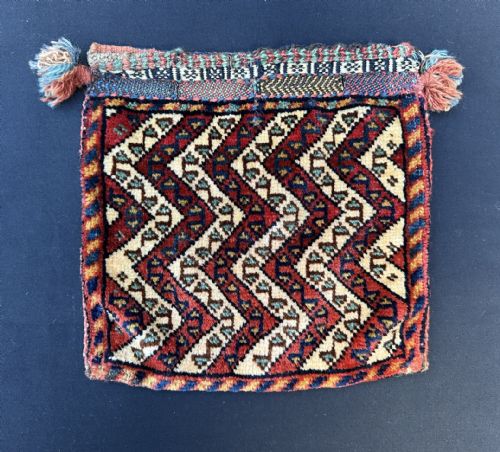
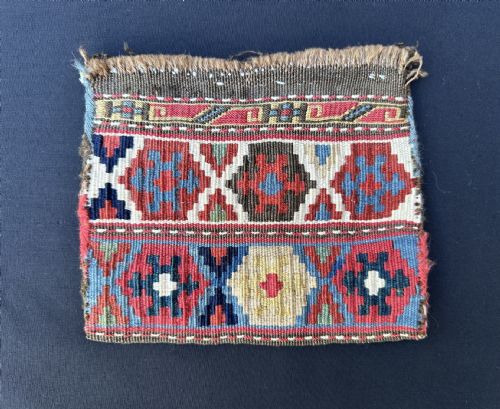
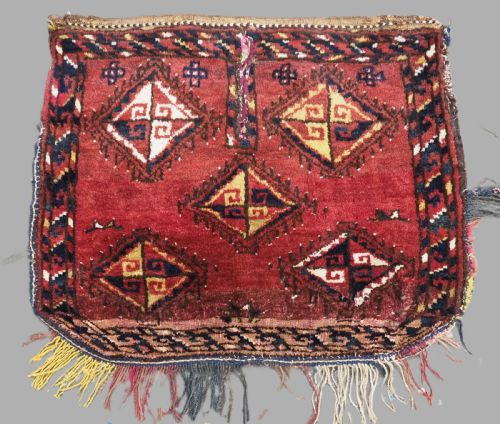

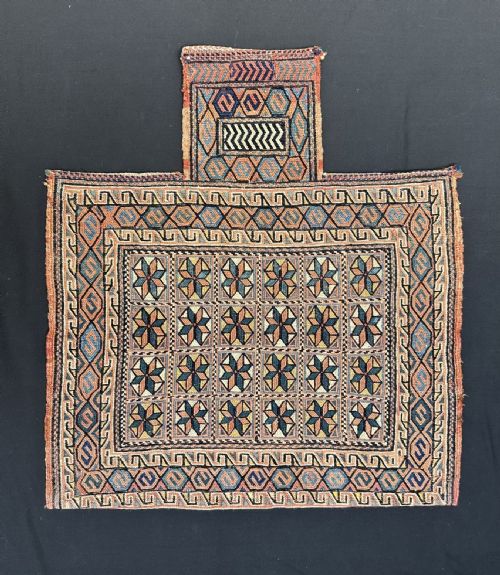
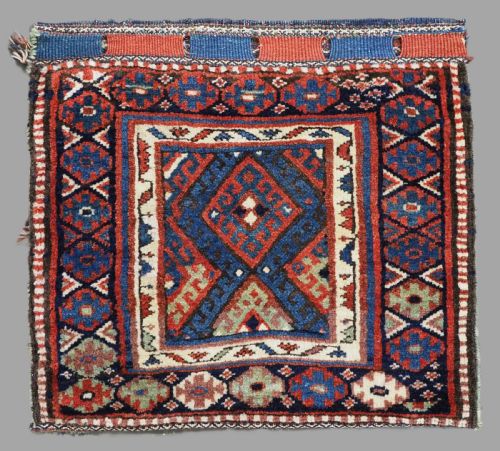
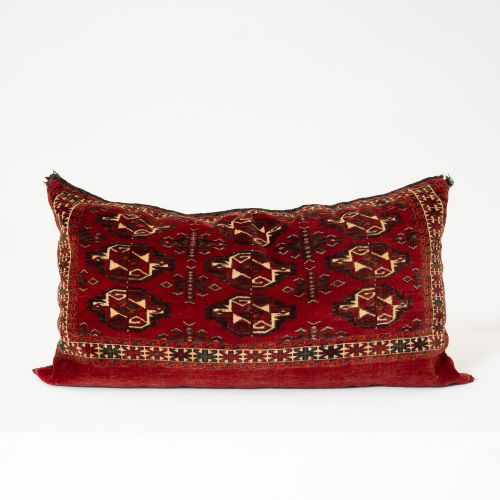

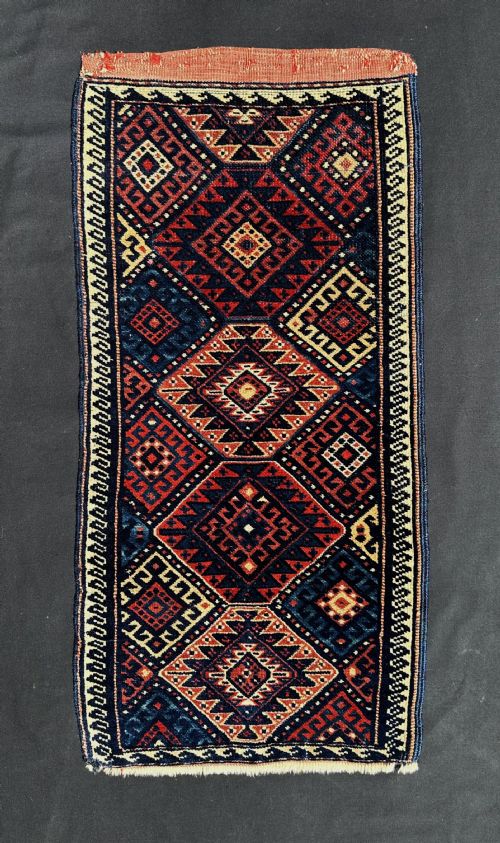
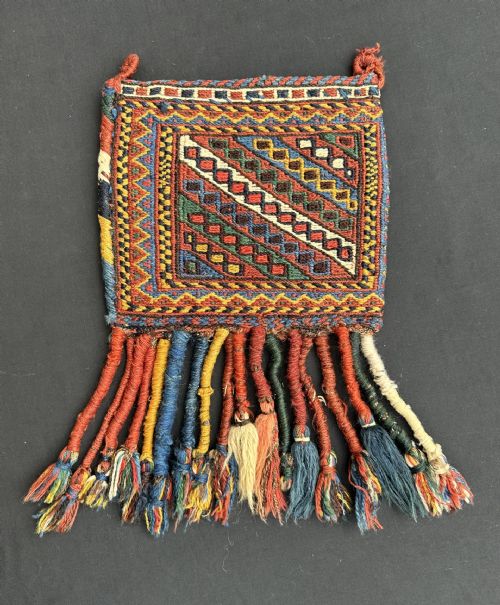

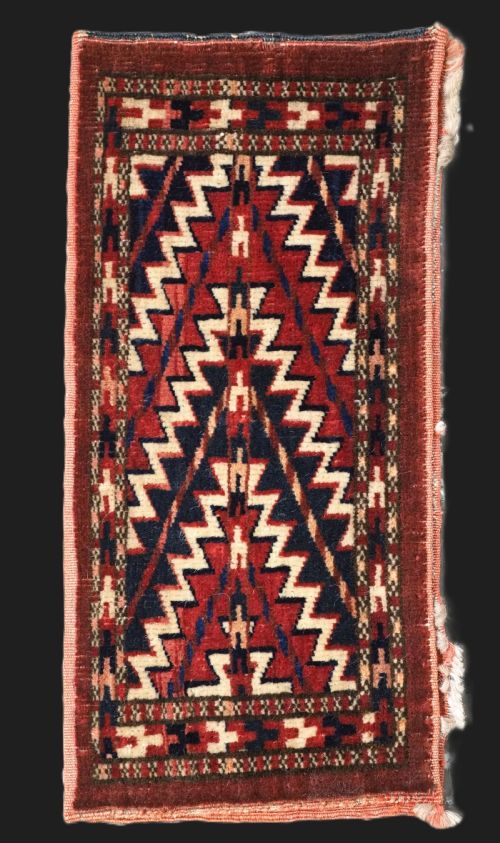
Geometric Woven Tribal Bag
When you search for a geometric woven tribal bag, you are looking at utilitarian nomadic textiles woven across Persia, the Caucasus, and Central Asia during the nineteenth and early twentieth centuries.
Geometric Woven Tribal Bag
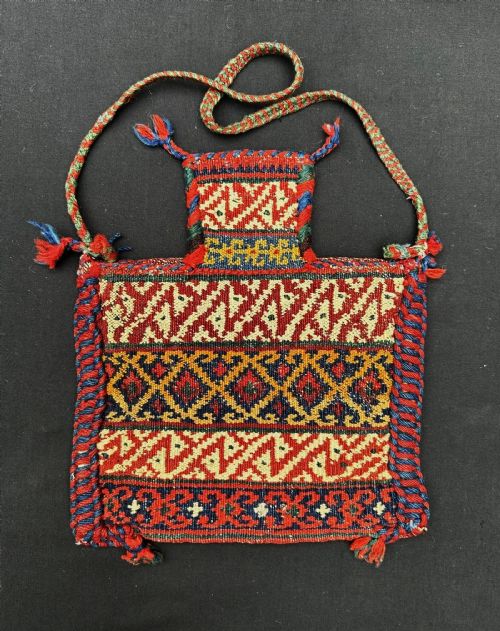
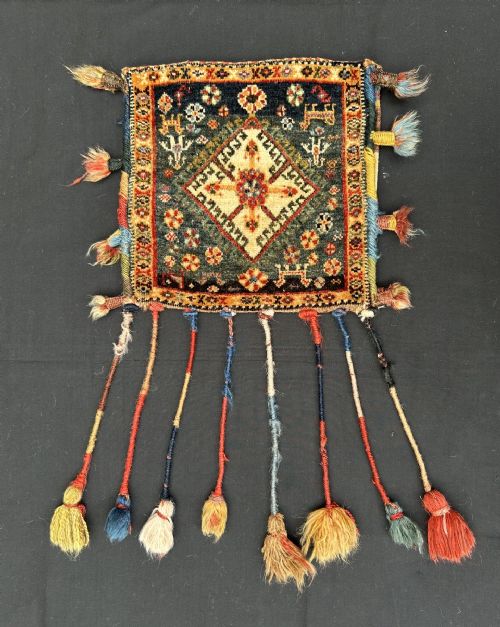
A geometric woven tribal bag is typically a functional container such as a saddlebag, salt bag, vanity bag, or storage bag created by nomadic and village weavers for daily transport and household use.
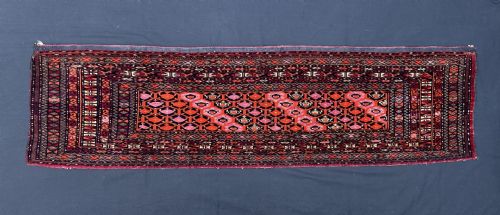
The pieces on this page span styles from Persian tribal groups like the Qashqa'i and Afshar to Turkmen, Caucasian, and Kurdish weavers working between the eighteen-sixties and nineteen-twenties.
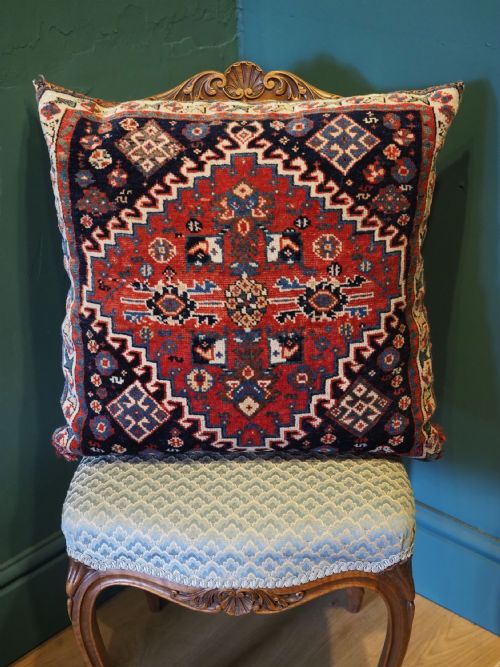
Most examples appear as complete bags, front panels, or cushions adapted from larger saddlebag assemblies and storage sacks.
How They Were Made
These textiles are constructed primarily from wool and hand-spun wool, often paired with cotton for structural foundations or specific design details.
Weavers utilised natural dyes to achieve deep palettes across pile-woven surfaces and flat-woven soumak work.
Techniques range from intricate knotted pile to soumak wrapping and plain weave backs.
Some Turkmen tent pole bags, known as okbash, were specifically designed to keep tent poles neat during transit.
What Varies in Quality
Quality rests in the precision of the geometric design, the depth and saturation of natural dyes, and the fineness of the wool preparation.
Survival of complete structures, including original plain weave backs and closure systems, distinguishes exceptional examples from fragmentary faces.
The Geometric Woven Tribal Bag Glossary
- Soumak
- A flat-weave technique where coloured weft threads wrap around warp threads in a continuous pattern, creating a textured surface.
- Torba
- A small storage bag produced by Turkmen and other Central Asian tribes, typically hung inside a tent.
- Khorjin
- The Persian term for a double-sided saddlebag used for transport on animals.
- Jollar
- A wide Turkmen tent bag used for bedding or general storage.
- Mafrash
- A large rectangular storage chest bag, often woven using soumak technique in the Caucasus.
Geometric Woven Tribal Bag: Frequently Asked Questions
What were tribal bags used for?
Nomadic groups utilised these bags for practical storage and transport during seasonal migrations. They held salt, household goods, personal items, and bedding inside tents.
Over time, many double saddlebags were separated into individual bag faces or converted into cushions for domestic use.
How do I identify the tribe?
Tribal attribution relies on specific structural traits, palette choices, and repeat geometric motifs. Weavers from the Qashqa'i, Afshar, Shahsevan, and various Turkmen groups employed distinct colour combinations and border designs.
Examining the handling of wool and the specific weave structure often points directly to a regional workshop or nomadic confederacy.
What is a bag face?
A bag face is the decorative front panel of a larger utility bag, separated from its plain weave back either through wear over time or intentional cutting. Collectors prize complete bags with original backs, but individual faces display the primary artistry.
These panels frequently find new life mounted as wall hangings or fashioned into decorative cushions.
Are natural dyes used on these?
Nineteenth and early twentieth-century nomadic textiles rely heavily on natural dye sources derived from plants, roots, and insects. These materials produce rich, variable tones that mellow gracefully with age.
Subtle tonal shifts within a single field of colour often indicate the use of traditional dye methods.