



Geometric Wool Prayer Rug
A geometric wool prayer rug brings tribal warmth and intricate symbolic architecture into a room.
Geometric Wool Prayer Rug
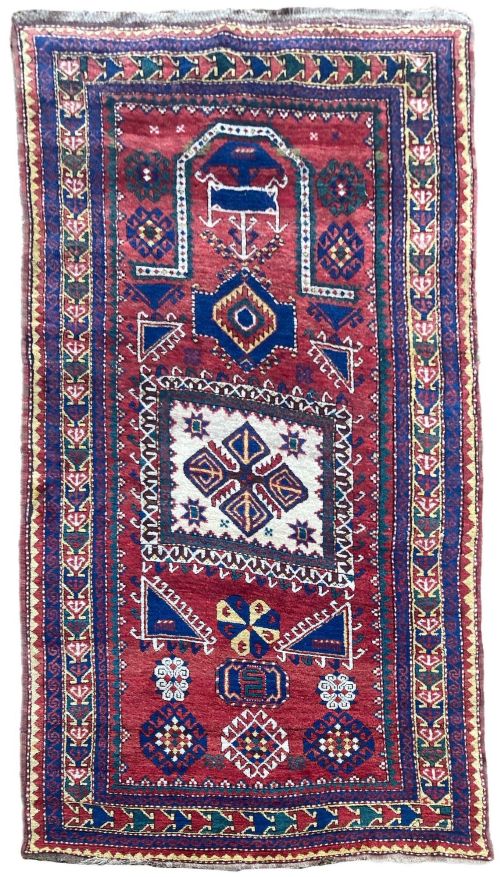
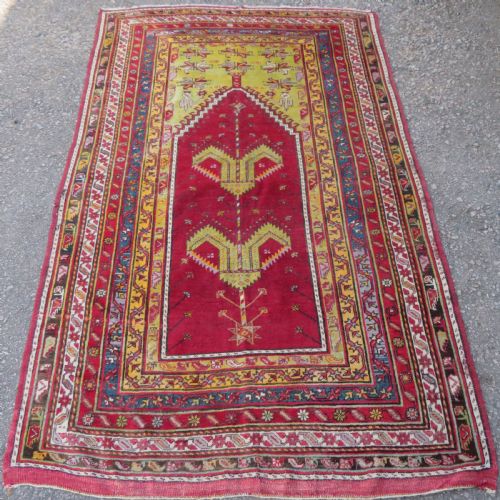
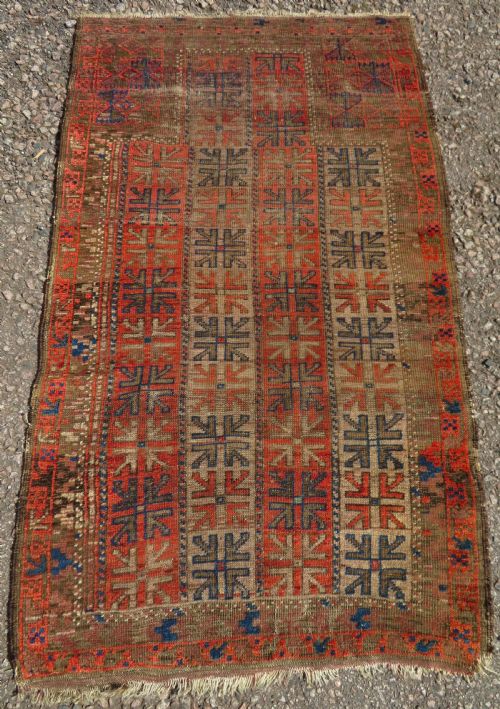
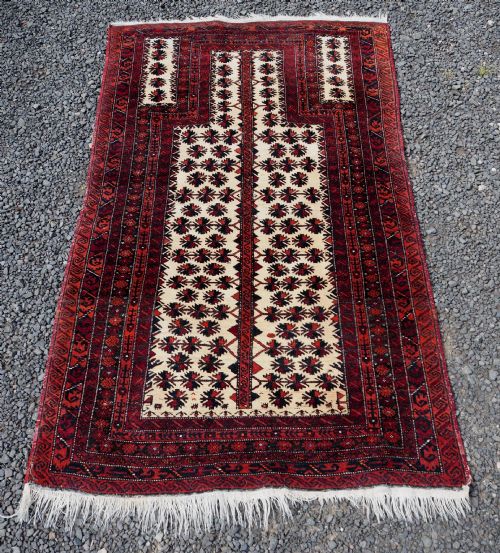
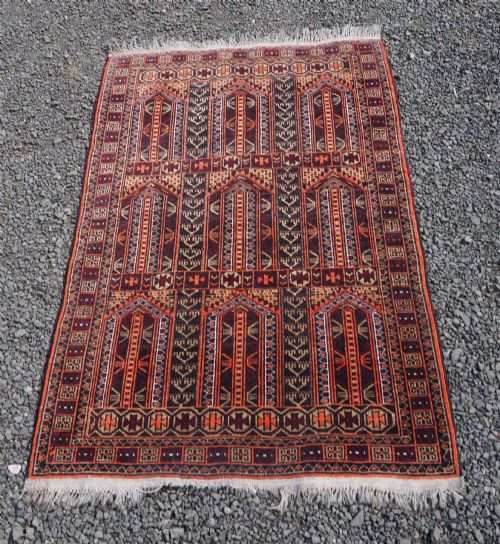
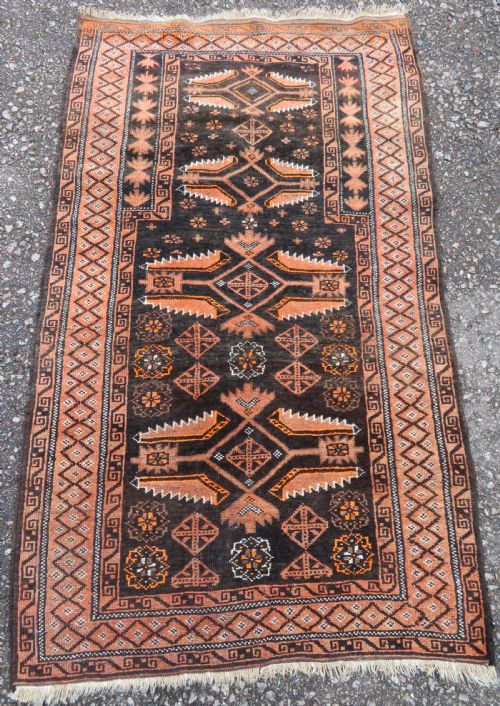
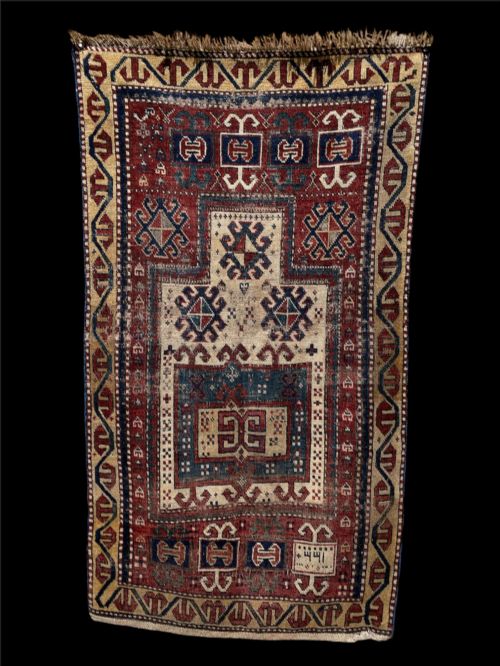
A geometric wool prayer rug is a portable woven space designed for daily devotion, featuring characteristic architectural niches known as mihrabs. These textiles emerge from nineteenth and early twentieth-century village and nomadic traditions across the Caucasus, Anatolia, and Persia. Buyers searching for a geometric wool prayer rug will find pieces dominated by angular medallions, stepped borders, and distinct tribal motifs.
The selections span distinct regional weaving groups, including Baluch, Caucasian, and Anatolian traditions. Afghan tribal and Baluch examples frequently appear with multiple mihrabs or specialised lotus leaf and ram's horn designs. Caucasian formats such as Kazak and Gendje variations showcase bold, saturated palettes and precise linear geometry.
How They Were Made
These textiles rely on sturdy foundations utilising hand-spun wool and cotton, often paired with supplemental camel hair or goat hair for structural durability. Weavers knotted pile wool onto warp and weft threads before finishing the ends with traditional kilim webbed borders.
The coloration stems from natural dyes applied to locally sourced wool, producing rich tones that age with considerable depth. Handweaving techniques varied by tribe, resulting in dense, resilient knots suited to daily ritual use.
Materials recorded across the inventory include natural dyes, hand-spun wool, cotton, goat hair, and camel hair.
What Varies in Quality
Quality rests upon the crispness of the geometric drawing and the saturation of the natural dyes. Superior examples exhibit tightly packed knots and precise symmetry within the mihrab arches and border guards.
The choice of secondary materials, such as lustrous hand-spun wool or camel hair accents, elevates a piece. Village condition and the retention of original kilim ends also distinguish standard tribal work from master-woven examples.
The Geometric Wool Prayer Rug Glossary
- Mihrab
- The arched niche in a prayer rug that mimics the direction of Mecca. It forms the central architectural focus of the textile's design.
- Kazak
- A style of Caucasian rug known for bold geometric layouts and primary colour palettes. These pieces originate from nineteenth-century weaving workshops in the southern Caucasus.
- Baluch
- A designation for rugs woven by nomadic and semi-nomadic tribes of Baluchistan and the wider borderlands of Persia and Afghanistan. They typically feature dark grounds and intricate tribal motifs.
- Kilim
- A flatweave textile structure often utilised at the ends of pile rugs to prevent fraying. Long kilim ends are a prized survival on antique village pieces.
- Seh Mihrab
- A triple arch design incorporating three distinct prayer niches within the field. This format appears frequently in Afghan tribal weaving.
Geometric Wool Prayer Rug: Frequently Asked Questions
How do I identify a prayer rug?
A prayer rug is distinguished by the presence of a mihrab, an architectural arch motif pointing toward Mecca. The design directs the user during ritual prostration.
Unlike general area rugs featuring all-over medallion fields, prayer rugs orient the viewer toward a single direction. The field often includes flanking columns, hanging lamps, or symbolic amulets.
Where were these rugs made?
These textiles originate from nomadic tribes and sedentary villages across the Caucasus, Anatolia, and regions of Persia and Afghanistan. Each geographic centre developed distinct tribal vocabularies.
Caucasian weavers favoured bright, primary palettes and crisp geometric medallions. Baluch and Afghan makers utilised darker wools, goat hair, and repeating prayer niches.
How should I care for antique wool rugs?
Antique wool rugs require gentle maintenance, including regular vacuuming without a beater bar to protect the pile and foundation. Professional cleaning by specialists in historic textiles preserves the natural lanolin.
Keeping the rugs out of direct sunlight prevents natural dyes from fading over time. Using a breathable underlay protects the woven foundation from friction against hard floors.