



Baluch Tribal Mat
When you unfold a baluch tribal mat, you hold a piece of nomadic weaving history shaped by the borderlands of Persia and Afghanistan.
Baluch Tribal Mat
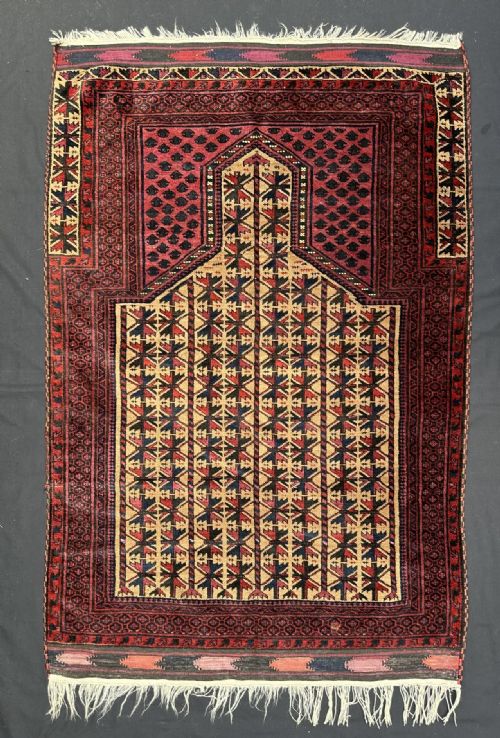
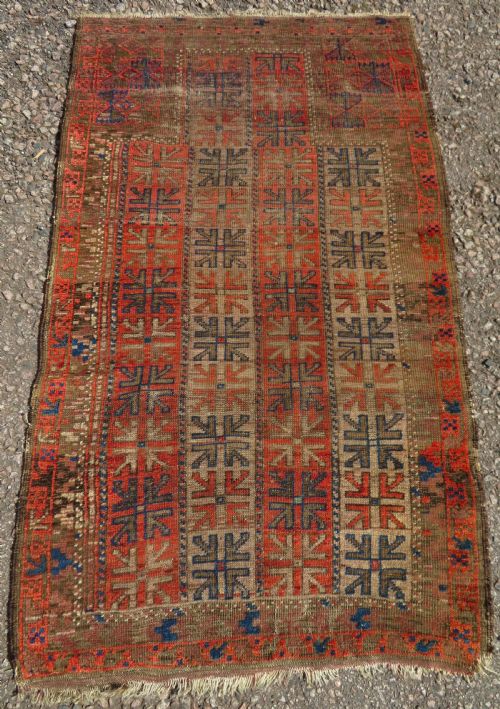
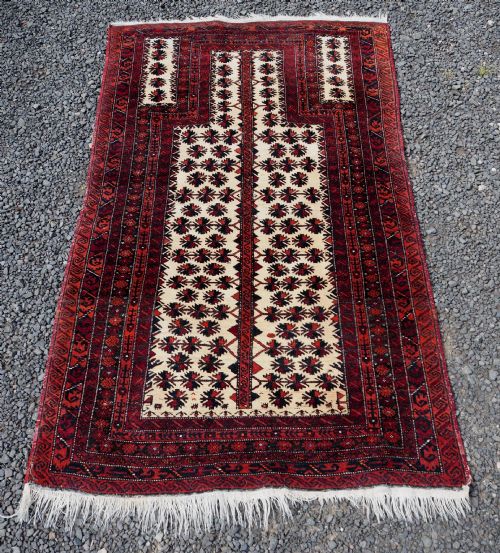
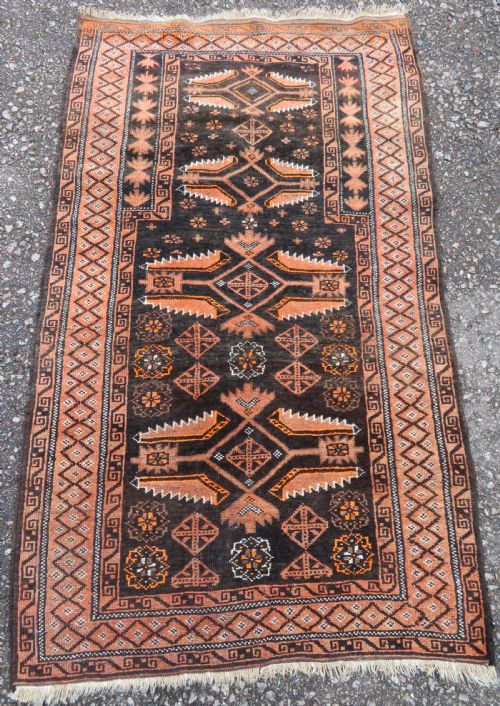
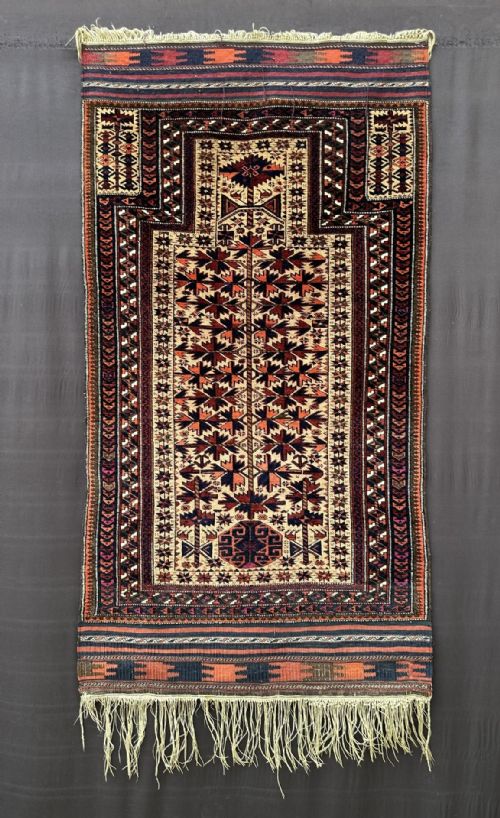
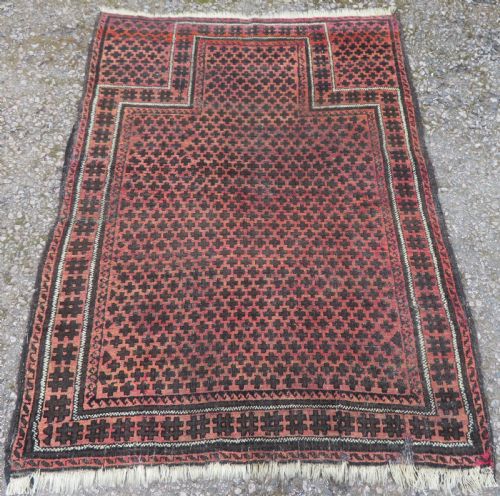
A baluch tribal mat connects you directly to the nomadic and village weavers of the nineteenth and early twentieth centuries. These hand-knotted textiles range from small pushti faces and saddle bags to larger prayer rugs and dining sofreh.
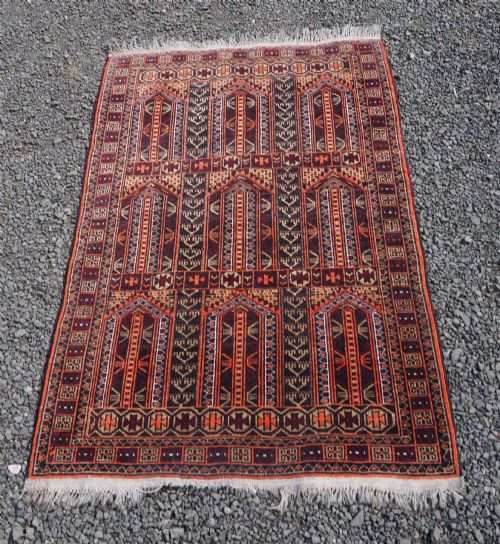
The version you are most likely to encounter on this page is the prayer rug featuring distinctive mihrab arches. Weavers from tribes such as the Timuri, Taimani, and Salar Khani produced these portable pieces across the borderlands of north-east Persia and north-west Afghanistan.
Motive designs vary from repeating lotus leaves and shrub motifs to geometric tile patterns and trees of life. The formats span utilitarian floor coverings created for daily life to devotional mats woven for prayer.
What Varies in Quality
The fineness of the knotting and the tightness of the weave set superior examples apart from standard village work. Greater precision in executing complex tribal symbols, such as the seh mihrab or detailed shrub designs, indicates a higher level of weaver skill.
The depth and vibrancy of the natural dye palette also dictate the standing of a piece. Examples retaining rich, varied tones across the camel hair and wool pile hold greater visual harmony than those with faded or muddy colouring.
Several prayer rugs hide subtle rams horn motifs within their arches, put there by weavers wishing for flock protection.
The Baluch Tribal Mat Glossary
- Mihrab
- The arched niche found on prayer rugs, which symbolises the direction of prayer. Variations on these pieces include double mihrab and seh mihrab formats.
- Sofreh
- A flatwoven or piled spread used for communal dining or food preparation. These textiles often feature geometric field designs associated with specific tribal groups.
- Pushti
- A small mat or scatter rug designed for floor seating or cushion use. They frequently display centralized tribal motifs or face designs from saddle bags.
- Gul
- A medallion or repeating octagonal motif used extensively in tribal rug design. Different tribes utilised distinct gul patterns to denote heritage and lineage.
- Dokhtar-e-qazi
- A specific design attribution linked to regional weaving traditions in the borderlands. These pieces often incorporate small shrub or leaf patterns across the field.
Baluch Tribal Mat: Frequently Asked Questions
How do I care for an old baluch tribal mat?
Vacuum gently without using a rotating brush roll to protect the wool pile and foundation threads. Keep the textile out of direct sunlight to prevent natural dyes from fading over time.
Rotate the rug periodically to ensure even wear across the surface. Professional cleaning by a specialist in antique textiles is recommended when deep cleaning becomes necessary.
Where were baluch tribal mats made?
These textiles originated in the borderlands spanning north-east Persia and north-west Afghanistan. Nomadic and village tribes such as the Timuri and Taimani produced them in regions including Khorassan and Ferdows.
Weavers travelled across these arid landscapes, drawing design inspiration from their surroundings. Their output reflects the cultural crossover between Persian and Afghan tribal groups.
Are camel hair and goat hair common in these rugs?
Weavers frequently incorporated untreated camel wool and goat hair alongside sheep wool to add natural colour variation and strength. Camel hair provides a characteristic warm, golden-brown tone that requires no artificial dyeing.
Goat hair was often utilised in the outer selvedges and borders for structural durability. These animal fibres highlight the utilitarian origins of pieces created for life on the move.