


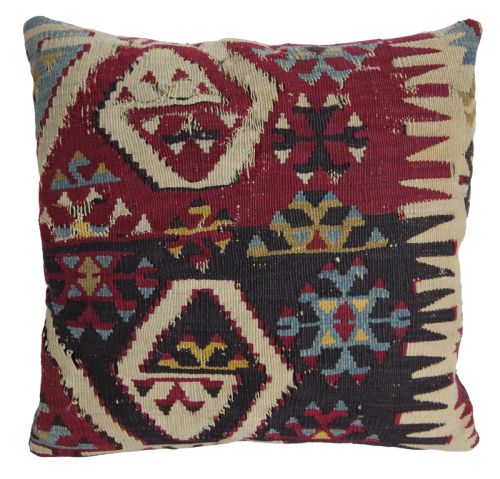


Geometric Tribal Rug Pillow
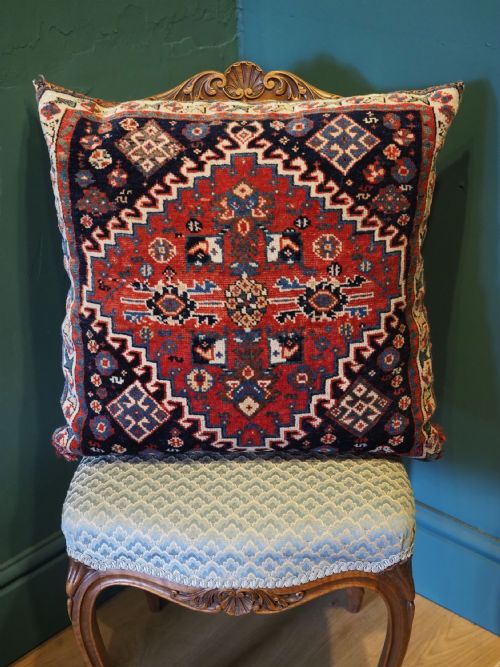
These geometric tribal rug pillow pieces are tactile fragments of nomadic history repurposed for modern interiors.
Geometric Tribal Rug Pillow
The pieces on this page span from the mid-nineteenth century into the early twentieth century, originating from regions such as Persia, Anatolia, and Azerbaijan.
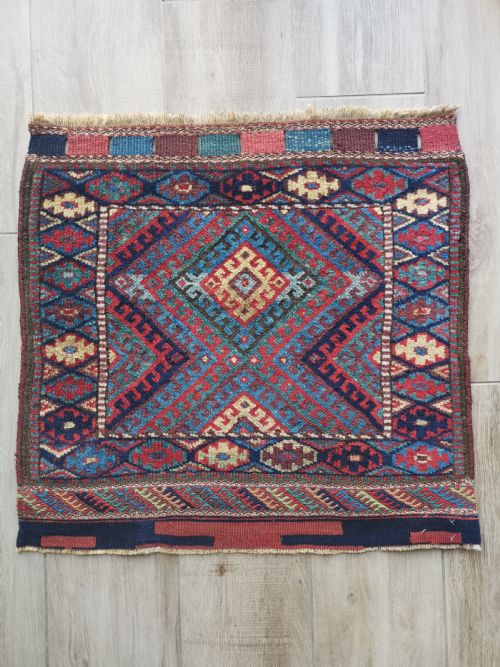
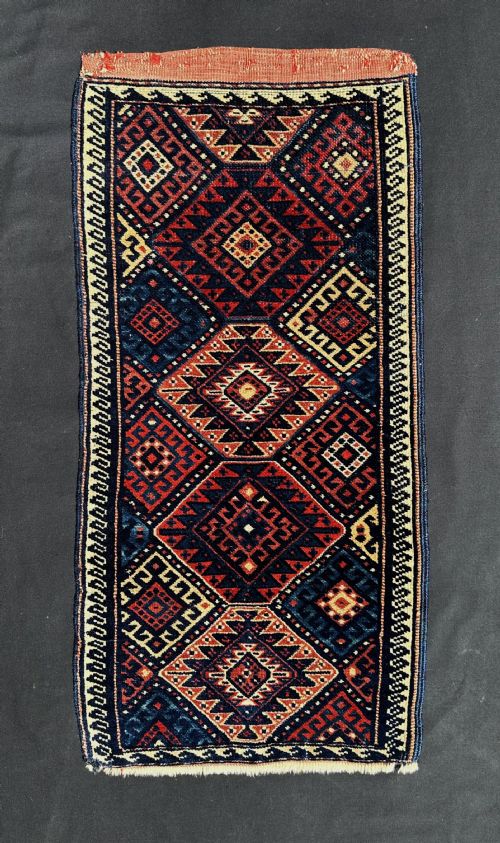
Common forms include converted saddlebags, bagfaces, chuvals, and kilim fragments that retain their original tribal patterns.
How They Were Made
These textiles utilise hand-spun wool combined with cotton foundations, reflecting traditional nomadic weaving methods.
Weavers dyed the wool using natural dyes, producing the rich, enduring colour palettes seen across the pieces.
What Varies in Quality
The fineness of the wool spin and the complexity of the geometric motifs set the finer examples apart.
The integrity of the original weave and the depth of the natural dye colours dictate the character of each cushion.
The Geometric Tribal Rug Pillow Glossary
- Bagface
- The front decorative panel of a nomadic storage bag, frequently repurposed into a cushion. These panels display the primary geometric iconography of the tribe.
- Chuval
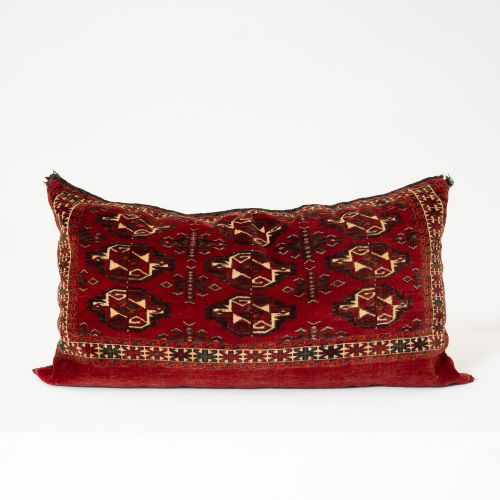
- A large tent storage bag made by Turkmen tribes, often featuring multiple guls and distinctive border designs. Surviving fragments make substantial floor or bed cushions.
- Kilim
- A flatweave textile produced without a pile, created by tightly interweaving warp and weft strands. This technique results in crisp geometric edges suited for soft furnishings.
- Natural Dyes
- Colourants derived from plants, insects, and minerals before the introduction of synthetic alternatives. They yield subtle tonal variations that mature gracefully over decades.
Geometric Tribal Rug Pillow: Frequently Asked Questions
Are these cushions made from old rugs?
Many are fashioned from authentic nineteenth and early twentieth-century tribal bag faces, saddlebags, and flatwoven kilims rather than newly manufactured rugs.
This method gives antique nomadic textiles a functional second life in contemporary rooms while preserving their original weave and pattern.
Which tribes made these textiles?
The pieces originate from various nomadic and village groups, including the Qashqai, Shahsevan, Baluch, Kurdish, and Turkmen peoples.
Each group utilised distinct geometric vocabularies and colour combinations that identify their regional heritage.
How do I care for a vintage wool cushion?
Gentle vacuuming without a rotating brush helps remove surface dust without disturbing the hand-spun wool pile or flatweave structure.
Professional specialist cleaning is recommended for any deeper maintenance to protect the natural dyes and historical fibres.
How can I tell the age of a tribal pillow?
Age is indicated by the use of hand-spun wool, traditional natural dye palettes, and the specific structural wear of the textile. Pieces spanning the mid-nineteenth to early twentieth centuries display distinct regional characteristics that separate them from modern reproductions.