

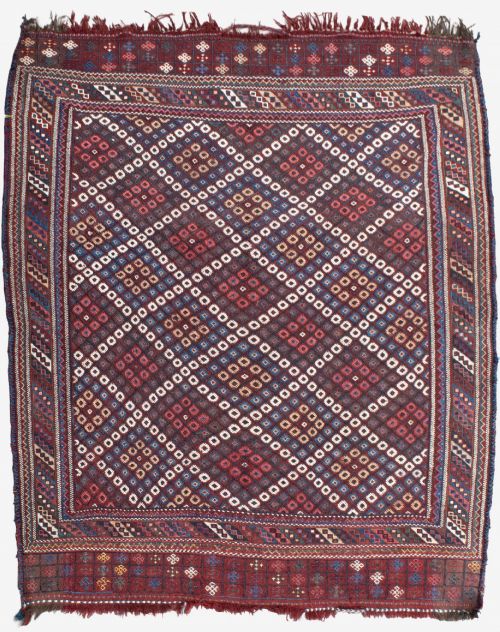


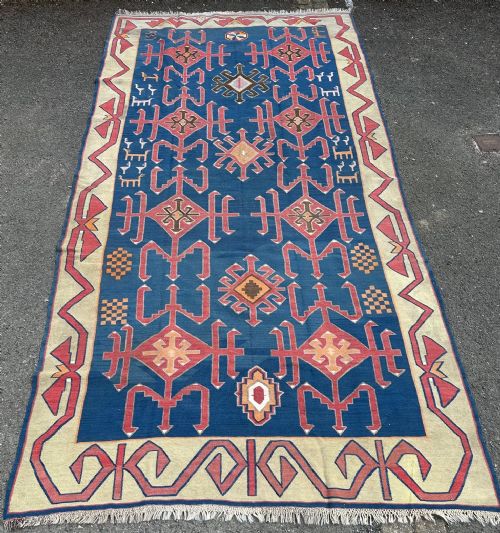


Geometric Tribal Flatweave
Geometric tribal flatweave textiles bring linear motifs and village artistry into rooms through enduring nomadic weaves.
Geometric Tribal Flatweave
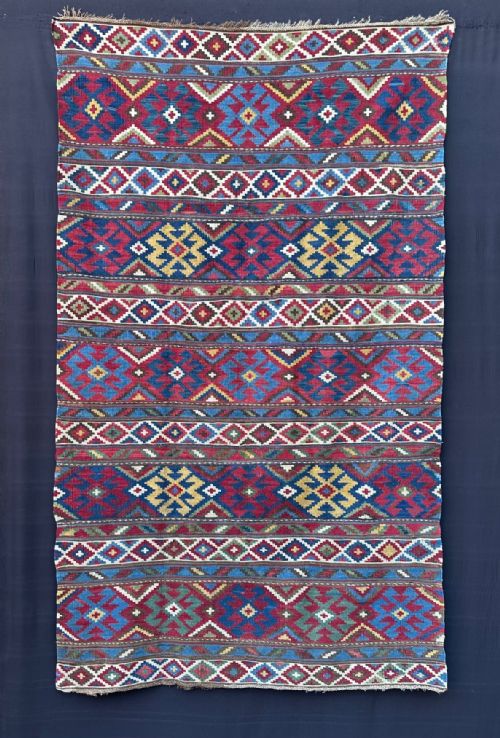
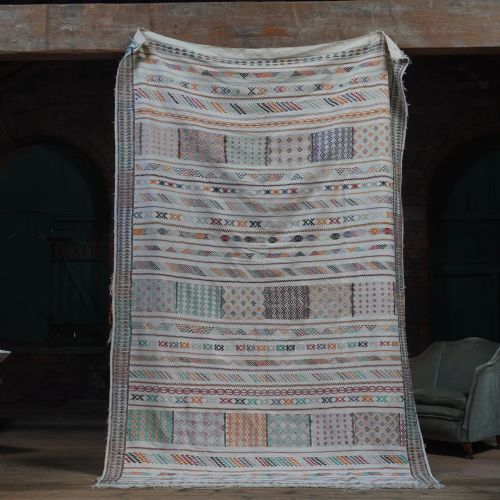
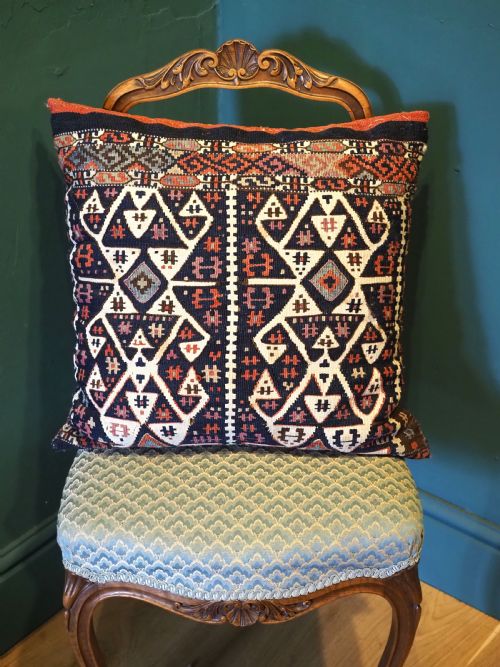
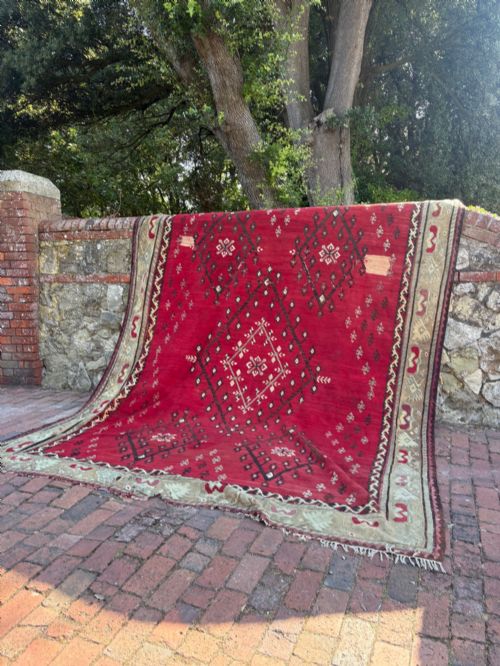
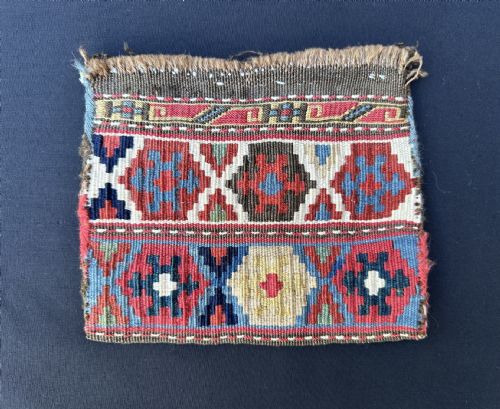
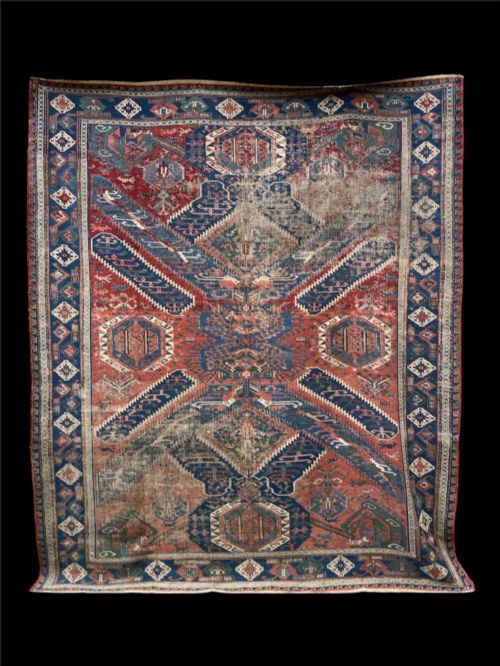
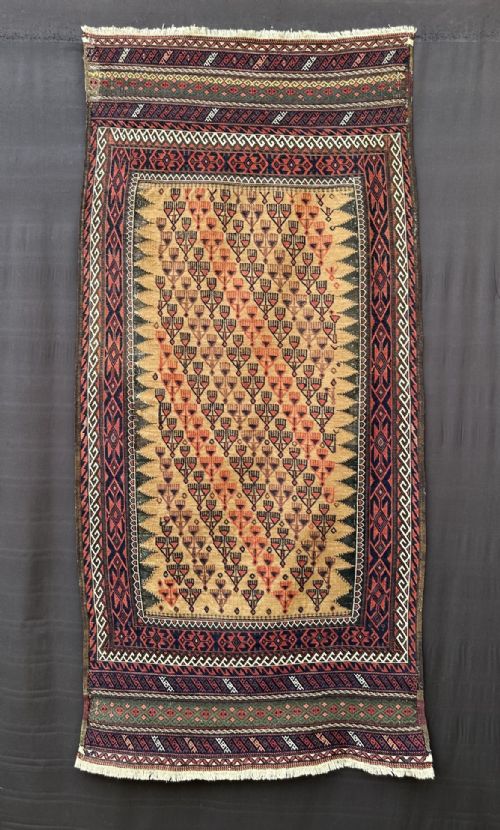
A geometric tribal flatweave encompasses antique kilims, soft cushions, and utilitarian storage bags produced by nomadic and village makers across Persia, the Caucasus, Anatolia, and Central Asia. These textiles feature un-piled surfaces constructed by tightly inter-lacing warp and weft threads to form sharp angles, diamonds, and bands. Buyers seeking geometric tribal flatweave examples encounter room-sized carpets, long runner rugs, and smaller household containers dating from the nineteenth and early twentieth centuries.
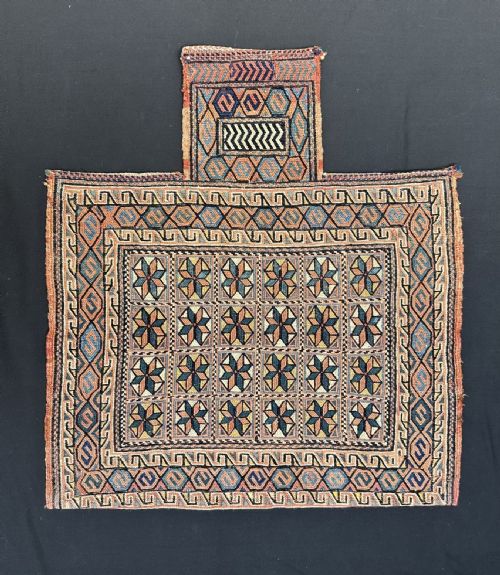
The regional variety spans the bold graphic panels of Uzbek and Turkmen workshops, the fine borders of Shirvan work, and the intricate medallions associated with Qashqai and Afshar weavers. Sofreh cloths, vanity bags, and saddlebags represent the domestic and nomadic functions of these flatweaves. Each piece reflects the specific visual vocabulary of its originating tribe or borderland region.
How they were made
Weavers constructed these textiles primarily using hand-spun wool and cotton, dyed with natural colour agents to achieve lasting depth. Certain Moroccan variants incorporate sabra fibre and cactus silk for distinct texture.
Techniques relied on slit-tapestry weaving or soumac wrapping methods, creating flat structures without pile that endure heavy floor use or serve as functional covers.
A nomadic weaver occasionally stored salt in a dedicated bag designed to prevent moisture from ruining dinner.
What varies in quality
Quality rests on the tightness of the weave, the clarity of the linear design, and the integrity of the natural dyes. Denser tension in the yarn structure produces greater durability.
Artisanal skill shows in the precision of the geometric shifts and the balance of the colour palette across the field.
Shahsevan Nomads of Moghan·Afshar Tribes of Bardsir·Timuri Sangtshuli Tribe·Luri-Bakhtiari Tribes·Qashqai Tribes of Fars
The Geometric Tribal Flatweave Glossary
- Flatweave
- A textile constructed without pile by interlocking warp and weft threads together. This technique produces a thin, reversible fabric traditionally used for floor coverings and utility cloths.
- Sofreh
- A utilitarian spreading cloth used for dining, bread preparation, or grain handling. These flatweaves often display strong regional iconography.
- Soumac
- A supplementary weft-wrapping technique that creates a braided surface texture on the face of the textile while leaving loose threads underneath. It provides extra structural weight.
- Warp
- The stationary vertical threads stretched on a loom that form the foundational grid of the weave. The coloured weft threads pass horizontally through them.
- Kilim
- A pileless tapestry-woven carpet or rug originating from regions spanning the Balkans to Pakistan. They are known for distinct slit-weave gaps where colour blocks meet.
Geometric Tribal Flatweave: Frequently Asked Questions
How were flatweaves used daily?
Nomadic communities used these textiles as floor coverings, blankets, and dining cloths. They also fashioned them into storage bags for salt, bread, and personal items.
Durability made them suitable for constant transport and domestic tasks in harsh environments.
Where do these tribal pieces originate?
Origins trace to regions across Persia, the Caucasus, Anatolia, and Central Asia. Specific groups such as the Shahsevan, Afshar, and Qashqai produced distinct regional patterns.
Borderlands between Persia and Afghanistan also contributed unique village and nomadic flatweaves.
How should I care for a flatweave?
Protect the textile by vacuuming gently without a rotating brush roll. Use a breathable underlay to prevent slipping and reduce friction against hard floors.
Professional specialist cleaning maintains the integrity of hand-spun wool and natural dyes.
How do I identify regional designs?
Look at the specific arrangement of geometric motifs, border structures, and colour palettes. Shirvan pieces often feature banded layouts, while Caucasian work displays sharp graphic medallions.
Village attribution relies on matching structural techniques and wool types to known tribal areas.