
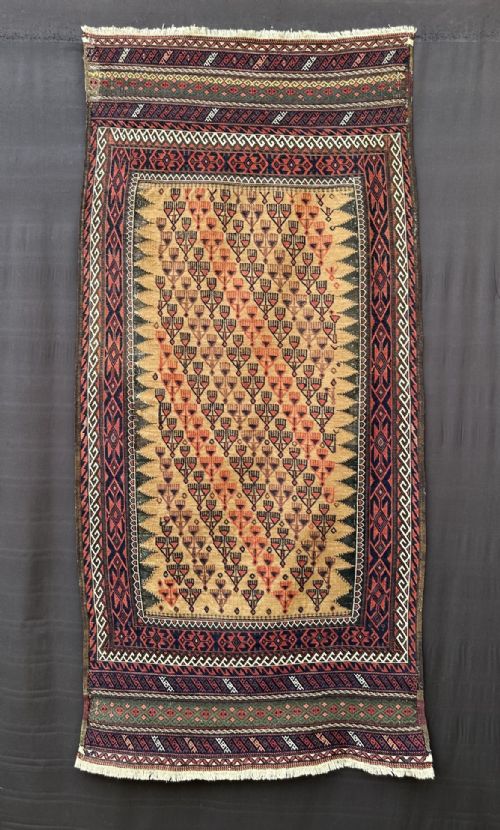
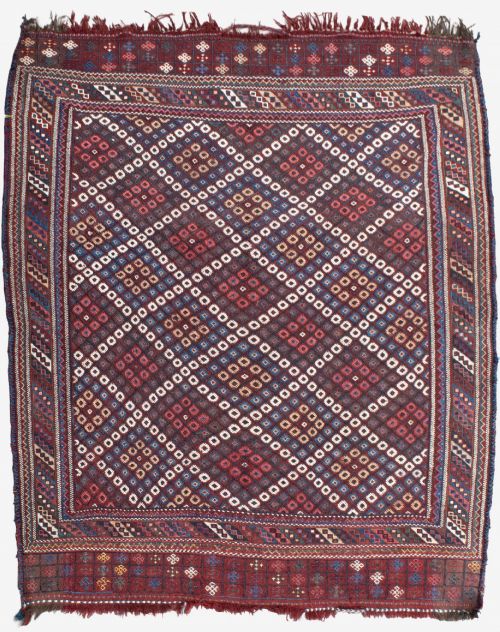


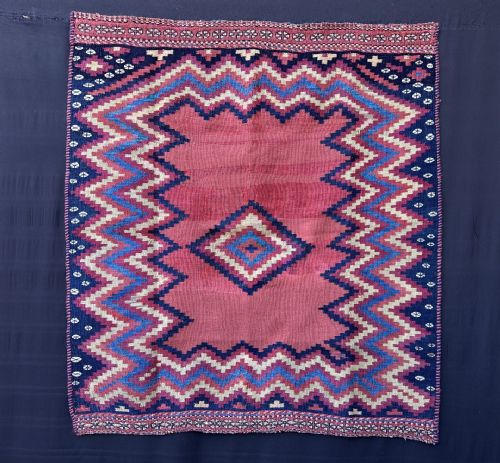

Persian Sofreh Textile
A persian sofreh textile is a woven cloth used for dining or bread preparation, prized for its tribal patterns and historical regional character.
Persian Sofreh Textile
A persian sofreh textile serves primarily as a cloth for dining or bread making, produced by various tribal groups across different regions. Buyers searching for a persian sofreh textile encounter flatweaves and rugs originating from locations such as Western Persia, South Persia, and the borderlands of North-East Persia and North-West Afghanistan.
The pieces appearing on this page span several decades from the late nineteenth century into the early twentieth century. Examples include works attributed to the Afshar, Timuri Sangtshuli, Luri-Bakhtiari, and Baluch Salar Khani tribes, as well as specific village production centres like Kamo.
Forms range from dedicated bread sofreh cloths to dining sofreh pieces, with some items functioning as flatweave rugs or wall hangings. These textiles reflect the distinct weaving traditions of nomadic and settled tribal communities across Persian territories.
How they were made
Makers constructed each persian sofreh textile utilising wool and cotton foundations and surface yarns. Artisans sourced these natural fibres locally to build durable cloths capable of enduring daily domestic use in nomadic and village settings.
Weavers dyed the yarns using natural dyes to achieve the rich colour palettes characteristic of tribal output. The combination of traditional flatweave techniques and vegetable colouring produced stable, enduring textile surfaces.
Materials documented in the current inventory are strictly limited to wool, cotton, and natural dyes.
What varies in quality
The standard of a persian sofreh textile depends on the fineness of the weave and the precision of the tribal geometric motifs. Tighter knotting or flatweaving structures demonstrate greater technical skill by the maker.
Condition and the retention of vibrant natural dyes influence the appeal of individual pieces. Tribal identity and regional attribution also play a significant role in distinguishing standard utility cloths from more expressive examples.
The Persian Sofreh Textile Glossary
- Sofreh
- A spread or cloth used traditionally for eating meals upon or for kneading and resting bread dough. These woven pieces typically feature central fields adapted for domestic rituals.
- Flatweave
- A textile produced without knotted pile, resulting in a smooth, tapestry-like surface. This technique allows for sharp geometric patterning across the cloth.
- Natural Dyes
- Colourants derived from plant, insect, and mineral sources prior to the widespread adoption of synthetic alternatives. These dyes yield harmonious hues that age gracefully over decades.
- Afshar
- A nomadic and semi-nomadic Turkic tribe inhabiting southern regions of Persia. Their weaving is noted for distinctive tribal iconography and robust construction.
- Baluch
- A group of tribes residing in the borderlands of Persia and neighbouring areas. Their textile output often incorporates deep tones and geometric layouts.
Persian Sofreh Textile: Frequently Asked Questions
What is a Persian sofreh used for?
A persian sofreh textile functioned traditionally as a floor spread for family dining or as a clean surface for preparing and resting bread dough. Nomadic and village households utilised these cloths daily for essential domestic tasks.
Over time, these textiles transitioned from active household service into decorative objects. Modern collectors display them as flatweave rugs or wall hangings to showcase their tribal designs.
How do I identify tribal origins?
Identifying the origin of a persian sofreh textile relies on examining the specific geometric motifs, border arrangements, and structural characteristics unique to each group. Listings often attribute pieces to specific tribes such as the Afshar, Luri-Bakhtiari, or Timuri Sangtshuli based on these traits.
Regional markers like the Kamo village attribution or Khorassan Province origins provide further context. Comparing the colour palette and weave structure helps confirm the likely producing community.
Are these textiles made with natural dyes?
The materials recorded for these pieces include wool, cotton, and natural dyes derived from traditional organic sources. These plant and mineral colourants create the characteristic secondary tones found across nineteenth and early twentieth-century Persian tribal weaving.
Natural dyes interact with wool fibres to produce subtle variations in shade across the surface of the cloth. This tonal variation contributes to the visual depth appreciated by collectors of antique flatweaves.
How should I care for a antique sofreh?
Preserving a antique persian sofreh textile involves protecting the wool and cotton fibres from excessive direct sunlight and moisture. Gentle vacuuming without a rotating brush helps remove surface dust without straining the flatweave structure.
Consulting a professional textile conservator ensures proper cleaning methods are applied when necessary. Exhibiting the piece away from heavy foot traffic maintains the integrity of the historical materials.