


Brown Kilim
When you search for a brown antique kilim, you are looking at flatwoven tribal textiles spanning the late nineteenth and early twentieth centuries.
Brown Kilim
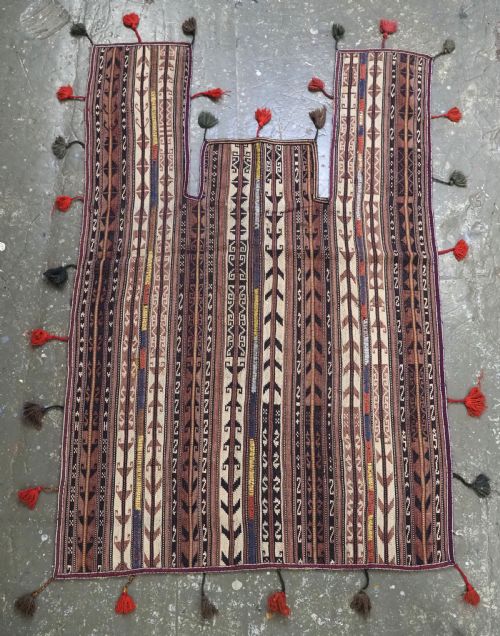
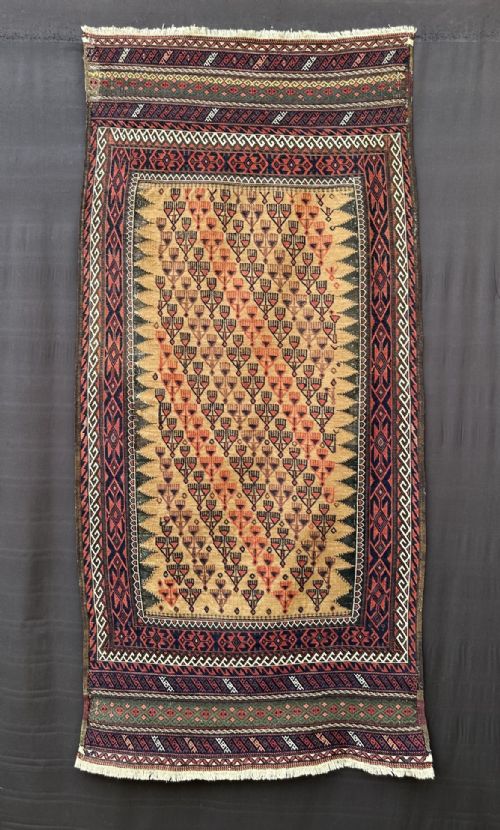
A brown antique kilim encompasses flatwoven rugs, covers, storage bags, and tribal textiles originating from Persian, Anatolian, Caucasian, and Central Asian weaving traditions. The items on this page date from the nineteenth and early twentieth centuries, reflecting utilitarian domestic objects made by nomadic and village makers.
Most examples take the form of functional tribal pieces such as Sofreh dining cloths, Tacheh wheat-sacks, Mafrash storage panels, and runner rugs. These utilitarian items served specific purposes in nomadic households before entering the antique market as decorative flatweaves.
The regional variety spans specific tribal groups including the Qashqa'i, Yomut Turkmen, Timuri, Bakhtiari, and Shahsavan. Each group utilised distinctive geometric motifs and flatweaving techniques suited to their local culture and environment.
What varies in quality
The fineness of the weave and the complexity of the banded flatweave design largely distinguish the standard of production. Tighter knotting and precise geometric execution point to greater technical skill by the tribal weaver.
Listings feature flatweaves spanning the decades from 1860 to 1940, constructed from hand-spun wool, cotton, and camel hair.
The Brown Kilim Glossary
- Kilim
- A flatwoven carpet or rug produced without a pile by tightly interweaving warp and weft strands. This construction creates a lightweight textile historically used for floor coverings, wall hangings, and utility covers.
- Sofreh
- A flatwoven dining or ceremonial cloth traditionally used in Persian households for spreading meals or handling bread. These textiles often feature minimalist tribal fields and practical rectangular proportions.
- Mafrash
- A rectangular storage bag or chest panel used by nomadic tribes for bedding and domestic goods. They are frequently encountered as flatwoven panels or reconstructed into smaller decorative flatweaves.
- Soumak
- A brocade-like flatweaving technique where pattern yarns are wrapped over and under the warp threads before continuing across the textile. This method adds structural weight and crisp pattern definition to the face of the weave.
- Tacheh
- A traditional tribal wheat-sack or storage container woven by western Persian groups. These functional carriers display bold geometric bands designed for heavy domestic use.
Brown Kilim: Frequently Asked Questions
What is a brown antique kilim?
These pieces are flatwoven tribal textiles created by nomadic and village weavers across Persia, Anatolia, and Central Asia during the nineteenth and early twentieth centuries. They served practical domestic functions rather than acting as purely decorative items.
The use of hand-spun wool and natural dyes gives these flatweaves their characteristic organic brown tones and durable structure. Collectors value them for their authentic regional motifs and utility-driven history.
How do I care for an antique flatweave?
Protect these textiles by placing a quality rug underlay beneath them to prevent slipping and reduce friction on the flatwoven structure. Gentle vacuuming without a rotating brush roll helps remove embedded dust without pulling the wool fibres.
Keep them out of direct sunlight to prevent the natural dyes from fading over time. Professional cleaning tailored to antique textiles ensures the wool and cotton foundations remain stable.
How can I tell tribal styles apart?
Tribal styles differ through distinct geometric vocabularies, border arrangements, and structural flatweaving techniques specific to regions like the Caucasus, Anatolia, or Western Persia. Groups such as the Yomut Turkmen or Shahsavan relied on particular banded layouts and colour palettes.
Examining the weave density and the types of animal hair or wool employed provides further clues to the geographic origins of the piece.