

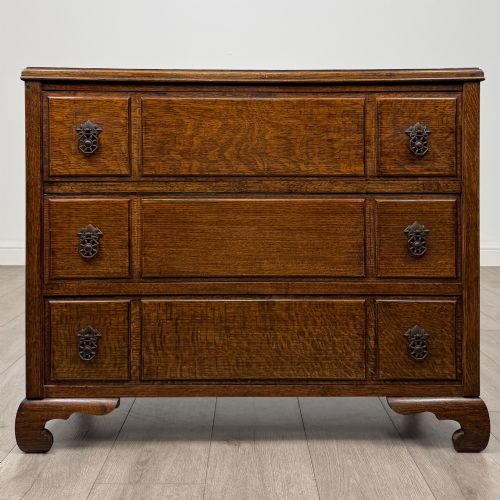
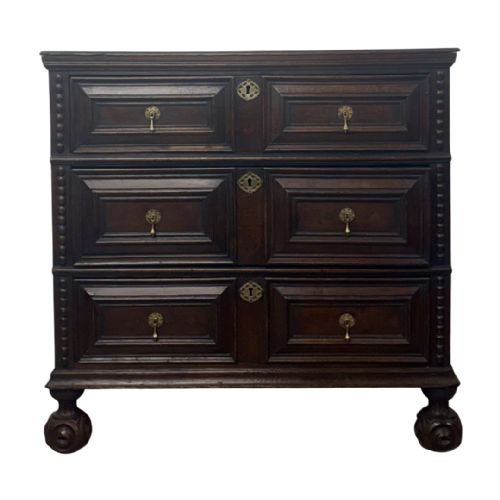
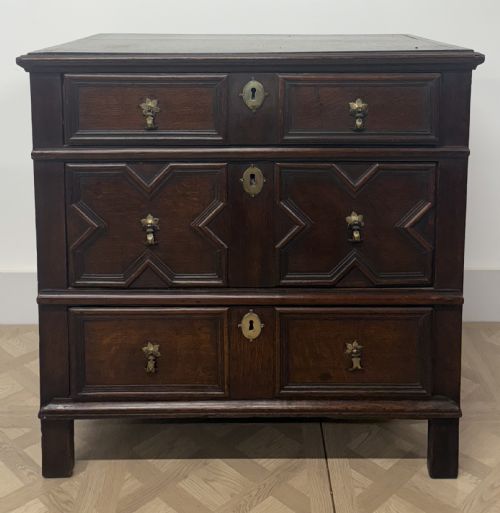
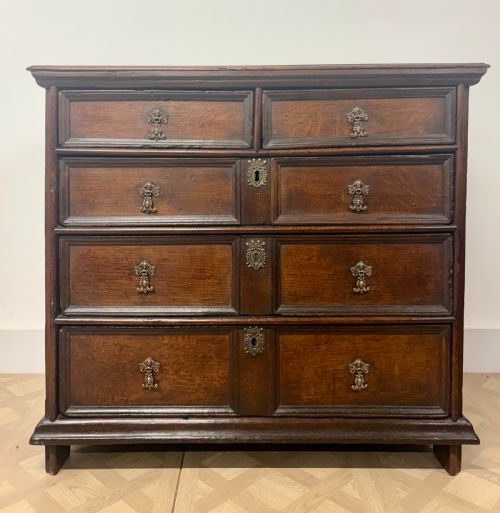

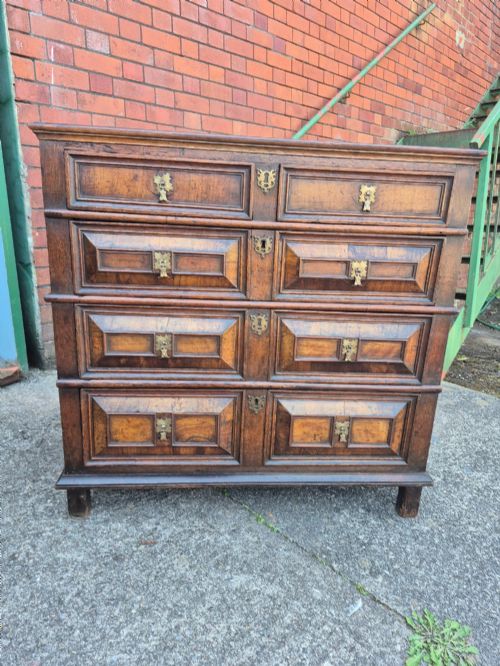
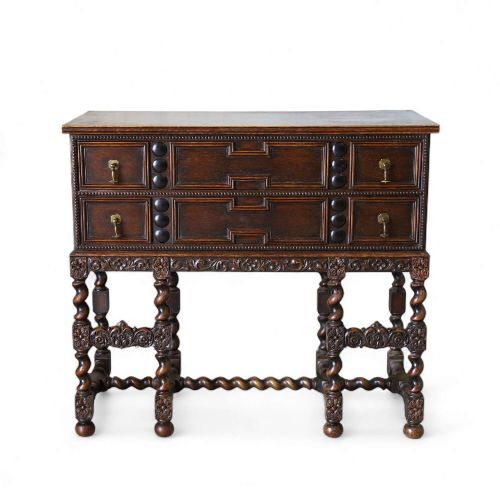

Geometric Panelled Oak Drawers
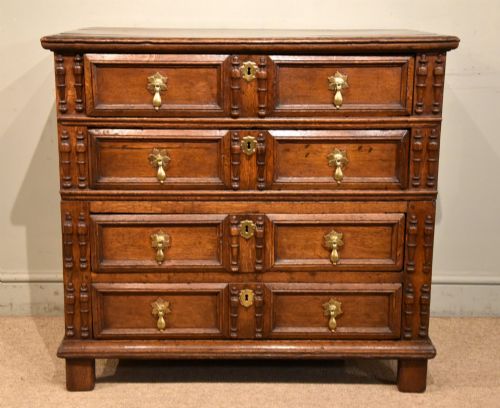
These geometric panelled oak drawers combine robust seventeenth-century craftsmanship with striking geometric moulding that brings tactile depth to any room.
Geometric Panelled Oak Drawers
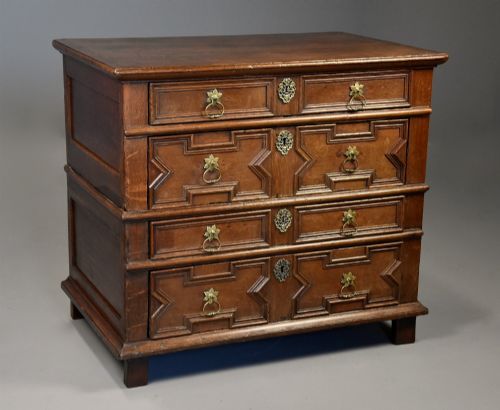
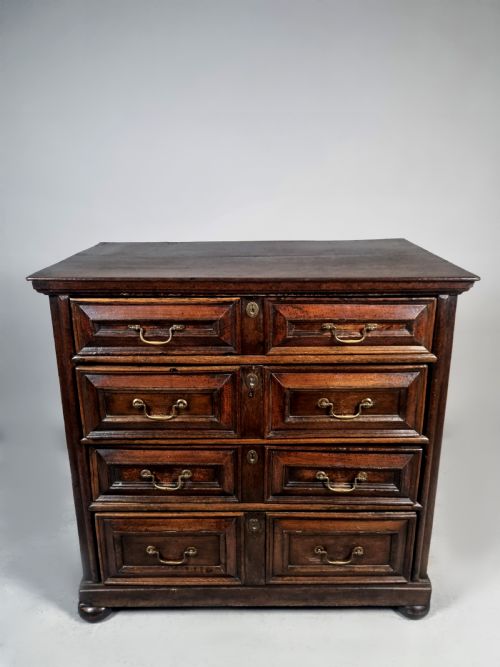
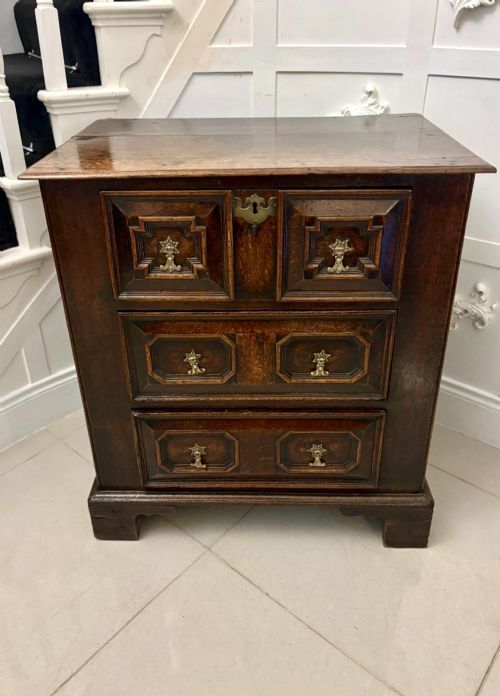
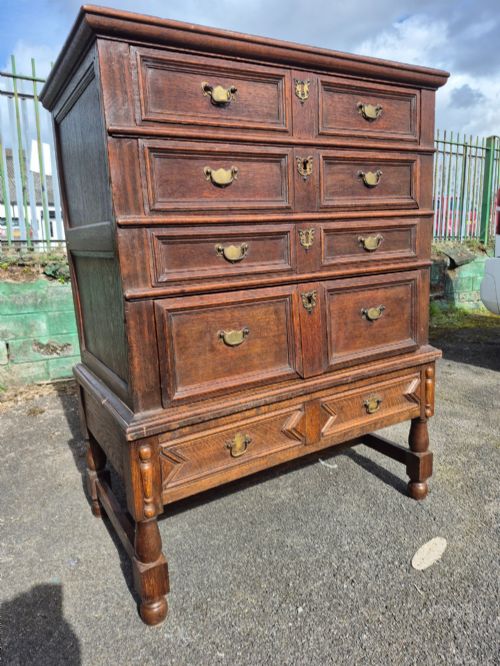
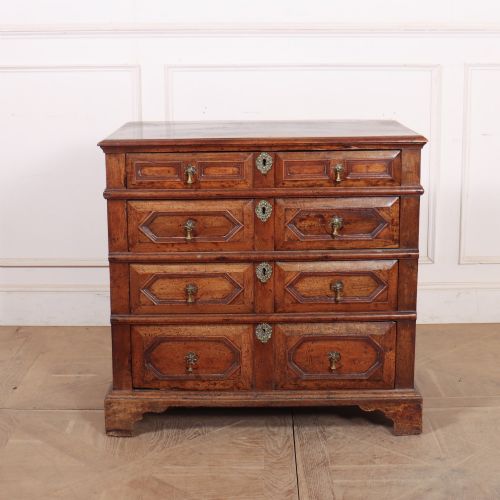
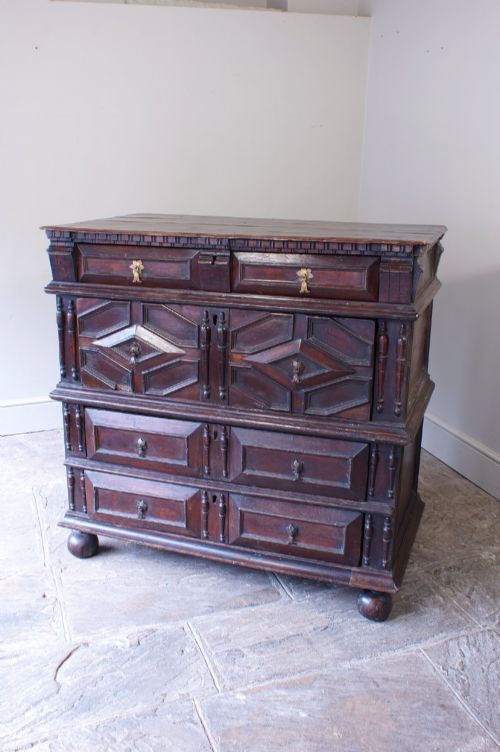
Geometric panelled oak drawers primarily comprise seventeenth-century chests of drawers, dresser bases, and servers built from solid timber. These pieces typically display structured, moulded drawer fronts arranged in mitred geometric patterns that reflect the joinery standards of the period.
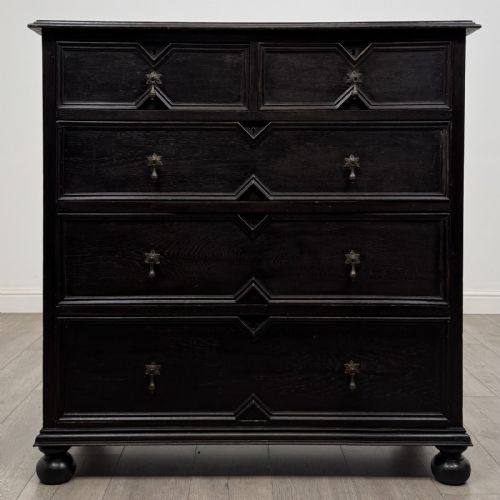
Alongside seventeenth-century originals, buyers will encounter revival interpretations from the Edwardian era and the 1920s and 1930s. These later pieces adopt Jacobean and Carolean styles, often incorporating ebonised oak or barley-twist supports while retaining the characteristic panelled fronts.
Forms extend beyond standard chests to include two-part chests, pieces on stands, and mule chests. Oak serves as the primary structural wood, frequently complemented by secondary timbers such as walnut, fruitwood, and snakewood on the drawer fronts.
How they were made
Cabinet makers built these drawers using solid oak for the main carcasses and structural frames, employing traditional jointing methods like mortise and tenon. The characteristic geometric panels on the drawer fronts were shaped from applied mouldings, often glued and pinned to the flat drawer surfaces.
Secondary hardwoods including walnut, fruitwood, and snakewood were frequently utilised for decorative veneers and contrast mouldings. Brass hardware and iron fixings completed the construction, whilst occasional ebonised finishes provided a dramatic dark surface contrasting with the natural oak.
Geometric Panelled Oak Drawers Retail Price Guide 2026
Typical asking prices for geometric panelled oak drawers among the pieces listed under this phrase on Sellingantiques today, from the lower quarter to the upper quarter. They describe what is for sale here now, not the wider market.
Object types include chests of drawers, dresser bases, mule chests, and servers equipped with geometric mouldings.
What varies in quality
The sophistication of the applied geometric moulding and the precision of the mitred joints separate standard pieces from the finest examples. Richness of timber patina and the harmonious integration of secondary woods like fruitwood and snakewood elevate the visual depth of the drawer fronts.
The integrity of the original construction, including the survival of period brass drop handles, bun feet, and unaltered drawer linings, dictates the standing of an individual piece within the range.
The Geometric Panelled Oak Drawers Glossary
- Geometric moulding
- Applied strips of wood shaped and mitred into repeating square, octagonal, or lozenge patterns on drawer fronts. This technique defined the decorative vocabulary of late seventeenth-century case furniture.
- Dresser base
- A long, low sideboard fitted with drawers, originating as a functional kitchen or dining room furnishing. These pieces often feature the same geometric panelling seen on contemporary chests.
- Mule chest
- A storage chest featuring one or more drawers built into the base beneath the main compartment. They bridge the gap between traditional coffer storage and modern chest design.
- Ebonised oak
- Oak timber treated chemically or pigmented to imitate ebony. This dark finish was popular during the seventeenth century and later revived in nineteenth and twentieth-century interpretations.
- Barley-twist
- A turned column support resembling a twisted rope, carved into legs or uprights. This decorative turning style frequently appears on revival sideboards and stands from the early twentieth century.
Geometric Panelled Oak Drawers: Frequently Asked Questions
What periods do these pieces come from?
The selection spans authentic seventeenth-century origins through to later revival periods in the Edwardian era and the 1920s and 1930s. Original pieces date predominantly from the Charles II and William and Mary eras.
Revival pieces adopt Jacobean and Carolean styles, offering the distinctive geometric aesthetic with the structural characteristics of early twentieth-century cabinet making.
How were these drawers used originally?
These chests and servers functioned as primary storage for textiles, valuables, and household goods in wealthy seventeenth-century homes. Lower dresser bases served practical food preparation and serving duties in large domestic kitchens.
Over time, their decorative geometric fronts transitioned them from utilitarian storage into prominent display pieces for reception rooms and hallways.
How do I distinguish original seventeenth-century pieces from revivals?
Examination of construction marks, timber shrinkage, and hand-cut joinery helps differentiate period pieces from 1920s and 1930s revivals. Seventeenth-century surfaces show natural wear patterns and deep patination developed over centuries of use.
Revival examples often utilise machine-cut elements and standardised hardware associated with early twentieth-century manufacturing techniques while copying historical styles.
What timbers are used in these drawers?
Oak forms the primary structural timber for the carcasses and frames across almost all listings. Cabinet makers frequently introduced contrasting timbers such as walnut, fruitwood, and snakewood specifically for decorative geometric drawer mouldings.
Some pieces also feature ebonised oak finishes, providing a stark dark contrast against the natural grain of the primary wood.