


Geometric Panel Coffer
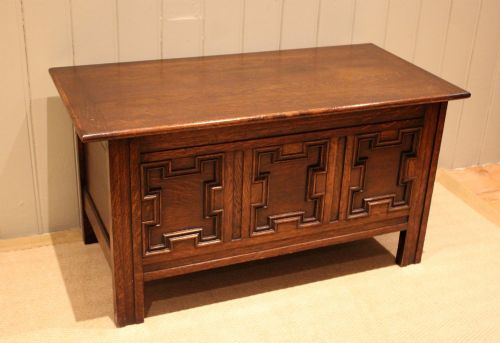
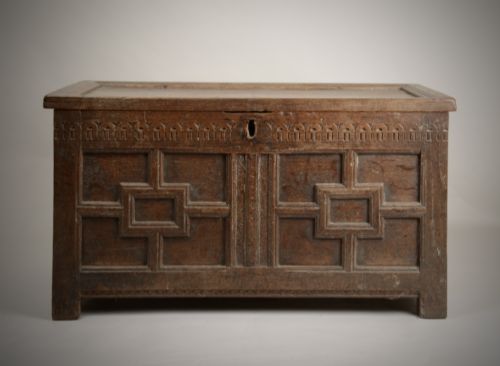
A geometric panel coffer is a robust storage chest defined by applied mouldings forming bold patterns, offering enduring utility and seventeenth-century character.
Geometric Panel Coffer
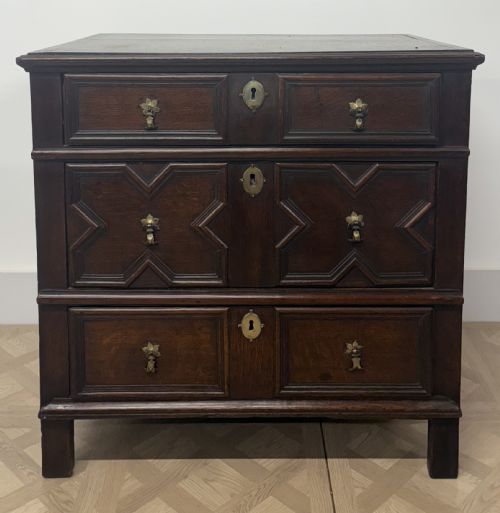
When searching for a geometric panel coffer, a buyer encounters heavy timber storage pieces principally from the seventeenth century alongside revival examples. These items combine deep storage compartments with architectural facades built from applied mouldings.
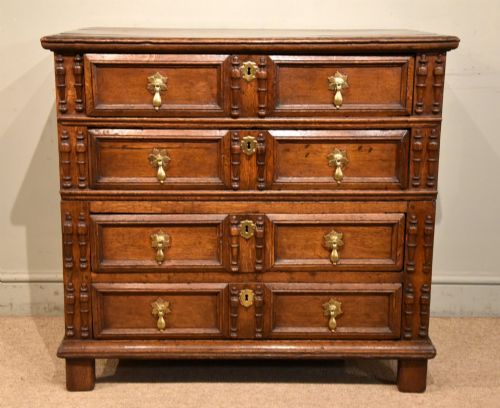
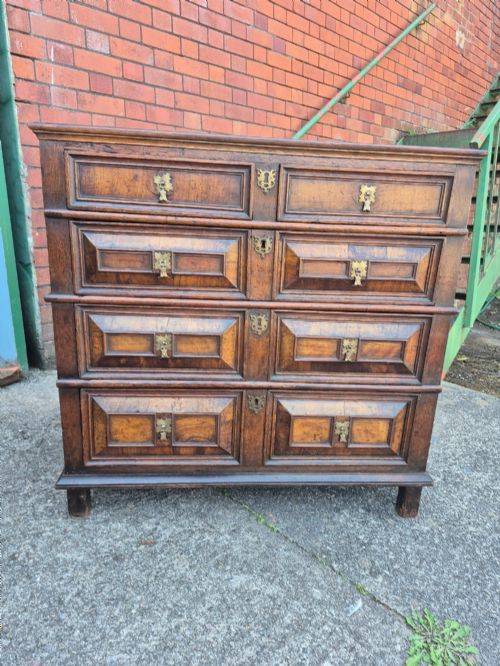
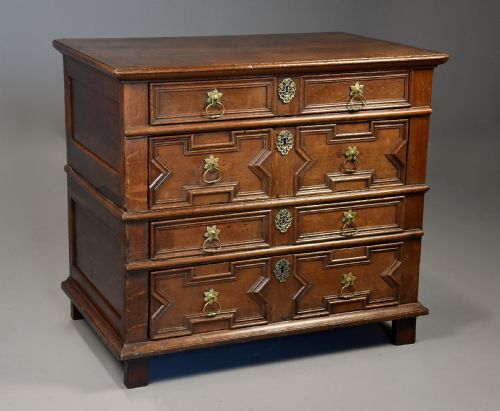
The version most commonly met on this page is the seventeenth-century English oak coffer or chest featuring panelled construction. Alongside these, related forms such as mule chests and chests of drawers appear, sharing the same vocabulary of geometric wood decoration.
What varies in quality
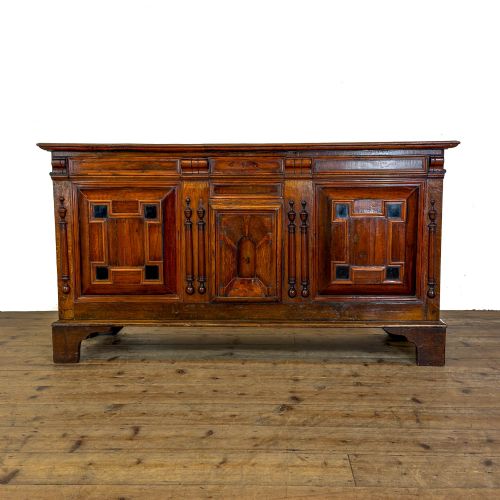
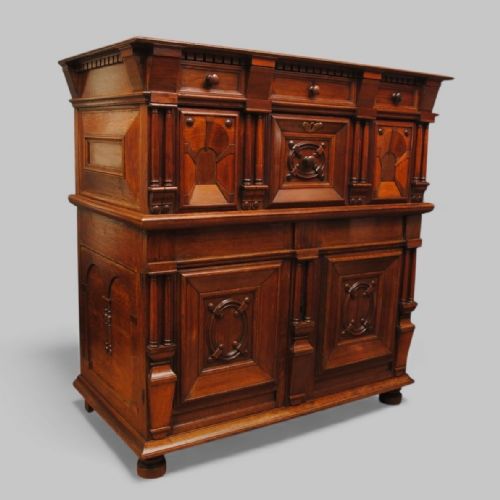
Quality rests on the crispness of the timber selection and the ambition of the geometric layout across the facade. Pieces incorporating contrasting secondary woods like walnut or snakewood demonstrate greater workshop investment than plain oak equivalents.
The integrity of the construction, the retention of original brass or iron hardware, and the depth of the surface patina dictate the standing of an individual piece. Alterations to bases or replacement lids diminish the historical coherence of the object.
Materials recorded across the inventory include oak, walnut, fruitwood, snakewood, cedar, ebonised wood, brass and iron.
The Geometric Panel Coffer Glossary
- Geometric moulding
- Applied strips of wood cut into mitred patterns such as rectangles, octagons and crosses to create relief on drawer fronts and panels. This technique defines the visual style of the period.
- Mule chest
- A storage chest featuring one or more drawers built into the base beneath the main compartment. They bridge the functional gap between a traditional coffer and a chest of drawers.
- Split turning
- A decorative wooden element produced by turning a piece on a lathe and splitting it down the middle, then applying both halves to the furniture surface.
- Patina
- The surface sheen and colour developed by timber through decades of handling, wax application and oxidation. A good patina reflects the age and history of the wood.
- Stile
- The vertical upright member in a frame and panel construction. It forms the structural outer edge that receives the tenons from the horizontal rails.
Geometric Panel Coffer: Frequently Asked Questions
What is a geometric panel coffer?
A geometric panel coffer is a heavy wooden storage chest decorated with applied mouldings arranged in repeating patterns across the front. These pieces primarily date from the seventeenth century and serve as both practical storage and focal furniture.
They were built by joiners using native timber, frequently oak accented with darker woods to highlight the architectural design of the facade.
How were these coffers used?
These chests were utilised in domestic interiors for storing valuable textiles, documents, clothing and household provisions. Their sturdy construction and lockable lids made them secure repositories in an era before built-in closets.
Over time, many were placed in hallways, bedrooms or living spaces where the decorative front panels contributed to the room's formal appearance.
Where should I place one?
A coffer suits placement in a hallway, at the foot of a bed, or as a low surface in a living room. Ensure it sits away from direct heat sources like radiators to prevent the dry timber from splitting.
Allow sufficient clearance around the lid if you intend to use the interior storage regularly.
How do I care for the wood?
Maintain the finish by applying a traditional beeswax polish sparingly and buffing with a soft cloth. Avoid modern silicone sprays or harsh chemical cleaners that strip the historic surface.
Keep the room at a stable humidity level to protect the pegged joinery and applied mouldings from movement.