
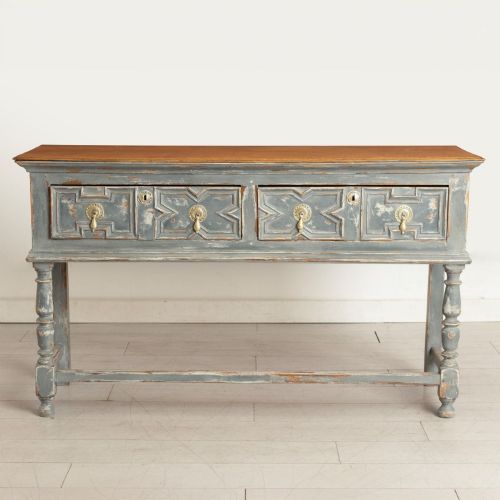
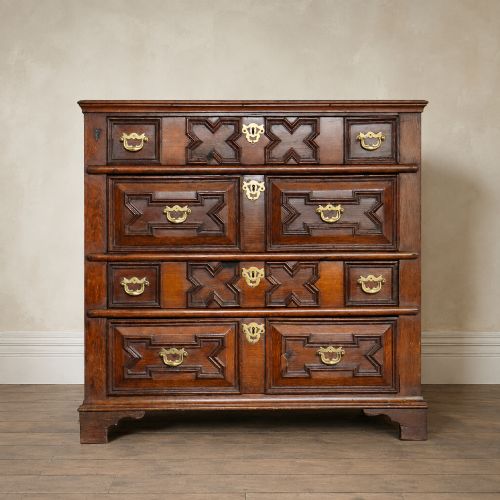
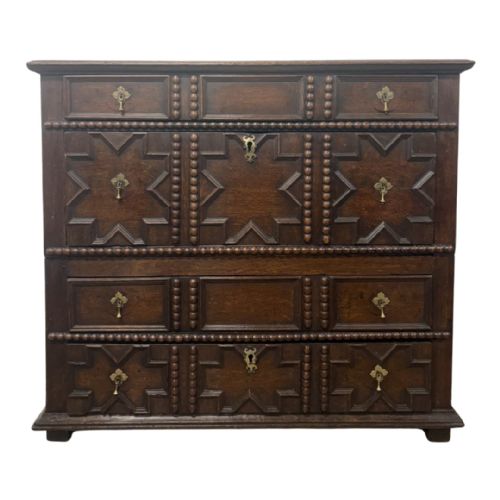
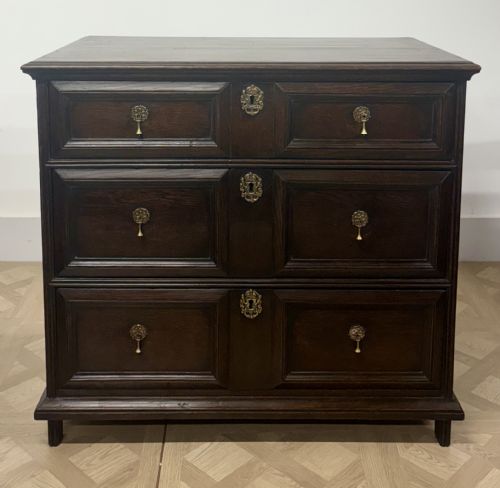


Geometric Moulding Chest Drawers
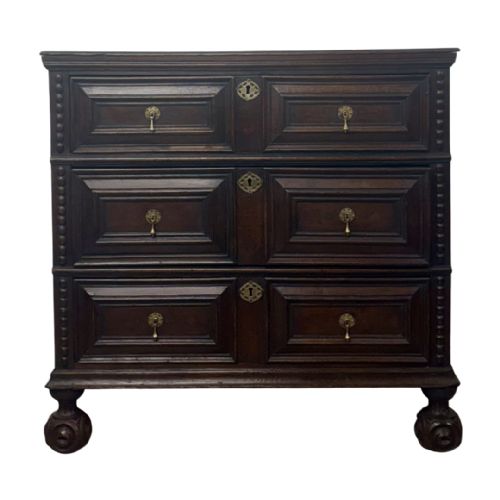
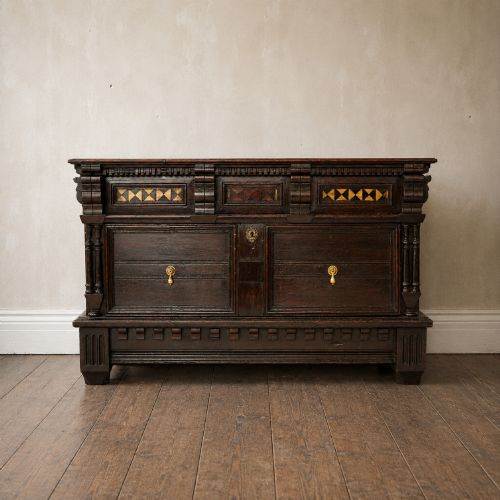
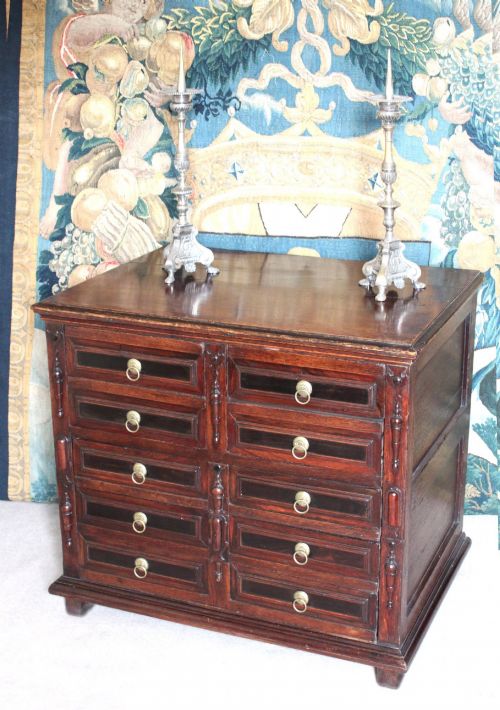
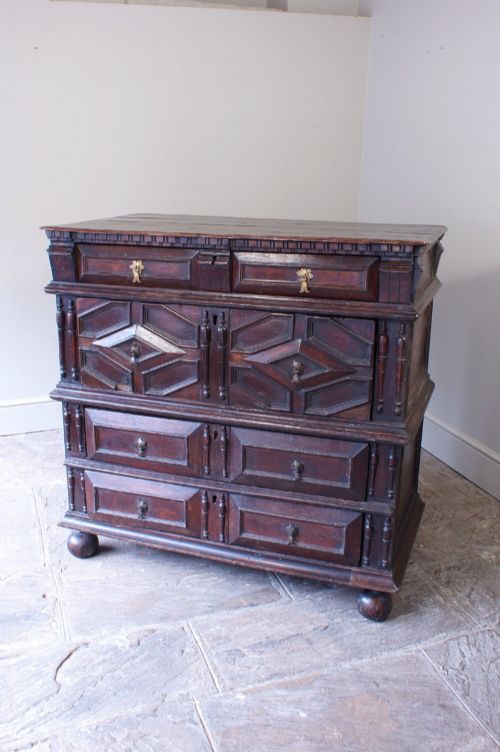
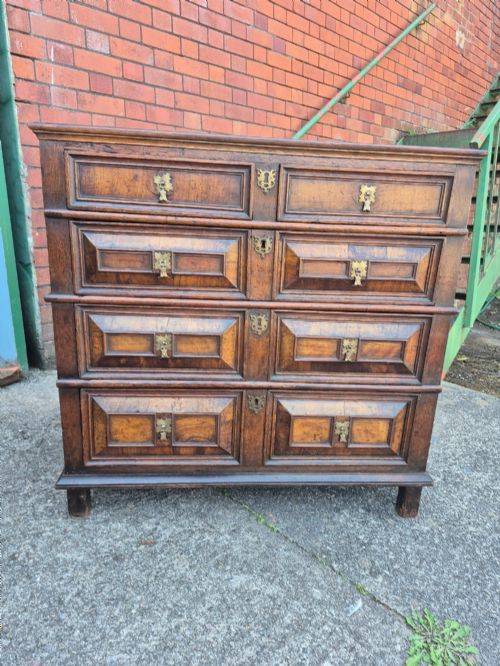
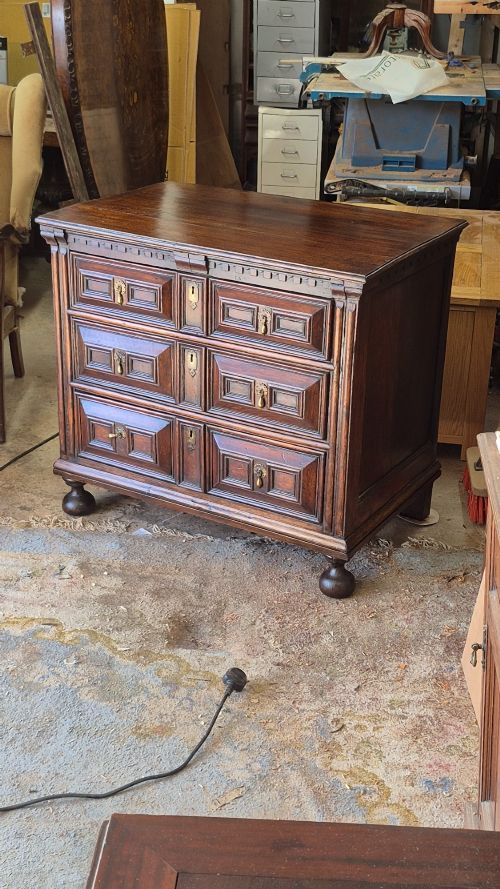
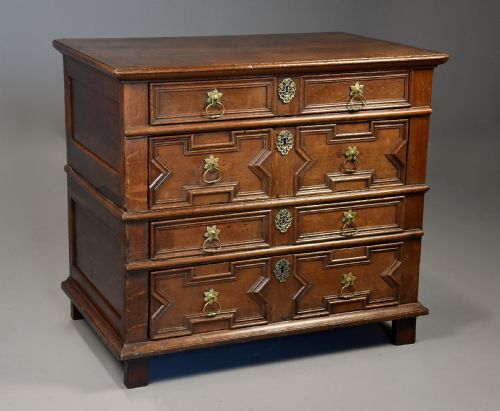
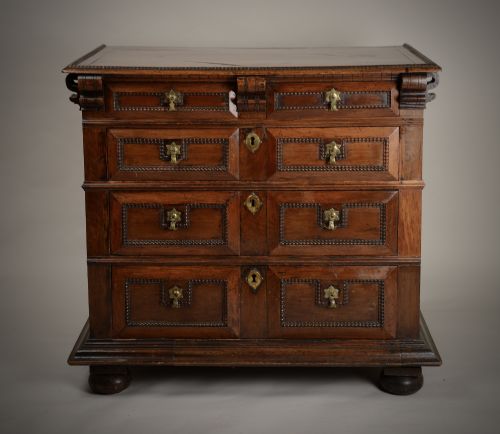
These geometric moulding chest drawers combine heavy seventeenth-century timber construction with intricate panelled facades that anchor a traditional period interior.
Geometric Moulding Chest Drawers
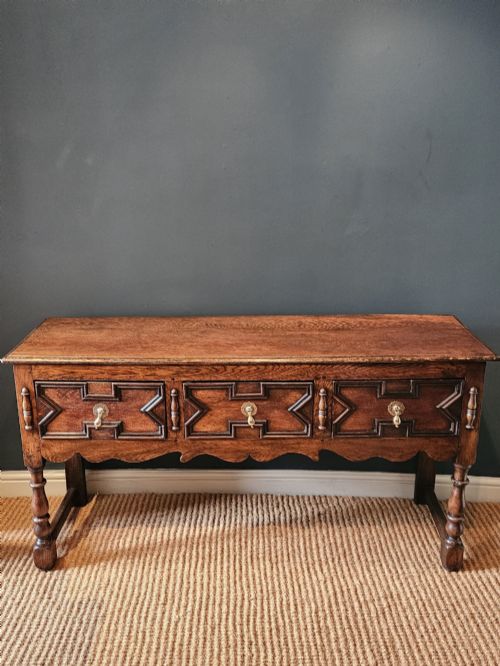
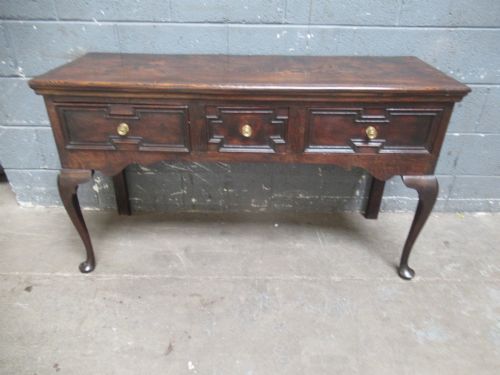
When searching for geometric moulding chest drawers, a buyer encounters heavy timber furniture primarily originating from the seventeenth century and the Georgian era. These pieces frequently manifest as two-part chests or dresser bases utilising robust construction methods.
The version most commonly met on this page is the Charles II oak chest featuring applied mouldings on the drawer fronts. Examples also span later revivals and styles such as Jacobean, William and Mary, and Queen Anne.
How they were made
Cabinetmakers constructed these pieces predominantly from solid oak, frequently incorporating walnut, fruitwood, and decorative oyster veneer across the primary surfaces. Cross-grain mouldings were painstakingly applied to the drawer fronts to create intricate geometric patterns.
Metalwork played a functional role, utilising brass for handles and escutcheons alongside iron fixings. Skilled artisans also applied paint or wood inlay to enhance the visual depth of the timber.
Listings span multiple eras from the seventeenth century through to the early twentieth century, featuring oak, walnut, and fruitwood.
What varies in quality
The standard of timber selection and the precision of the applied geometric mouldings dictate the distinction between average examples and superior pieces. Original brass hardware and a well-preserved, faded patina elevate the desirability of a piece.
Construction integrity, such as the survival of original two-part structures and authentic bracket feet, separates standard regional work from finer metropolitan cabinetmaking.
The Geometric Moulding Chest Drawers Glossary
- Geometric moulding
- Applied wooden strips arranged in repeating patterns on drawer fronts. This technique defined much of the decorative cabinetry during the late seventeenth century.
- Oyster veneer
- Thin circular slices of branch wood arranged to resemble oyster shells. This method created decorative swirling patterns on cabinet surfaces.
- Dresser base
- A low wooden sideboard or table fitted with drawers. These pieces served utilitarian storage purposes in domestic kitchens and halls.
- Two-part chest
- A piece of case furniture constructed in upper and lower sections. This design facilitated transport in smaller domestic spaces.
Geometric Moulding Chest Drawers: Frequently Asked Questions
How do I date a geometric chest?
Dating relies heavily on timber species, construction joints, and the complexity of the applied mouldings. Seventeenth-century examples typically utilise pegged oak frames alongside hand-cut dovetails.
Later revivals from around nineteen hundred imitate these older traits but lack the characteristic surface wear and oxidation found on genuine period pieces.
Are these chests heavy to move?
These pieces possess substantial weight due to their dense solid oak and walnut construction. Many period examples were built as two separate sections to ease transportation.
Lifting requires multiple people to prevent strain on the historical joints and applied mouldings.
Where were these pieces used?
These items functioned as primary storage furniture within period bedchambers and formal reception rooms. They held linens, garments, and personal valuables securely.
Today, they serve as functional focal points in hallways and living spaces while retaining their original storage utility.