
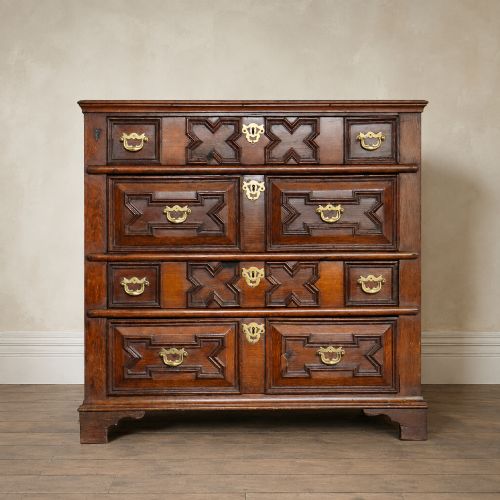
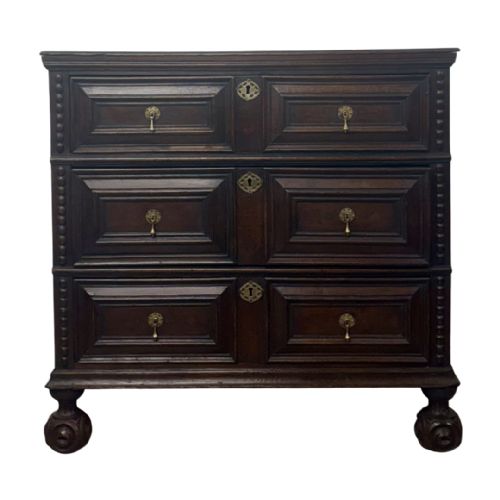
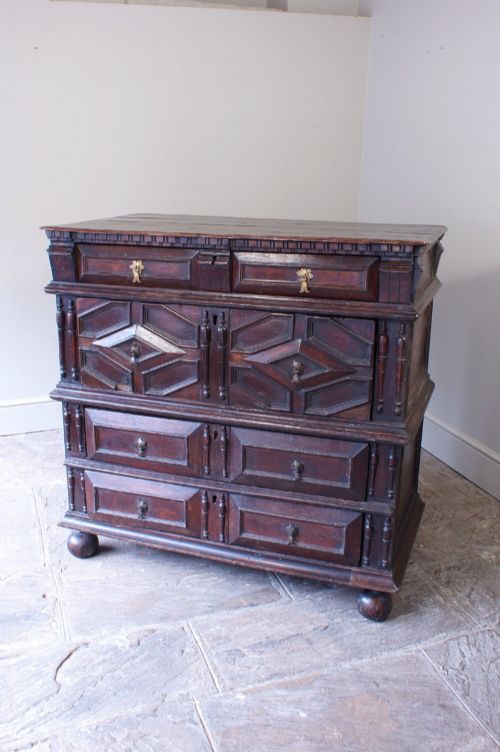


Geometric Moulded Bureau
A geometric moulded bureau offers striking panelled cabinetry and a fitted workspace, bringing seventeenth-century character and practical storage to any room.
Geometric Moulded Bureau
When you search for a geometric moulded bureau, you are looking at sturdy wooden furniture created with prominent surface mouldings and drop-front writing compartments. The pieces appearing here span the seventeenth century and the later nineteen-twenties revival, including related chest of drawers and bureau bookcase formats.
The seventeenth-century examples showcase authentic period construction in oak, whilst the nineteen-twenties pieces reflect a strong Jacobean revival aesthetic in dark oak. Both forms utilise architectural drawer fronts and substantial proportions that anchor a traditional interior.
Materials and construction
These items are constructed primarily from solid oak, sometimes accented with wood inlay, brass hardware, iron details, and glass panes in the bookcase variants. Artisans built the structural framework and drawer fronts by hand, applying applied geometric mouldings to create texture and depth across the surfaces.
The integration of writing compartments and bureau bookcases required sophisticated joinery to support drop-front desks and heavy shelving. Timber selection focused on durable native hardwoods capable of sustaining deep carved details and repeated daily use.
Assessing quality and authenticity
Quality in these items rests upon the crispness of the applied geometric mouldings and the integrity of the original oak construction. Period pieces from the seventeenth century command attention for their authentic age, whilst later nineteen-twenties revivals depend on the fidelity of their Jacobean styling.
The handling of hardware, from brass fittings to iron hinges, distinguishes finer examples alongside the careful execution of wood inlay. Proportional balance between the lower chest section and the upper bureau or bookcase elements defines the overall visual success of the piece.
The Geometric Moulded Bureau Glossary
- Geometric moulding
- Raised wooden strips applied to drawer fronts and panels in symmetrical, often rectilinear patterns. This technique defined late seventeenth-century case furniture.
- Bureau
- A desk featuring a sloping hinged flap that opens to reveal a fitted interior of small drawers and pigeonholes. It provides a concealed writing surface.
- Bureau bookcase
- A combination piece comprising a lower writing bureau surmounted by an enclosed upper shelving section with glass doors. It unites storage and display in a single tall format.
- Jacobean style
- An early seventeenth-century design aesthetic characterised by heavy proportions and dark oak. Later twentieth-century revivals reinterpreted these motifs.
- Wood inlay
- The technique of inserting contrasting strips of timber into recesses within a wooden surface to form decorative patterns. It enhances the visual depth of the primary material.
Geometric Moulded Bureau: Frequently Asked Questions
What is a geometric moulded bureau?
A geometric moulded bureau is a wooden desk featuring a drop-front writing flap and decorative raised mouldings on the drawer fronts. These pieces derive their character from seventeenth-century joinery traditions and later revival periods.
They combine enclosed storage with a compact writing surface, making them both functional desks and sculptural cabinet pieces.
How do I date a geometric moulded piece?
Dating relies on examining the timber, construction methods, and hardware integration. Seventeenth-century examples display authentic age-related wear and period joinery.
Items from the nineteen-twenties typically reflect a Jacobean revival style, using dark oak and machine-assisted joinery alongside traditional forms.
Where should I place a bureau bookcase?
A bureau bookcase requires a sturdy wall with adequate vertical clearance and enough floor space to allow the writing flap to drop fully open. Because these pieces are tall and deep, positioning them away from direct heat sources protects the solid oak timbers.
They function well in studies or living rooms where both book storage and writing space are needed.
How do I care for antique oak furniture?
Maintain antique oak by keeping it away from rapid humidity changes and direct sunlight, which can dry out the wood. Dust the geometric mouldings regularly with a dry cloth to prevent dirt accumulation in the recesses.
Occasional application of appropriate wax preserves the finish without sealing moisture into the grain.