



Oak Bureau on Turned Legs
An oak bureau on turned legs brings solid timber and practical writing space into a room, combining a drop-down flap with sturdy supports.
Oak Bureau on Turned Legs
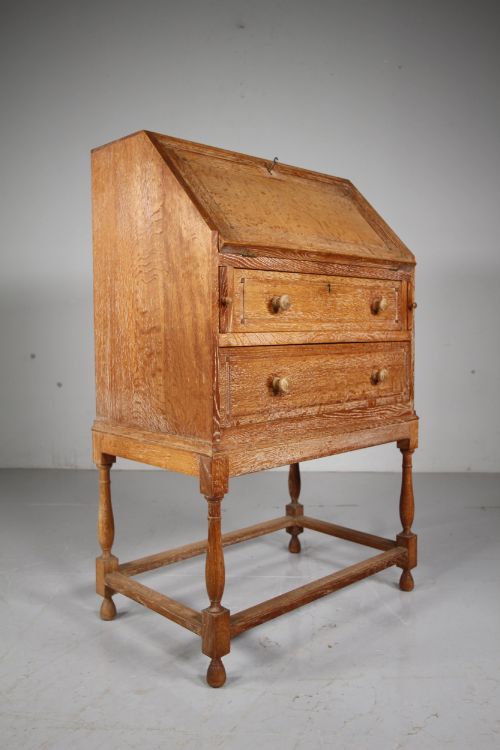
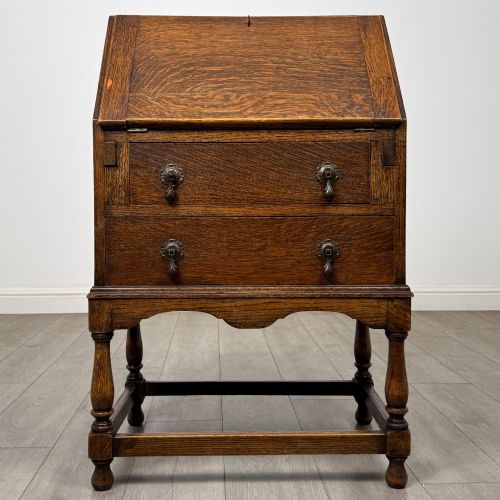
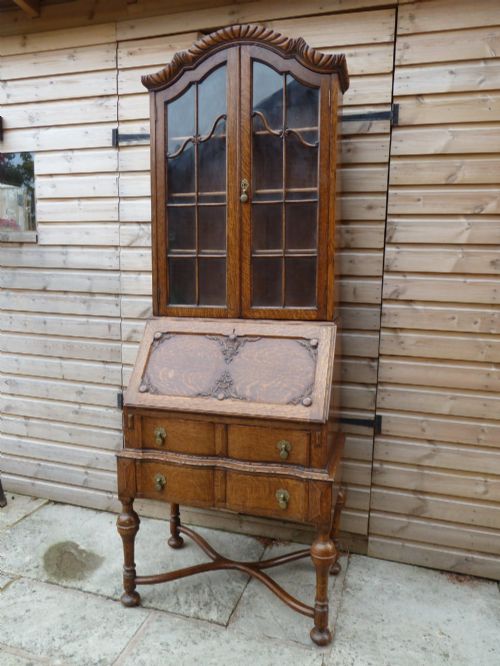
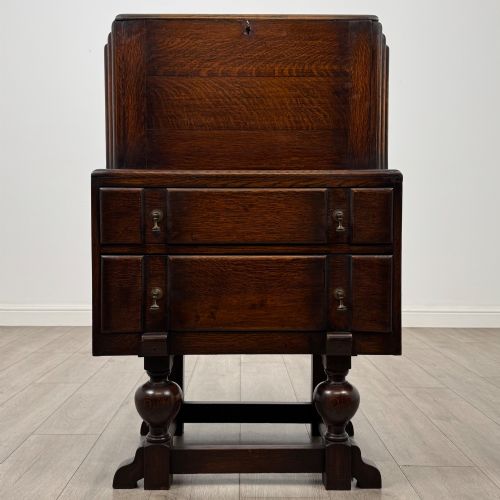
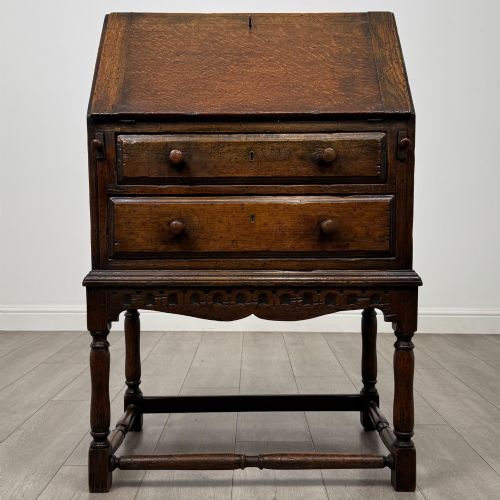
An oak bureau on turned legs is a functional writing desk that uses turned supports beneath a cabinet body, appearing in forms ranging from compact Edwardian examples to larger Jacobean Revival pieces. Buyers seeking this type will most frequently encounter Edwardian and 1920s variations constructed in golden or dark oak.
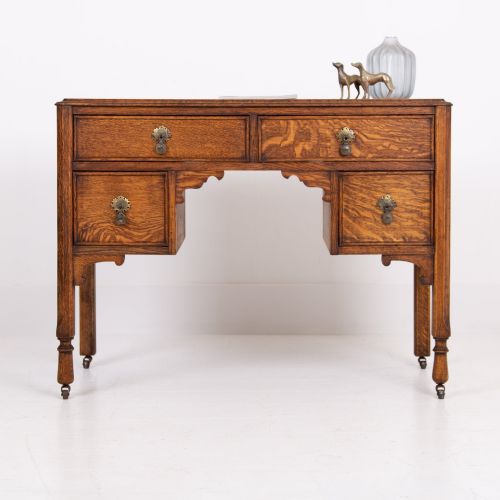
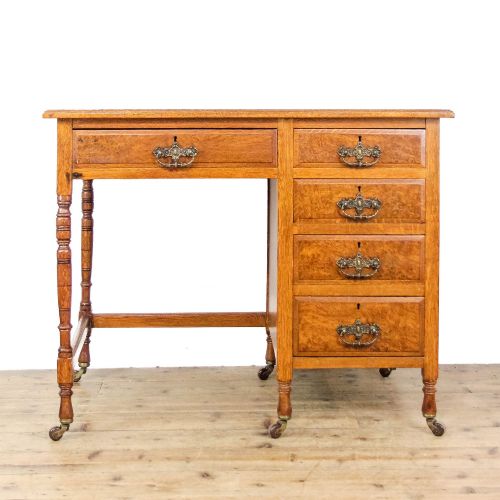
The selection includes drop-front desks, writing tables, and tall bureau bookcases featuring glazed upper sections. These items serve as practical workspaces and storage units while displaying the grain and character of traditional timber.
How they were made
Carpenters built these items primarily from solid oak, sometimes pairing the timber with brass handles and leather writing surfaces. Construction relies on traditional joinery techniques to support the weight of the fall-front desk and interior compartments.
Turned legs provide the structural foundation for the cabinet bodies, shaped on lathes to create specific stylistic profiles from the Edwardian period or earlier revival eras.
Listings for this phrase include pieces from the seventeenth century through to the Edwardian era and the nineteen twenties, constructed in oak with occasional brass and leather elements.
What varies in quality
Quality in an oak bureau on turned legs rests on the selection of the timber and the depth of the grain rather than surface ornamentation alone. Superior examples show careful matching of oak boards across the fall-front flap and drawer fronts.
The precision of the internal pigeonholes and small drawers indicates the standard of workshop execution. Well-proportioned turned legs and robust hinges ensure the desk remains stable during daily use.
Heals of London
The Oak Bureau on Turned Legs Glossary
- Bureau
- A writing desk featuring a sloping hinged lid that drops down to form a writing surface, concealing small drawers and pigeonholes inside.
- Bureau bookcase
- A combination furniture piece consisting of a lower writing bureau surmounted by a glazed cabinet for storing books.
- Edwardian
- Pertaining to the period from nineteen hundred to nineteen ten, known for lighter proportions and revivals of earlier furniture styles.
- Jacobean Revival
- A nineteenth and twentieth century style imitating seventeenth century English furniture, characterised by dark oak and turned woodwork.
- Turned leg
- A wooden support shaped on a lathe, varying from simple baluster forms to more elaborate bobbin or spiral turnings.
Oak Bureau on Turned Legs: Frequently Asked Questions
How do I use a bureau desk?
Lower the hinged flap to reveal the interior writing surface and pigeonholes, providing a dedicated space for correspondence.
Close the flap when finished to conceal papers and maintain a tidy appearance in the room.
What is the fall front?
The fall front is the sloping wooden panel that pulls down or folds forward to create the desk surface.
It rests on wooden supports called lopers when opened for writing.
How do I care for oak furniture?
Keep the timber away from direct heat sources and strong sunlight to prevent the wood from drying out or splitting.
Apply a traditional wax polish occasionally and buff with a soft cloth to maintain the lustre of the oak.
How do I date an oak bureau?
Examine the hardware, timber grain, and construction methods to determine the period of manufacture.
Edwardian and 1920s pieces often feature lighter golden oak and machine-sawn components alongside traditional joinery.