

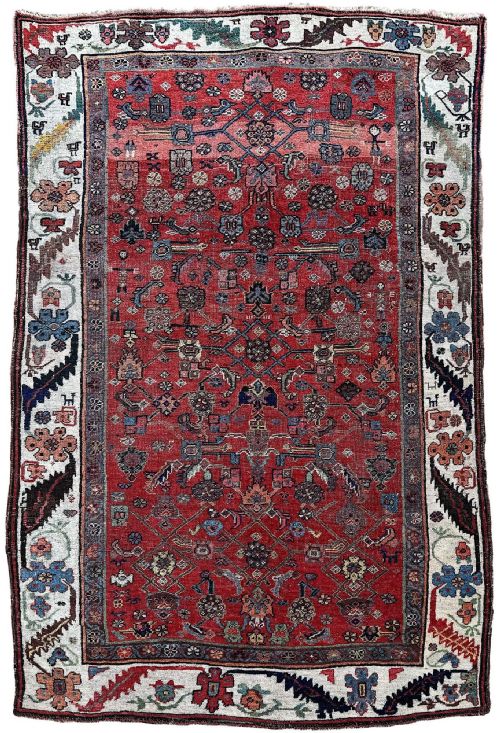
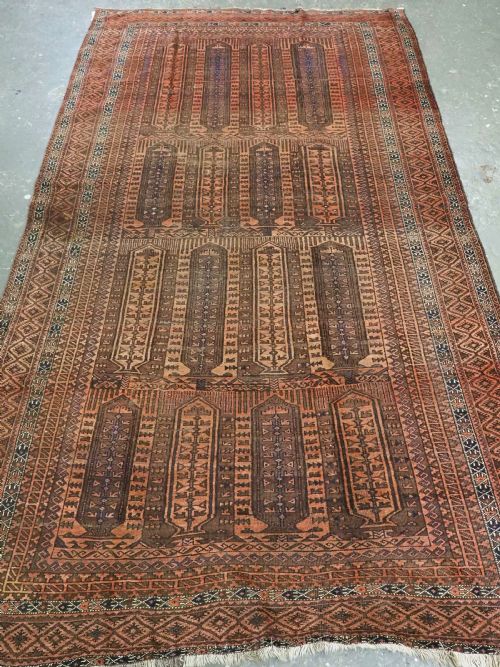
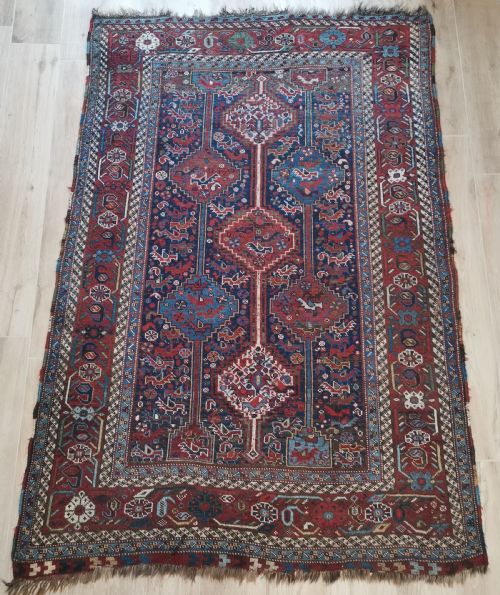
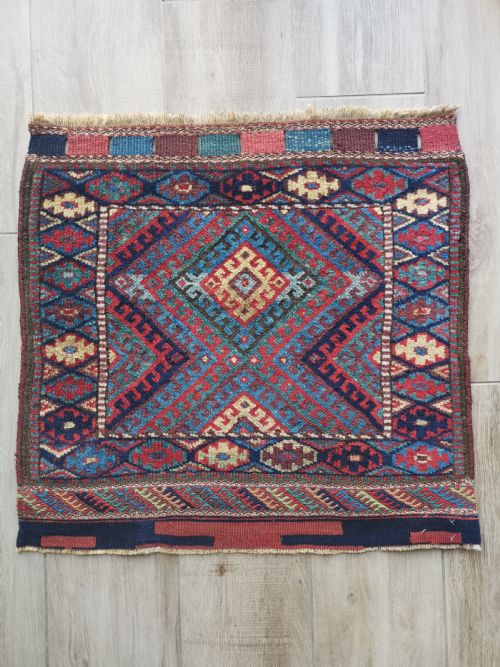


Geometric Motif Wool Rug
When you select a geometric motif wool rug, you bring home a piece of tribal weaving history shaped by nomadic hands over a century ago.
Geometric Motif Wool Rug
A geometric motif wool rug brings traditional tribal and village weaving into domestic spaces, featuring angular patterns passed down through generations. These pieces originate from Persian, Caucasian, Afghan, and Balkan traditions, dating primarily from the nineteenth and early twentieth centuries.
The most common versions encountered here are village and nomadic carpets, runners, and bagfaces displaying repeating guls, medallions, and stylized animal forms. They function as both floor coverings and textile art, adding depth and structure to a room through precise symmetry.
Buyers will find formats ranging from small prayer rugs and cushions to substantial room-sized carpets and narrow runners. Each format showcases regional layouts, from Caucasian star motifs to Persian tribal field designs.
Materials and construction methods
Weavers utilised hand-spun wool for the pile and structure, providing the resilience that allows these textiles to survive for generations. Cotton foundation threads frequently appear in village workshop pieces to maintain structural tension.
Natural dyes produced the deep, enduring palette seen across these rugs, deriving hues from plants, roots, and minerals. Over decades, these vegetable colours develop a characteristic mellow patina that chemical dyes cannot replicate.
Listings feature wool rugs and textiles spanning from the early nineteenth century through the 1930s, utilising natural dyes and hand-spun materials.
Evaluating weave and design integrity
The fineness of the knotting and the crispness of the angular design distinguish standard village pieces from masterwork carpets. A tighter foundation allows complex medallions and borders to maintain precise geometric clarity.
Preservation of the original pile depth and untrimmed outer edges determines the structural integrity of an antique textile. Pieces retaining their full wool density and balanced end finishes demonstrate superior longevity.
The Geometric Motif Wool Rug Glossary
- Gul
- A medallion or primary repeating octagonal motif used extensively in Turkmen and Baluch tribal weaving.
- Mihrab
- The arched niche design found on prayer rugs, directing the user toward a sacred orientation.
- Boteh
- A Paisley-like almond or pear-shaped motif representing a sprouting twig or cypress tree, common in Persian weaving.
- Kilim
- A flat-woven textile produced without a pile, utilising interlocking horizontal and vertical weft techniques.
Geometric Motif Wool Rug: Frequently Asked Questions
How do I clean an antique wool rug?
Regular gentle vacuuming without a beater bar removes surface grit and prevents dust accumulation in the wool pile. Professional specialist cleaning remains essential for deep maintenance.
Water saturation and harsh chemical detergents must be avoided to protect natural dye stability and fibre integrity. Proper air drying preserves the original hand-spun wool texture.
Can I place these rugs in high traffic areas?
Many sturdy tribal and village carpets tolerate moderate hallway or living room use due to their dense wool construction. Placing a quality underlay beneath the textile prevents slippage and reduces friction against the floor.
Delicate flat-weaves and fragile older prayer formats suit low-traffic display spaces or wall hanging. Assessing the pile thickness helps determine appropriate placement in the home.
How do I identify a tribal design origin?
Regional weaving traditions reveal themselves through specific structural traits, palette choices, and repeat motifs like stars or animal figures. Caucasian pieces often display bold, angular geometry while Persian tribal formats utilise intricate medallion arrangements.
Comparing border bands and end finishes provides additional clues to geographic provenance. Village workshops incorporated local iconography that remained distinct to specific valleys and tribes.
Why do natural dyes change over time?
Vegetable and insect-derived colorants interact gradually with light and ambient air over decades of exposure. This oxidation process creates abrash, a subtle tonal variation within a single colour field that confirms traditional dyeing methods.
Synthetic aniline dyes introduced later do not age with the same harmonious softening. Connoisseurs value the gentle fading of natural dyes for adding character and depth to the textile.