





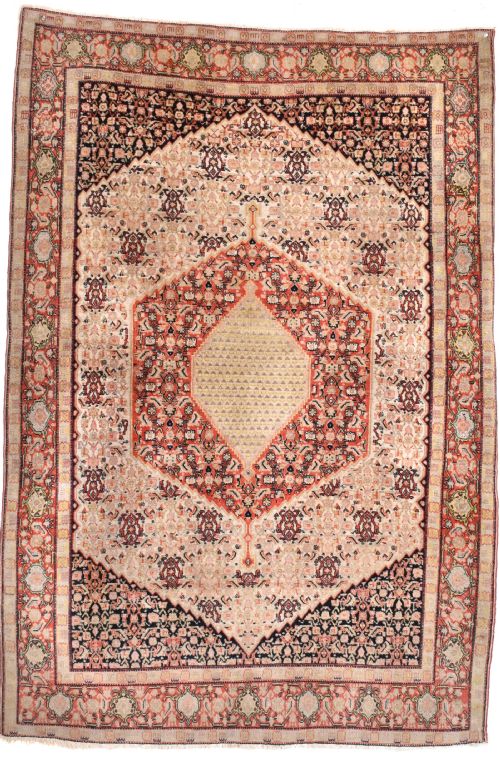
Handcrafted Persian Floor Carpet
These handcrafted Persian floor carpet examples bring centuries of weaving heritage into a room, valued for their enduring wool construction and traditional regional designs.
Handcrafted Persian Floor Carpet
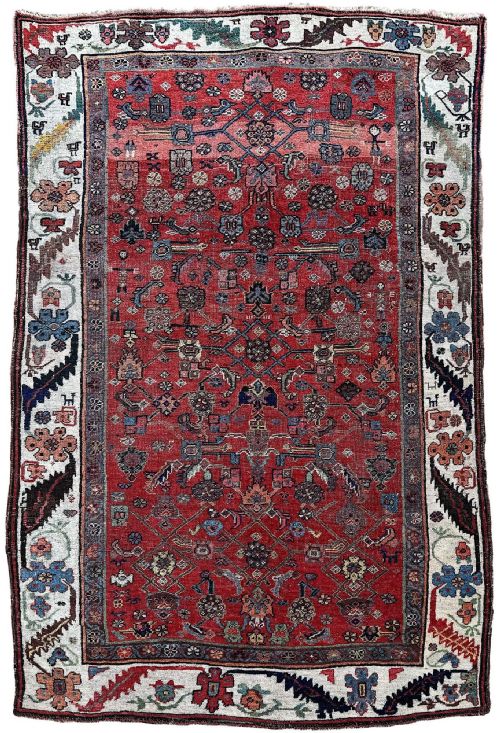
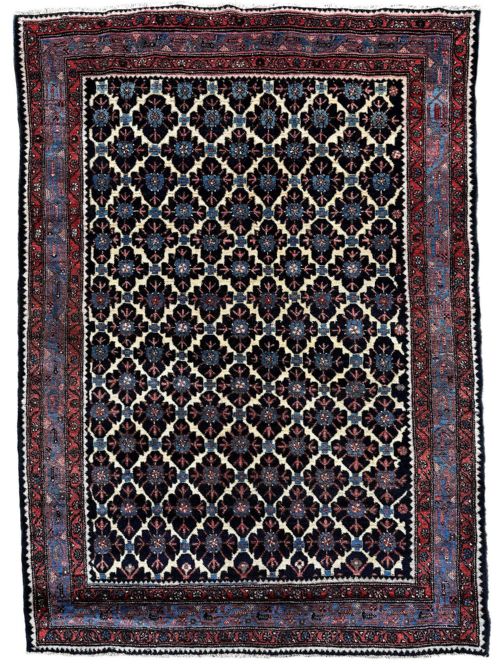
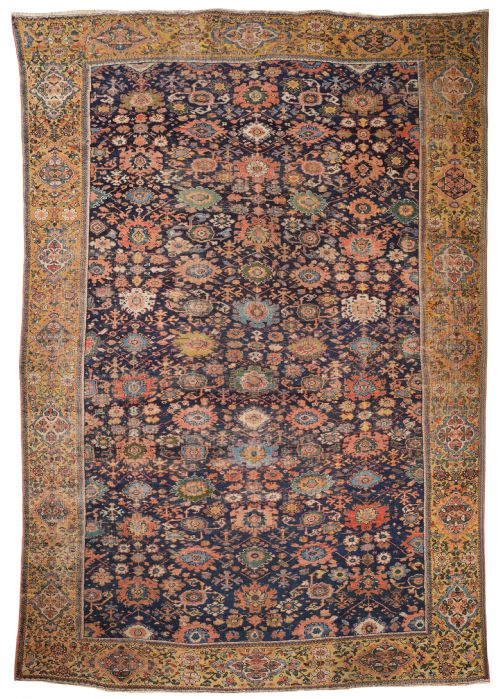
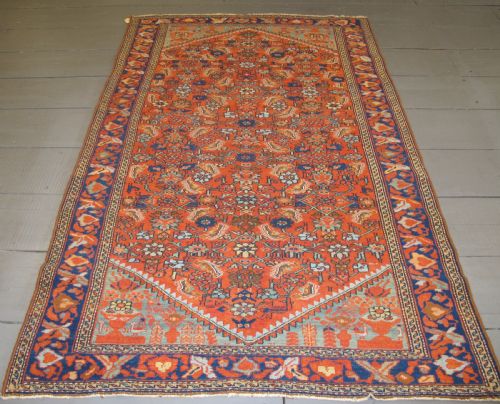
A handcrafted Persian floor carpet brings dense wool pile and centuries of weaving traditions straight into a room. When buyers search for a handcrafted Persian floor carpet, they encounter antique regional carpets and rugs that date from the nineteenth and early twentieth centuries.
The pieces listed on this page span several specific production centres across Persia, including Bakhtiar, Bidjar, Hamadan, Tabriz, Heriz, Farahan, Malayer, and Senneh. Most examples emerge from the late nineteenth century up to the nineteen-twenties, presenting traditional motifs worked in durable materials.
Buyers are most likely to meet room-size carpets alongside smaller area rugs within these regional classifications. Each piece reflects the distinct knotting techniques and design vocabulary of the town or tribal group that produced it.
How they were made
These floor coverings rely on natural wool for the pile, providing both warmth and resilience underfoot. Cotton typically forms the sturdy foundation warp and weft threads that support the knotted structure.
Weavers tied wool pile yarn by hand onto cotton foundations using traditional regional knotting methods. This labour-intensive process creates the dense, durable surfaces characteristic of antique Persian workshop and village production.
Current listings exclusively feature wool and cotton materials across nineteenth- and early twentieth-century Persian rugs and carpets.
What varies in quality
Knot density and the precision of the pattern execution distinguish the finer workshop pieces from simpler village weaves. Tighter knots allow for sharper definition within traditional medallion and all-over field designs.
The choice of wool quality and the depth of the pile also separate standard examples from superior ones. Finer wool yields a softer handle and ages with a more lustrous patina across the carpet surface.
The Handcrafted Persian Floor Carpet Glossary
- Pile
- The upright wool fibres that form the soft upper surface of the carpet. This layer absorbs foot traffic and displays the woven design.
- Warp
- The stationary longitudinal threads stretched tightly on the loom before weaving begins. Cotton serves as the primary material for this structural foundation.
- Weft
- The horizontal threads passed across the warp between rows of knots to bind the structure together. It keeps the wool pile firmly locked in place.
- Medallion
- A large central ornamental design motif placed in the middle of the carpet field. Many traditional Persian pieces build their layout around this focal point.
- Herati
- A repeating geometric floral pattern featuring a central rosette enclosed by four curved leaves. This classic motif appears frequently across Persian village and town weaving.
Handcrafted Persian Floor Carpet: Frequently Asked Questions
What periods do these Persian carpets come from?
The available pieces originate primarily from the late nineteenth century and the early decades of the twentieth century. Specific dates span from eighteen-seventy through to nineteen-twenty.
This timeframe encompasses both nineteenth-century productions and early twentieth-century examples representing various traditional Persian weaving centres.
What materials were used to make them?
Traditional wool provides the thick, durable pile found on the surface of these floor coverings. Cotton forms the hidden foundation yarns that give each piece its structural stability.
Together, these natural materials create the flexible yet robust textile required for daily floor use.
How do I identify different regional styles?
Regional types are distinguished by their specific design layouts, border arrangements, and structural characteristics. Pieces from Heriz, Tabriz, Bidjar, and Senneh each display unique local aesthetics.
Study the central field motifs and the density of the weave to connect a rug to its specific town or tribal origin.
How should I care for an antique Persian carpet?
Protect the wool pile by vacuuming gently without a rotating brush bar to avoid pulling the fibres. Professional cleaning tailored to antique textiles preserves the natural lanolin in the wool.
Positioning the rug away from direct, harsh sunlight prevents the natural dyes from fading prematurely over the years.