
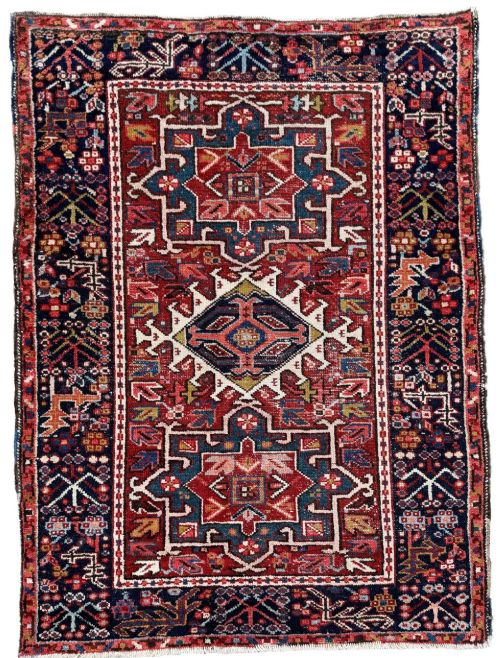
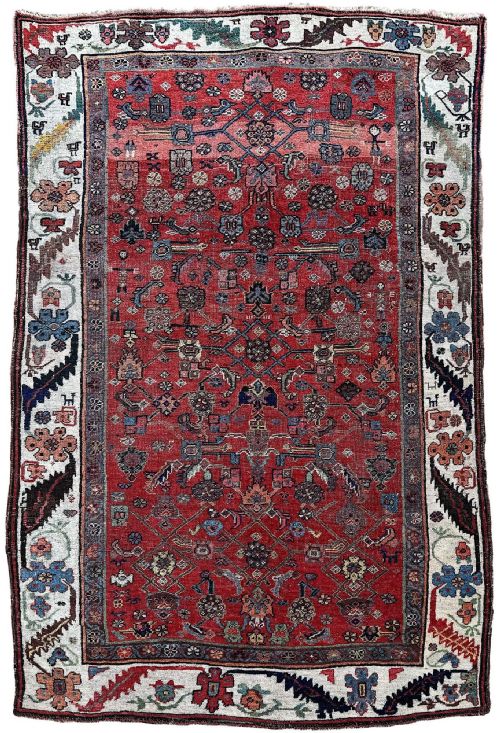
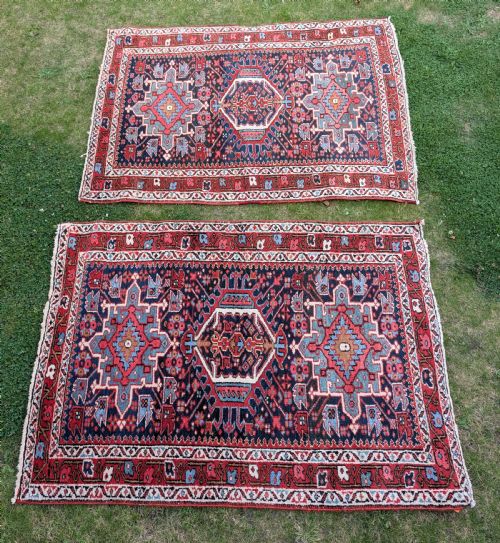
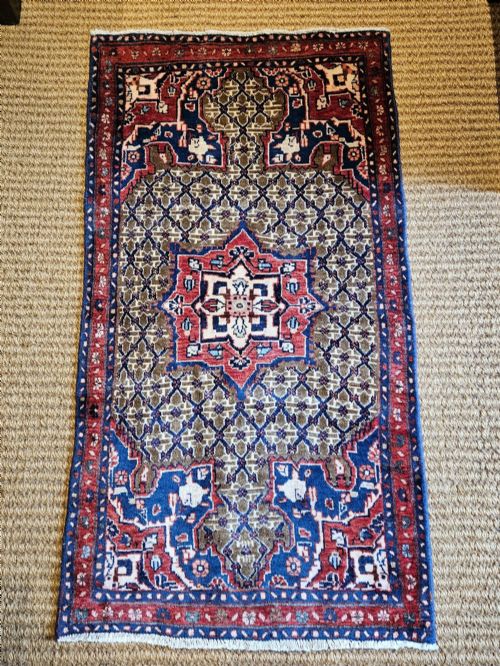


Small Persian Accent Rug
A small persian accent rug brings genuine tribal warmth to a floor, offering rich colour and pattern scaled for tighter spaces.
Small Persian Accent Rug
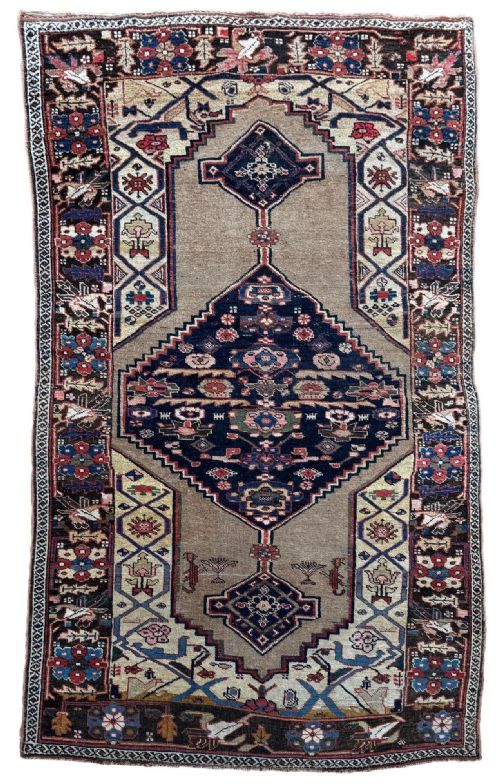
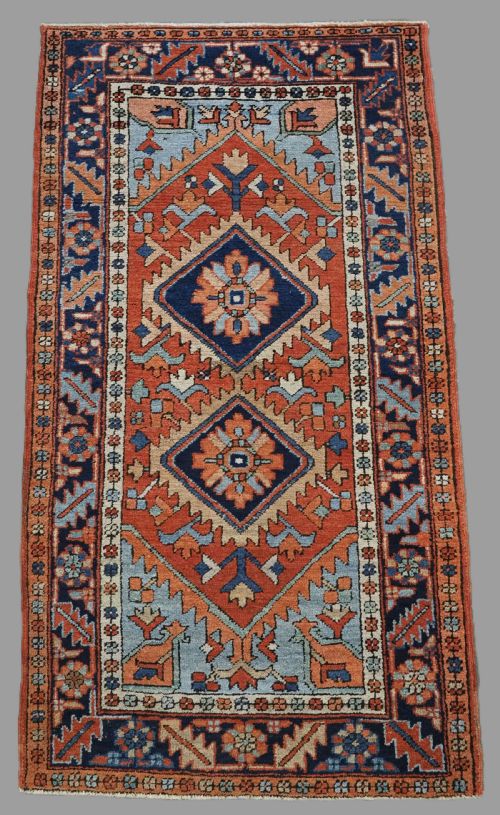
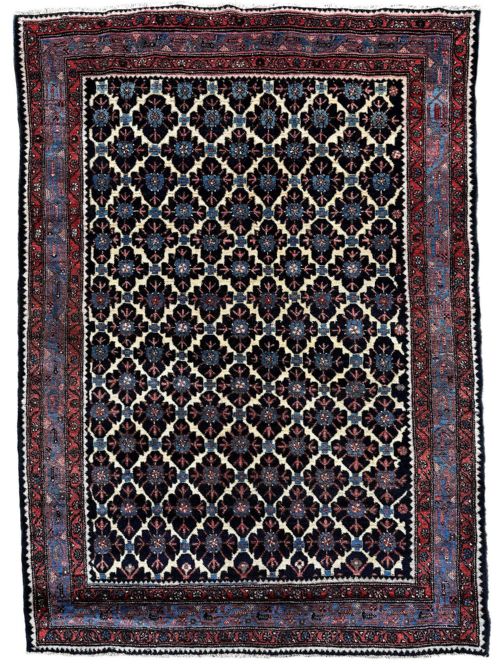
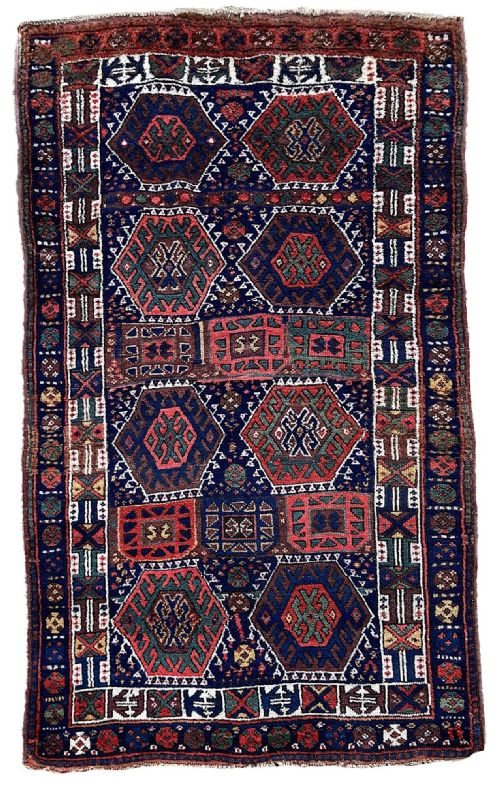
A small persian accent rug encompasses hand-knotted tribal and village floor coverings originating from various Persian regions during the nineteenth and early twentieth centuries. These pieces typically present distinct geometric or medallion designs tailored for hearths, corridors, or compact rooms.
Buyers encountering this selection will most frequently find village weaves from centres such as Karaja, Bidjar, Hamadan, and Heriz, alongside tribal works by Kurdish, Afshar, and Baluch weavers. These works range from diminutive prayer mats to compact area rugs produced between eighteen eighty and nineteen twenty.
Materials and construction
Weavers constructed these rugs using hand-spun wool piles knotted onto sturdy cotton warps, occasionally incorporating camel hair for natural tones. Artisans dyed these wool fibres using natural dyes derived from plants and minerals, achieving deep, lasting hues that soften gracefully over decades.
The dense knotting technique employed by village workshops created durable floor coverings capable of withstanding heavy daily use while retaining intricate field patterns. Foundation threads and selvedges were finished by hand, reflecting traditional regional weaving methods passed down through generations.
Listings span from eighteen eighty through nineteen twenty, featuring wool piles, cotton warps, and natural dyes across diverse Persian styles.
Judging quality and character
Quality in these woven pieces rests upon the precision of the knotting, the depth and complexity of the natural dye palette, and the crispness of the tribal design. Finer wool selection and tighter structural density separate exceptional village production from standard utility weaving.
The visual impact is further determined by the harmonious ageing of the wool and the integrity of the original borders and field proportions. Pieces that maintain strong graphic clarity and balanced composition display the true mastery of nineteenth and early twentieth century regional artisans.
The Small Persian Accent Rug Glossary
- Warp
- The vertical foundation threads stretched lengthwise on the loom before knotting begins. These sturdy cotton or wool strands support the entire tension of the pile.
- Prayer Rug
- A devotional rug featuring a specific architectural arch or mihrab design at one end. Historically utilised by individuals for daily ritual prayers facing Mecca.
- Medallion
- A central ornamental design motif placed in the middle of the rug field. Persian village weavers frequently utilised star, diamond, or floral medallions.
- Natural Dyes
- Colourants extracted from organic sources such as plants, roots, and insects prior to synthetic alternatives. They produce complex, varied tones that mellow organically over time.
Small Persian Accent Rug: Frequently Asked Questions
Where should I place a small persian accent rug?
These compact rugs suit smaller floor spaces such as bedside areas, hearths, and narrow hallways where full-sized carpets overwhelm the room.
Their scaled dimensions allow them to introduce concentrated pattern and warmth without dominating the surrounding furniture arrangement.
How do I identify a tribal rug?
Tribal rugs typically display geometric motifs, repeating tribal symbols, and bold, abstracted designs rather than formal court patterns. These pieces reflect the nomadic or village heritage of the weavers who produced them.
Palettes often rely on rich earthy tones derived from natural dyes, applied to wool piles woven on simple village looms.
How do I care for an antique wool rug?
Vacuum these wool and cotton textiles gently with a suction-only attachment, avoiding rotating brush bars that can pull at the vintage pile. Keep them out of harsh direct sunlight to protect the natural dyes from fading prematurely.
Professional cleaning should be undertaken periodically by specialists experienced in antique textiles.