


Antique Karaja Carpet
An antique karaja carpet brings robust Persian tribal artistry into a room, offering deep geometric character and rich wool durability.
Antique Karaja Carpet
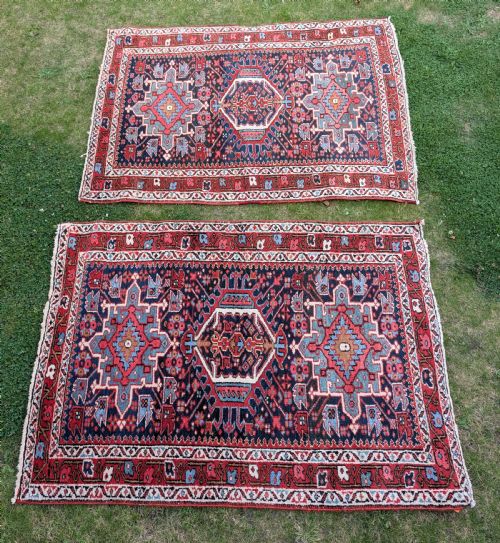
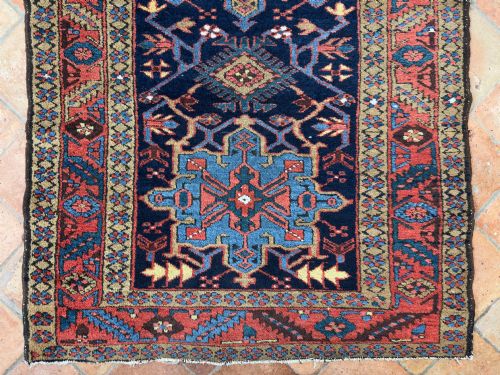
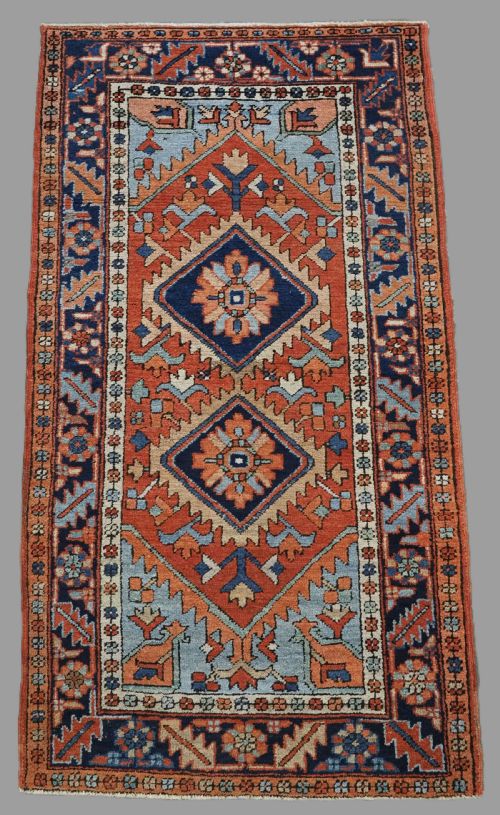
When you search for an antique karaja carpet, you are looking at hand-knotted woven floor coverings originating from the north-west region of Persia. These pieces span from the late nineteenth century through to the early decades of the twentieth century, encompassing smaller scatter rugs alongside room-size formats and long hallway runners.
The pieces you are most likely to meet on this page include room-size carpets and rectangular rugs dating from around eighteen-eighty to nineteen-thirty. They frequently share stylistic links with neighbouring Heriz production, showing strong geometric medallions and traditional village designs.
How they were made
These floor coverings are constructed using hand-knotted wool pile secured on sturdy cotton foundations. The weavers tied dense knots by hand, resulting in a robust textile designed for heavy daily use.
Natural dye stuffs provided the deep colour palettes recorded in the pieces, utilising local plant and mineral sources to achieve intense hues across the geometric fields.
Antique Karaja Carpet Retail Price Guide 2026
Typical asking prices for karaja carpet among the pieces listed under this phrase on Sellingantiques today, from the lower quarter to the upper quarter. They describe what is for sale here now, not the wider market.
The listings here feature wool and cotton pieces produced across the late nineteenth and early twentieth centuries.
What varies in quality
Quality in these woven works rests upon the crispness of the geometric drawing and the density of the knotting across the wool pile. Finer examples display precise execution in the medallions and sharper definition in the traditional village motifs.
The depth and saturation of the dye work also divide the standard examples from the exceptional ones. Pieces possessing intense, varied colouration command greater visual presence on the floor.
The Antique Karaja Carpet Glossary
- Runner
- A long, narrow carpet format designed specifically for hallways and corridors. They typically measure significantly longer than they are wide.
- Medallion
- A large central decorative motif set into the middle of the carpet field. It usually forms the primary geometric focus of the design.
- Heriz
- A neighbouring Persian weaving region known for bold, geometric formats. Karaja pieces often share similar structural and stylistic traits with this tradition.
- Warp
- The vertical threads stretched tightly on the loom that form the foundational skeleton of the rug. Cotton is the standard material used for these structural elements.
- Pile
- The raised, soft surface of the carpet formed by the ends of the hand-knotted wool yarn. This is the part of the textile that meets foot traffic.
Antique Karaja Carpet: Frequently Asked Questions
How do I place a runner?
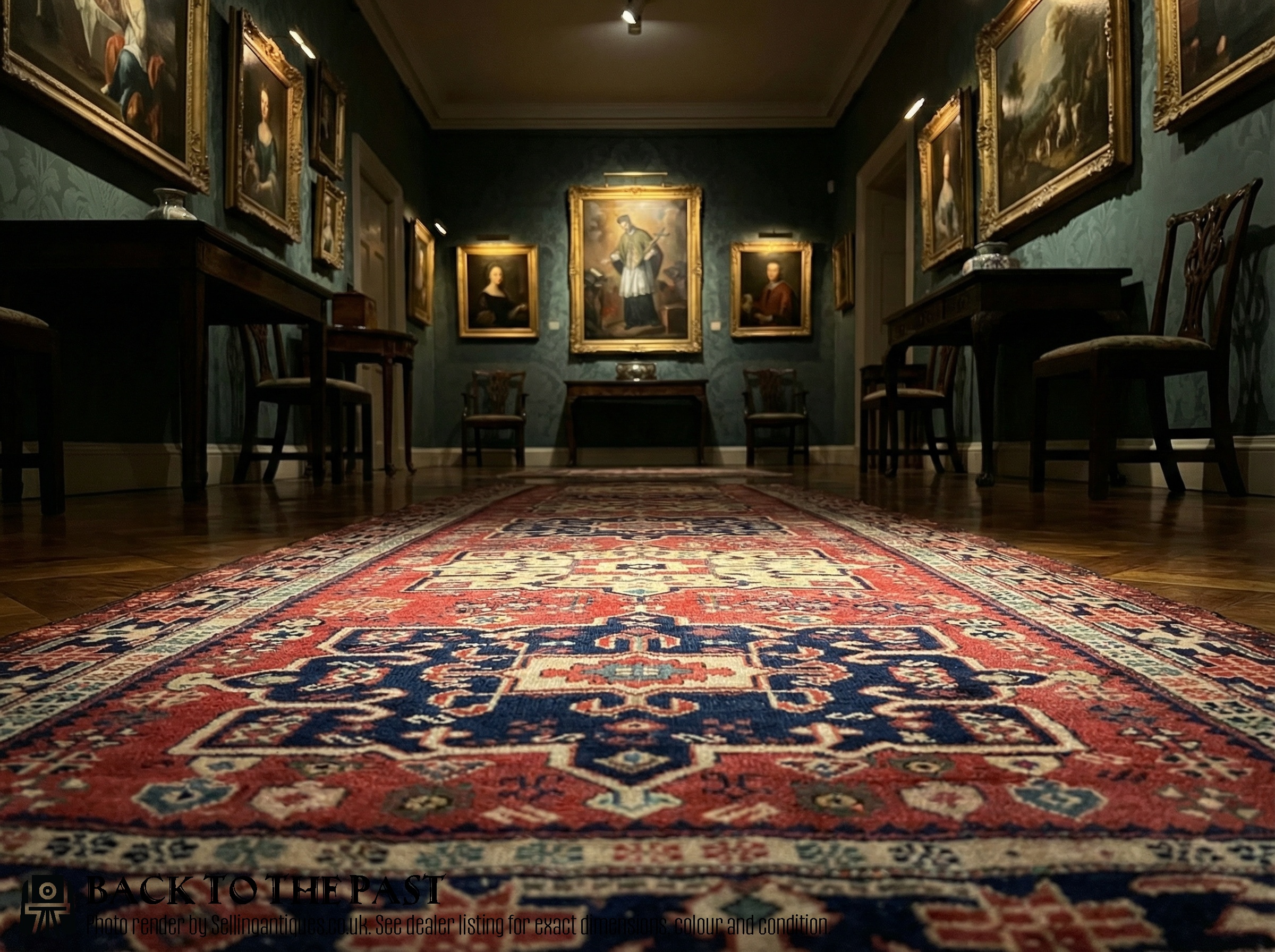
A runner works best in high-traffic corridors, hallways, and narrow entryways where linear floor space requires definition.
Ensure you leave a uniform border of bare timber or stone visible on all sides to frame the textile properly.
Are these rugs durable?
These hand-knotted wool textiles are built for enduring utility, using dense knotting techniques on sturdy cotton foundations.
With sensible placement and proper underlay support, they withstand everyday walking without losing their structural integrity.
How do I date these pieces?
Dating relies on stylistic markers, wool characteristics, dye analysis, and structural comparisons with documented village weaving.
Most examples documented here cluster between the late nineteenth century and the nineteen-thirties based on these traditional traits.
What is tribal design?
Tribal design refers to geometric patterns and stylized motifs created by village or nomadic weavers rather than urban workshops.
These patterns rely on generational knowledge, resulting in bold, angular arrangements and memorable character.