


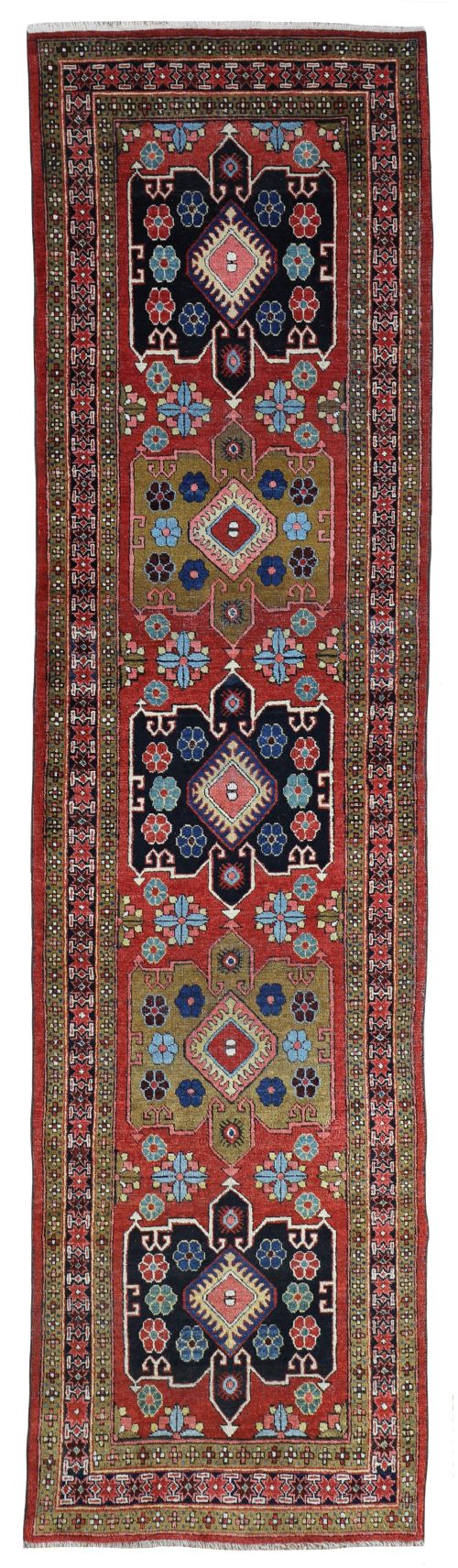

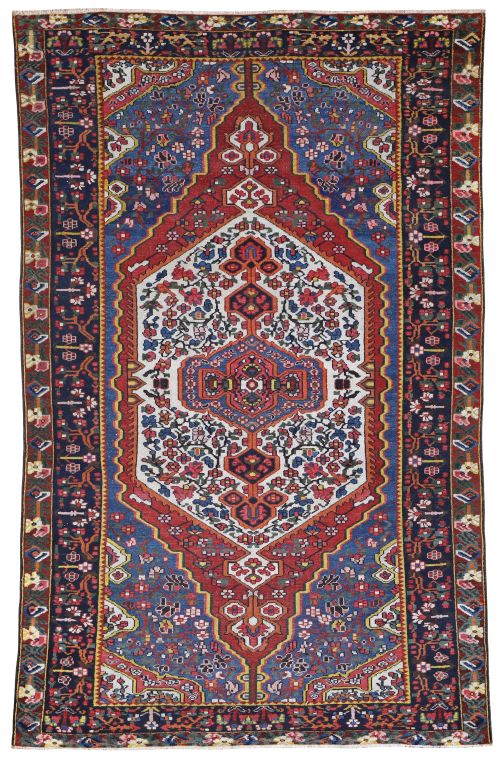


Geometric Floral Persian Rug
These geometric floral persian rug pieces combine striking angular motifs with organic patterns, offering enduring character and warmth for any room.
Geometric Floral Persian Rug
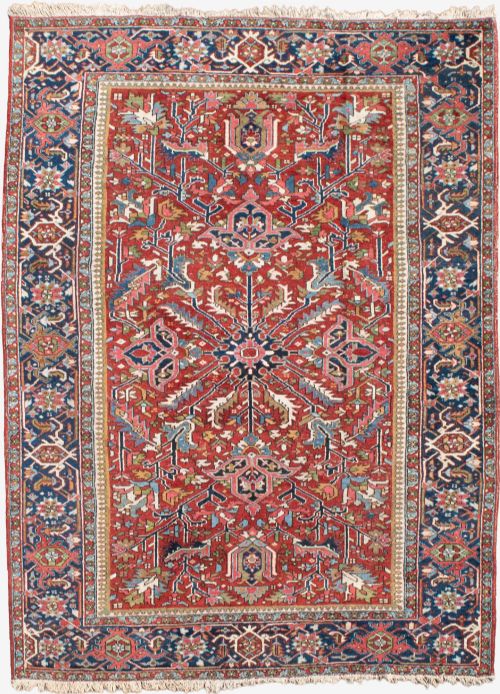
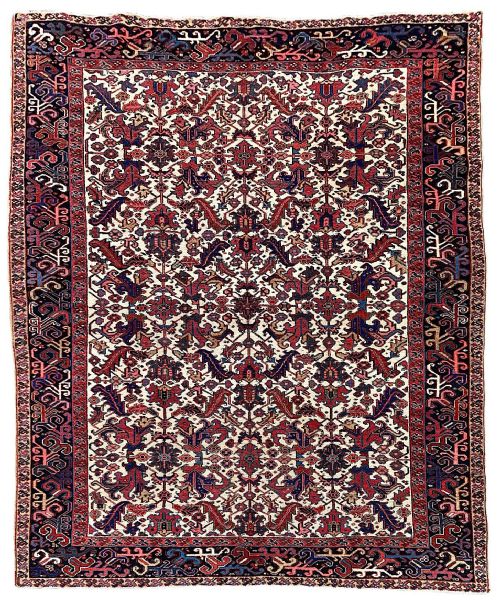
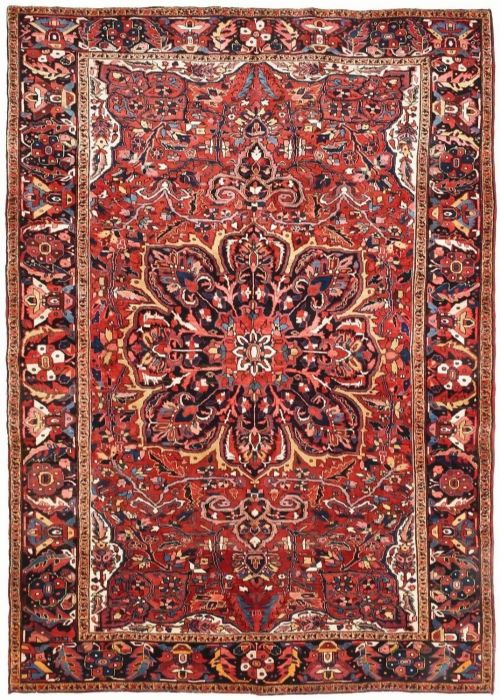
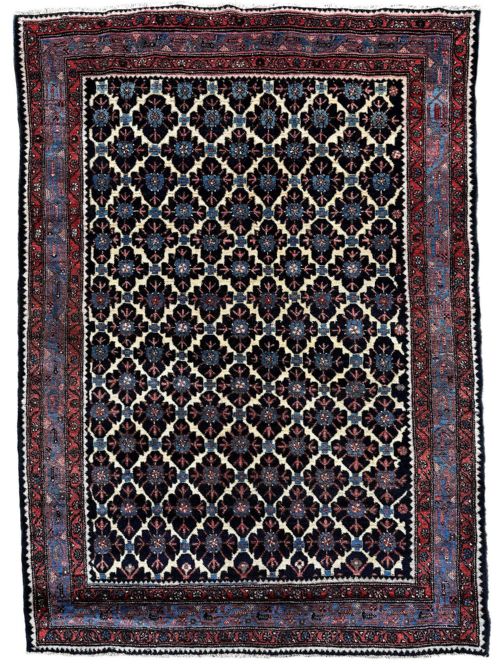
A geometric floral persian rug brings together structured rectilinear patterns and botanical motifs, creating a balanced surface design. These floor coverings emerge from various regions across Persia, spanning the late nineteenth and early twentieth centuries.
Buyers will most frequently encounter Heriz carpets and runner rugs on this page, alongside pieces from Hamadan, Bakshaish, and other weaving traditions. The selection ranges from compact area rugs to large carpets and narrow hallway runners suitable for diverse domestic spaces.
How they were made
Weavers constructed these carpets and rugs using traditional wool pile knotted onto sturdy cotton foundations. This pairing of materials provided the structural durability necessary for heavy floor use over generations.
The making process relied on hand-knotting techniques executed across different tribal and village workshops. Natural dyeing traditions contributed to the depth and longevity of the colours seen across the wool surfaces.
A narrow runner measuring only 81 centimetres wide proves that weavers could conquer even the skinhest hallway.
What varies in quality
The standard of a piece rests largely on the precision of the knotting and the crispness of the geometric and floral drawing. Finer execution in the delineation of motifs distinguishes more accomplished weaving from simpler village production.
Condition and integrity of the wool pile also separate examples at different levels. Retaining full pile and robust edges preserves the visual impact of the design intended by the original weaver.
The Geometric Floral Persian Rug Glossary
- Heriz
- A region in northwest Persia known for producing robust carpets with bold geometric medallions and rectilinear floral details. These pieces often feature durable cotton foundations and heavy wool piles.
- Runner
- A long, narrow carpet format designed specifically for hallways, corridors, or staircases. They display repeating patterns that draw the eye along linear spaces.
- Kilim
- A flatweave textile produced without a pile by tightly interweaving warp and weft threads. These items offer a smoother surface texture compared to knotted rugs.
- Medallion
- A large central ornamental motif placed in the middle of the carpet field. It serves as the focal point around which the geometric and floral elements arrange themselves.
- Foundation
- The underlying structure of a rug, consisting of warp and weft threads that hold the knotted pile in place. Cotton is a common material used for this structural grid.
Geometric Floral Persian Rug: Frequently Asked Questions
How do I clean a geometric floral persian rug?
Vacuum gently without using a rotating brush roll to protect the wool pile from unnecessary friction.
Professional specialist cleaning is recommended for addressing deeper soil or spills to preserve the dyes and fibres.
Where should I place a runner rug?
Hallways and narrow corridors provide ideal settings for long runner formats, protecting high-traffic wooden floors.
They also work effectively alongside kitchen islands or beside beds where linear floor coverage is useful.
Are these rugs durable for daily use?
The traditional combination of wool pile and cotton foundations creates a robust surface suitable for everyday walking.
Using an appropriate underlay helps prevent slipping and reduces wear from hard subfloors.
How do I tell different regional styles apart?
Heriz pieces typically display strong geometric medallions and bold rectilinear floral drawings across the field.
Village rugs from places like Hamadan or Kurdistani areas often show more varied repeating overall patterns and distinct border arrangements.