


Large Persian Living Rug
A large persian living rug brings deep history and geometric or floral motifs into a room, offering durability and warmth underfoot.
Large Persian Living Rug
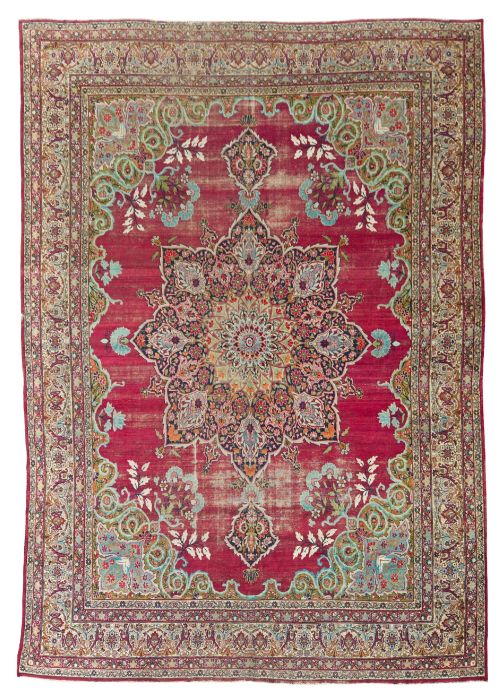
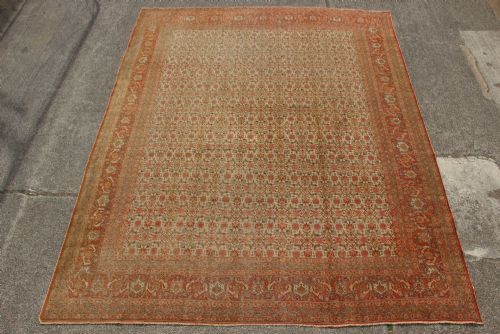
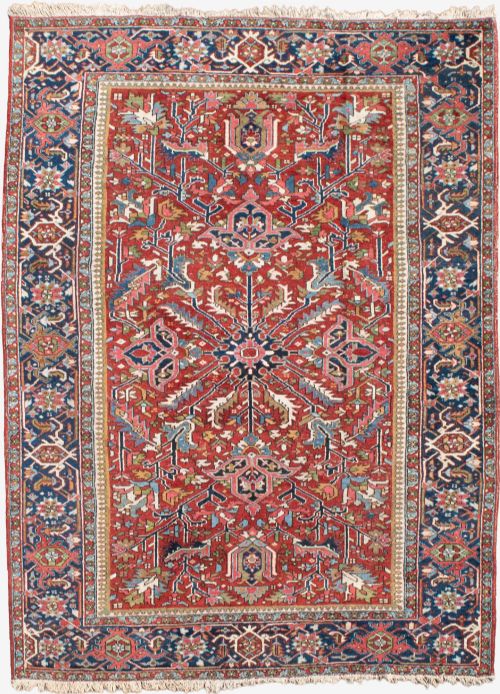
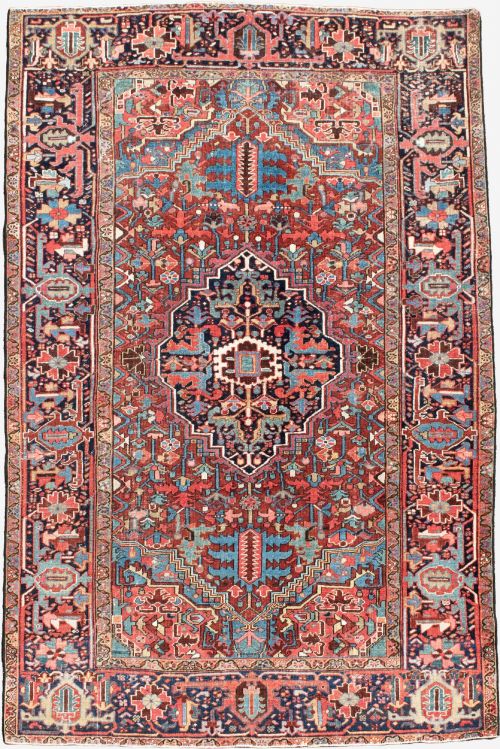
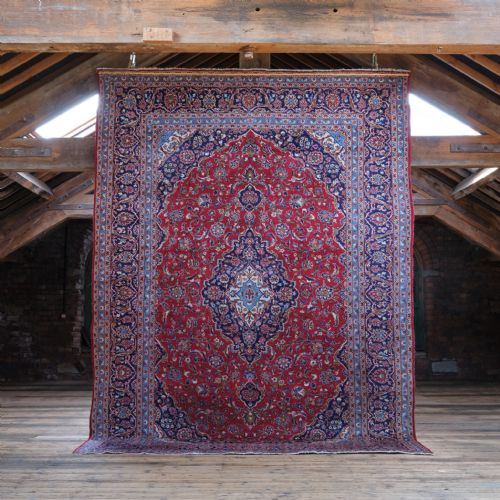
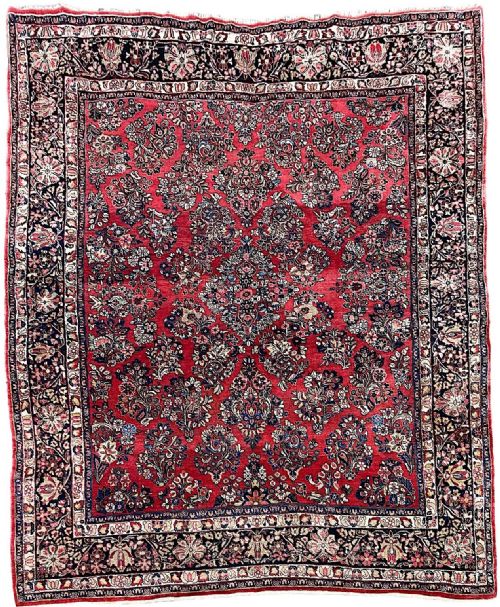
A large persian living rug anchors a room with traditional motifs and substantial room-size dimensions, spanning periods from the late nineteenth century to the mid-twentieth century. Buyers searching for a large persian living rug will encounter regional woven styles such as Heriz, Tabriz, Mahal, and Kirman.
These floor coverings arrive from Persian weaving centres and workshops, shaped by traditional regional designs. Most examples found here date across the nineteenth and twentieth centuries, providing substantial scale for reception rooms and living spaces.
How they were made
Weavers constructed these pieces using hand-knotted wool on cotton foundations, sometimes incorporating silk highlights. The hand-knotting technique allowed for intricate geometric and floral patterns that define traditional Persian weaving.
Dyes derived from natural sources imparted rich, lasting tones that soften gracefully over decades of use. Skilled artisans tied thousands of individual knots by hand to ensure structural integrity across large floor areas.
Regional styles represented include Heriz, Tabriz, Mahal, Kirman, and Qum.
What varies in quality
Knot density and wool quality dictate the fineness of the pile and the crispness of the design details. Higher-tier examples display superior precision in drawing and a tighter foundation structure.
The choice of materials and the complexity of the regional design influence the visual depth of the carpet. Older pieces demonstrate varying degrees of wear that reflect their working lifespan in traditional homes.
Benlian
The Large Persian Living Rug Glossary
- Heriz
- A style of carpet originating from north-west Persia, known for bold geometric medallions and durable construction. These rugs often feature strong corner spandrels and robust wool.
- Tabriz
- A type of floor covering produced in the major weaving city of Tabriz, featuring intricate floral patterns and fine knotting. They range from classic medallion layouts to all-over garden designs.
- Mahal
- A category of commercial Persian carpet produced for Western export, typically offering large-scale patterns and softer colour palettes. They suit spacious room settings due to their expansive dimensions.
- Kirman
- A style originating from south-central Persia, characterised by detailed floral sprays, vases, and finely spun wool. These pieces often employ pastel shades and elaborate central medallions.
- Hand-knotted
- A construction method where individual strands of wool or silk are tied by hand onto a warp and weft foundation. This laborious technique creates durable floor coverings with distinct pile textures.
Large Persian Living Rug: Frequently Asked Questions
How do I clean a large persian living rug?
Professional specialist cleaning is recommended for antique and vintage wool carpets to protect the natural fibres and dyes. Regular gentle vacuuming without a beater bar helps remove surface dust.
Avoid DIY chemical treatments or excessive water immersion, which can damage the foundation and cause dye bleeding.
Where should I place a roomsize carpet?
These large floor coverings suit principal reception spaces, dining rooms, and spacious living areas where furniture can sit comfortably on top or around the borders. Ensure the room dimensions allow enough bare floor margin to frame the piece properly.
Using a quality underlay prevents slippage and reduces friction between the wool pile and hard flooring.
How can I tell a Heriz from a Tabriz?
Heriz carpets typically display bold, geometric central medallions and sturdy, angular lines designed for heavy use. Their palette often relies on deep rust, navy, and ivory tones.
Tabriz carpets lean towards curvilinear floral motifs, intricate central roundels, and finer knot counts with a softer overall visual texture.
What does antique mean for Persian carpets?
In the context of these floor coverings, antique generally refers to pieces produced around a century or more ago, typically dating from the nineteenth or early twentieth century. These items show evidence of traditional hand-spinning and natural dyeing methods.
Age brings a desirable patina and softening of the wool pile that distinguishes older woven textiles from modern reproductions.