




Geometric Flatweave Carpet
A geometric flatweave carpet brings linear tribal patterns and a durable pile-free textile surface into domestic spaces.
Geometric Flatweave Carpet
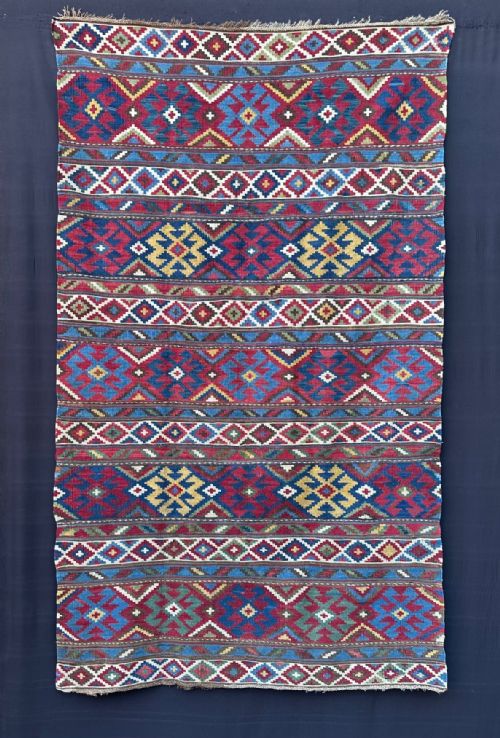
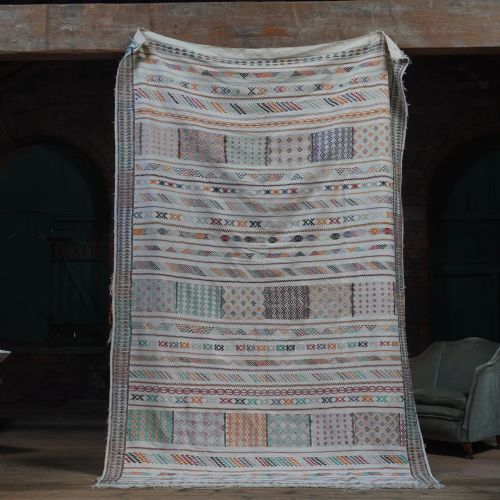
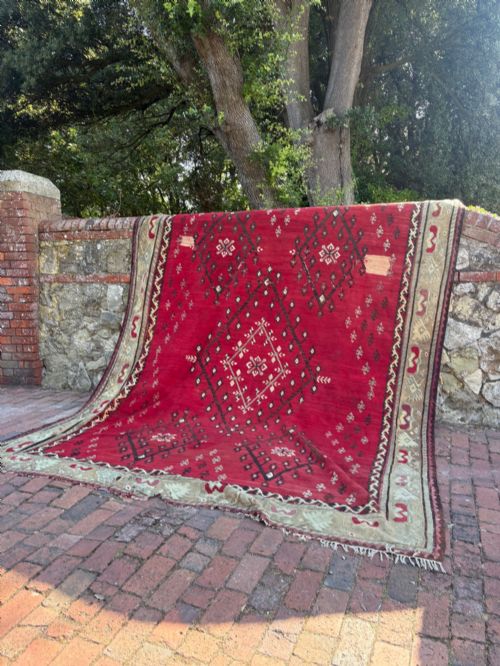
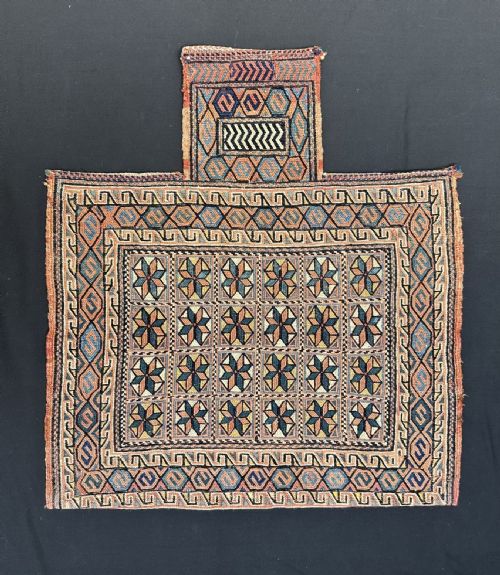
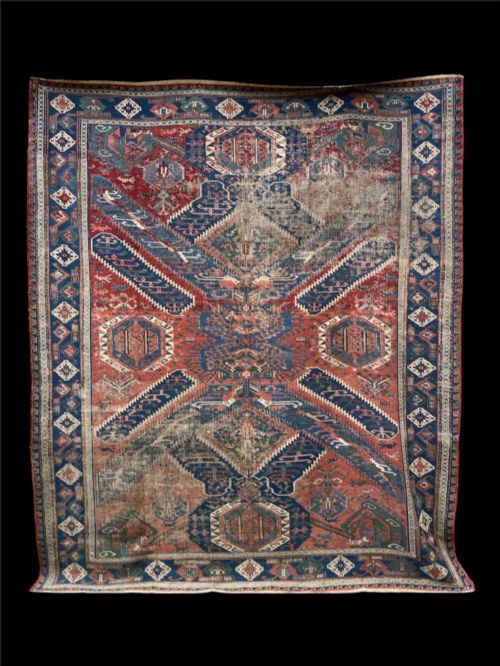
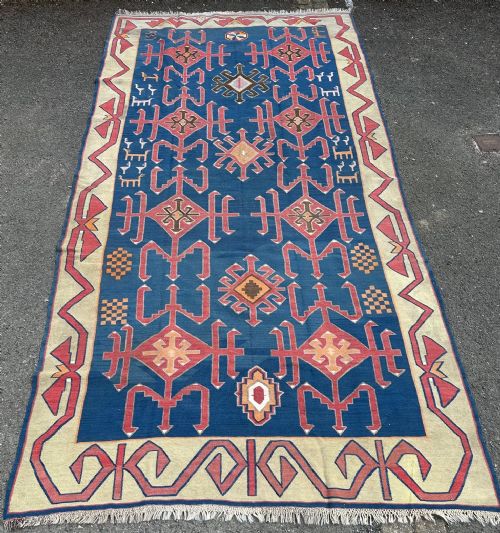
A geometric flatweave carpet comprises pileless floor coverings and utility textiles created by tribal and nomadic groups across the Caucasus, Anatolia, Persia, Central Asia and North Africa. These textiles include room-sized carpets, runners, salt-bags, storage panels and eating cloths dating from the late nineteenth century through to the mid-twentieth century. Buyers encounter regional kilims, soumaks and tapestry rugs featuring banded layouts, repeat motifs and graphic tribal compositions.
The selection centres on antique and vintage flatweaves originating from specific weaving cultures such as the Shirvan, Qashqai, Shahsavan, Uzbek and Baluch peoples. Pieces span various scales, from compact runner rugs to large room-sized formats woven in multiple strips or joined panels. Each textile reflects the utilitarian traditions of nomadic weavers who utilised slit-weave and supplementary weft techniques to build sharp geometric structures.
How They Were Made
Weavers constructed these flatweaves primarily using hand-spun wool and cotton foundations, occasionally incorporating natural dyes, camel hair, sabra fibre and cactus silk. The structural integrity relies on tightly packed warp and weft threads interlocked to create flat, durable textile surfaces without a raised pile.
Techniques such as slit-weaving separate colour blocks to form crisp diagonal edges, while soumak wrapping introduces embroidered surface textures across the ground. Many regional examples utilise banded construction, where narrow woven strips are stitched together to form larger carpet formats.
Listings feature flatweaves spanning the nineteenth and twentieth centuries, incorporating wool, cotton, cactus silk and camel hair across multiple regional styles.
What Varies in Quality
Quality rests upon the crispness of the graphic design, the precision of the flatweave structure and the density of the weave. Finer examples display meticulous control over slit-weave junctions and well-balanced proportions within banded or repeat layouts.
The choice of materials and dye sources influences the character of the piece, with hand-spun wool and natural colour palettes yielding softer ageing and greater textural depth. Structural soundness, particularly along selvedges and joining seams, distinguishes finely preserved tribal panels and room-sized carpets from heavily worn utility pieces.
The Geometric Flatweave Carpet Glossary
- Kilim
- A flatwoven textile produced without a pile, using slit-weave or related techniques to create geometric patterns. This method leaves small slits where different colour areas meet.
- Soumak
- A brocaded flatweave technique where supplementary weft threads wrap around the warp threads to produce a textured, durable surface. It often appears in Caucasian and Persian tribal work.
- Mafresh
- A nomadic storage bag or container panel woven in techniques like soumak or tapestry weave. These panels were originally used for transport and household storage.
- Sofreh
- A woven spread or cloth used for eating, dough preparation or ritual purposes among nomadic groups. They frequently display minimalist or geometric band decorations.
- Warp
- The vertical foundation threads stretched tightly on the loom before weaving begins. Weft threads pass horizontally over and under these structural elements.
Geometric Flatweave Carpet: Frequently Asked Questions
What is a flatweave carpet?
A flatweave carpet is a textile woven without a raised pile, relying on interlocking warp and weft threads to form flat surfaces. These pieces are traditionally produced by tribal and nomadic groups for utility, floor covering and storage.
Unlike knotted pile carpets, flatweaves are lighter and display sharp, geometric patterns dictated by the grid of the loom. They include kilims, soumaks and tapestry rugs from regions spanning Anatolia, the Caucasus, Persia and Central Asia.
How were tribal rugs used?
Nomadic and village groups utilised these woven textiles for daily domestic life as floor coverings, blankets, horse covers and storage containers. Salt-bags, storage panels and eating cloths served specific practical functions within tribal households.
Over time, many of these utilitarian textiles survived as panels or complete covers, later valued for their striking graphic designs and regional weaving traditions.
Where do antique flatweaves originate?
Antique flatweaves originate from diverse weaving traditions across the Caucasus, Anatolia, Persia, Central Asia and North Africa. Specific regions such as Shirvan, Daghestan, Kerman and the High Atlas mountains developed distinct tribal styles.
Groups including the Shahsavan, Qashqai, Uzbek and Baluch produced recognisable regional aesthetics through local materials, natural dyes and specific structural techniques.
How should I care for a flatweave?
Caring for a flatweave involves regular gentle vacuuming without a rotating brush roll to protect the flat surface and delicate selvedges. Using a quality rug underlay prevents slipping and reduces friction against hard flooring.
Professional cleaning tailored to antique wool and cotton textiles maintains the integrity of natural fibres and dyes. Keeping the carpet out of direct, harsh sunlight preserves the original colour balance over time.