

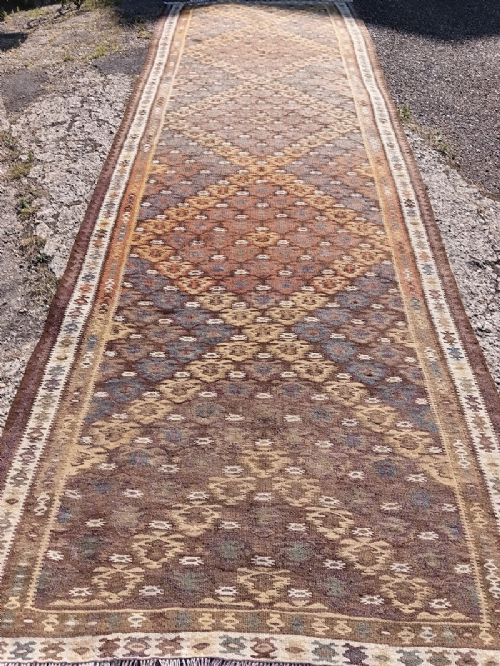
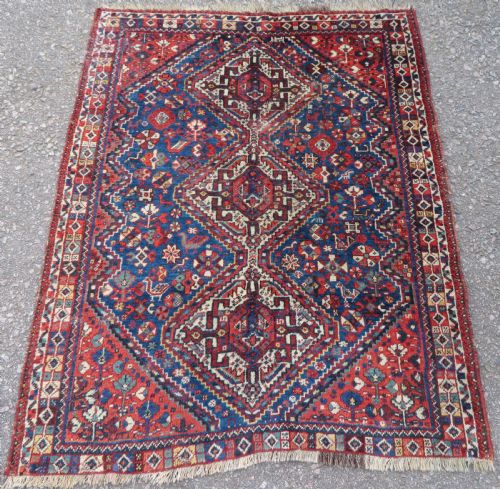
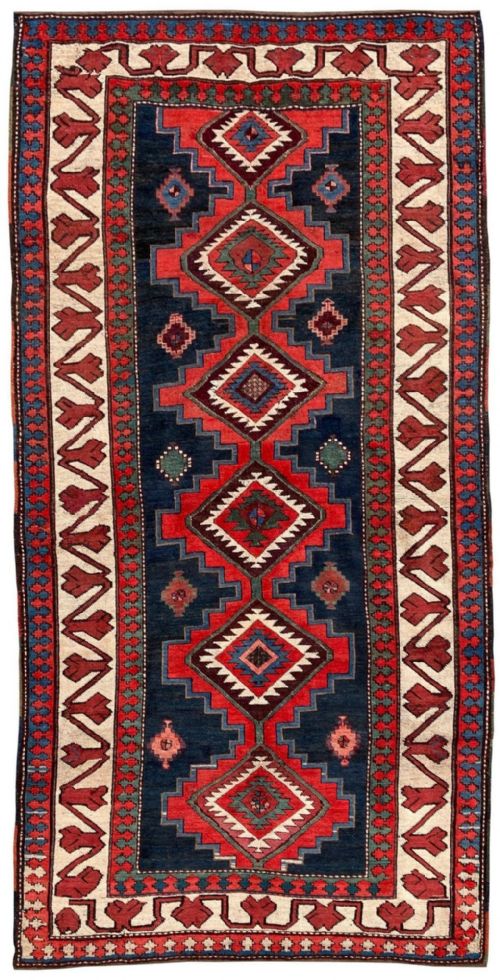
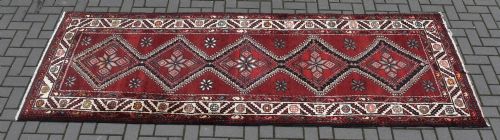


Geometric Diamond Rug Runner
These geometric diamond rug runner pieces bring tribal character into narrow spaces through traditional village weaving from the nineteenth and early twentieth centuries.
Geometric Diamond Rug Runner
A geometric diamond rug runner brings together elongated formats and repeating tribal motifs originating from regional weaving traditions across Persia, Anatolia, and the Caucasus. These pieces span production dates from the late nineteenth century through the 1930s, reflecting utilitarian hallway floor coverings made by nomadic and village makers.
The format focuses heavily on narrow proportions suited for corridors and passageways, utilising structural repeats that draw the eye along the length of the textile. Buyers encounter various tribal attributions including Kurdish, Qashqai, and Sarab origins among the available inventory.
Designs rely on lattice structures and medallion repeats rather than curved floral court patterns, keeping the visual language grounded in tribal symbolism. Each runner balances functional durability with distinct regional aesthetics passed down through generations of weavers.
Materials and construction
Construction relies primarily on wool foundations and piles, often utilising hand-spun wool that accepts natural dyes with subtle variations in tone. Cotton also appears in foundations for specific regional types, providing structural stability alongside the wool.
Weaving techniques encompass standard pile knotting, flatwoven kilims, and soumak wrapping, depending on whether the piece originates from a nomadic camp or a settled village workshop. Natural dyes impart the foundational palette, ageing gracefully over decades of light exposure.
Geometric Diamond Rug Runner Retail Price Guide 2026
Typical asking prices for geometric diamond rug runner among the pieces listed under this phrase on Sellingantiques today, from the lower quarter to the upper quarter. They describe what is for sale here now, not the wider market.
Listings span production dates from the 1870s through the 1930s, featuring wool, cotton, and natural dyes across tribal traditions.
Quality factors
Quality rests on the integrity of the wool, the clarity of the natural dyes, and the tightness of the knotting or weaving structure. Denser foundations hold up better to foot traffic in hallways.
Design execution distinguishes standard village output from finer examples, with balanced proportions in the diamond lattice work and crisp border transitions indicating skilled execution by the weaver.
The Geometric Diamond Rug Runner Glossary
- Soumak
- A flatweaving technique that wraps supplementary weft threads over the warp to create a textured, durable surface. This method produces sturdy textiles without a cut pile.
- Kilim
- A flatwoven textile produced without a pile by tightly interweaving warp and weft strands. These pieces function as rugs, covers, or wall hangings.
- Kazak
- A style of rug originating from the Caucasus region known for bold geometric medallions and primary colour palettes. These pieces display strong tribal characteristics.
- Lattice
- A repeating geometric grid pattern forming diamond or lozenge shapes across the field of the textile. This structure organises the primary motifs in runner formats.
Geometric Diamond Rug Runner: Frequently Asked Questions
Where were these runners used?
These runners served primarily as floor coverings in hallways, corridors, and long rooms within traditional homes. Their narrow proportions fit confined domestic spaces effectively.
Nomadic and village households utilised them for daily living, placing them on floors or using them as bedding and storage covers depending on the specific textile type.
How do I care for an old runner?
Protect the textile by placing a breathable rug underlay beneath it to prevent slipping and reduce friction against hard floors. Vacuum gently without using a rotating brush roll.
Keep the piece out of direct sunlight to preserve natural dye colours and rotate the runner periodically to ensure even wear across the surface.
What materials are used?
Most examples utilise wool for both the pile and the foundation structure, often featuring hand-spun yarn that displays individual character. Cotton appears in foundations for certain regional types.
Colour comes from natural dyes derived from plants and minerals, which yield the mellow tones seen across nineteenth and early twentieth century examples.
How are periods identified?
Dating relies on structural characteristics, wool preparation, dye types, and traditional design markers associated with specific decades between 1870 and 1940. Natural dyes and hand-spun wool point toward earlier production.
Comparative analysis of border motifs and regional weaving styles helps narrow down the approximate period of manufacture for unsigned village and tribal pieces.