


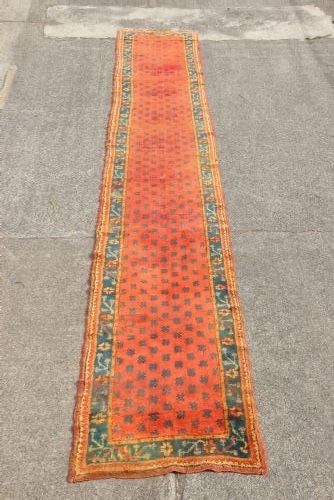

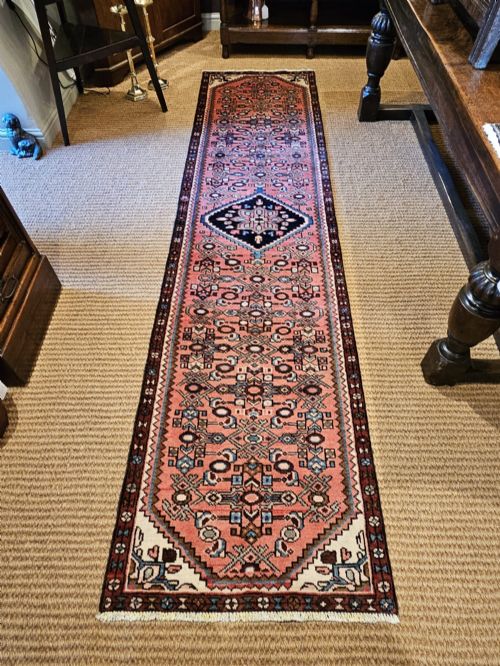

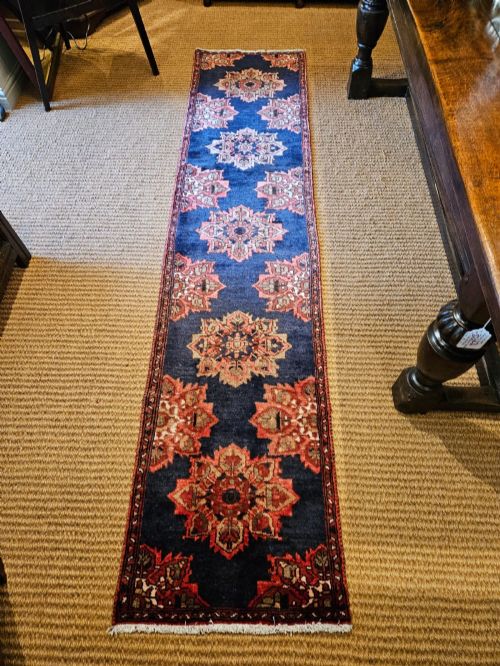

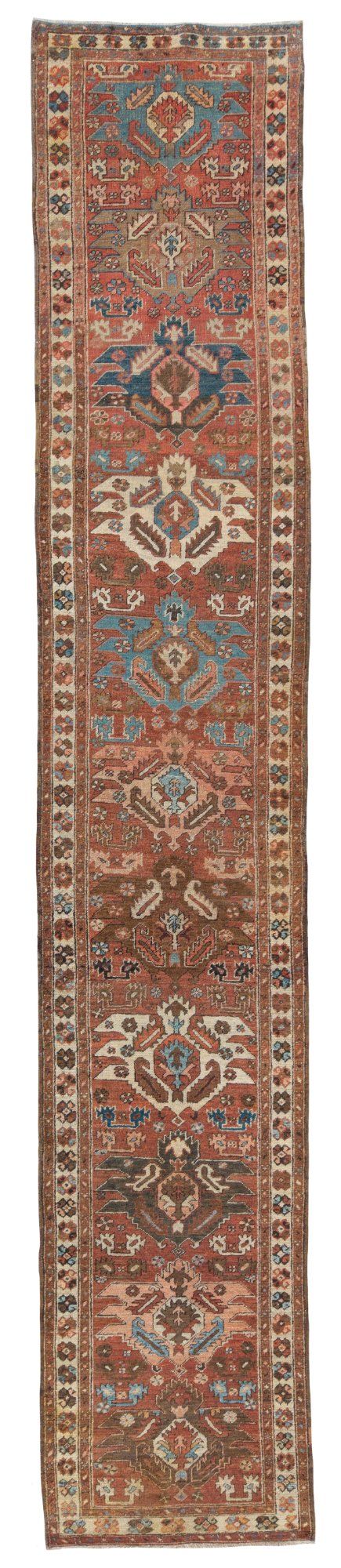
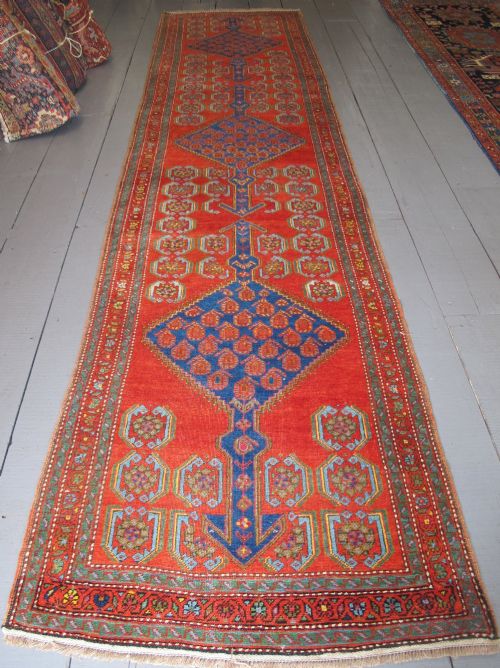


Terracotta Wool Hallway Runner
A terracotta wool hallway runner brings warmth and pattern to long spaces through enduring hand-knotted craftsmanship.
Terracotta Wool Hallway Runner
A terracotta wool hallway runner is a long, narrow carpet designed for corridors, passages and galleries. These textiles originate largely from Persian and tribal weaving centres, spanning the nineteenth and early twentieth centuries.
Makers shaped these long formats to protect timber floors while adding grounding colour to high-traffic domestic areas. The surviving examples demonstrate utility combined with enduring decorative merit.
Materials and construction
Weavers utilised natural wool, often hand-spun, to build dense foundations that withstand centuries of foot traffic. Cotton also appears in the structural foundations of specific regional carpets.
The technique relies on manual knotting methods passed down through generations in workshops and tribal communities. Natural dyestuffs provide the terracotta, red and indigo hues that define the palette.
Current listings feature pieces spanning the 1870s to the 1930s, constructed from wool, cotton and hand-spun wool.
Assessing quality and character
Quality rests upon knot density, wool quality and the precision of the tribal or regional design. Finer knotting allows intricate medallion and shrub patterns to remain sharp along narrow formats.
The integrity of the wool pile and the balance of natural dyes dictate visual depth. Consistent widths across long spans and well-preserved borders distinguish superior examples.
The Terracotta Wool Hallway Runner Glossary
- Runner
- A long, narrow carpet format intended for hallways, stairs and corridors. These pieces measure significantly longer than they are wide.
- Heriz
- A style of Persian carpet known for bold geometric medallions and robust construction. These pieces originate from the East Azerbaijan region.
- Bidjar
- A durable Persian carpet type characterised by heavy packing of the foundation. This technique creates a stiff, resilient structure.
- Kilim
- A flat-woven carpet lacking a pile, produced by tightly interweaving warp and weft strands. These textiles offer lighter textures.
- Oushak
- A Turkish carpet style featuring larger-scale floral motifs and soft, harmonious wool colours. Weavers in western Anatolia produced these decorative works.
Terracotta Wool Hallway Runner: Frequently Asked Questions
How do I measure for a hallway runner?
Measure the length and width of your corridor space carefully, leaving a consistent border of exposed floorboards around the edges. Keep doorways in mind so the pile thickness clears the clearance of the swing.
Allow extra space at both ends to maintain balance in long hallways. Centring the runner visually creates a defined pathway through the interior.
What periods do these runners come from?
The available pieces span from the late nineteenth century through to the early twentieth century. This period captures traditional hand-knotting before synthetic dyes became dominant.
Items date across the eighteen-hundreds and nineteen-hundreds, reflecting regional styles from Persia, Turkey and the Caucasus. Each era brings distinct wool preparation and colour palettes.
Are these runners made of pure wool?
The pile consists of natural wool, frequently hand-spun to achieve texture and strength. Cotton often forms the inner warp and weft foundation threads.
This material combination provides flexibility alongside the durability required for narrow, high-traffic corridors. The natural fibres respond well to traditional maintenance.
How do I care for an antique wool runner?
Vacuum gently using a suction-only attachment without the rotating brush bar to protect the hand-knotted pile. Rotate the runner periodically to ensure even wear across high-traffic areas.
Address spills immediately by blotting with a clean cloth rather than rubbing. Professional cleaning tailored to antique textiles preserves the lanolin in the wool.