


Geometric Diamond Medallion Rug
A geometric diamond medallion rug brings grounded tribal artistry into a room through repeating motifs rooted in village and nomadic traditions.
Geometric Diamond Medallion Rug
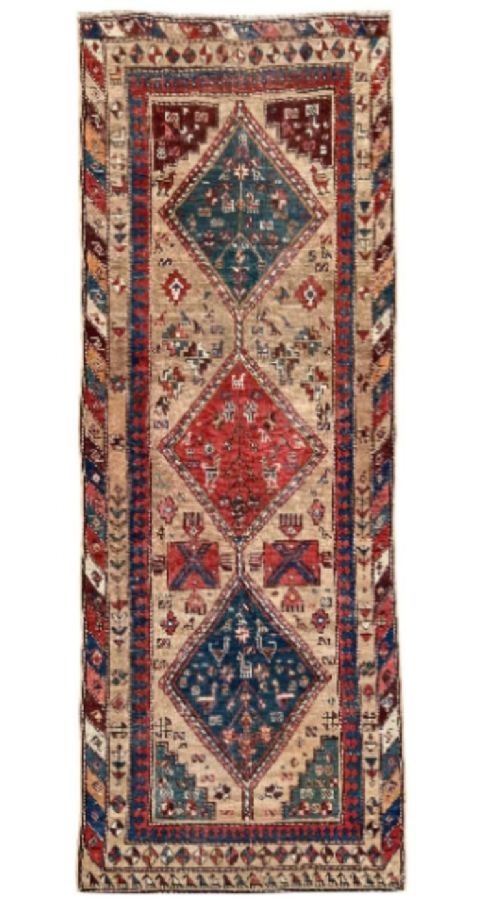
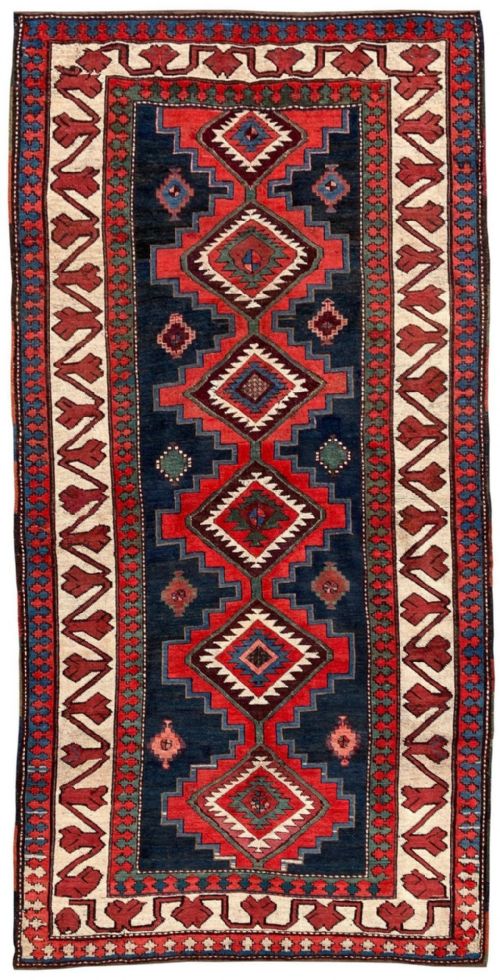
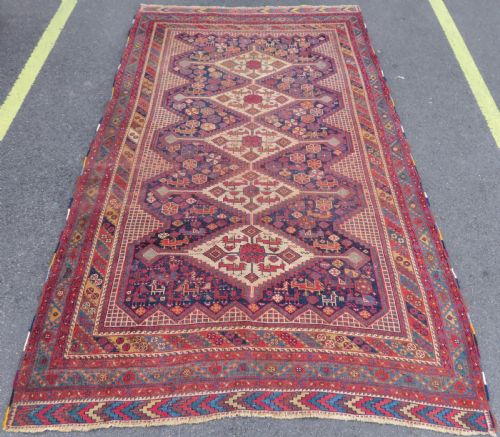
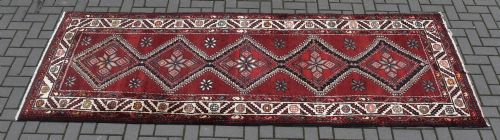
A geometric diamond medallion rug is a handwoven textile featuring central lozenge patterns created by village weavers and nomadic tribes. The selection ranges from runner formats designed for hallways to room-sized carpets originating from Persian, Caucasian, and Anatolian traditions.
The pieces encountered on this page span the nineteenth and early twentieth centuries, encompassing styles such as Khamseh, Qashqai, Kurdish, and Ushak. These floor coverings bridge utility and cultural expression, functioning equally as practical runners and focal room carpets.
How They Were Made
These textiles rely on handspun wool for the pile and cotton for foundations, combined with natural dyes derived from local plants and minerals. Artisans constructed them on vertical or horizontal looms using traditional knotting or flatweave kilim techniques.
The natural dyes yield rich, complex tones that age with character, reacting to light and wear over decades of use.
What Varies in Quality
Quality rests in the precision of the tribal geometry and the depth of the natural dyes utilised across the field. Finer pieces demonstrate tighter knot densities and superior wool preparation, which preserves the crispness of the medallion outlines.
The integrity of the foundation and the balance of the border proportions relative to the central field distinguish standard village work from master examples.
The Geometric Diamond Medallion Rug Glossary
- Medallion
- A central decorative motif, often diamond or lozenge-shaped, dominating the field of the rug. It serves as the primary focal point of the composition.
- Kilim
- A flatweave textile produced without a pile by tightly interweaving warp and weft threads. These pieces are lighter and versatile for various interior applications.
- Runner
- A long, narrow carpet format traditionally utilised in hallways, corridors, or alongside beds. Proportions emphasise length over width.
- Warp
- The stationary vertical threads stretched across the loom that form the structural foundation of the textile. Fringe is typically an extension of these threads.
Geometric Diamond Medallion Rug: Frequently Asked Questions
Where should I place a geometric diamond medallion rug?
These runners and carpets suit high-traffic walkways, living rooms, and bedrooms where their repeating motifs can anchor the furniture arrangement.
Matching the format, such as narrow runners for hallways or larger rugs for seating areas, ensures the design remains visible.
How do I care for an antique wool rug?
Regular gentle vacuuming without a beater bar prevents dust accumulation within the wool pile. Professional cleaning suited for natural dyes maintains the textile integrity.
Keeping the piece out of direct, harsh sunlight preserves the natural dye colours over time.
How do I identify a tribal design?
Tribal designs feature asymmetrical motifs, geometric symbols, and stylised representations of animals or plants passed down through specific weaving groups. These patterns often lack the rigid symmetry found in urban workshop carpets.
Regional characteristics help attribute pieces to specific groups like the Qashqai or Khamseh.
What is the difference between a rug and a kilim?
A rug possesses a raised pile created by individual knots tied to the foundation, offering a thicker texture underfoot. A kilim is flatwoven with no pile, resulting in a lighter, reversible textile.
Both utilise similar geometric iconography and natural dyeing techniques.