



Gendje Rug Runner
A gendje rug runner brings geometric Caucasian tribal artistry to hallways and long spaces, prized for saturated natural dyes and spirited village designs.
Gendje Rug Runner
A gendje rug runner represents a specific category of Caucasian weaving created in village or regional workshops, typically encountered in long formats suited to hallways and corridors. These textiles appear in formats described as runner rugs, hallway runners, and long rugs, spanning periods from 1880 to 1900.
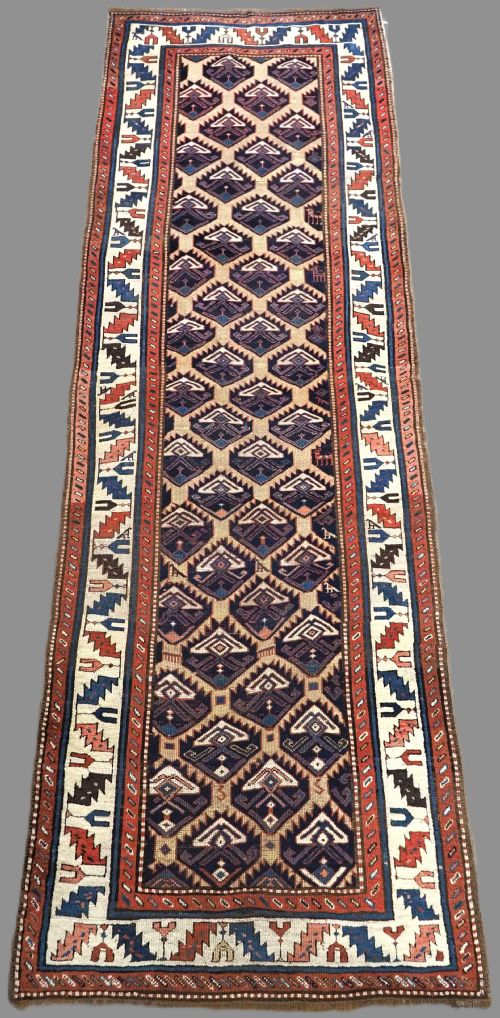
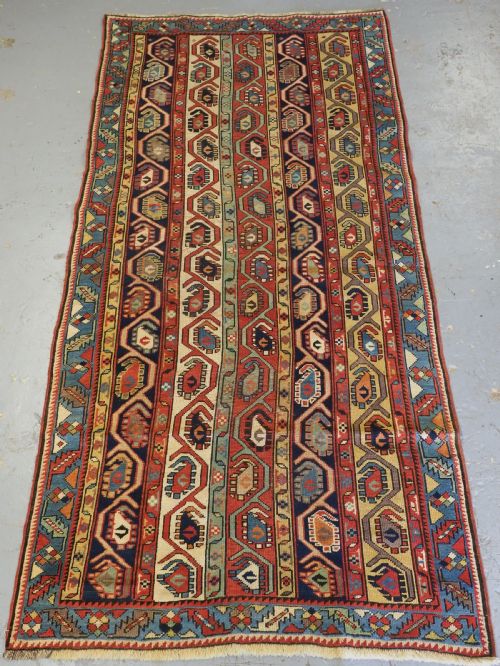
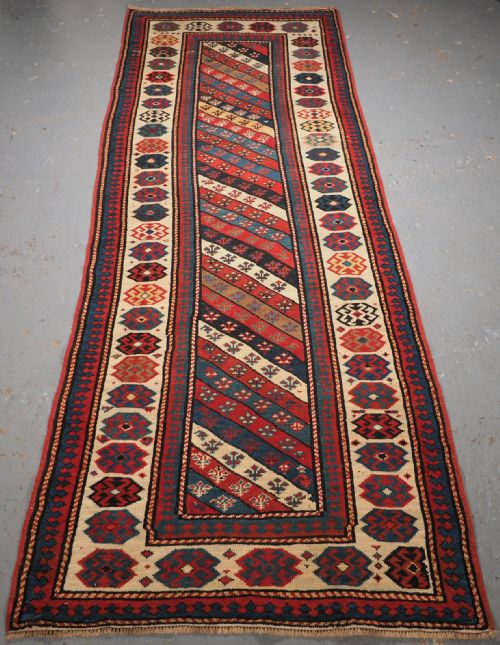
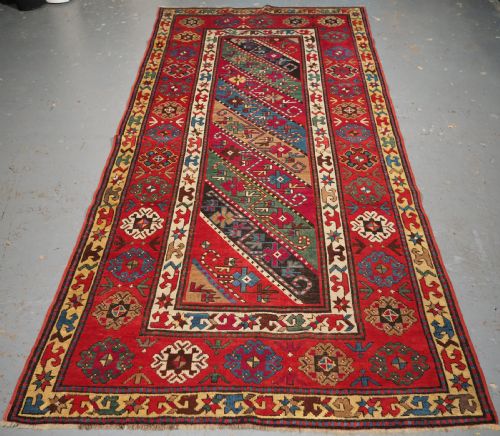
The visual vocabulary relies heavily on distinct village motifs, displaying lattice designs, colourful boteh patterns, diagonal stripes, and occasional figurative elements such as horses and people. Such pieces originate from the Caucasus and often share stylistic traits with neighbouring Kazak or Shahsavan traditions.
Buyers seeking a gendje rug runner encounter formats designed for narrow spaces, combining functional length with dense tribal imagery. The surviving examples demonstrate how traditional weavers adapted symmetrical motifs to elongated proportions.
The Spectrum of Quality
Quality in a gendje rug runner rests on the crispness of the geometric execution and the handling of the wool pile. Finer examples display precise lattice work, sharp diagonal stripes, or well-defined boteh motifs without distortion along the elongated format.
The choice and preservation of natural dyes further distinguish the weaving, particularly where scarce ground colours or complex multi-coloured patterns remain vibrant. Greater artistic ambition, seen in unusual designs or figurative folk art elements like horses and people, marks out the more compelling pieces.
Materials recorded across the inventory consist solely of wool, hand-spun wool, and natural dyes.
The Gendje Rug Runner Glossary
- Gendje
- A regional designation for rugs and runners woven in the Caucasus, known for structured geometric patterns and distinct colour palettes. These pieces often incorporate diagonal stripes or lattice arrangements.
- Boteh
- A stylised almond or pear-shaped motif representing a floral or cypress sprout, frequently repeated in rows across Caucasian weaving. It remains one of the most recognisable symbols in these runners.
- Prayer Rug
- A textile featuring a specific architectural niche design, such as a mihrab, intended for devotional use. Such formats occur within the regional weaving output alongside standard runners.
- Natural Dyes
- Colourants derived from plant and mineral sources rather than synthetic chemicals, utilised in traditional nineteenth-century production. They age with a characteristic softening of tone.
- Caucasian Tribal
- A broad stylistic classification encompassing rugs produced by various groups in the Caucasus region. This aesthetic prioritises bold geometry and saturated colour over curvilinear court designs.
Gendje Rug Runner: Frequently Asked Questions
What is a gendje rug runner?
A gendje rug runner is an elongated Caucasian tribal floor covering featuring traditional village motifs like boteh patterns, lattice work, or diagonal stripes. These textiles were produced in the Caucasus during the late nineteenth century.
They serve as decorative and functional pieces suited for narrow spaces such as hallways and corridors. Each piece reflects the regional weaving practices of its period.
How do I date a gendje runner?
Dating relies on stylistic evidence, material analysis, and structural indicators consistent with late nineteenth-century Caucasian weaving. Surviving examples typically originate from decades around 1880, 1890, and 1900.
Examining the use of hand-spun wool and natural dye palettes helps place a runner within this historical window. Comparing motif structures with dated comparables provides further chronological context.
Where were these runners made?
These runners originate from the Caucasus, a mountainous region bridging Europe and Asia with a rich history of tribal rug production. Weavers in the Gendje region produced distinct runners that sometimes share stylistic overlaps with neighbouring Kazak or Shahsavan traditions.
Local village communities produced these textiles using readily available regional materials. The resulting pieces reflect the specific design repertoires of the South Caucasus.
How do I care for antique wool runners?
Antique wool runners require gentle maintenance, including regular vacuuming without a rotating brush bar to protect the hand-spun pile. Professional cleaning suited to antique textiles helps preserve the integrity of natural dyes.
Using an appropriate underlay prevents slippage and reduces friction against the floorboards. Keeping the runner out of direct, prolonged sunlight protects the natural colourants from fading.