


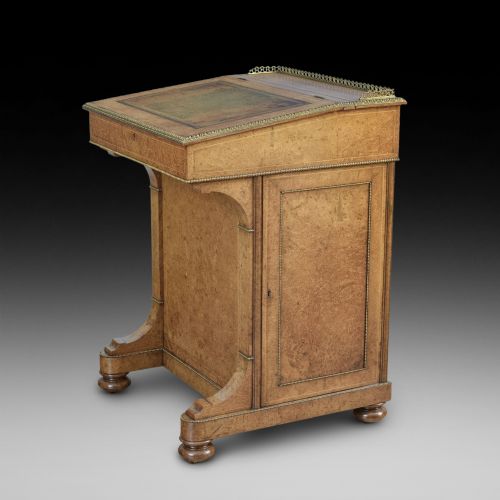
Gallery Top Desk
A gallery top desk brings a raised superstructure to the writing surface, sorting stationery and holding ink while keeping the working space clear.
Gallery Top Desk
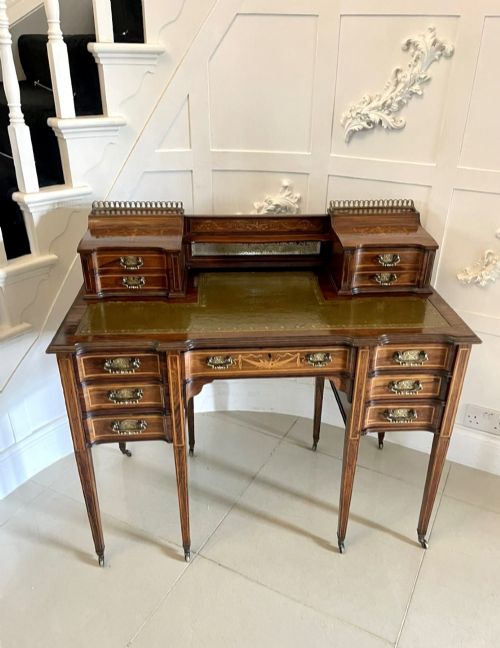
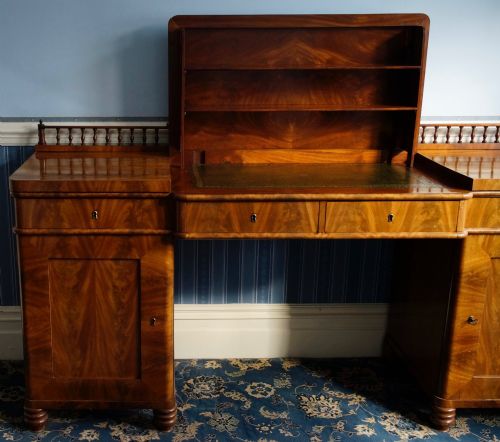
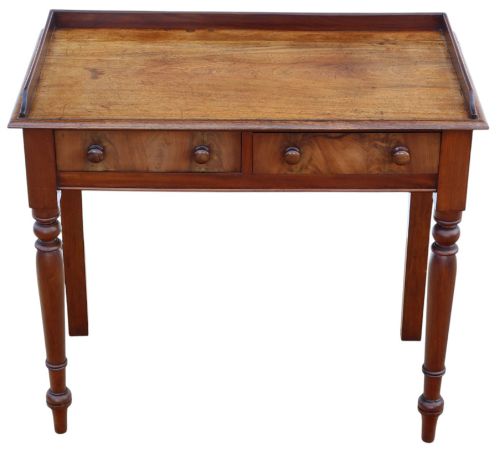
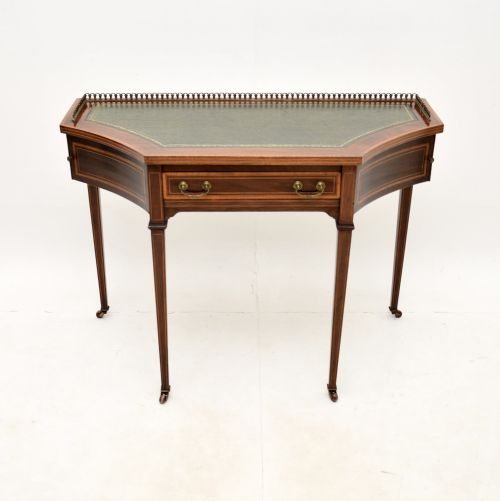
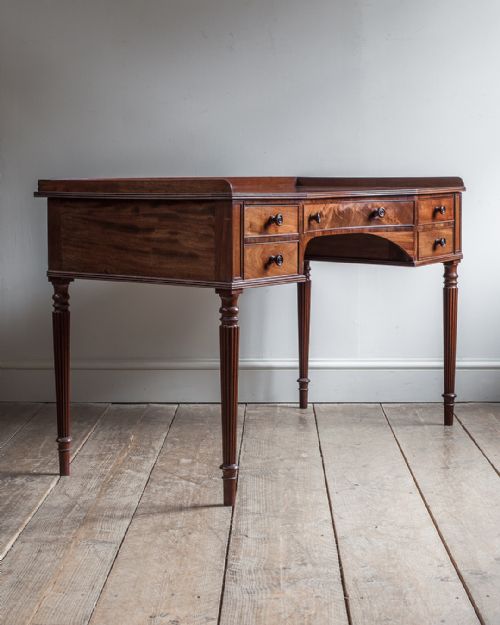
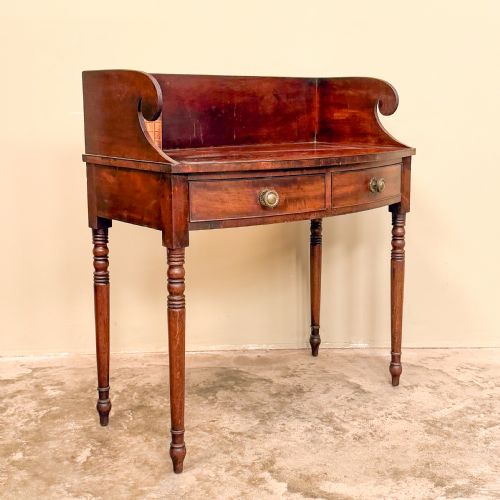
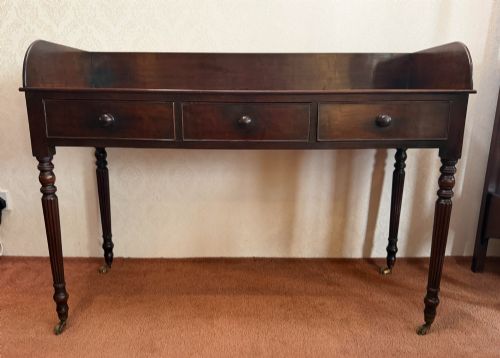
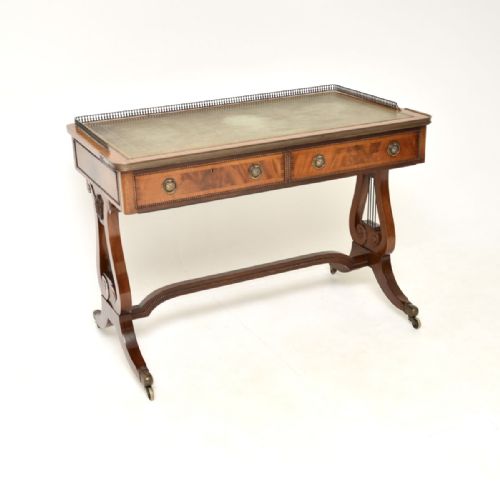
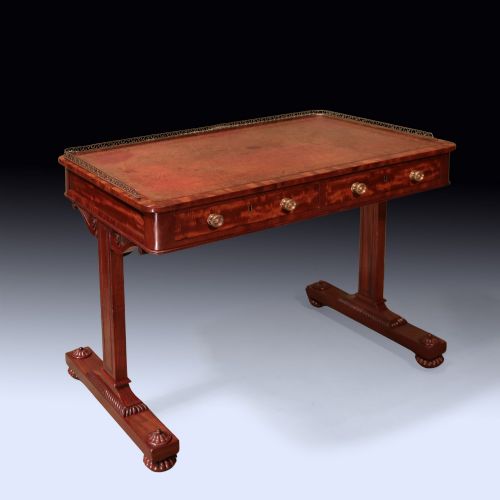
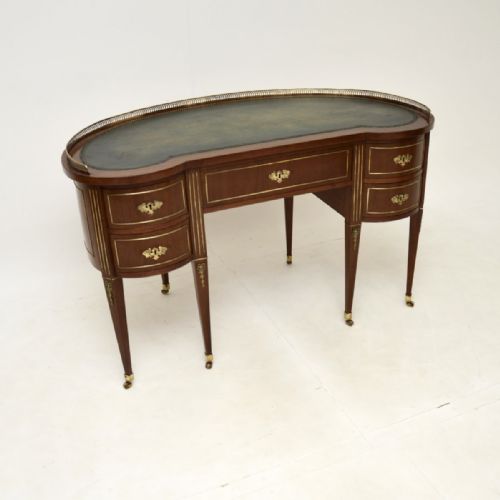
A gallery top desk is a piece designed for correspondence and paperwork, distinguished by a low wooden, brass, or spindle rail enclosing part or all of the upper surface. The evidence shows these pieces appearing across the nineteenth century and into the Edwardian era, spanning Regency, Victorian, and Edwardian periods.
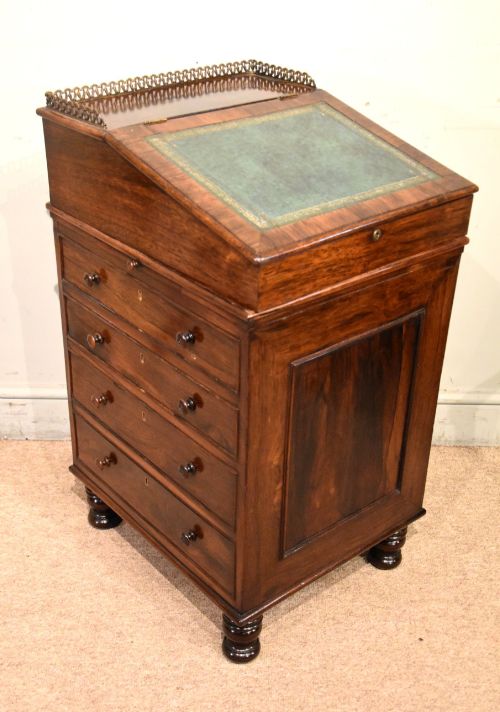
Buyers seeking this form will encounter writing tables, davenports, cylinder desks, and Carlton House desks fitted with these elevated backs. The specimens on offer utilise timbers such as mahogany, rosewood, walnut, and satinwood, frequently paired with inlaid details and leather writing surfaces.
Forms range from compact davenports with side compartments to larger freestanding writing desks intended for the centre of a room. The structural layout prioritises utility, providing pigeonholes and small drawers within the superstructure to organise correspondence.
Materials and construction methods
Cabinetmakers constructed these desks using solid hardwoods and carefully chosen veneers, applying mahogany, rosewood, and walnut as primary surfaces. Crossbanding, satinwood stringing, and brass mounts add decorative contrast to the timber frames.
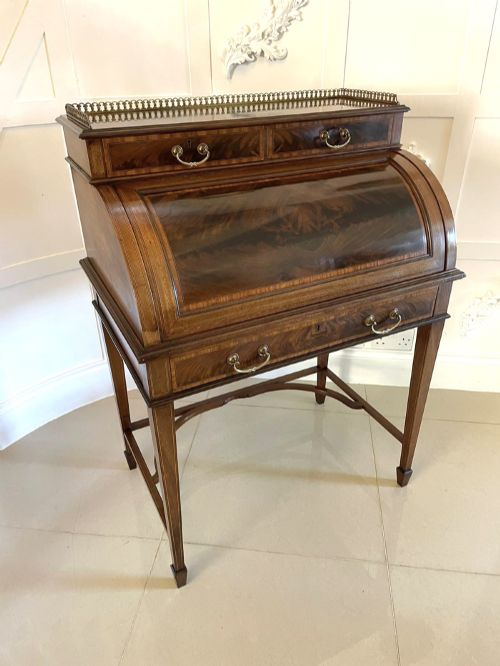
The galleries themselves take various forms, constructed from turned spindle work, pierced brass, or fretted wood secured to the desktop. Writing surfaces are frequently inset with tooled leather, providing a durable plane for daily correspondence.
Drawer construction relies on traditional hand-cut dovetails and solid secondary timbers, while larger pieces integrate pedestals or turned legs fitted with castors for mobility.
Several pieces combine the gallery top feature with specialised forms such as the cylinder desk, the Davenport, and the Carlton House desk.
Distinctions in craftsmanship and finish
Quality reveals itself in the selection of timber figures, the precision of stringing and inlay, and the integration of the gallery superstructure. Finer examples display continuous grain matching across drawer fronts and meticulous attention to hidden secondary surfaces.
The refinement of the brass hardware, the execution of turned spindles within the gallery, and the quality of the leather tooing separate standard utility pieces from master cabinetmaker productions.
Maple & Co·Gillow & Co
The Gallery Top Desk Glossary
- Gallery
- A raised railing or superstructure of wood or metal enclosing the top of a desk or table. It prevents items from rolling off and provides compartments for letters.
- Davenport desk
- A compact writing box form featuring a sloping hinged desk top above a pedestal of drawers. The writing surface often slides forward for convenience.
- Carlton House desk
- A distinctive horseshoe-shaped writing desk featuring a continuous tiered superstructure of small drawers and pigeonholes. It originated in the late eighteenth century and remained popular through the Victorian period.
- Cylinder desk
- A writing desk enclosed by a curved rolling shutter that conceals the writing surface and interior fittings when closed. The mechanism requires precise joinery to operate smoothly.
- Crossbanding
- A narrow strip of veneer applied perpendicularly to the grain of the primary surface. It creates a formal border around table tops and drawer fronts.
Gallery Top Desk: Frequently Asked Questions
What is a gallery top desk used for?
These desks served as private writing stations for correspondence, household accounts, and letter-writing. The raised superstructure kept stationery, inkwells, and sealing wax organised and within reach.
Today, they function effectively as study desks or living room writing tables, offering compact surface organisation that suits modern paperwork and laptop use.
How do I identify a Victorian gallery top desk?
Victorian examples typically feature heavier timbers like mahogany or walnut, often complemented by robust turned legs, brass castors, and elaborate veneer work. The gallery rail might be constructed from turned wood or pierced brass.
Examining the drawer construction for hand-cut dovetails and inspecting the secondary woods helps confirm the nineteenth-century manufacture date.
Are these desks suitable for daily use?
These pieces were built for regular clerical work using solid hardwoods and durable leather writing inserts. With sensible care, they withstand everyday tasks.
Protecting the leather surface and avoiding excessive moisture will preserve the antique finish during daily use.
What is the difference between a davenport and a writing table?
A davenport is a compact, box-like desk with a sloping top and drawers fitted to one side. A writing table is an open-frame table with legs, sometimes featuring frieze drawers beneath the top.
Both types can feature a gallery superstructure, but the davenport prioritises enclosed storage within a smaller footprint.