

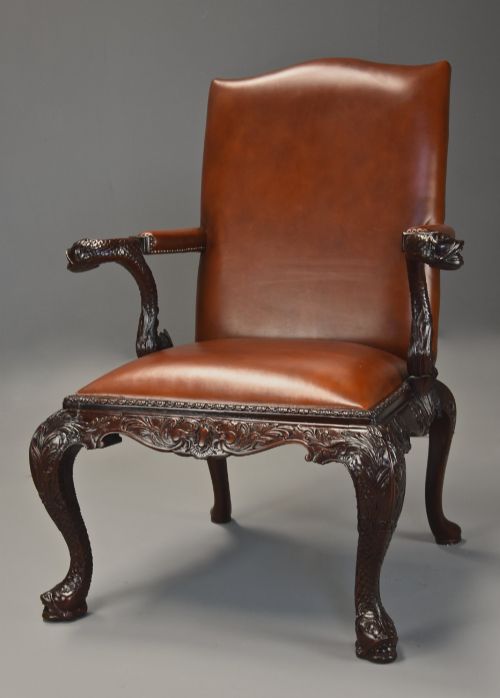
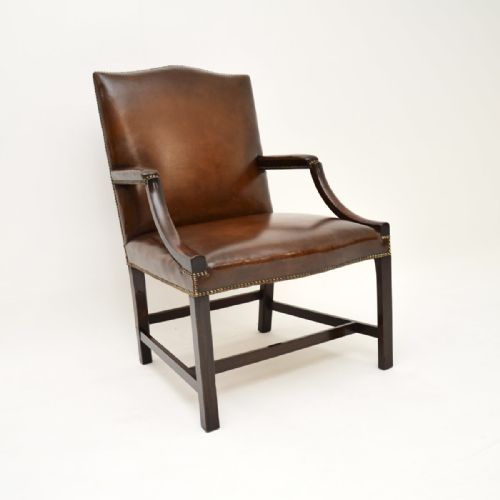
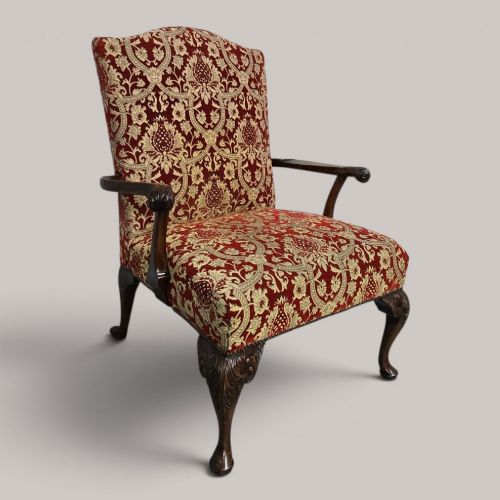
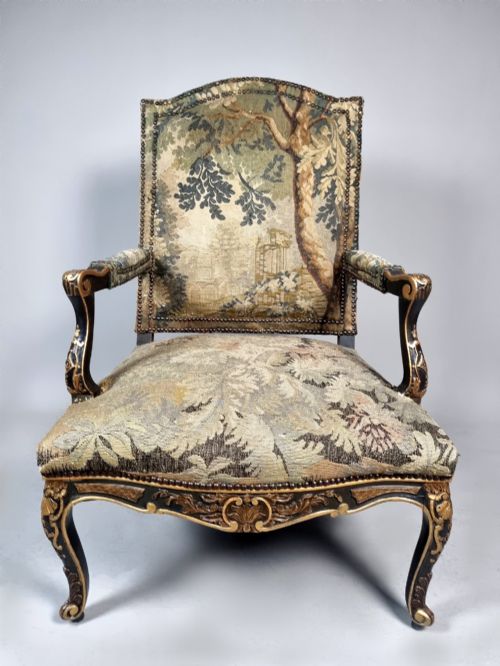
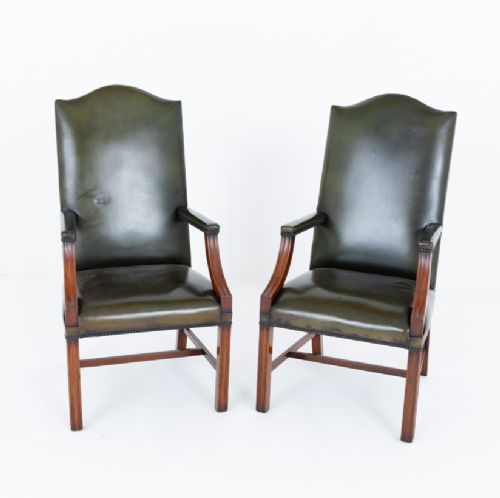
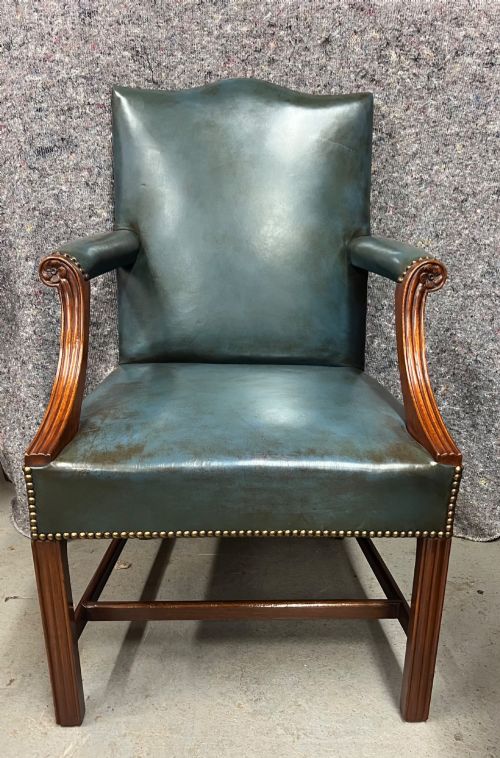


Gainsborough Style Armchair
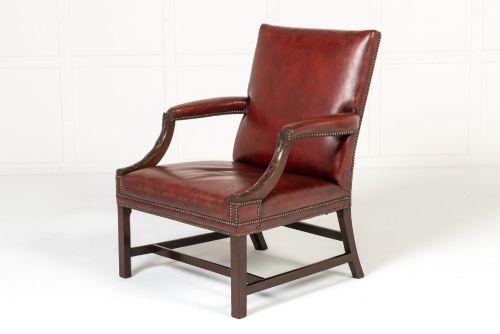
A gainsborough style armchair offers wide-seated comfort with open upholstered arms, uniting library utility and formal proportion.
Gainsborough Style Armchair
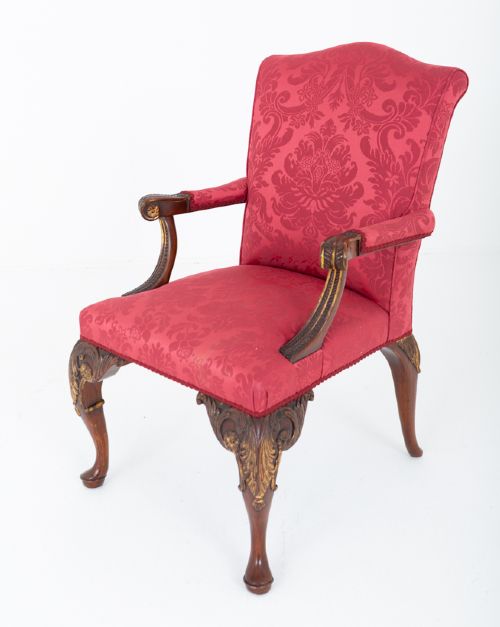
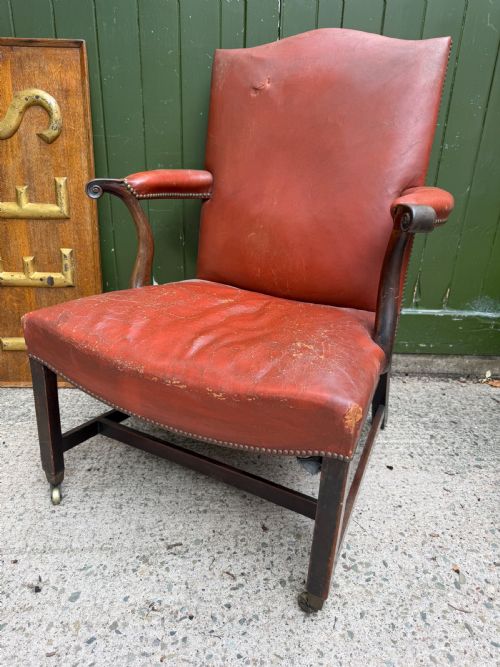
A gainsborough style armchair is an upholstered open-arm seat designed for libraries, desks, and parlours during the eighteenth century and recreated in later revival periods. You will regularly encounter mid to late eighteenth-century originals alongside nineteenth-century George III style iterations and early twentieth-century revival pieces.
How they were made
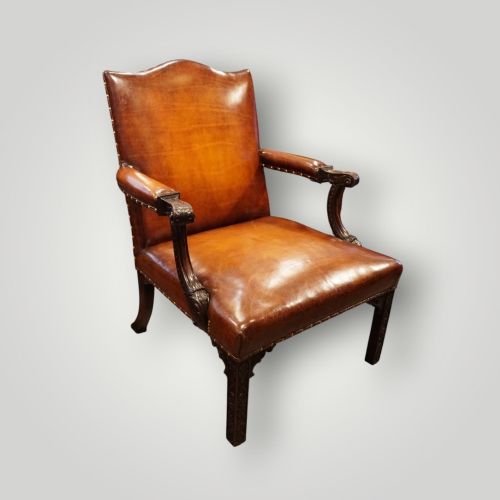
Makers constructed the structural frames predominantly from solid mahogany and walnut, occasionally applying intricate blind carving or giltwood finishes. These timbers provided the necessary strength for wide open arms and heavy upholstered seats.
Traditional upholstery techniques utilised durable hides, leathers, velvet, damask, and standard upholstery fabric, often secured with brass tacking. Hand-dyed English hide and traditional leather remain prominent surface materials across surviving examples.
Gainsborough Style Armchair Retail Price Guide 2026
Typical asking prices for gainsborough style armchair among the pieces listed under this phrase on Sellingantiques today, from the lower quarter to the upper quarter. They describe what is for sale here now, not the wider market.
These chairs earned their descriptive name because portraitist Thomas Gainsborough famously painted sitters resting in wide-armed seats of this exact proportion.
What varies in quality
The refinement of the timber carving and the crispness of the frame's joinery dictate the primary tier of craftsmanship. Superior examples display deeply moulded arm supports, hand-carved details, and dense native hardwoods.
Proportion and stance distinguish exceptional workshop production from simpler output. Balanced rake to the back and well-turned or carved legs ensure the chair holds its intended architectural dignity.
The Gainsborough Style Armchair Glossary
- Gainsborough chair
- A wide-seated, upholstered open armchair with low arms, designed in the mid-eighteenth century for writing and reading.
- Chippendale Revival
- A late nineteenth and early twentieth-century movement recreating mid-eighteenth-century English furniture designs. This style frequently incorporates mahogany frames with intricate fretwork or carved details.
- George II Style
- An aesthetic referencing the heavy proportions and architectural carving typical of the English monarchy between 1727 and 1760. Chairs from this period often showcase bold cabriole legs and scroll terminals.
- Blind Carving
- Low-relief ornamentation applied to the flat surfaces of furniture legs and rails, popular in mid-eighteenth-century cabinet making.
Gainsborough Style Armchair: Frequently Asked Questions
What is a gainsborough style armchair used for?
These chairs were originally designed for writing desks, libraries, and reading rooms where an upright posture combined with upholstered comfort was required.
Today, they function effectively as desk chairs, accent seating, or fireside chairs in traditional and contemporary interiors alike.
How do I tell an 18th century original from a revival piece?
Original eighteenth-century pieces exhibit period timber shrinkage, hand-cut joinery marks, and traditional frame construction beneath the upholstery.
Revival pieces from the nineteenth and twentieth centuries typically employ later fastening methods while closely copying earlier George II or Chippendale forms.
What is the difference between mahogany and walnut frames?
Mahogany frames offer a dense, reddish-brown timber that supports sharp carving and heavy structural use, dominating the Georgian production.
Walnut frames present a rich, figured grain pattern that was particularly favoured during earlier phases and specific revival periods.
Are these chairs comfortable for daily sitting?
The wide seats and padded armrests provide a supportive sit, though period seat heights often sit lower than modern lounge chairs.
Many examples feature traditional leather or fabric upholstery that accommodates daily reading and desk work comfortably.