

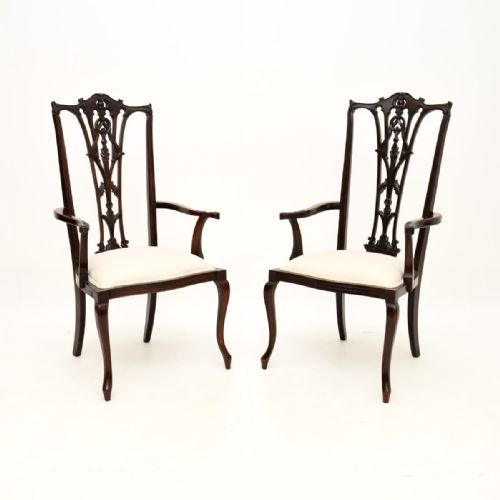

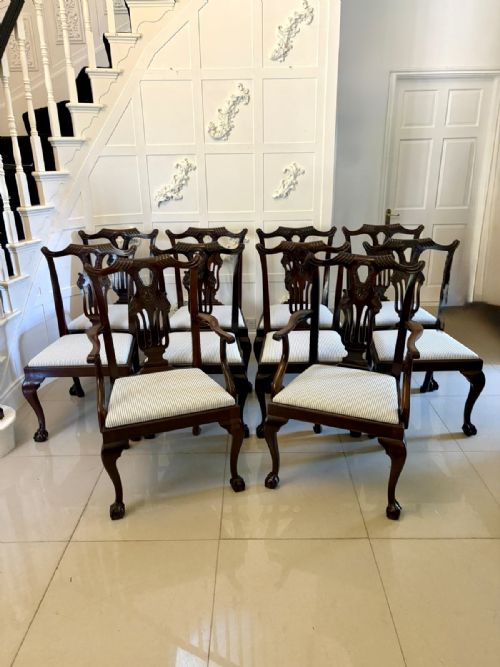
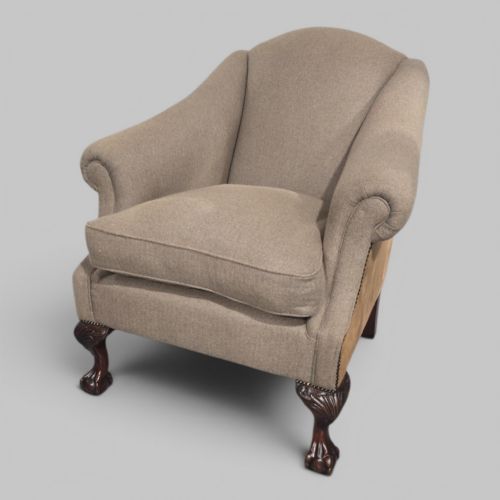
Chippendale Cabriole Armchair
A chippendale cabriole armchair brings substantial eighteenth-century grace and sturdy comfort to a room.
Chippendale Cabriole Armchair
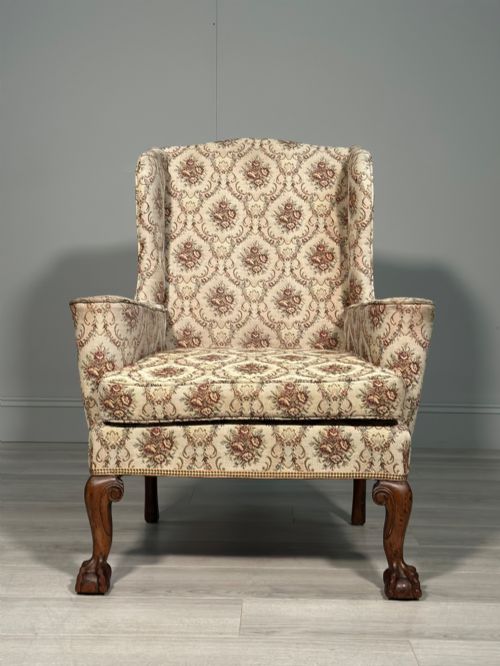
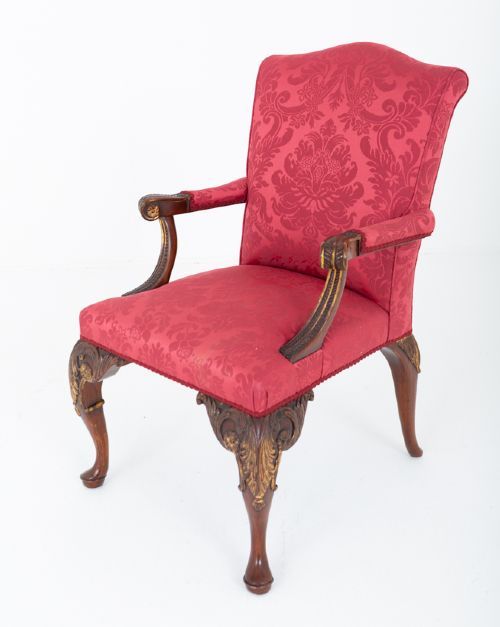
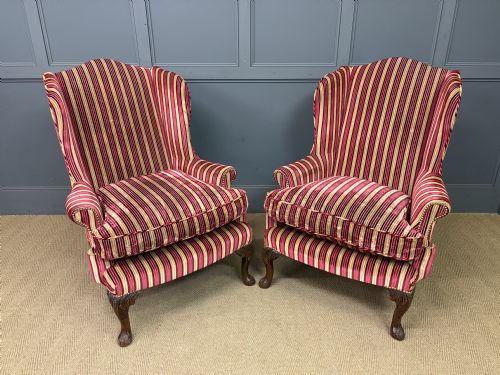
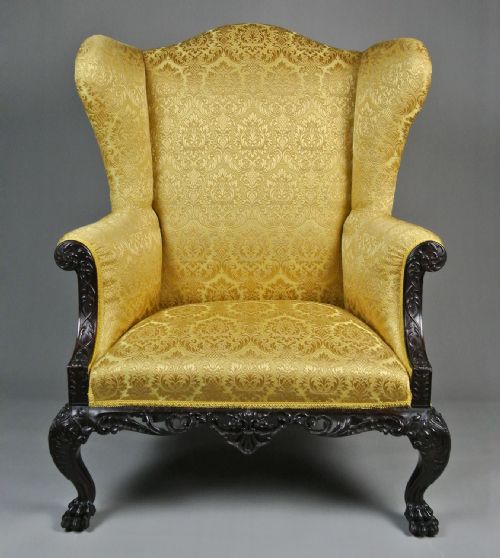
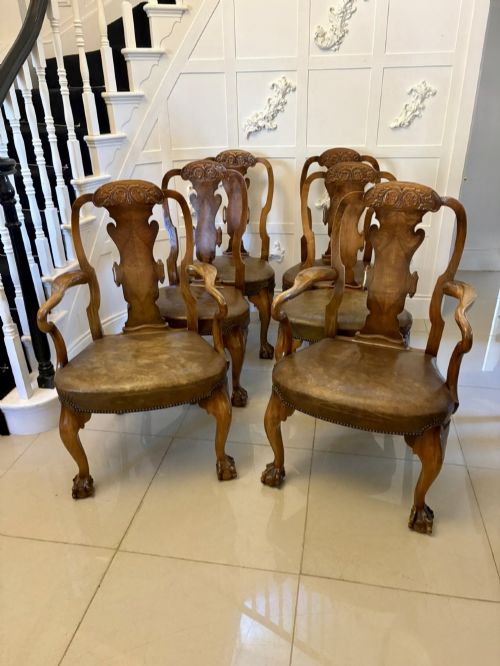
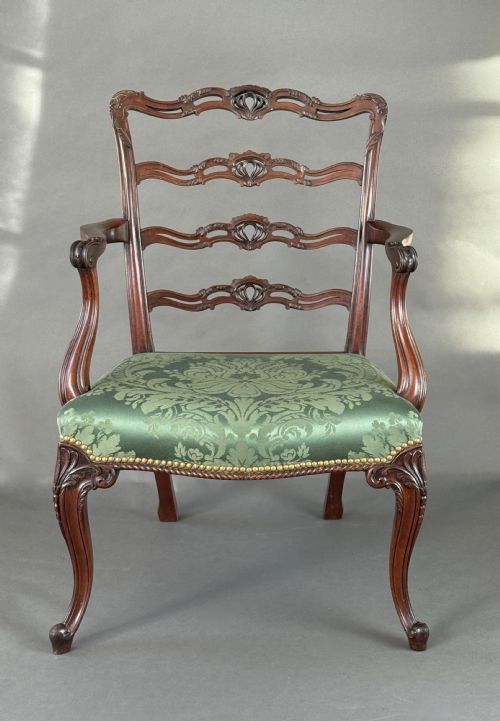
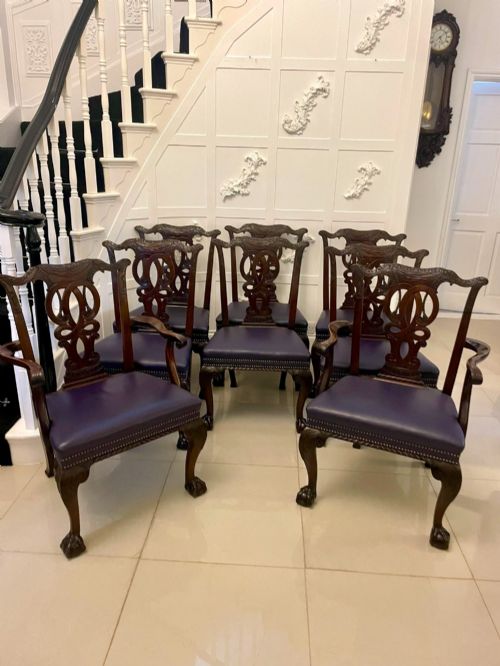
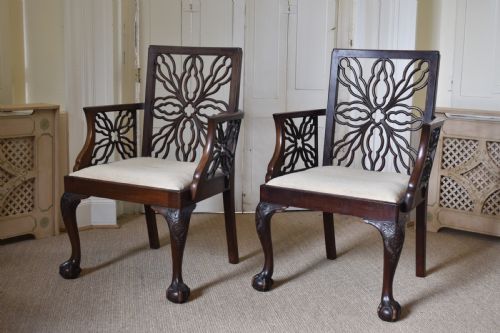
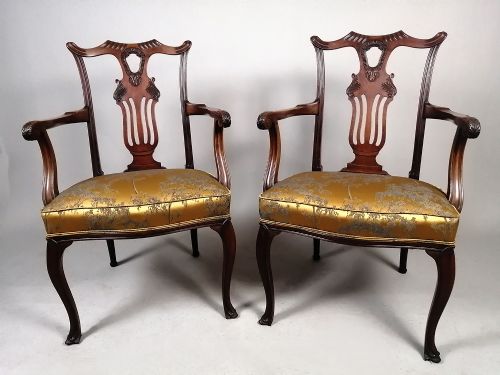
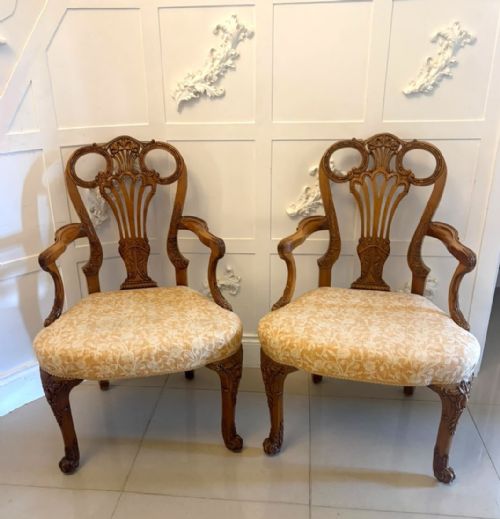
A chippendale cabriole armchair unites mid-eighteenth-century English cabinet-making traditions with distinctive sweeping legs that curve outward at the knee and taper down to a pad or ball and claw foot. The examples met on this page span genuine eighteenth-century pieces alongside nineteenth-century Victorian interpretations and later revival pieces from the early twentieth century. These seating forms range from open armchairs and library chairs to desk chairs and generous wingbacks upholstered in fabric, leather, damask, or velvet.
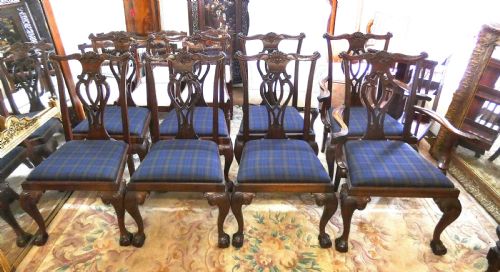
Makers working across Georgian, Victorian, and Edwardian periods adopted these characteristic outlines for dining sets, library furnishings, and intimate desk seating. The integration of carved mahogany and walnut frames with substantial padded upholstery defines the core visual identity of these chairs. Buyers encounter single library pieces, matched pairs, and larger suites designed for formal dining rooms.
Materials and Construction Methods
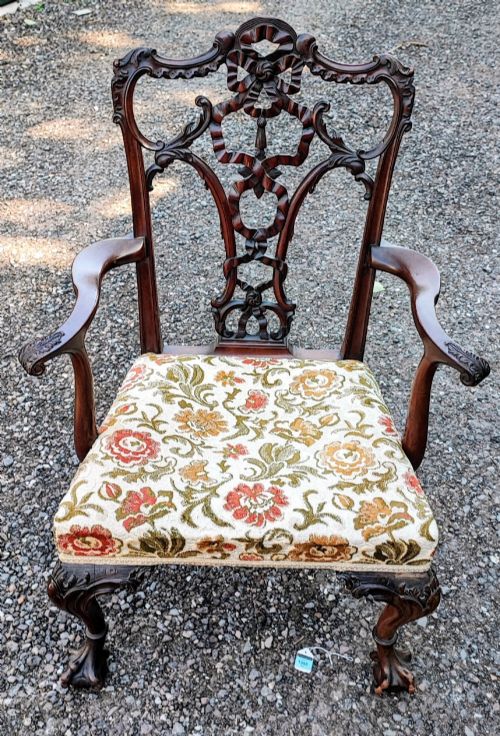
Cabinet-makers relied heavily on dense imported mahogany and rich walnut for the primary structural frames, utilising the tight grain to support intricate hand-carved ribbon backs, acanthus leaves, and ball and claw feet. These timbers provided the tensile strength needed for the characteristic sweeping cabriole leg without requiring bulky supplementary braces.
Upholstery techniques evolved from traditional horsehair stuffing secured with webbing and linen down to modern calico stages, enclosed by outer coverings of damask, velvet, or leather fixed with brass tacks. Joinery relied on mortise and tenon joints locked with wooden pins to endure the sustained weight placed upon the arms and seats.
Chippendale Cabriole Armchair Retail Price Guide 2026
Typical asking prices for chippendale cabriole armchair among the pieces listed under this phrase on Sellingantiques today, from the lower quarter to the upper quarter. They describe what is for sale here now, not the wider market.
Listings feature pieces spanning the eighteenth, nineteenth, and early twentieth centuries, constructed primarily from mahogany and walnut.
Judging Quality and Execution
The distinction between ordinary and superior pieces rests on the crispness and depth of the hand-carving upon the knees, knuckles, and splats. Master carvers achieved clean, undercut details that catch the light, whereas lesser workshops produced softer, shallower reliefs.
Proportional harmony dictates the overall presence of the chair, separating disciplined period execution from clumsy revival attempts. The graceful sweep of the cabriole leg must flow naturally from the seat rail down to the foot without appearing abrupt or strained.
The Chippendale Cabriole Armchair Glossary
- Cabriole leg
- A furniture leg that bends outward at the knee and tapers inward toward the ankle, mimicking the shape of an animal's limb. This form gained widespread popularity during the Georgian period.
- Ball and claw foot
- A carved foot depicting a bird's talon clutching a spherical ball, commonly seen terminating the cabriole legs of eighteenth-century seating. The design drew inspiration from Chinese motifs traded through the Dutch East India Company.
- Splat
- The vertical wooden strip down the centre of a chair back, often pierced and intricately carved in Chippendale designs. It provides ergonomic lumbar support while serving as the primary decorative canvas for the maker.
- Library chair
- A substantial, heavily upholstered armchair designed for prolonged reading and comfort, frequently fitted with padded arms. These pieces often resided in studies and large country house libraries.
- Gainsborough chair
- A wide, open-armed desk or reading chair with upholstered seat and back, standing on four legs. The design accommodates the voluminous hooped skirts worn during the mid-eighteenth century.
Chippendale Cabriole Armchair: Frequently Asked Questions
How do I date a Chippendale chair?
Dating relies on examining timber patination, tool marks left by hand saws on secondary woods, and the stylistic evolution of the carved splat and legs. Eighteenth-century originals display subtle irregularities from hand-working that machine-assisted revival pieces from the Victorian or Edwardian eras lack.
Secondary woods such as pine or oak used for seat frames also offer clues, as do the fastening methods and the wear patterns accumulated over centuries of domestic use.
Are these chairs suitable for daily use?
Most antique armchairs and desk chairs are structurally robust enough for daily seating provided the joints remain tight and the internal webbing is sound. Period mahogany and walnut timbers offer exceptional durability.
It is advisable to check the stability of the cabriole legs and the condition of the upholstery support before putting antique seating into heavy rotation in a modern household.
What is the difference between Georgian and revival pieces?
Georgian pieces were built during the reigns of the Georges between 1714 and 1830, embodying the contemporary aesthetic and construction methods of the era. Revival pieces were produced later, particularly during the Victorian and Edwardian periods, copying those earlier historical styles.
Revival furniture often utilises nineteenth- or twentieth-century machinery alongside hand-finishing, whereas genuine Georgian items bear the distinct hallmarks of eighteenth-century hand tool fabrication.
How should I care for mahogany frames?
Maintaining mahogany requires keeping the timber away from direct heat sources and rapid humidity changes that can cause the wood to split or warp. Occasional dusting with a soft, dry cloth preserves the finish.
Applying microcrystalline wax periodically helps nourish the wood and protects the patina without building up greasy residue on the carved surfaces.