


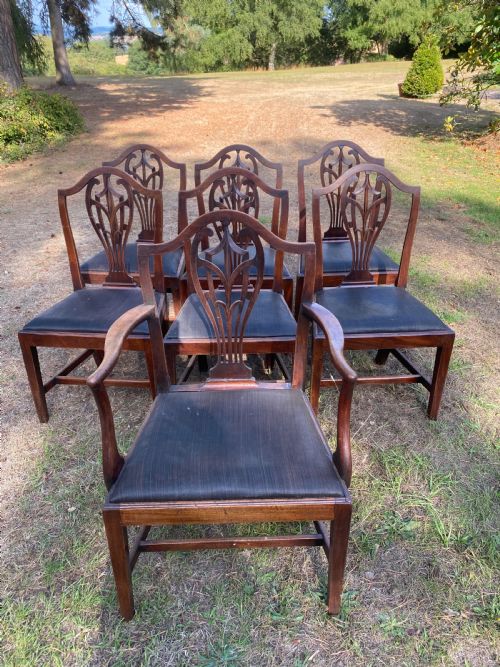
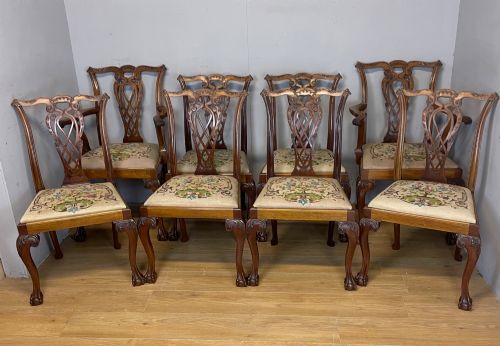
Mahogany Chippendale Chairs
When choosing mahogany chippendale chairs, you select enduring seating defined by rich timber and intricate carved detail that anchors a traditional dining room or study.
Mahogany Chippendale Chairs
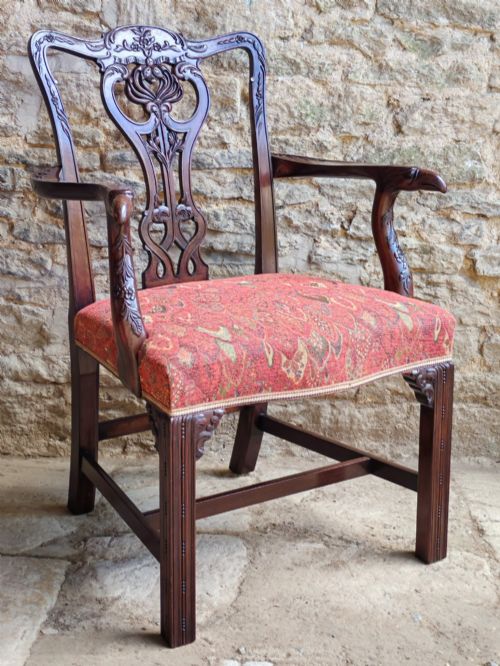
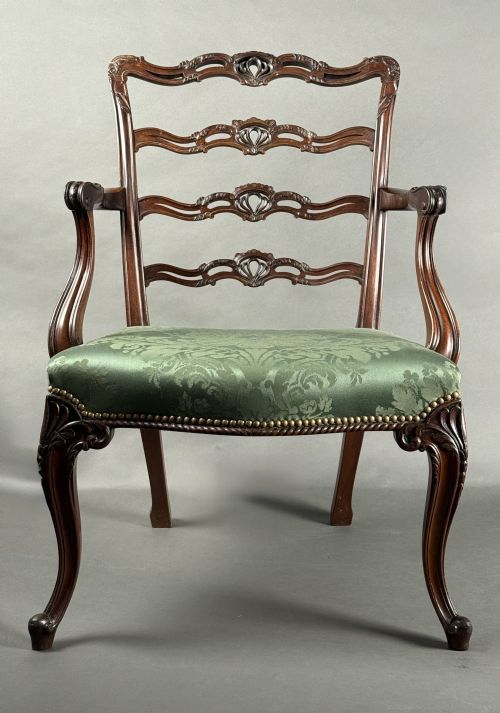
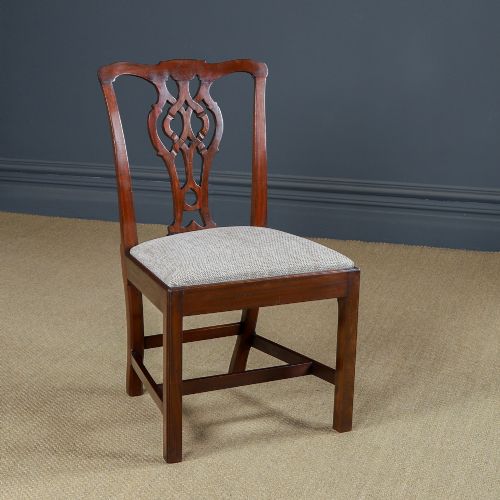
Mahogany chippendale chairs encompass both authentic 18th-century Georgian examples and later revival pieces produced through the Victorian and Edwardian eras. Buyers encounter single side chairs, expansive dining sets, and substantial library armchairs designed for formal interiors.
The aesthetic bridges robust structural joinery with refined ornamentation, drawing on the design vocabulary published in the director by Thomas Chippendale. Dining sets and individual desk or corner chairs remain the most frequent forms discovered within this category.
Originating primarily from English workshops, these pieces span from mid-Georgian periods through to late-19th-century interpretations. The versatility of the design ensures they integrate easily into modern or period domestic settings.
Distinguishing quality across the range
The crispness and depth of the hand carving dictate the upper tier of the range, separating deeply undercut foliage from shallow, mechanical work. Superior examples exhibit balanced proportions where the weight of the crest rail matches the stance of the legs.
Timber selection plays a major role, with straight-grained mahogany and heavy Cuban stock indicating superior craftsmanship compared to lesser secondary woods. Original surface patination achieved through decades of waxing creates a warm depth that inferior refinished surfaces lack.
Structural integrity of the joints and the retention of original components, such as carved claw and ball feet or stretchers, elevate the standing of any individual chair or dining set.
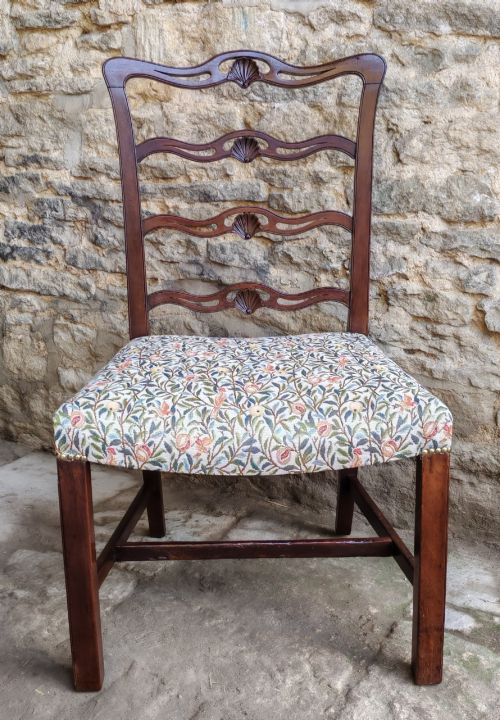
The inventory includes dining sets, library armchairs, ladderback chairs, and corner seating styles.
Howard and Sons·Warings·Alfred Allen of Birmingham·Phillips and Jones
The Mahogany Chippendale Chairs Glossary
- Carver
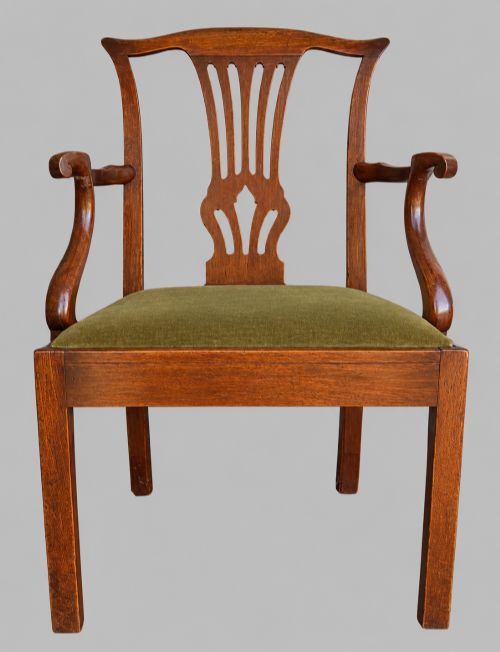
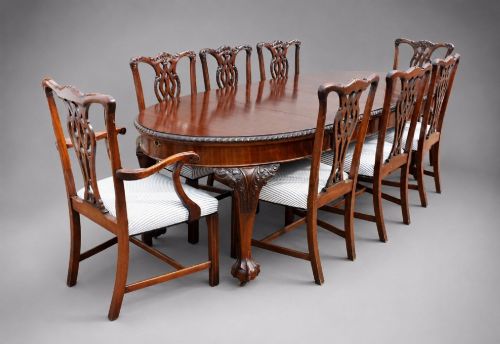
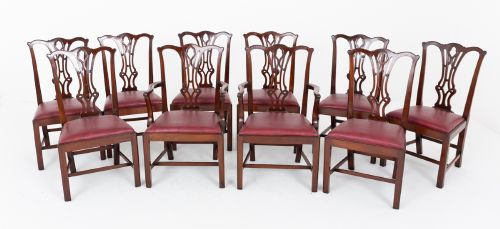
- An armchair, often designed as the head-of-table seat in a dining set, featuring supportive elbow rests. These pieces match the design of companion side chairs.
- Splat
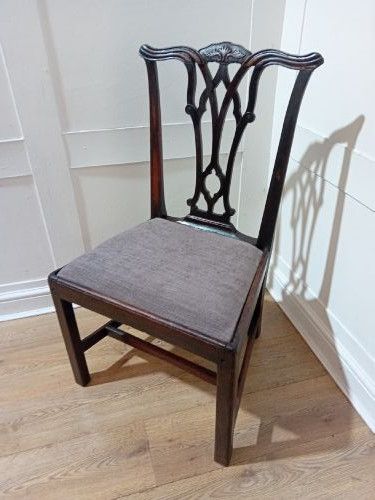
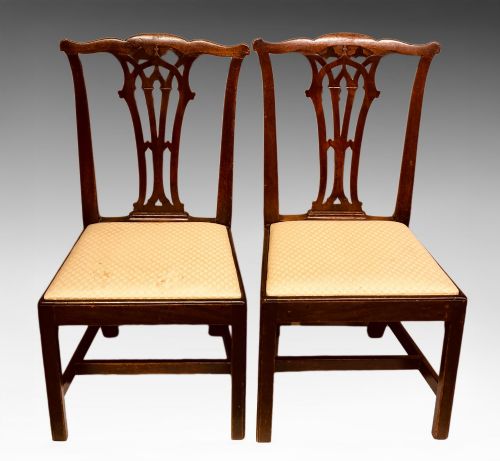
- The vertical wooden panel positioned in the centre of a chair back, frequently pierced and carved in ribbon or ladder patterns. This element bears the main decorative weight of the profile.
- Blind fretwork
- Low-relief geometric carving applied to the face of straight chair legs or seat rails to simulate Chinese lattice patterns. It became popular during the mid-18th century.
- Claw and ball
- A foot carved to represent a bird's talon clutching a spherical ball, commonly terminating cabriole legs on Georgian seating. This detail was widely revived in later periods.
- Gainsborough chair
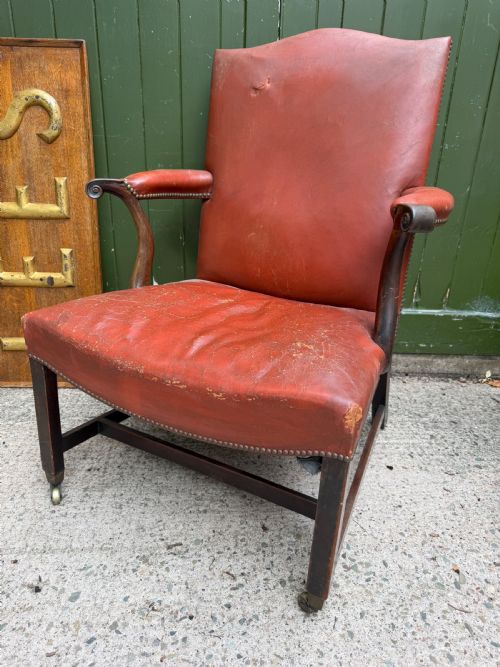
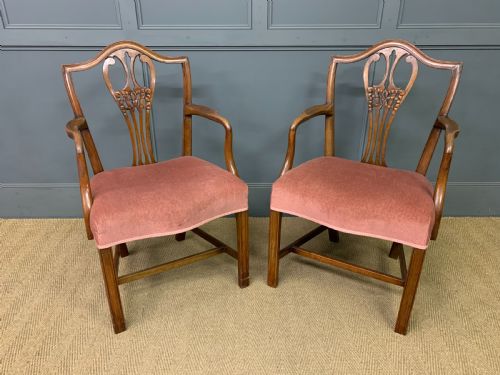
- A wide, upholstered armchair with open padded arms and square legs, historically used in libraries and studies. The form offers a comfortable seat while maintaining a compact footprint.
Mahogany Chippendale Chairs: Frequently Asked Questions
How do I spot a reproduction?
Examine the timber colour, tool marks beneath the seat frame, and the weight of the wood to gauge the age of the piece. Authentic older frames display natural patina and hand-cut joinery that modern replicas struggle to replicate accurately.
Look closely at the carving style and secondary woods used in the blocks beneath the corners. Revival pieces from the Victorian era often show subtle differences in proportion and machine assistance compared to 18th-century originals.
Were these chairs used for dining?
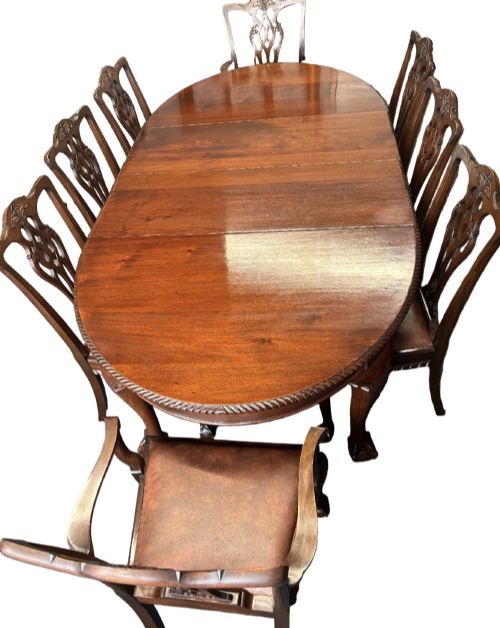
Many examples served as formal dining seating, paired around large extending tables for banquets and daily family meals. Dining sets typically included multiple side chairs alongside matching carvers for the hosts.
Other variants functioned as desk chairs, hall seats, or library armchairs. Their robust construction ensured they could withstand heavy daily use across centuries.
What is a carver chair?
A carver is an armchair designed to match a set of single dining chairs, traditionally placed at the head and foot of the table. The term derives from the carved decoration typical of these larger seats.
Collectors often seek complete dining sets that retain their original complement of carvers alongside the side chairs. They offer enhanced comfort due to the inclusion of armrests.