
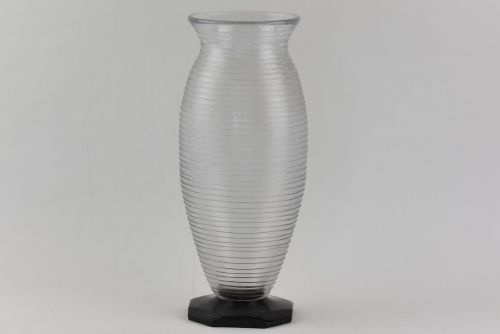


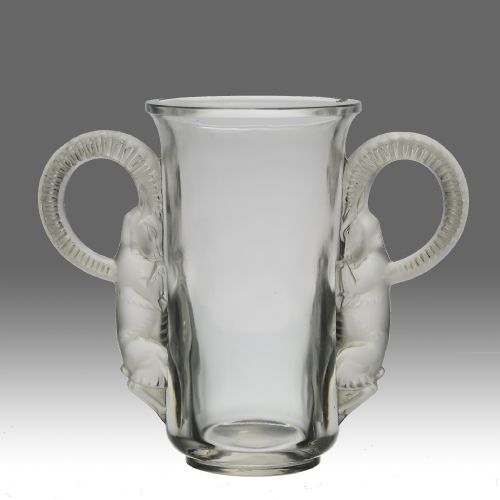
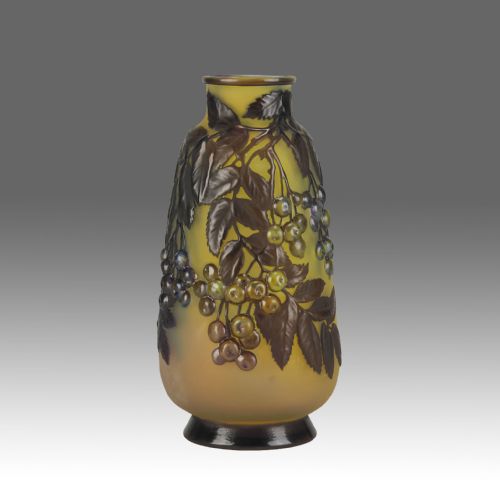


Frosted Glass Art Vase
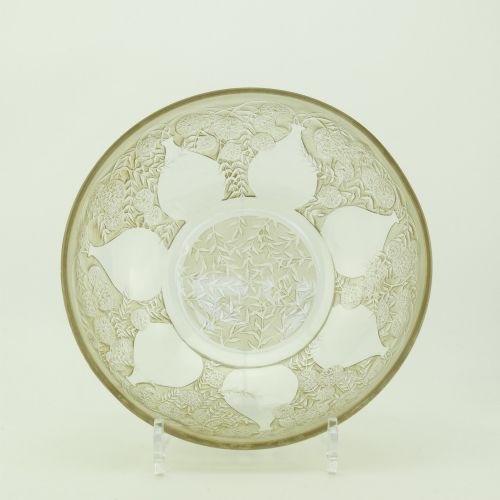
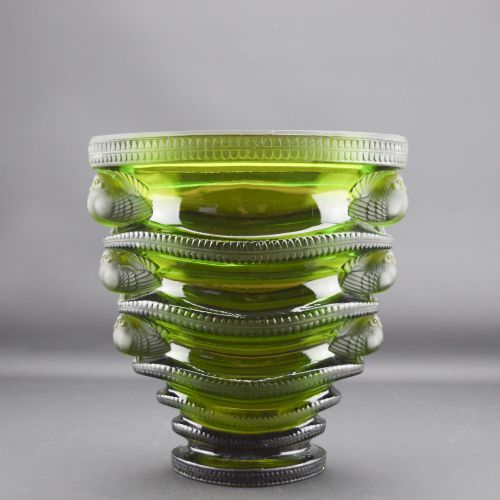
These frosted glass art vases bring tactile depth and diffuse light into a room, spanning the organic curves of Art Nouveau and the geometric lines of Art Deco.
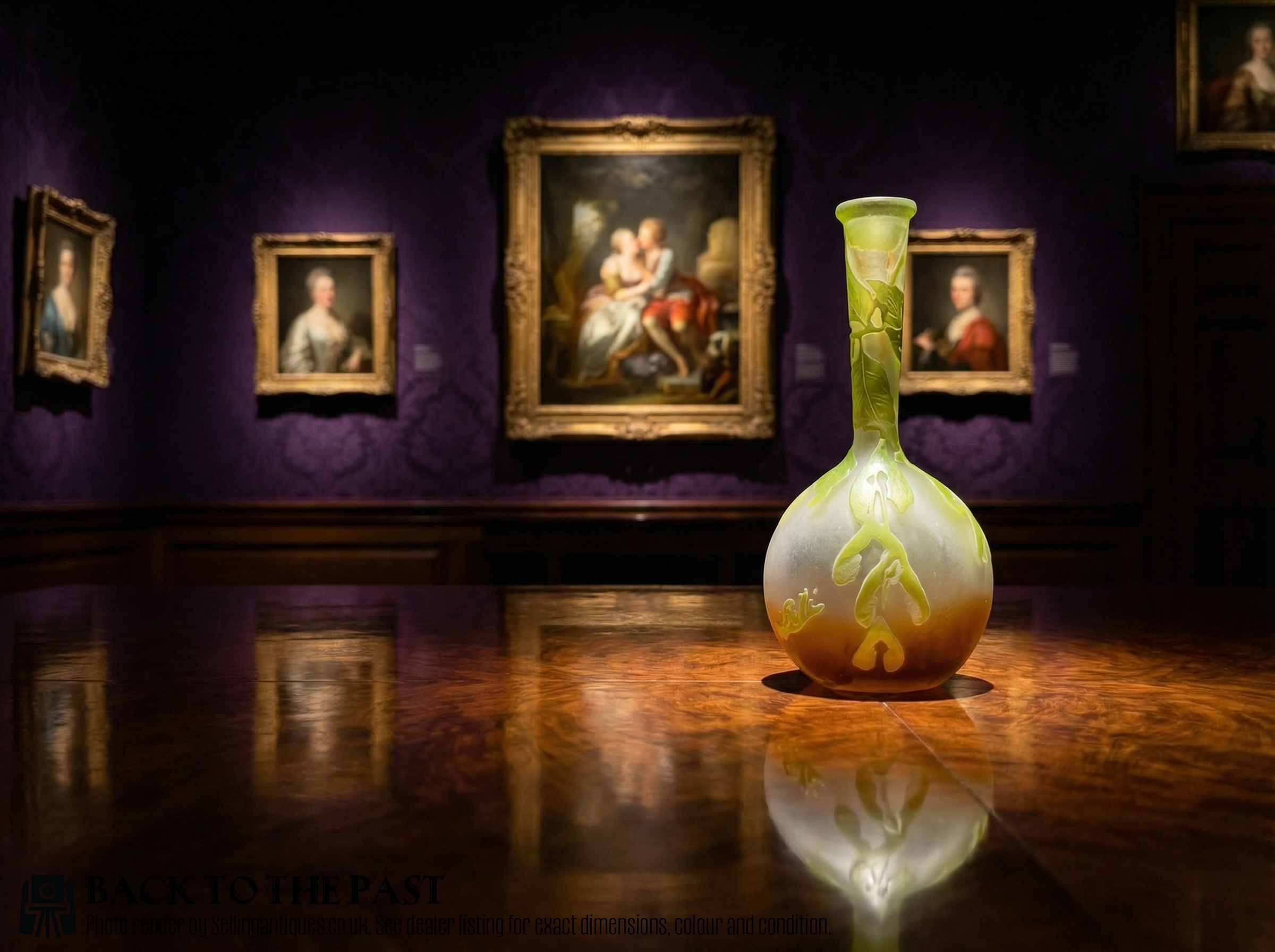
Frosted Glass Art Vase
A frosted glass art vase is a vessel designed to display stems or stand alone as a sculptural object, utilising matte surfaces to soften the interplay of light. When searching this phrase, a buyer encounters pieces primarily originating from the late Victorian era through the interwar decades of the twentieth century.
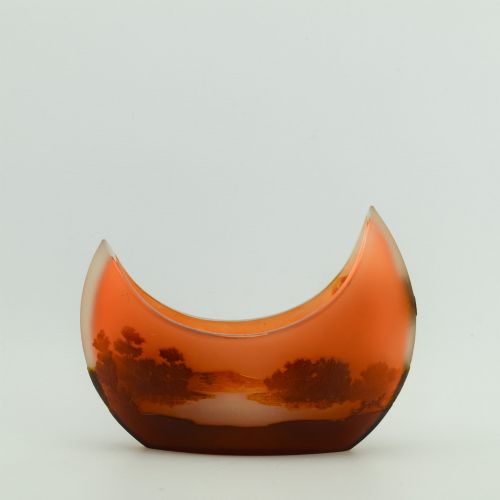
The inventory leans heavily towards French production from the Art Nouveau and Art Deco periods, alongside English Victorian examples. Forms range from slender footed cylinders and crescent shapes to wide bowls and large oviform bodies.
Makers such as René Lalique, Gallé, and Daum dominate the selection, bringing distinct techniques like cameo carving and opalescent moulding to these decorative objects. Buyers meet both delicate miniature vessels and large exhibition-scale pieces.
How they were made
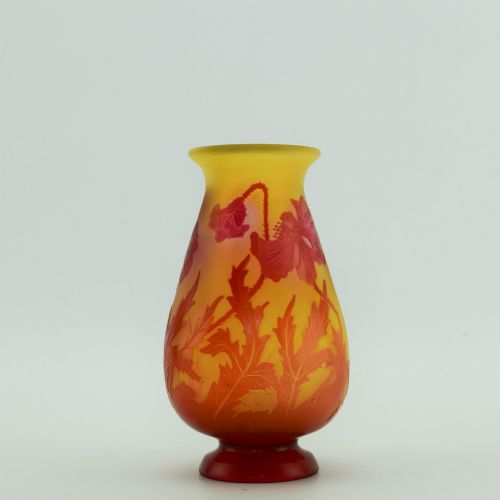
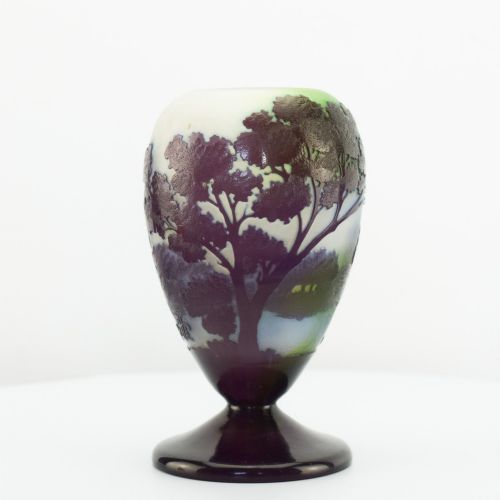
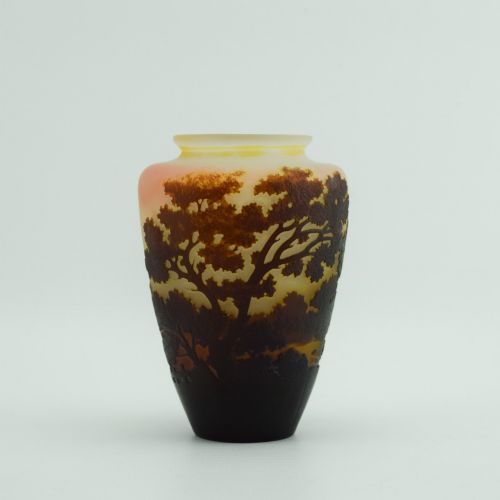
The creation of these pieces relied on specialised glassmaking methods, principally acid-etching and sandblasting to achieve the characteristic matte or frosted texture. Cameo glass vessels were built from multiple fused layers of coloured glass, which artisans then carved by hand or etched with acid to reveal contrasting designs.
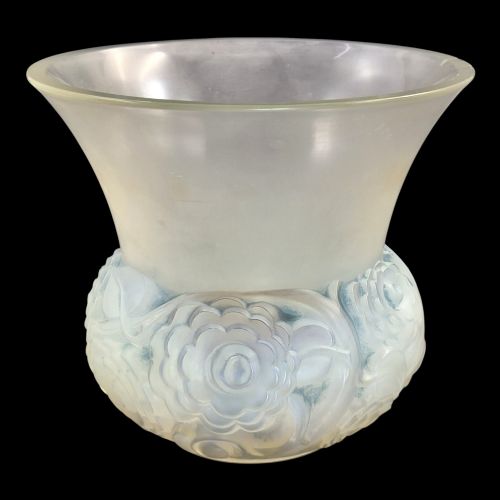
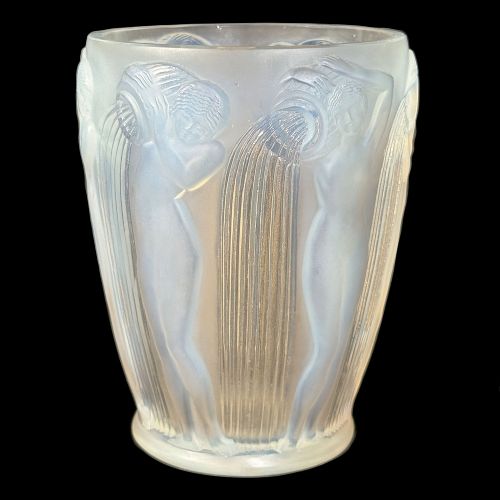
Moulded glass pieces employed heavy iron or bronze moulds to shape the hot metal, often incorporating opalescent agents that caused the glass to catch blue and amber tones in the light. Enamel work and hand-painting occasionally added surface colour to floral and geometric motifs.
Floral motifs dominate the forms, capturing clematis, poppies, and water lilies in acid-etched relief and layered glass.
What varies in quality
Quality in these vessels rests upon the depth of the carving, the crispness of the mould release, and the artistic control over the frosting. Superior examples display intricate layering in cameo pieces or subtle, milk-blue fire in opalescent press-moulded works.
The weight of the glass, the balance of the form, and the integration of signature marks further separate standard production from masterworks. The skill of the execution determines whether the matte surface feels velvety and alive or flat and dull.
Rene Lalique·Emile Galle·Daum Freres·Thomas Webb And Sons·Legras·Schneider
The Frosted Glass Art Vase Glossary
- Cameo Glass
- Glass formed with multiple distinct layers of different colours, then carved or acid-etched down to create a raised relief design.
- Opalescent Glass
- Glass containing chemical agents that scatter light, causing the material to appear milky white with blue or amber highlights when viewed from different angles.
- Acid-Etched Glass
- Glass treated with hydrofluoric acid to eat away the surface, producing a frosted matte texture or a sunken pattern.
- Epergne
- A large table centrepiece featuring a central vase surrounded by smaller attached arms or vases for holding flowers.
- Oviform
- Egg-shaped, describing a rounded vessel body that tapers gently towards the base and neck.
Frosted Glass Art Vase: Frequently Asked Questions
What is a frosted glass art vase?
A frosted glass art vase is a decorative vessel treated with acid or sandblasting to create a matte, non-reflective surface. These pieces often feature raised motifs or carved designs characteristic of late nineteenth and early twentieth-century design movements.
They serve as both floral holders and sculptural centrepieces, celebrated for how their textured surfaces diffuse light across interior spaces.
How do I identify Art Nouveau versus Art Deco pieces?
Art Nouveau vases, prevalent around nineteen hundred, favour asymmetrical floral patterns, winding stems, and organic cameo glass forms inspired by nature. Think of lilies, cornflowers, and sweeping landscape scenes.
Art Deco pieces from the nineteen twenties and thirties shift towards symmetry, geometric abstraction, stylised floral reliefs, and heavy opalescent moulding. The lines become sharper and the profiles more architectural.
How were these vases used originally?
Many of these vessels functioned as table centrepieces or mantel ornaments, designed to hold fresh blooms during formal dining and drawing-room gatherings. Their presence added colour, texture, and status to middle and upper-class interiors.
Larger exhibition pieces were often displayed purely as works of art on pedestals or dedicated display cabinets rather than serving a domestic botanical function.
How should I care for a frosted glass vase?
Dust these pieces gently with a soft, dry microfibre cloth to prevent the accumulation of grime within the textured frosted areas. Avoid harsh chemical cleaners or abrasive scouring pads that can scratch the delicate matte finish.
When washing, use lukewarm water with mild soap and dry immediately with a lint-free cloth, supporting heavy bases carefully during handling.