

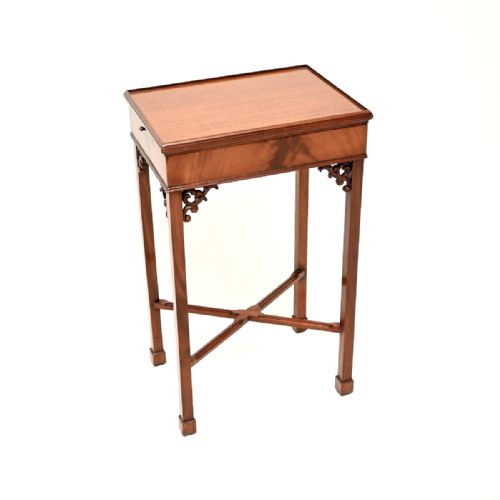


Fretwork Corner Stand
These fretwork corner stand pieces turn awkward room angles into useful display surfaces.
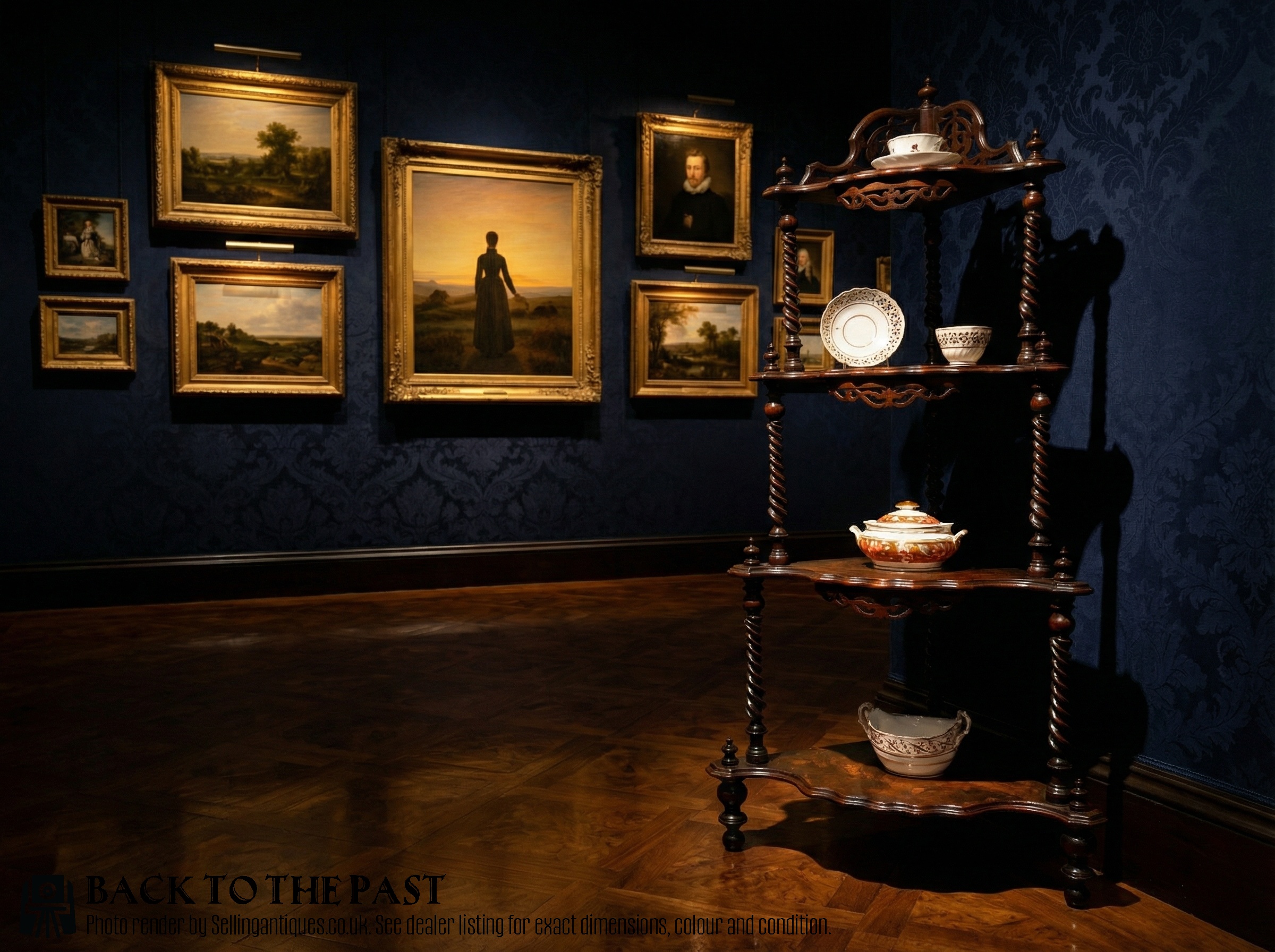
Fretwork Corner Stand
A fretwork corner stand provides tiered shelving designed to fit snugly into the corner of a room, taking up minimal floor space while offering multiple surfaces for ornaments. The examples seen here include multi-tiered whatnots, corner cabinets, and display stands dating from the eighteenth century through to the Edwardian period.
Most pieces encountered in this selection belong to the Victorian era, executed in timber such as walnut, burr walnut, and mahogany. These items often feature open shelves supported by turned or twisted uprights, alongside enclosed cupboards at the base.
How they were made
Cabinet makers utilised dense hardwoods like mahogany and walnut as the primary structural frame, frequently employing burr walnut veneers for decorative surfaces. Inlay work and brass elements appear on selected pieces to accent the timber grain.
Joinery techniques ranged from straightforward corner brackets to intricate pierced fretwork panels and turned barley twist supports. Timber was selected for its figure, then polished to a smooth finish that highlighted the natural grain.
Fretwork Corner Stand Retail Price Guide 2026
Typical asking prices for fretwork corner stand among the pieces listed under this phrase on Sellingantiques today, from the lower quarter to the upper quarter. They describe what is for sale here now, not the wider market.
One past cupboard includes carved figures emblematic of America, standing guard over its corner.
What varies in quality
The distinction between standard items and finer examples rests on the selection of timber veneers and the intricacy of the woodwork. Burr walnut surfaces with rich figuring and matching grain patterns command greater visual interest than plain secondary woods.
Construction detail also marks the difference, seen in the precision of the pierced fretwork panels and the stability of multi-tiered shelving units. Heavy turning on uprights and thoughtful proportions indicate a more accomplished workshop origin.
The Fretwork Corner Stand Glossary
- Whatnot
- A piece of furniture consisting of a set of open shelves for displaying small objects or books. They typically have three to six tiers supported by slender columns.
- Fretwork
- Ornamental design executed in wood by cutting patterns with a fretsaw. This technique creates delicate, pierced panels often used for gallery rails or backing.
- Burr Walnut
- Timber taken from a walnut tree growth where the grain has grown in a deformed, swirling pattern. It produces highly decorative veneer panels with distinctive patterning.
- Demi-Lune
- Half-moon shape, applied to tables or consoles with a straight back edge designed to sit flat against a wall and a curved front.
- Aesthetic Movement
- A late nineteenth-century design style that emphasised visual beauty over narrative subject matter. Furniture from this movement often shows Japanese influences and clean lines.
Fretwork Corner Stand: Frequently Asked Questions
What is a corner whatnot?
A corner whatnot is a multi-tiered shelving unit built with a triangular footprint to slot into room angles. These pieces were designed to hold decorative ceramics, silver, and books.
The listings show examples ranging from three to six tiers, sometimes featuring an enclosed cupboard section at the base for additional storage.
How do I place one in a modern room?
These stands fit into unused wall junctions, making them practical for smaller spaces where floor area is restricted. They lift display items off the ground and draw the eye upward.
Pair them with lamps, small plants, or collections of ceramics that benefit from being viewed at eye level.
What woods were used for these stands?
Makers relied heavily on walnut, burr walnut, and mahogany, with occasional examples in oak, satinwood, and rosewood. Burr walnut was particularly favoured for its striking decorative grain.
Inlay work and brass details were frequently added to enhance the appearance of the primary timber.
How do I distinguish Victorian from Edwardian pieces?
Victorian pieces tend to use darker, heavily figured timbers like burr walnut and feature robust turning, deep carving, or elaborate fretwork. They often lean towards revival styles or architectural forms.
Edwardian furniture generally exhibits lighter construction, simpler satinwood or mahogany inlay, and a more restrained approach to ornamentation.